

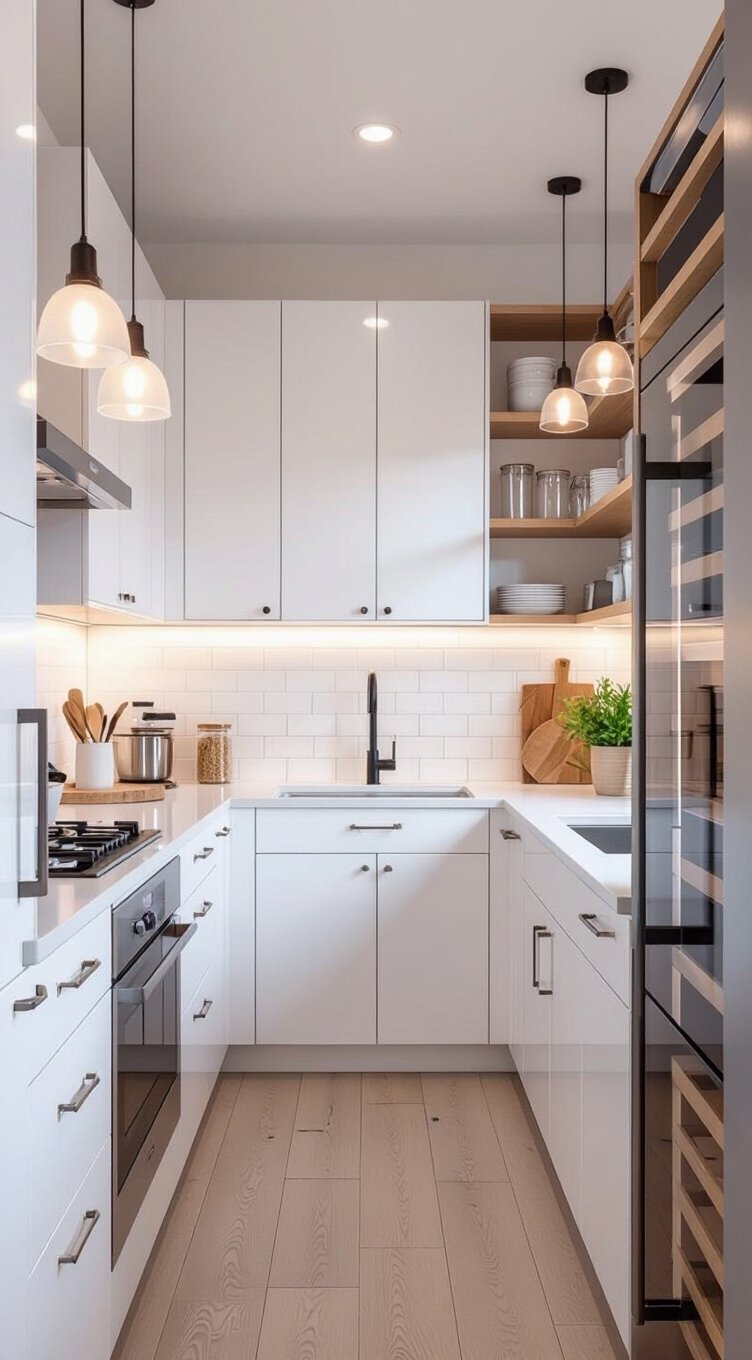
If you have a small, long kitchen, you’re not stuck with a cramped, inefficient space. The right design choices can reshape your narrow layout into something that feels open, organized, and surprisingly functional. From floor-to-ceiling cabinets to handleless doors and strategic lighting, these 11 proven ideas tackle your biggest storage and space challenges head-on. Each solution is practical, budget-conscious, and easy to implement — keep going to uncover which ones work best for your kitchen.
Use Vertical Space With Floor-to-Ceiling Cabinets
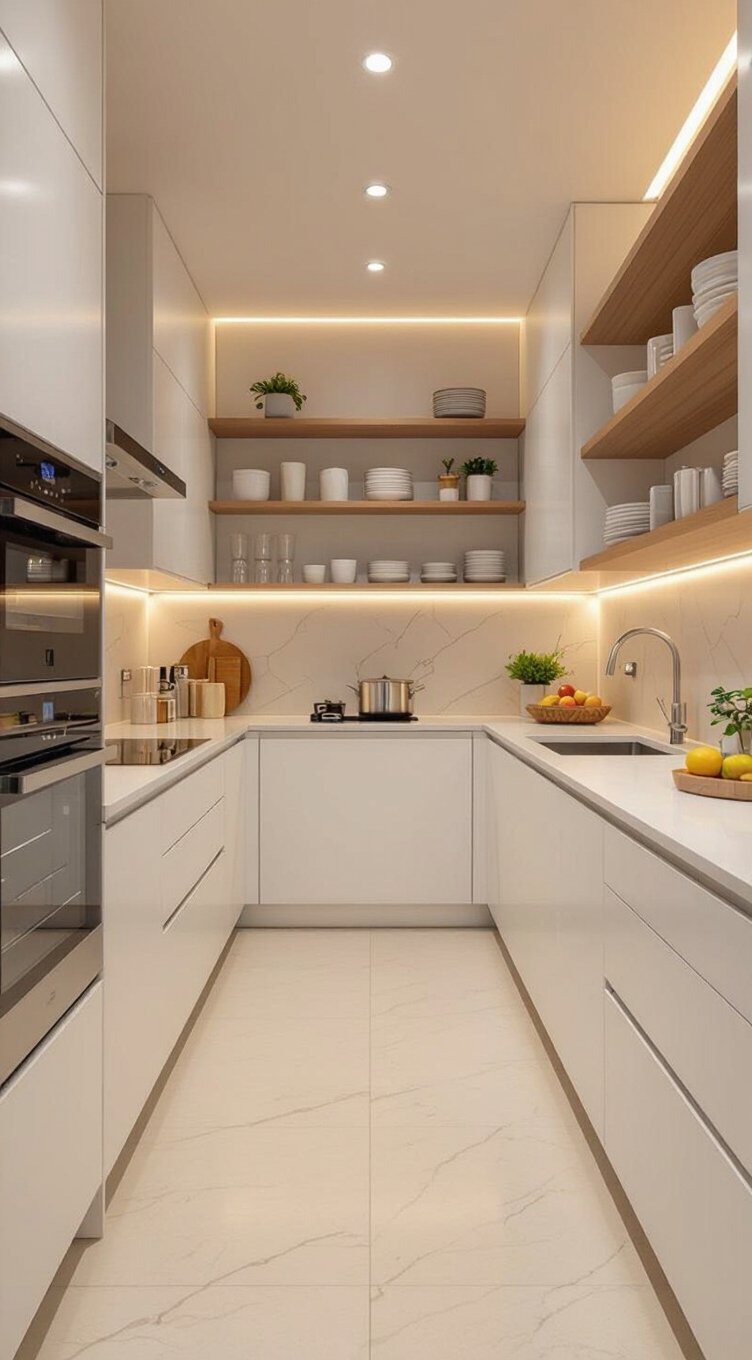
When space is limited, building upward is one of the smartest moves you can make in a small kitchen. Floor-to-ceiling cabinets maximize every inch of your vertical space, giving you storage freedom you didn’t know you had. You’re no longer stuck cramming everything into lower cabinets that are hard to reach and poorly organized.
Install wall mounted racks between cabinet sections to store oils, spices, and cooking tools within easy reach. Use ceiling hooks to hang pots, pans, and utensils, freeing up beneficial drawer and cabinet space below. Choose cabinets with glass fronts to visually open the room while keeping storage functional.
Going vertical redefines a tight kitchen into a well-organized, breathing space where everything has its proper place.
Install Open Shelving to Avoid a Boxed-In Feel
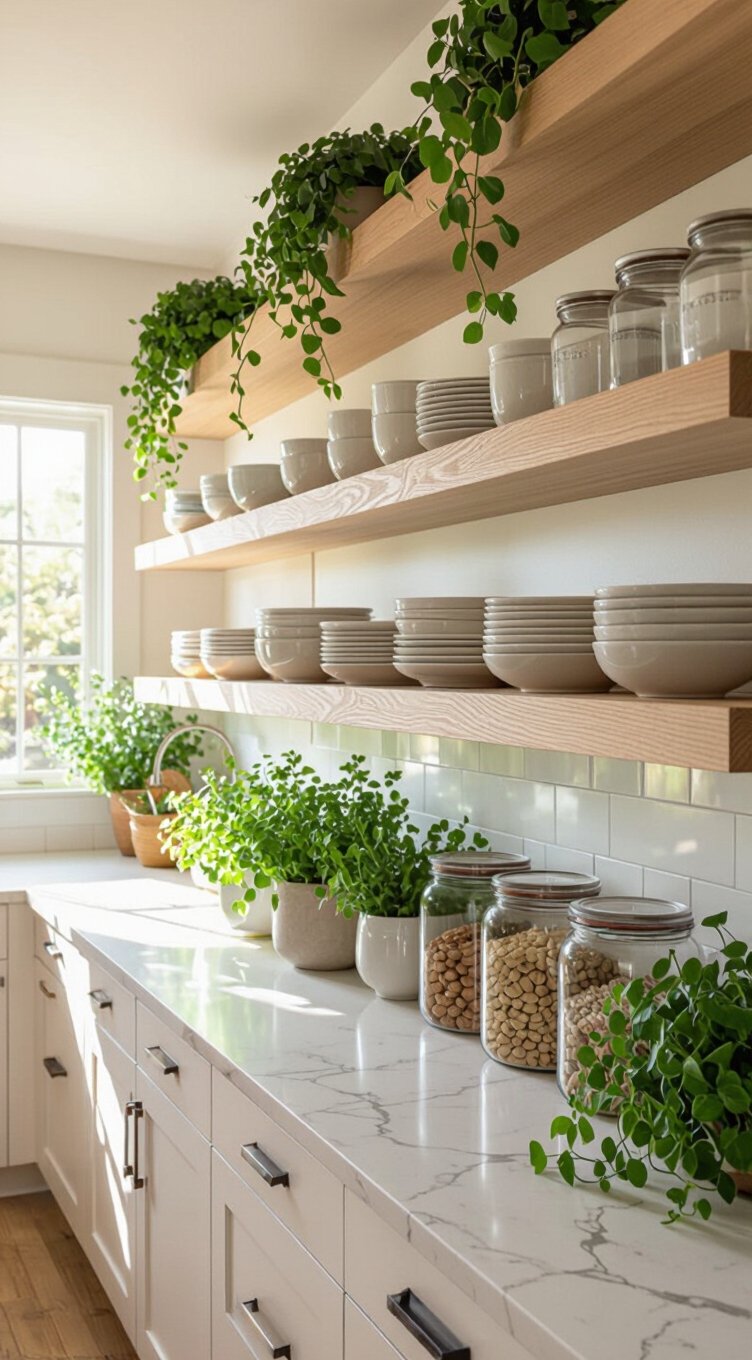
Floor-to-ceiling cabinets solve your storage problem, but they can make a small kitchen feel like a closed-off box. Open shelving gives you breathing room while keeping everything within reach. Replace a few upper cabinets with floating shelves to instantly open up your space. You’ll create visual depth without sacrificing storage.
Mount your shelves using sturdy wall brackets anchored directly into studs for maximum weight support. Space them 12-15 inches apart to accommodate dishes, glasses, and everyday essentials. Keep your shelves organized and intentional — clutter — cluttered open shelving defeats the purpose entirely.
Mix floating shelves with remaining closed cabinets to strike the right balance. You get the freedom of an open, airy kitchen without losing practical storage. This simple swap changes how your kitchen feels every single day.
Pick a Light Color Palette to Visually Widen Your Narrow Kitchen
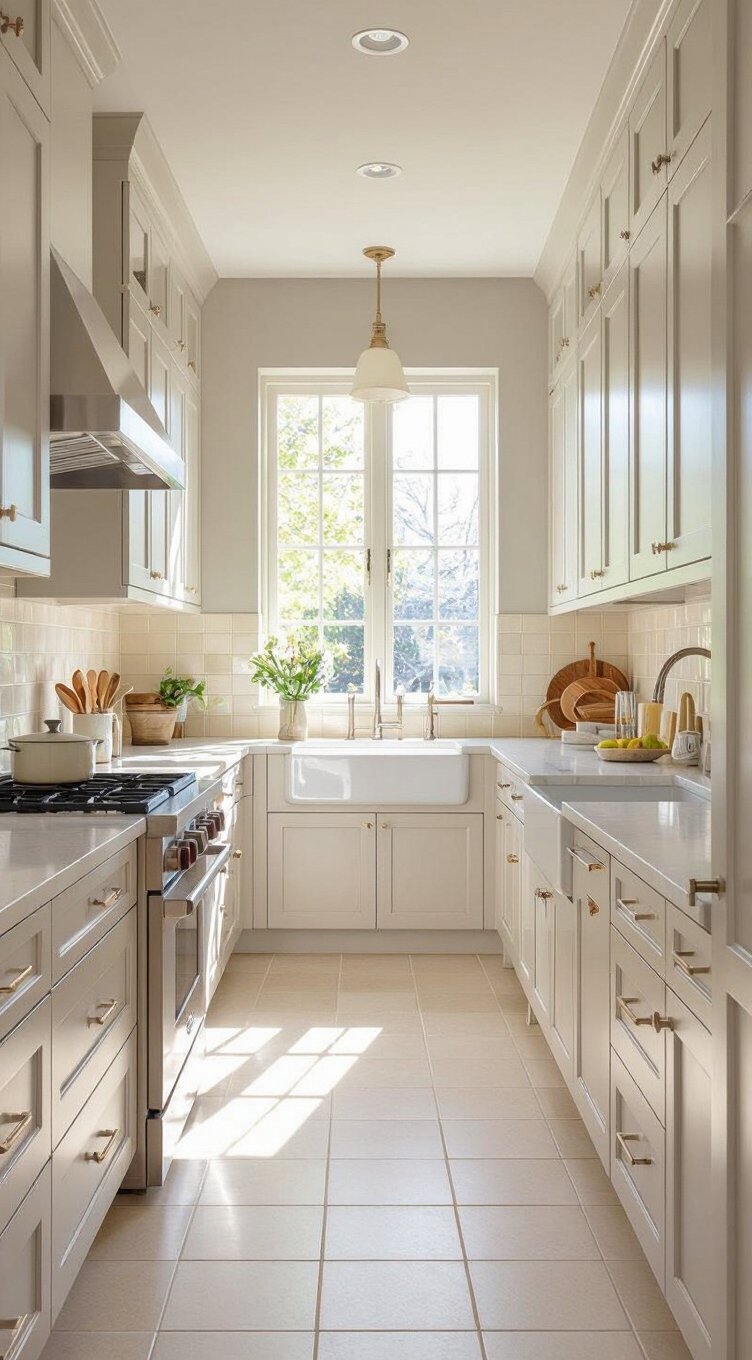
Color has a powerful effect on how large or small a space feels, and it’s one of the easiest things you can change. In a narrow kitchen, light colors like soft whites, pale grays, and warm creams reflect natural light and push the walls outward visually. You’re not locked into stark white either — bright hues like soft sage or pale blue add personality without closing the space in. Paint your cabinets, walls, and ceiling in similar light tones to create a seamless, airy flow. Glossy finishes on cabinet doors and backsplashes bounce light around the room, making every inch feel more open. This simple color strategy gives your kitchen a bigger, freer feel without requiring a single structural change.
Add Reflective Surfaces to Visually Widen the Space
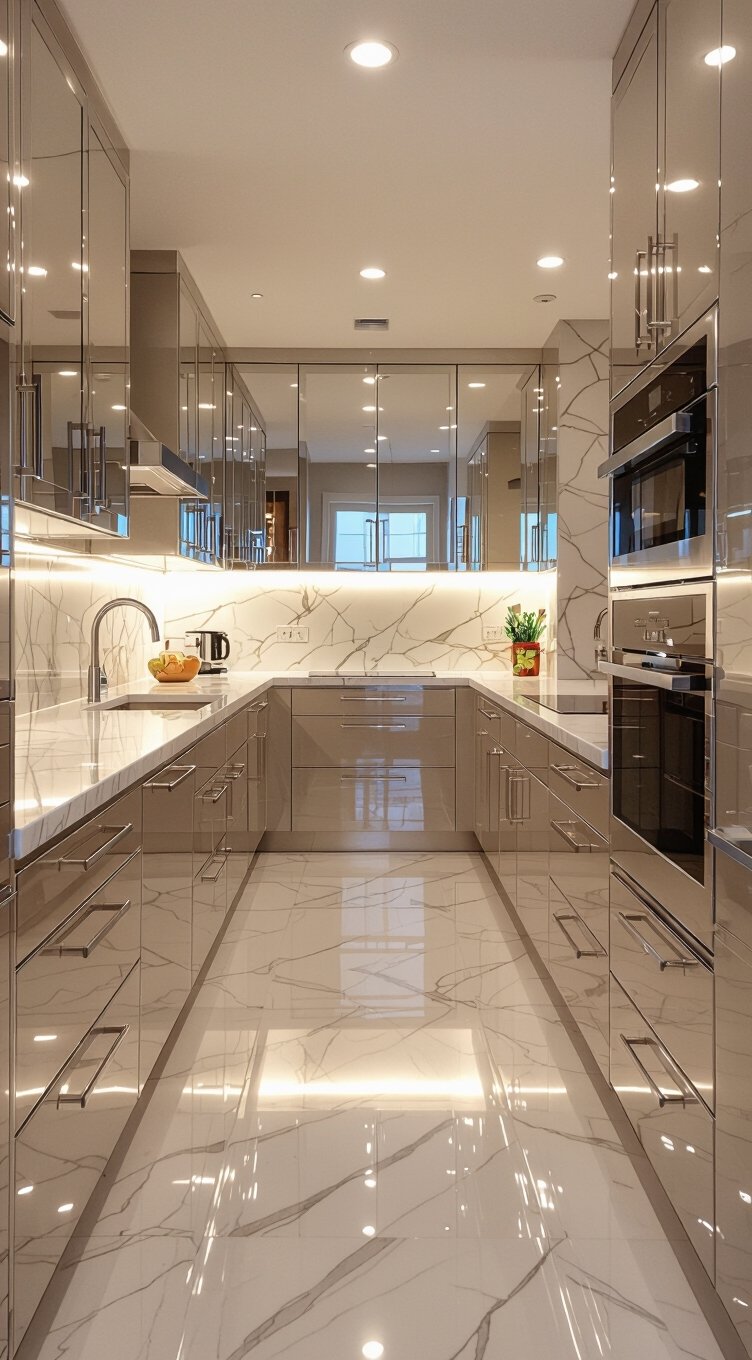
Light colors open up your kitchen visually, but reflective surfaces take that effect even further. They bounce natural and artificial light around your narrow space, making it feel larger and more open. You don’t need a full renovation to achieve this effect.
Consider these practical options:
- Install a mirrored backsplash behind your stove or sink. It doubles the visual depth of your kitchen instantly.
- Choose glossy countertops in light tones. Their reflective finish amplifies light and creates a seamless, expansive look.
- Add stainless steel appliances or metallic cabinet hardware for subtle reflectivity throughout the space.
These choices give your kitchen a polished, airy feel without sacrificing functionality. You’re creating the illusion of more space while keeping everything practical and stylish.
Lay Flooring Lengthwise to Make the Kitchen Feel Longer
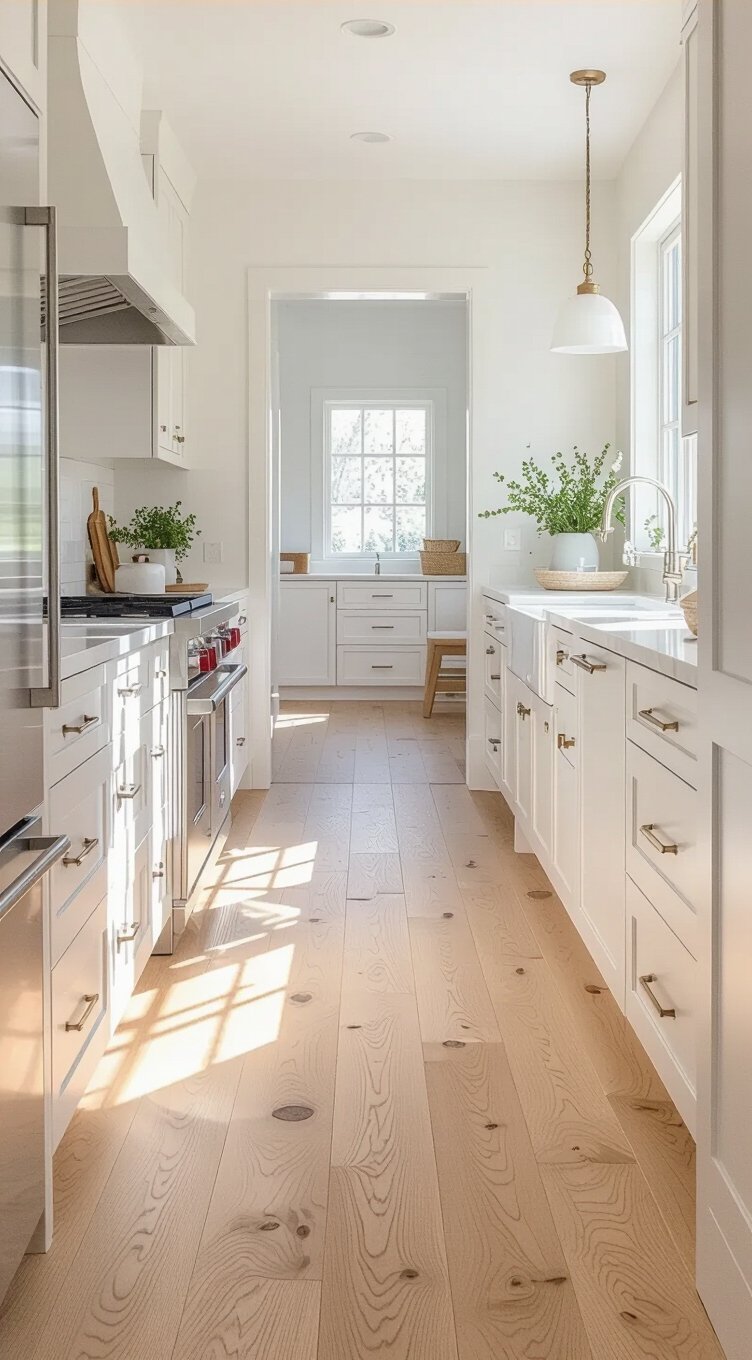
When you lay flooring lengthwise, you’re using a simple visual trick to make your kitchen feel longer than it actually is. The floor direction creates a natural visual flow that guides the eye from one end of the room to the other, opening up the space effortlessly.
Here’s how to make it work:
- Choose long planks or rectangular tiles to strengthen the lengthwise effect.
- Run the flooring parallel to the longest wall to maximize the visual stretch.
- Select lighter tones to bounce light and enhance the sense of depth.
This approach costs nothing extra but delivers a dramatic impact. You’re simply working with what you have, letting smart installation do the heavy lifting for you.
Add a Narrow Island or Rolling Cart for Extra Counter Space
Beyond the floor, you can also add functional square footage without touching your walls or cabinets. A narrow island benefits your workflow by creating dedicated prep space while keeping traffic lanes clear. Choose one that’s no wider than 18 to 24 inches so movement stays comfortable. Rolling cart storage gives you even more flexibility because you can reposition it whenever your needs change. Tuck it beside the stove during cooking, then roll it out of the way when you need open floor space. Look for carts with shelves, drawers, or hooks to maximize every inch. You’re not locked into a permanent layout, and that freedom matters in a small kitchen. These portable solutions let you work smarter without committing to costly renovations.
Run Cabinets Along One Wall Only to Free Up Movement
One smart layout move concentrates all your upper and lower cabinets along a single wall, freeing the rest of your kitchen for open movement. You’ll gain breathing room and effortless flow throughout your space.
This approach works especially well when you maximize corner placement with angled or pull-out cabinet solutions that capture every usable inch.
Here’s what a single wall layout gives you:
- Unobstructed floor space that lets you move freely without bumping into cabinetry
- Flexible dining or prep zones opposite the cabinet wall for multi-purpose functionality
- Smarter corner placement using lazy Susans or deep-drawer inserts to eliminate wasted space
You’re fundamentally trading cabinet quantity for spatial freedom, and that trade-off delivers a kitchen that feels markedly larger and more functional.
Choose Slim, Built-In Appliances That Hug the Walls
Slim, built-in appliances convert a tight kitchen by keeping your footprint compact without sacrificing function. Their slim design hugs the walls, freeing up essential floor space so you can move without constantly bumping into things. You’ll find that wall integration reshapes bulky appliances into seamless parts of your kitchen layout.
Consider these smart options:
- Column refrigerators fit flush against walls and stand narrower than standard models.
- Built-in microwaves mount directly into cabinetry, eliminating counter clutter entirely.
- Slim dishwashers run about 18 inches wide instead of the typical 24 inches.
Each choice returns precious inches to your daily movement zone. You’re not settling for less — you’re choosing smarter. These appliances let your kitchen work harder while demanding less space from you.
Use Under-Cabinet Lighting to Make the Space Feel Larger
After you’ve tightened your appliance footprint, lighting becomes your next powerful tool for reshaping how your kitchen feels. Smart lighting design eliminates dark corners that make small spaces feel even more cramped and closed off. Under-cabinet lighting delivers focused shadow reduction directly onto your countertops, giving you both function and visual freedom.
Here’s how to maximize this strategy:
- Mount LED strip lights flush against the cabinet’s front edge to push light forward across the full counter surface.
- Choose warm-white bulbs (2700K–3000K) to create an inviting, open atmosphere without harsh glare.
- Install dimmer switches so you control intensity based on time of day or task.
This simple upgrade redefines your long kitchen from a tunnel into a bright, breathable workspace.
Go Handleless for a Sleeker, Less Cluttered Look
When cabinet handles clutter your sightlines, they break up the visual flow that makes a small kitchen feel cohesive and open. Switching to handleless cabinets instantly creates clean aesthetics that free up your space visually and physically.
Here’s why handleless designs work so well:
- They support minimalist design by eliminating unnecessary hardware that draws the eye to individual units rather than the whole kitchen.
- They create seamless lines that make walls appear longer, which benefits narrow kitchen layouts markedly.
- They’re easier to clean since there are no grooves or hardware collecting grease and grime.
Consider push-to-open mechanisms or integrated finger-pull channels as practical alternatives. Both options maintain that streamlined look while keeping your kitchen feeling effortlessly uncluttered and completely yours.
Pull-Out Shelves and Drawer Dividers That Recover Dead Cabinet Space
Dead cabinet space is one of the biggest culprits behind a disorganized small kitchen, but pull-out shelves and drawer dividers can completely revolutionize how you use every inch. You’ll finally access everything without digging through cluttered, forgotten corners.
Here are three upgrades worth making:
- Install corner lazy susans to spin items into reach instead of losing them in awkward cabinet angles.
- Add sliding trash bins inside lower cabinets, freeing up precious floor space while keeping waste hidden.
- Use drawer dividers to separate utensils, tools, and small gadgets so everything has a designated spot.
These solutions hand control back to you. You’re no longer fighting your kitchen’s layout — you’re working with it efficiently and confidently every single day.
Frequently Asked Questions
What Is the Minimum Width Required for a Functional Long Kitchen?
You’ll need at least 4 feet of width for a functional long kitchen. Expert kitchen zoning and strategic appliance placement, and you’re free to design a space that truly works for your lifestyle.
How Much Does a Small Long Kitchen Renovation Typically Cost?
You’ll typically spend $5,000–$30,000 on your renovation, depending on key cost factors like materials, labor, and layout changes. For accurate budget estimation, you’re free to prioritize upgrades that matter most to your lifestyle and needs.
Can a Long Narrow Kitchen Layout Work for Multiple Cooks Simultaneously?
Yes, a long narrow kitchen can work for multiple cooks! You’ll need to optimize your traffic flow and adapt the work triangle by assigning separate zones, giving everyone freedom to move and cook without colliding.
What Permits Are Needed Before Remodeling a Small Long Kitchen?
Before remodeling, you’ll need building permits that align with local building codes and zoning laws. Check with your municipality to confirm electrical, plumbing, and structural permits so you’re free to convert your kitchen confidently and legally.
How Do I Maximize Natural Light in a Windowless Long Kitchen?
You can mimic natural light by installing layered artificial lighting throughout your kitchen. Use reflective surfaces like glossy tiles and mirrored backsplashes to bounce light around, making your space feel open, bright, and completely yours.
Conclusion
Your long, narrow kitchen doesn’t have to feel cramped or limiting. By combining smart storage solutions, reflective surfaces, and strategic lighting, you can convert even the tightest layout into a functional, stylish space. Start with one or two changes, like handleless cabinets or lengthwise flooring, then build from there. Small upgrades add up quickly, and you’ll notice a real difference in both how your kitchen looks and how efficiently it works.