

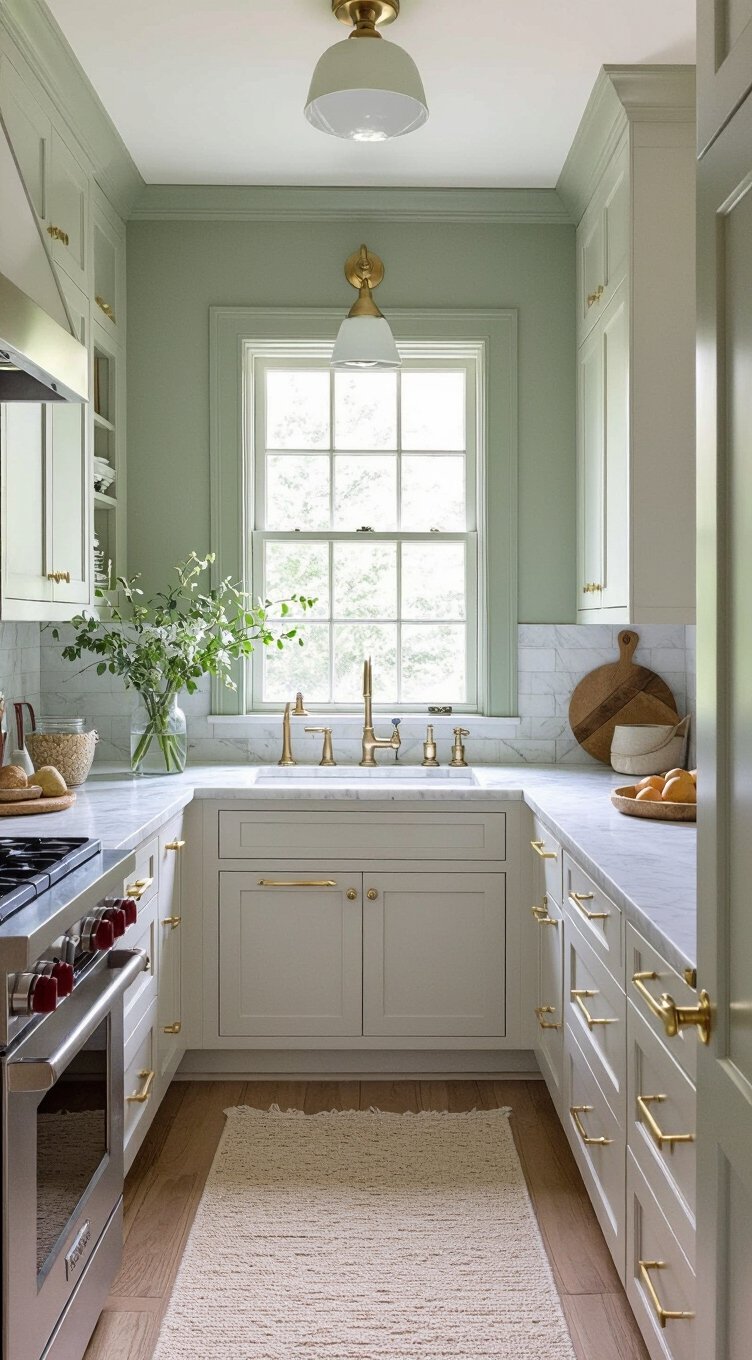
Your small kitchen’s color scheme does more than you might think. The right paint can make walls appear to recede, ceilings feel taller, and natural light bounce further into tight spaces. Whether you’re drawn to clean neutrals, earthy tones, or something unexpectedly bold, each choice carries real design consequences. These 12 paint ideas cover every style direction, with practical guidance on finishes, combinations, and cabinet colors to help you decide what works best.
Crisp White That Reflects Light and Opens Up the Room
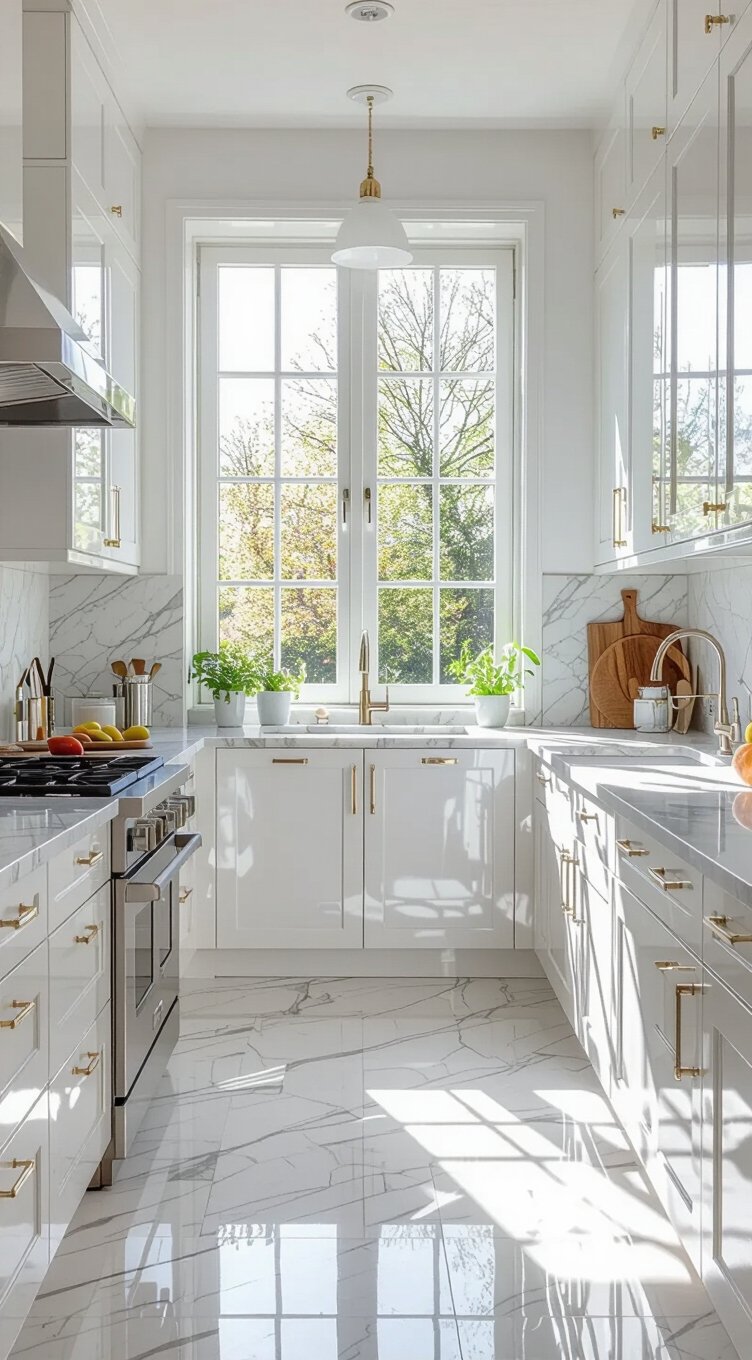
Crisp white paint is one of the smartest choices you can make for a small kitchen. It maximizes light reflection, bouncing natural and artificial light throughout every corner of your space. You’ll immediately notice how the room feels more open and breathable. White creates the illusion of expanded boundaries, making walls appear to recede and ceilings feel taller. This space enhancement effect works because your eyes perceive fewer visual interruptions. Choose bright whites with cool undertones like Benjamin Moore’s Chantilly Lace for a clean, polished result. You’re not locked into a sterile look either. Add wooden accents, open shelving, or colorful accessories to personalize the space freely. White gives you the ultimate flexible foundation that supports any style you choose.
Pale Blue That Makes Small Kitchens Feel Twice as Big
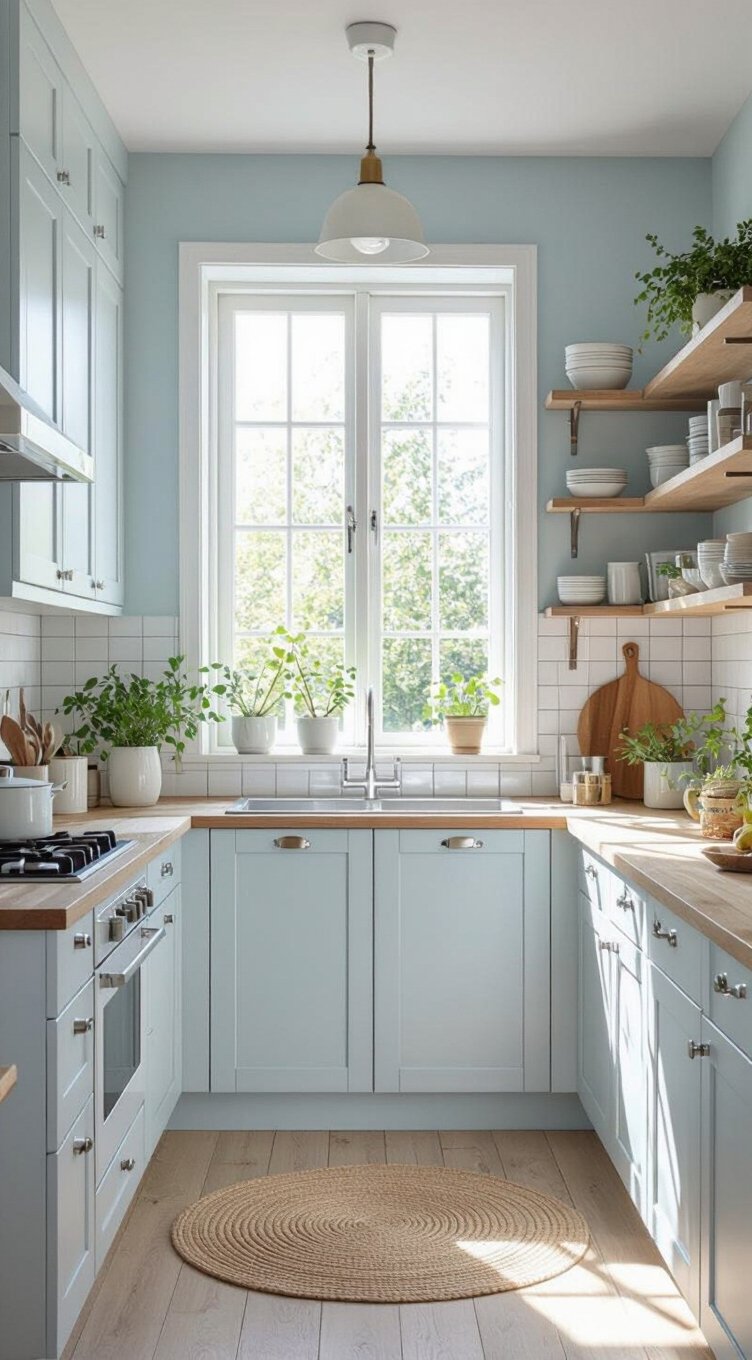
Pale blue is a surprisingly powerful color choice that can make your small kitchen feel considerably more spacious. Its serene hues work by visually pushing walls outward, giving you that breathable, open feeling you’re craving. Think of shades like powder blue, sky blue, or soft aqua to introduce coastal vibes without overwhelming the space. Here’s how to maximize this color’s impact:
- Pair pale blue walls with white trim to sharpen contrast and amplify brightness.
- Choose matte or eggshell finishes to soften reflections and maintain a calm atmosphere.
- Add natural wood accents to ground the space and prevent it from feeling too cold.
You’ll be amazed how this single color choice changes your kitchen into an airy, liberating retreat.
Soft Sage Green for a Fresh, Earthy Kitchen Feel
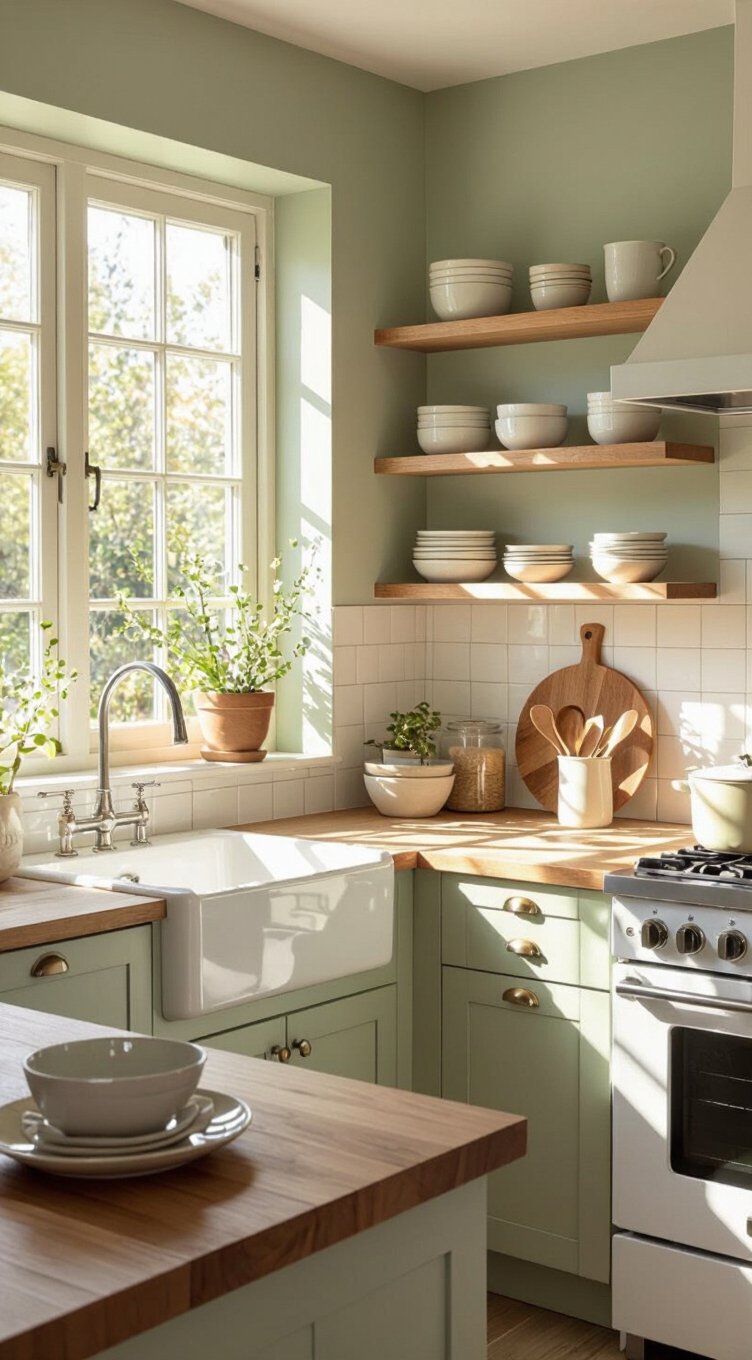
While pale blue channels a cool, airy vibe, soft sage green brings something equally invigorating but with a warmer, more grounded energy. It’s a color that lets your small kitchen breathe while staying rooted in earthy elegance. You’re fundamentally inviting nature indoors without sacrificing style or practicality.
Sage green pairs beautifully with natural wood cabinets, stone countertops, and brass hardware, creating natural harmony throughout your space. Try shades like Sherwin-Williams’ “Privilege Green” or Benjamin Moore’s “Saybrook Sage” for best results. These tones work especially well on lower cabinets while keeping upper cabinets white, visually lifting your ceiling. You don’t need to repaint everything — even one sage green accent wall changes your kitchen’s entire personality without overwhelming the space.
Butter Yellow for a Bright, Cheerful Kitchen Space
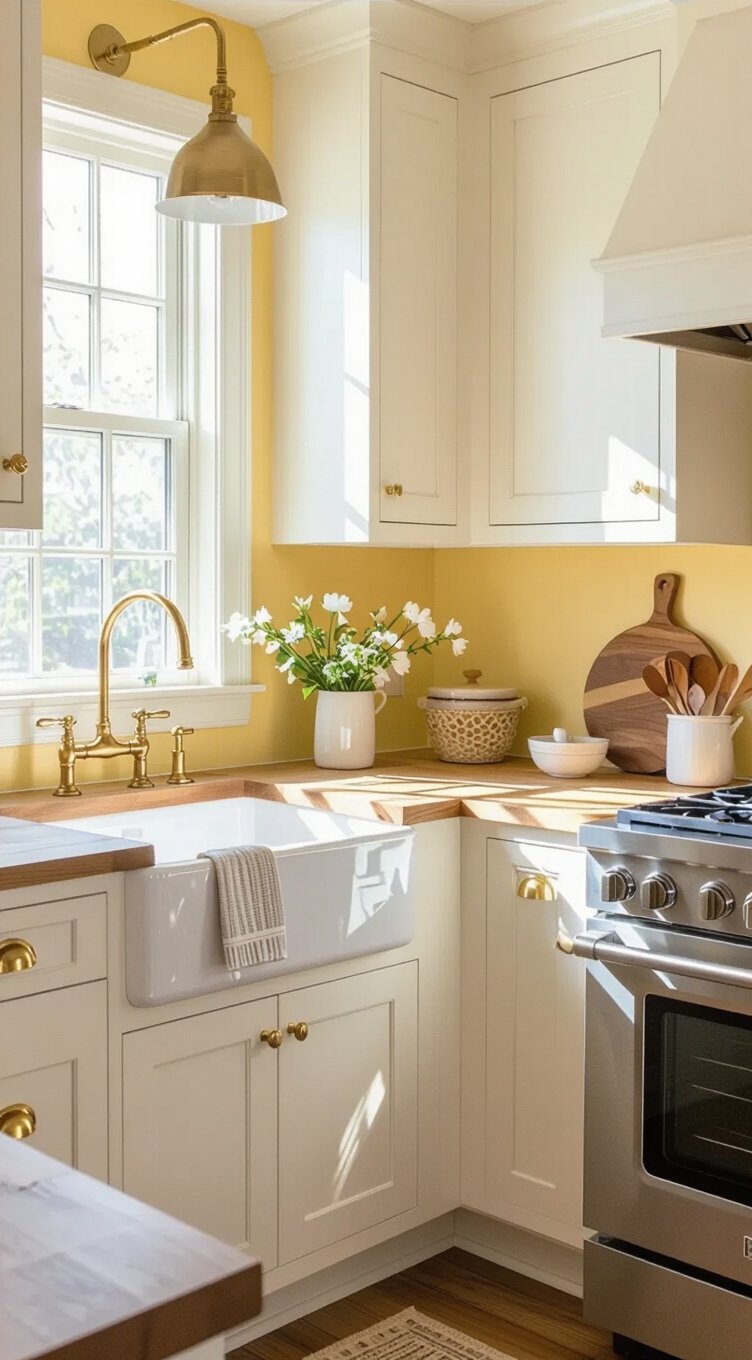
Butter yellow radiates warmth and cheerfulness, making it one of the smartest color choices you can make for a small kitchen. Its buttery glow bounces light around the room, creating an open, airy feeling that works beautifully in tight spaces. You’ll love how this shade brings sunny charm without overwhelming the room’s natural proportions.
To maximize butter yellow’s impact, follow these practical tips:
- Pair it with white trim to keep boundaries crisp and clean.
- Choose matte or eggshell finishes to soften any harsh light reflections.
- Add natural wood accents to ground the warmth and create visual balance.
This color gives your kitchen a lively, welcoming energy while keeping the space feeling completely your own.
Lavender and Soft Lilac for a Light, Airy Kitchen Feel
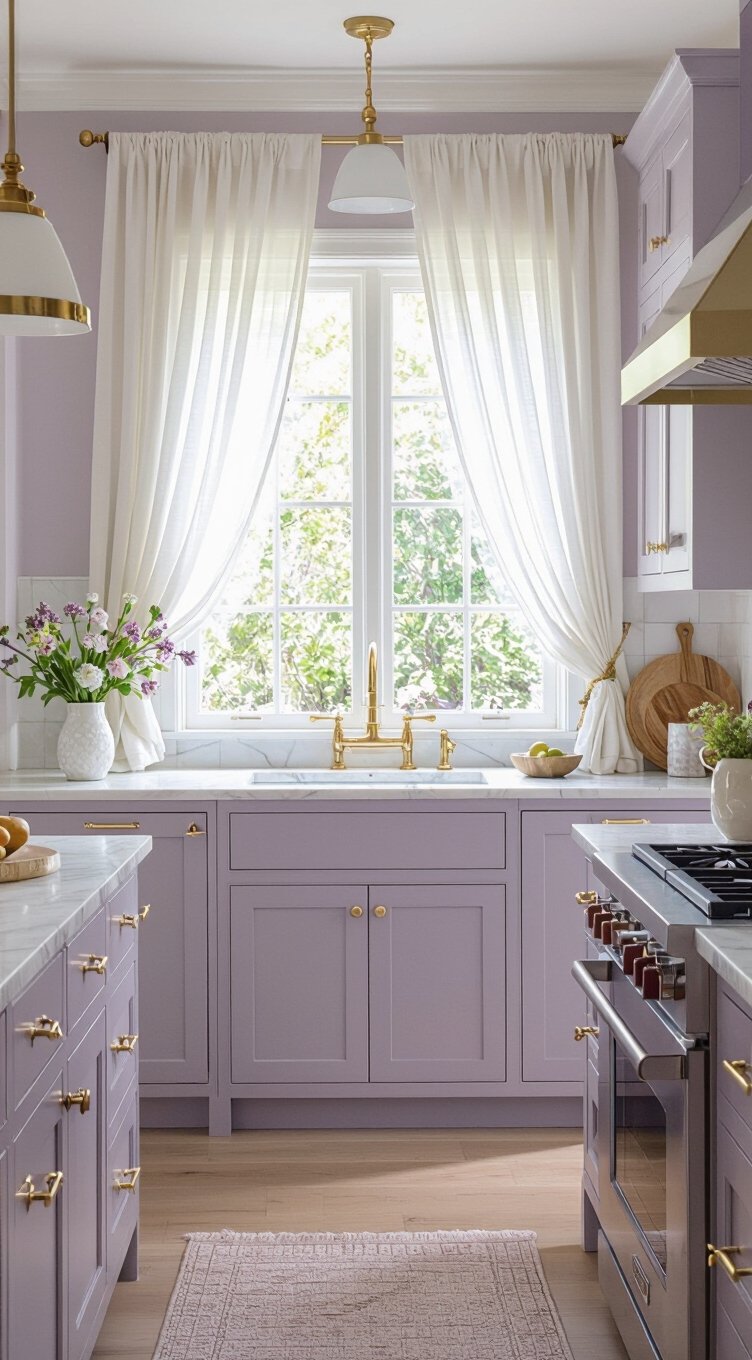
Lavender and soft lilac bring a surprisingly fresh, airy quality to small kitchens, making them feel more spacious and serene. These shades give you the freedom to experiment with color without overwhelming your space. Pair lavender accents on cabinets with white countertops to create a clean, open contrast that brightens the room naturally. Lilac undertones work beautifully on walls, reflecting light softly and adding subtle warmth without feeling heavy. You can also try:
- Lilac walls with crisp white trim for a polished, balanced look
- Lavender accents on open shelving to add dimension
- Soft lilac backsplash tiles paired with neutral cabinetry
These combinations let your small kitchen breathe while expressing a uniquely calm, inviting personality that feels entirely your own.
Warm Greige: The Perfect Neutral for Tiny Kitchens
If soft purples feel a bit too bold for your taste, warm greige might be exactly what your small kitchen needs. This blend of gray and beige creates cozy elegance without overwhelming limited square footage. It lets your space breathe while adding subtle warmth that feels inviting and timeless.
Here’s how greige works beautifully in small kitchens:
- Reflects natural light — its neutral undertones bounce brightness around the room effortlessly.
- Pairs with everything — wood accents, stainless steel, and white cabinetry all complement greige seamlessly.
- Hides imperfections — its mid-tone depth disguises everyday scuffs and smudges easily.
You’re free to choose lighter shades like “Accessible Beige” or deeper tones like “Agreeable Gray” for more dimension.
Warm Terracotta for a Cozy, Intimate Kitchen Vibe
When you’re craving warmth and personality in your small kitchen, terracotta delivers both with effortless charm. This earth undermined, rust-inspired hue creates cozy charm without making your space feel heavy or closed in. You can adopt this bold color freely and confidently.
Terracotta works beautifully when paired with white trim, natural wood accents, or cream-colored cabinets. These combinations let earthy warmth shine while keeping your kitchen visually balanced. Try Benjamin Moore’s “Pueblo Orange” or Sherwin-Williams’ “Fired Brick” for authentic, rich results.
Consider applying terracotta to a single accent wall rather than all four walls. This approach gives your kitchen personality without overwhelming the space. Finish with matte or eggshell sheen to enhance the color’s natural, grounded character beautifully.
Classic Navy Blue for a Bold, Dramatic Statement
Though it may seem counterintuitive, navy blue can actually make your small kitchen feel more defined and intentional rather than cramped. You’ll create a rich, bold atmosphere that feels deliberately designed when you welcome this classic color confidently.
Here’s how to make navy work beautifully for you:
- Choose a navy sheen finish like satin or semi-gloss to reflect light and prevent the space from feeling too heavy.
- Add dramatic trim in crisp white or warm cream to create sharp contrast and visual depth.
- Pair navy walls with brass or gold hardware to instantly enhance the overall aesthetic.
Navy blue gives you a kitchen that feels curated, sophisticated, and uniquely yours—proving that bold choices truly reshape small spaces.
Dark Paint Colors That Actually Work in Small Kitchens
Navy blue is just one of many dark shades that can completely change your small kitchen’s personality. Deep forest green, charcoal gray, and burgundy also create a stunning moody ambiance that feels intentional and bold. You don’t need a massive space to pull off these daring colors successfully.
Dark shades work best when you pair them with these strategic elements:
- Reflective surfaces – Glossy cabinets and metallic hardware create rich contrast against deep walls.
- Layered lighting – Under-cabinet and pendant lights prevent the space from feeling cave-like.
- Light countertops – White marble or pale quartz balances darker tones beautifully.
You’re free to break the “light colors only” rule. Dark kitchens feel sophisticated, cozy, and surprisingly spacious when executed thoughtfully.
Should You Paint Small Kitchen Cabinets and Walls the Same Color?
Painting your kitchen cabinets and walls the same color is a bold design choice that can actually make your small kitchen feel larger. This monochromatic approach creates visual continuity, drawing the eye seamlessly across the space.
Here’s how to make it work beautifully:
- Embrace cabinet texture — Let natural wood grain or raised panel details create subtle visual interest without disrupting your unified color scheme.
- Add wall contrast strategically — Introduce depth through matte walls paired with semi-gloss cabinets, creating dimension within the same color family.
- Choose wisely — Soft neutrals like warm whites or greiges work exceptionally well, giving you flexibility to update accessories freely.
You’ll realize that this approach liberates your design decisions, converting limitations into intentional, sophisticated style choices.
Two-Tone Paint Combinations That Add Depth Without Crowding
While a monochromatic look works beautifully, two-tone paint combinations give your small kitchen a lively, layered feel that’s surprisingly easy to achieve. You’re not locked into one shade when you can mix and match strategically.
Try these proven combinations:
- Soft upper walls, bold lower cabinets — Light sage on walls with deep navy cabinets creates visual balance without feeling heavy.
- Accent walls behind open shelving — A warm terracotta or dusty rose accent wall draws the eye and adds personality.
- Contrasting trims for definition — White or charcoal contrasting trims sharpen edges and make your space feel intentional and polished.
You’ll find that two thoughtful colors work harder than one, giving your kitchen genuine character and breathing room simultaneously.
Choosing the Right Paint Finish for Your Small Kitchen
The finish you choose matters just as much as the color when it comes to painting your small kitchen. Paint durability and moisture resistance are essential factors you can’t ignore in this hardworking space.
Here are the three best finishes for small kitchens:
- Satin – Offers a soft sheen, excellent moisture resistance, and easy cleaning without feeling clinical.
- Semi-gloss – Reflects light beautifully, maximizes paint durability, and handles grease and steam like a champion.
- Eggshell – Provides a subtle, forgiving finish that hides minor wall imperfections while still resisting moisture effectively.
Skip flat finishes entirely — they absorb stains and trap moisture. Choosing the right finish gives your small kitchen both lasting protection and the freedom to express your personal style confidently.
Frequently Asked Questions
How Much Paint Do I Typically Need for a Small Kitchen?
For a small kitchen, you’ll typically need one to two gallons. Consider your paint coverage needs and let your color selection reflect your personal freedom—don’t be afraid to experiment with bold, expressive hues that truly inspire you!
Can I Paint Over Existing Kitchen Tiles Instead of Replacing Them?
Yes, you can paint over existing kitchen tiles! Skip tile removal challenges by using a bonding primer to combat surface adhesion issues. You’ll save money and change your space freely without the hassle of full replacement.
How Long Should I Wait Before Using My Kitchen After Painting?
You should wait at least 24-48 hours before using your kitchen. Guarantee you’re meeting proper ventilation needs during this time. Remember, curing time can extend up to 30 days for paint to fully harden, so take it easy!
What Primer Works Best Before Applying Paint in a Kitchen?
For kitchens, you’ll want an oil-based or shellac primer — they offer superior moisture resistance and adhesion strength. These options let you confidently tackle any surface, ensuring your paint bonds perfectly and you’re free to enjoy lasting, beautiful results.
How Do I Properly Prepare Kitchen Walls Before Starting to Paint?
Start by tackling wall cleaning thoroughly — scrub away grease and grime with a degreaser. Then handle surface repair by filling cracks and holes with spackle. You’re now free to prime and paint your kitchen confidently!
Conclusion
Changing your small kitchen doesn’t require a major renovation — just the right paint color. Whether you choose crisp white for brightness, sage green for calm, or a bold dark hue for drama, each option can completely change how your space feels. Pick a finish that’s durable and moisture-resistant, then commit to your vision. Your small kitchen has real potential, and a fresh coat of paint is the simplest way to reveal it.