

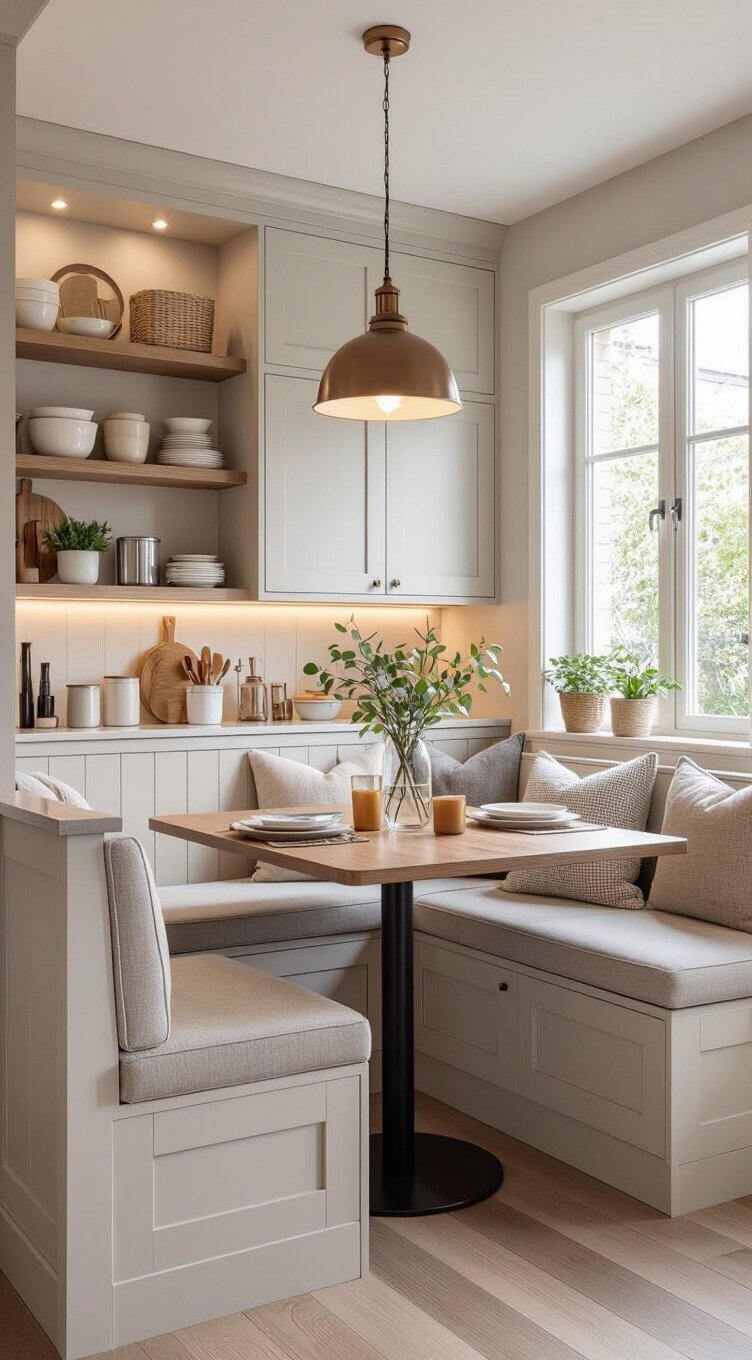
You don’t need a large kitchen to enjoy a proper dining space. With the right furniture choices and layout strategies, even the tightest corners can become functional, inviting spots to eat. Fold-down tables, slim pedestals, and built-in banquettes are just a few solutions that can convert wasted square footage into something genuinely useful. The difference between a cramped kitchen and a smart one often comes down to a handful of specific decisions worth exploring.
Fold-Down Tables That Disappear When You’re Done
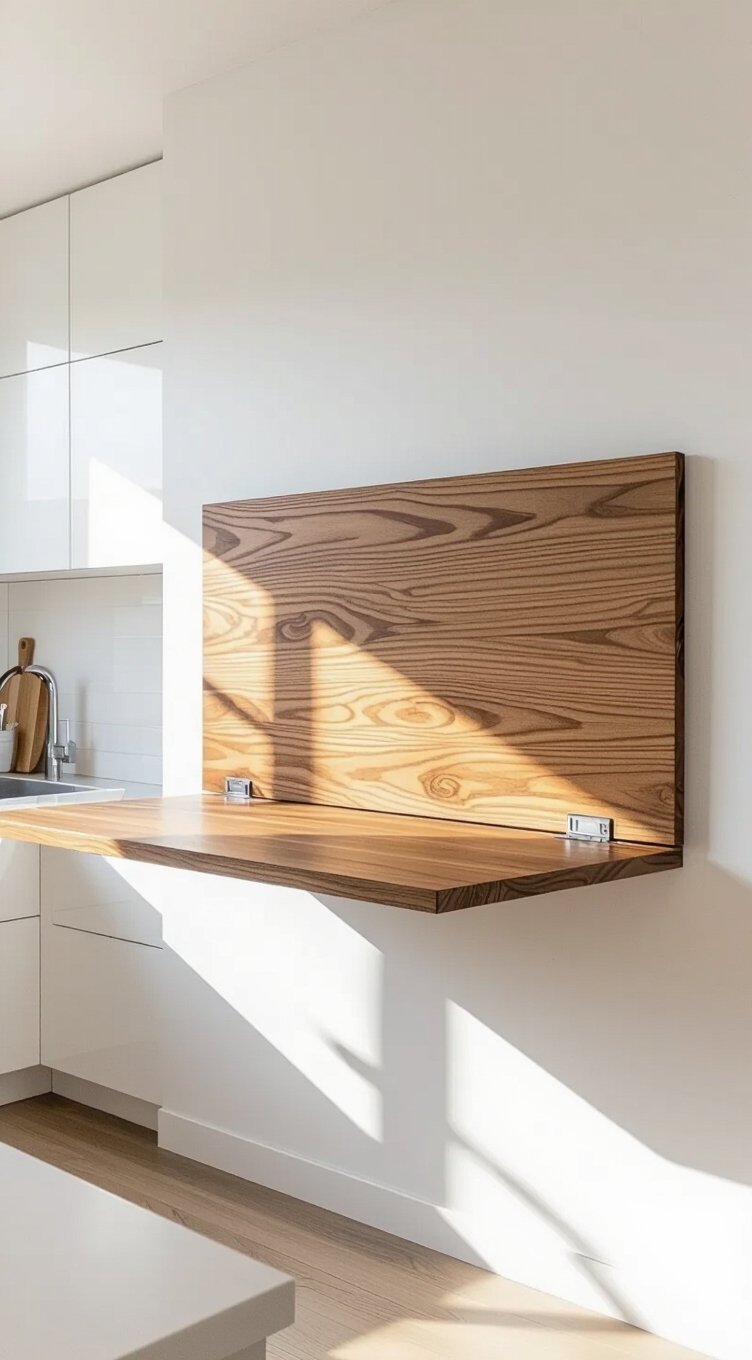
When space is tight, a fold-down table can completely change how you use your kitchen. This space saving design gives you a full dining surface exactly when you need it, then tucks away cleanly afterward. You’re not sacrificing precious floor space for a permanent fixture.
The wall hung mechanism is the key to making this work effectively. You simply mount the table bracket securely into wall studs, and the surface swings up or down with minimal effort. When you’re done eating, fold it flat and reclaim your kitchen instantly.
Consider these practical options:
- Murphy-style tables fold completely flush with the wall.
- Bracket-supported drop-leaf tables offer sturdy, adjustable dining surfaces.
- Built-in shelf tables double as storage when folded down.
You’ll love the freedom this creates.
Wall-Mounted Seating That Frees Up Floor Space
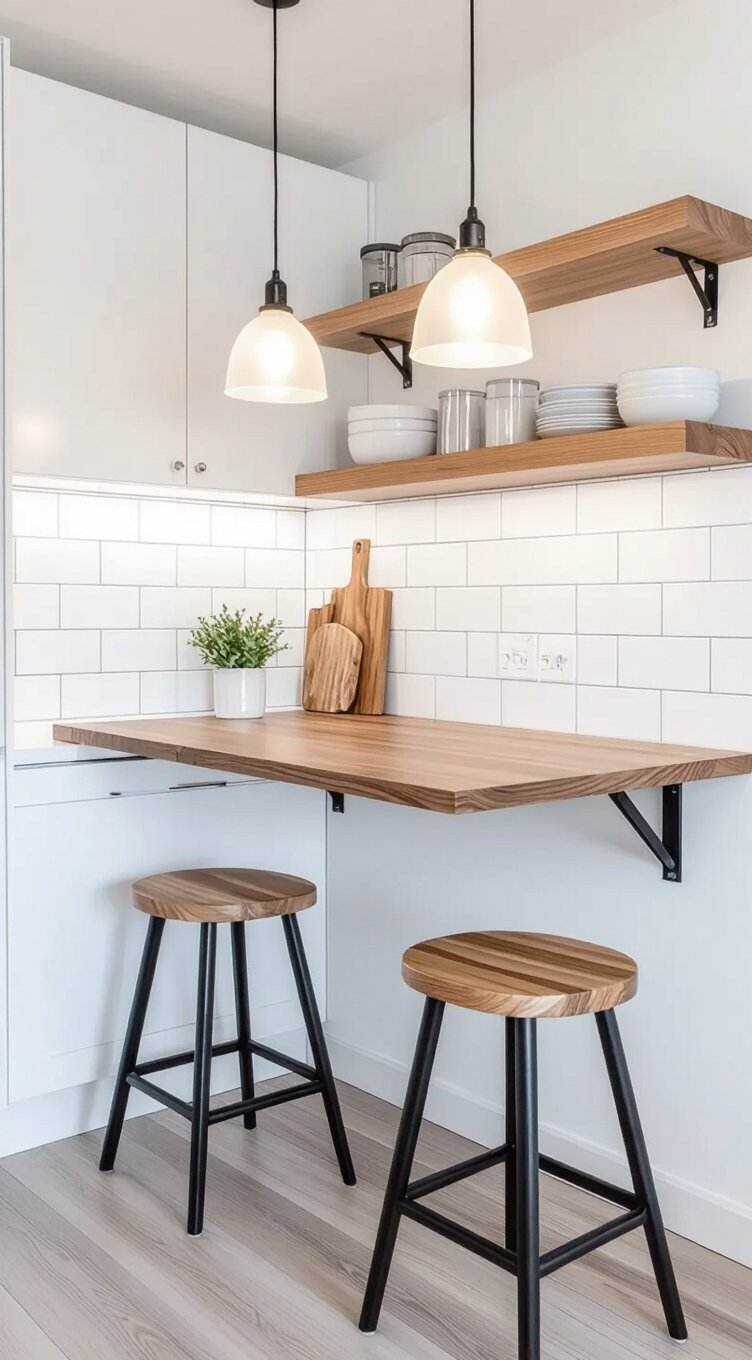
The right wall-mounted seating changes your small kitchen by eliminating bulky chair legs that constantly compete for floor space. When you mount floating benches directly onto your walls, you instantly reclaim essential square footage that traditional furniture constantly steals from you.
Fixed seating solutions work especially well along a single wall, creating a streamlined dining nook without cluttering your walkways. You can install floating benches at standard counter height, pairing them with a wall-mounted table from the previous section for a completely space-efficient setup.
Consider these practical installation tips:
- Anchor benches into wall studs for maximum safety and durability.
- Choose benches with hidden storage compartments underneath.
- Select fold-flat designs that press flush against the wall when unused.
Your kitchen floor stays clear, giving you genuine freedom to move.
Corner Banquettes That Make Dead Space Work
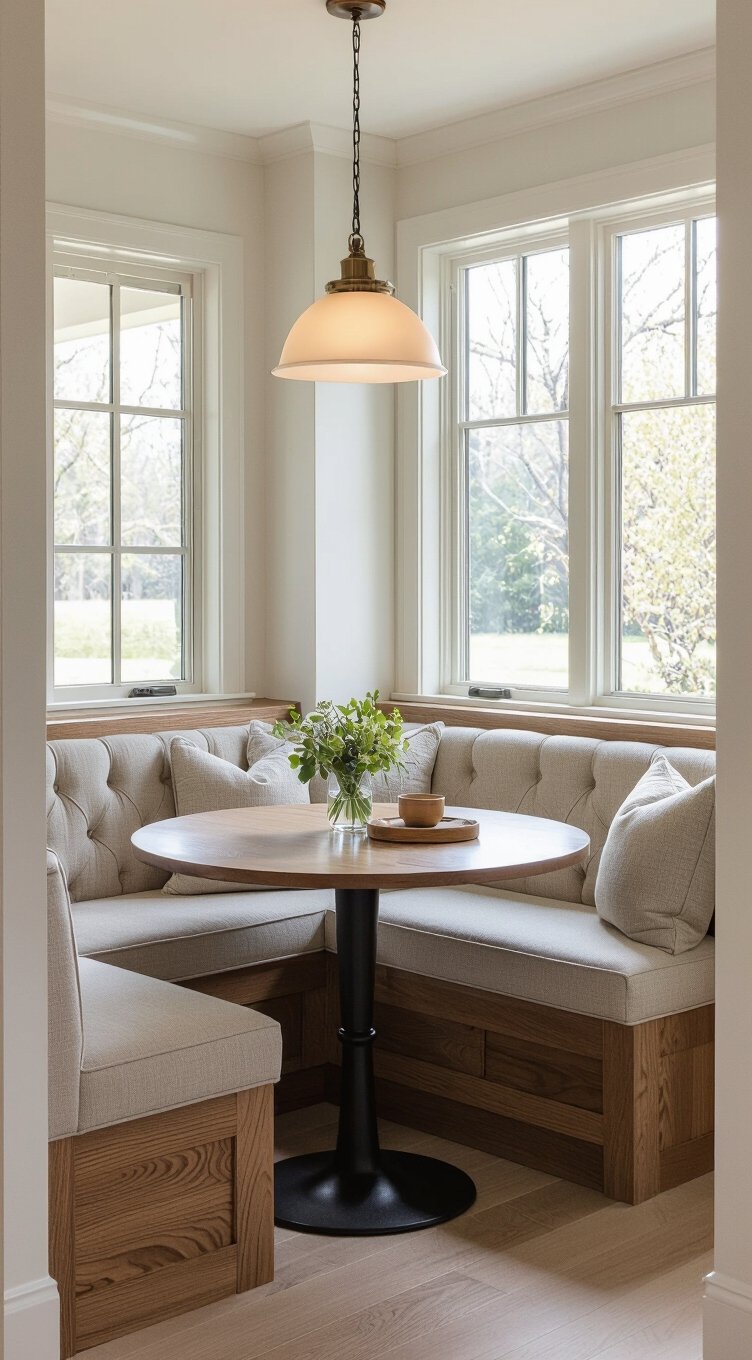
Moving beyond single-wall solutions, corner banquettes tackle one of the most overlooked problem areas in small kitchens. You can convert those awkward cozy corners into functional dining zones that maximize every square inch. Space optimization becomes effortless when you tuck built-in bench seating into unused angles.
Here’s what makes corner banquettes work so effectively:
- Built-in storage: Lift-top bench seats hide away linens, rarely used cookware, and seasonal items
- L-shaped configurations: These layouts comfortably seat four to six people without crowding your walkways
- Custom cushions: Customized padding lets you personalize comfort while defining the space visually
You’re fundamentally reclaiming territory your kitchen previously wasted. Add a compact pedestal table, and you’ve created a dining nook that feels intentional, inviting, and completely yours.
Stools and Benches Over Chairs in Small Kitchen Dining Spaces
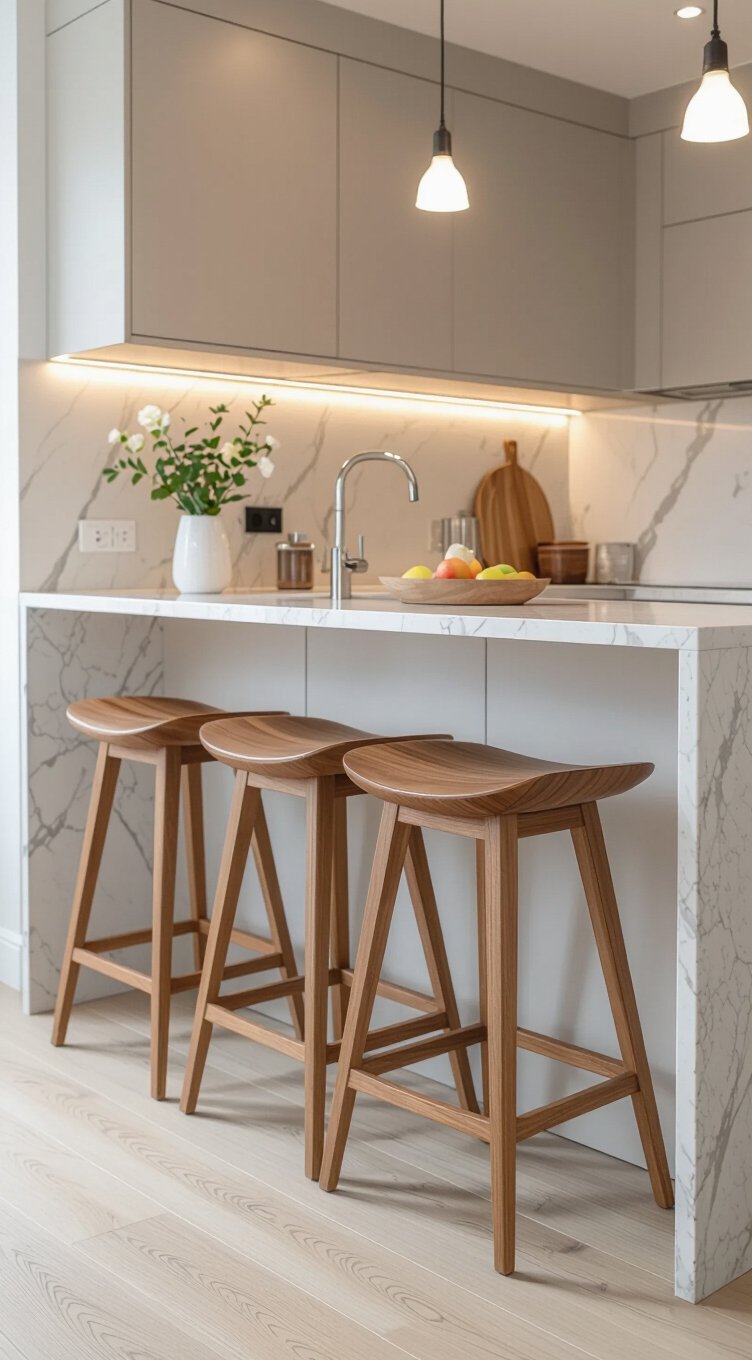
Swapping out chairs for stools or benches can instantly free up useful floor space in your small kitchen dining area. Space saving stools tuck neatly under counters and islands, keeping pathways clear when you’re not eating. Unlike bulky chairs, they don’t jut out awkwardly into your limited square footage. Compact benches offer even more flexibility, seating two or three people along a wall without consuming extra width. You can also store items underneath open benches for bonus organization. Consider backless stools for the slimmest profile possible, or choose folding versions you can hang on a wall. These smart swaps let you reclaim your floor plan without sacrificing comfortable seating, giving you the freedom to move through your kitchen with genuine ease.
The Right Table Shape for a Small Kitchen Dining Area
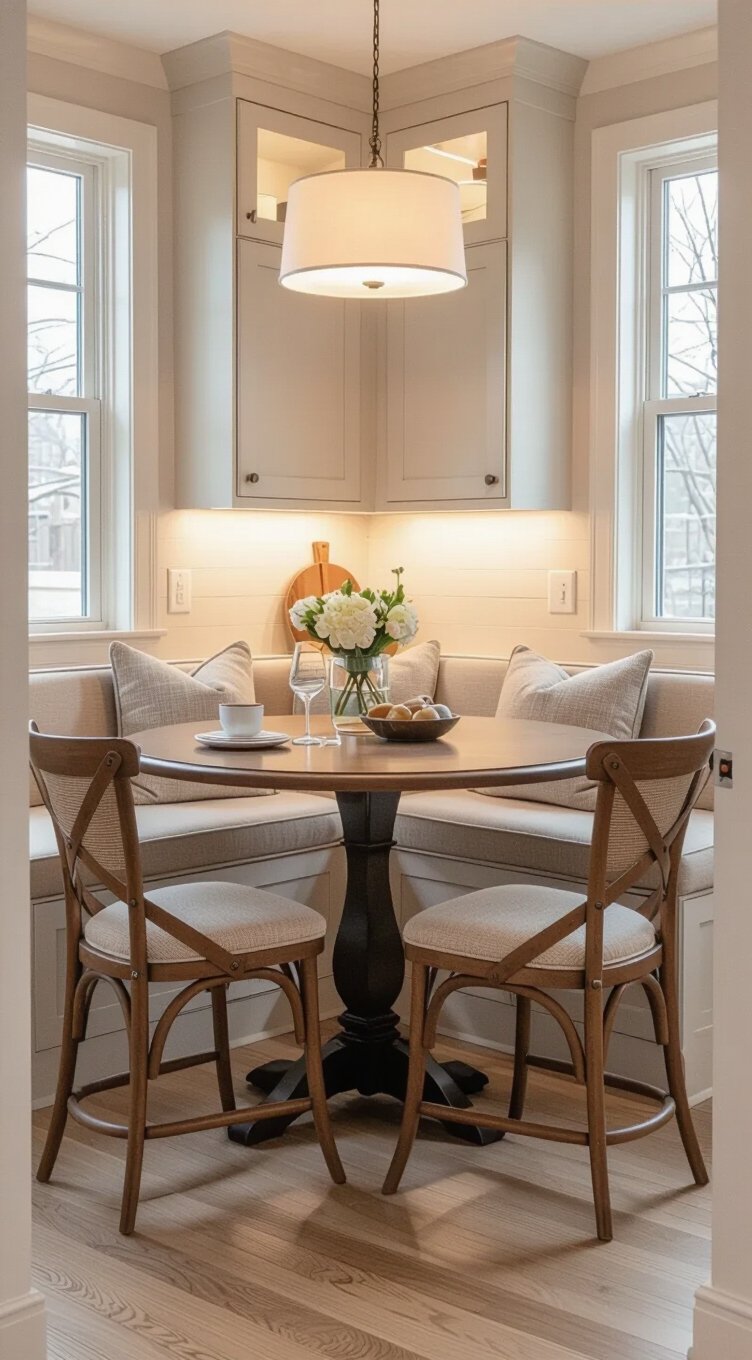
Choosing the right table shape can make a surprising difference in how spacious your small kitchen dining area feels. Round tables are ideal for tight corners since they eliminate sharp edges and allow easier movement. Rectangular tables work better along walls, maximizing your available floor space efficiently.
Consider these smart shape strategies:
- Round tables encourage natural conversation and fit beautifully in square-shaped kitchen dining nooks
- Rectangular tables push against walls to free up traffic flow and expand your usable space
- Oval tables blend both worlds, offering rounded edges with rectangular capacity
You’re free to experiment with placement before committing to a purchase. Sketching a simple floor plan helps you visualize each option clearly. The right shape genuinely alters how you experience your kitchen dining area daily.
Slim Pedestal Tables for Narrow Kitchen Layouts
When your kitchen layout feels impossibly narrow, a slim pedestal table can completely change how you use the space. Its slender design eliminates bulky table legs that typically crowd walkways and restrict movement. You’ll gain unobstructed floor space that makes your kitchen feel genuinely open and functional.
A pedestal table’s compact footprint works especially well in galley-style or corridor kitchens. You can pull chairs in completely, keeping traffic lanes clear throughout the day. Choose a table width between 24 and 30 inches to maximize comfort without overwhelming the space.
Consider a rectangular pedestal table with a single centered base for maximum flexibility. You can easily add a leaf when hosting guests, then return it to its streamlined form afterward, giving you complete control over your dining area.
Using a Kitchen Island as Your Dining Table
Why settle for a separate dining table when your kitchen island can handle both jobs beautifully? A well-designed island gives you the freedom to cook, eat, and socialize without cramming two separate pieces of furniture into a tight space.
Maximize your setup with these smart approaches:
- Add island seating with counter-height stools that tuck completely underneath, keeping your floor clear
- Use dining storage by building cabinets or open shelves directly into the island’s base
- Choose a waterfall-edge design that creates a natural overhang, giving guests comfortable legroom
You’ll instantly reclaim essential square footage while creating a vibrant, multi-use hub. Your kitchen becomes more efficient, more social, and more livable. One smart piece replaces two, and that’s a trade worth making.
Why a Bar Cart Is a Small Kitchen’s Best Dining Hack
A bar cart does more than hold drinks — it’s a flexible, mobile dining solution that punches well above its weight in a small kitchen. You can roll it anywhere, set it up in minutes, and tuck it away just as fast. That kind of freedom is exactly what tight spaces demand.
Smart bar cart styling changes a simple cart into a functional dining spot. Try these portable bar setups that actually work:
- Breakfast station — Add two stools, your coffee setup, and a small tray for condiments.
- Dinner-for-two spot — Roll it beside a window for an instant intimate dining area.
- Snack hub — Stack plates, napkins, and grab-and-go foods for effortless daily meals.
You control the layout. Rearrange whenever life changes.
Multipurpose Furniture That Stores, Seats, and Serves
Versatility is the secret weapon of multipurpose furniture in a small kitchen dining setup. You don’t have to sacrifice comfort or function when space is limited. Smart furniture choices let you eat, store, and entertain without feeling boxed in.
Consider these powerful options that give you maximum freedom:
- Sliding benches with built-in storage underneath keep clutter hidden while seating multiple guests
- Hidden cabinets inside dining tables or banquettes store dishes, linens, and supplies within arm’s reach
- Fold-down wall tables collapse flat when unused, instantly reclaim Bi your floor space
Each piece works double duty so your kitchen stays open and functional. You’re fundamentally getting two solutions in one investment. Choose furniture that adapts to your lifestyle rather than limiting it.
Built-In Shelving That Doubles as a Dining Display
Built-in shelving converts empty wall space into a functional dining display that’s both practical and visually striking. You can design shelves with hidden compartments behind decorative panels, keeping clutter tucked away while maintaining a clean, open look. Install decorative brackets beneath each shelf to add designer character that feels intentional rather than improvised.
Consider these practical approaches:
- Display cookbooks and plants at eye level to create warmth without sacrificing floor space.
- Use hidden compartments for storing napkins, placemats, and small appliances you don’t want visible.
- Choose adjustable shelving so you can reconfigure your setup as your needs change.
Your dining area becomes uniquely yours when shelving reflects your personality. Built-in solutions give you freedom to organize life exactly how you want it.
Lighting Tricks That Make Small Dining Nooks Feel Larger
Lighting alters how spacious your small dining nook actually feels, even when square footage stays the same. Strategic ambient lighting creates a soft, even glow that eliminates harsh shadows making walls feel closer. You can layer light sources to give your space visual depth and freedom to breathe.
- Install a dimmer switch to control mood and perceived room size effortlessly
- Position mirrors and other reflective surfaces opposite light sources to double brightness naturally
- Use upward-facing sconces to draw the eye toward the ceiling, expanding vertical space
You don’t need expensive renovations to revolutionize your nook. Choosing warm-toned bulbs softens boundaries between walls and open areas. Smart lighting placement genuinely activates a more open, comfortable dining experience within your existing footprint.
How Mirrors and Glass Make a Cramped Kitchen Feel Twice as Big
Once you’ve tackled your nook’s lighting, mirrors and glass become your next powerful tools for expanding visual space. Strategically placed reflective surfaces can instantly double your kitchen’s perceived depth. Try these approaches:
- Mount a large mirror on the wall opposite your dining area to bounce light and create an illusion of extended space.
- Choose glass-top tables since transparent materials visually reduce bulk, keeping your floor visible and the room feeling open.
- Choose glass cabinet doors to add depth while showcasing your dishes attractively.
- Use mirrored backsplash tiles to amplify both light and space simultaneously.
You’re not trapped by your kitchen’s actual dimensions. These simple additions give you the freedom to convert tight quarters into a dining space that genuinely breathes.
Paint and Color Choices That Make the Space Feel Bigger
Beyond reflective surfaces, your color choices carry tremendous power to transform how your kitchen dining nook feels. Light tones and cool hues visually push walls outward, giving you breathing room without demolishing a single wall.
Here’s how to use color strategically:
- Go light on walls: Soft whites, pale grays, and creamy off-whites reflect natural light beautifully, making your space feel open and free.
- Use cool hues deliberately: Soft blues and sage greens create visual depth, tricking your eye into perceiving more distance between surfaces.
- Keep your palette consistent: Matching your cabinets and walls in similar tones eliminates visual breaks, allowing the space to flow seamlessly.
You’ll immediately notice how intentional color transforms your cramped dining area into something genuinely expansive.
The Styling Rules That Keep a Small Dining Area Looking Clean
Even the most beautifully designed small dining area can look chaotic without a few key styling rules keeping everything in check. Start by committing to minimal decor—limit your table to one or two purposeful items, like a small plant or a single candle. Too many objects create visual clutter that shrinks your space instantly. Next, build a cohesive palette by choosing two or three complementary colors for your textiles, dishware, and accessories. Consistency ties everything together effortlessly. Keep surfaces clear after every meal, making tidiness a daily habit rather than a weekend chore. Store seldom-used items out of sight using closed cabinets or baskets. These simple rules give you a dining area that feels open, intentional, and completely yours.
Frequently Asked Questions
How Many People Can Realistically Sit in a Small Kitchen Dining Area?
You can realistically seat 2–4 people in a small kitchen dining area. Maximize your seating capacity by embracing space efficiency with foldable tables and wall-mounted options, giving you the freedom to dine comfortably without feeling cramped.
What Is the Minimum Square Footage Needed for a Kitchen Dining Space?
You’ll need at least 100 square feet to achieve space optimization and layout efficiency. This gives you the freedom to comfortably fit a small table and chairs without feeling cramped or restricted in your dining area.
Can Renters Install Wall-Mounted Dining Furniture Without Damaging Walls?
You can install wall-mounted dining furniture, but first check your lease agreements carefully. Know your renter rights — some landlords permit it if you restore walls upon move-out, giving you the freedom to maximize your space.
How Do I Childproof a Small Kitchen Dining Area Safely?
Install corner guards on sharp table edges and add outlet covers to exposed sockets. You’ll want to secure furniture to walls, choose rounded designs, and keep hazardous items out of children’s reach, giving your family safe, unrestricted movement.
Are Small Kitchen Dining Setups Suitable for People With Mobility Issues?
Yes, you can make small kitchen dining setups work with mobility issues! Choose accessible seating with armrests and design a clear mobility layout, ensuring wide pathways so you move freely and comfortably without feeling restricted.
Conclusion
You don’t need a large kitchen to create a functional, stylish dining space. With the right furniture, colors, lighting, and layout strategies, even the tightest areas can feel open and inviting. Start small by swapping bulky chairs for stools or adding a fold-down table. Each smart choice builds toward a dining nook that genuinely works for your lifestyle. Your small kitchen dining space has more potential than you think.