

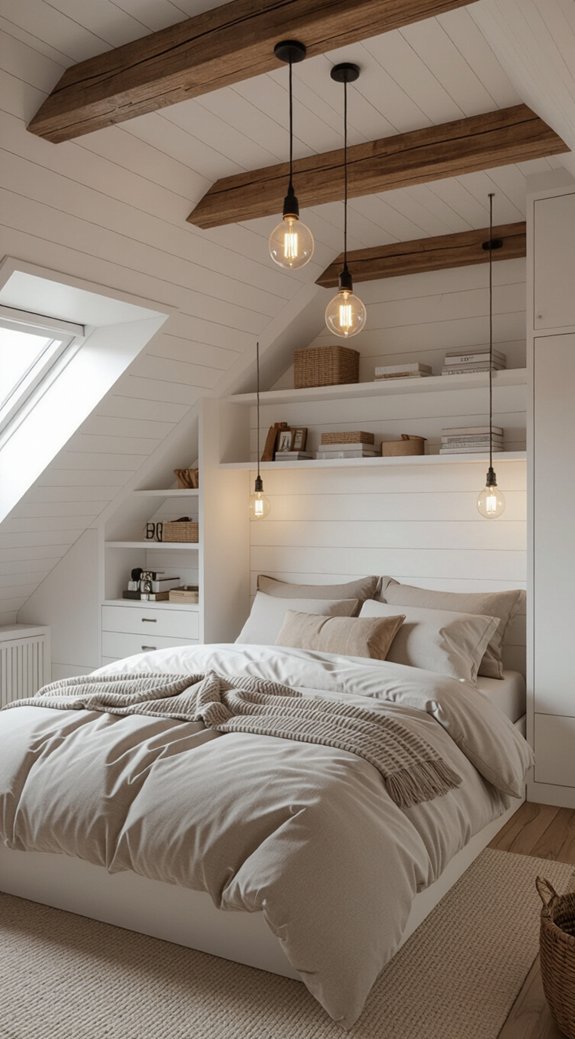
Attic bedrooms with slanted walls present unique design challenges, but they also offer serious creative potential. You can convert awkward angles into intentional, stylish features with the right approach. From built-in storage tucked under eaves to low-profile beds that maximize headroom, every decision matters in these compact spaces. The strategies ahead will show you exactly how to make slanted ceilings work for you, not against you.
Built-In Storage That Works With Slanted Walls
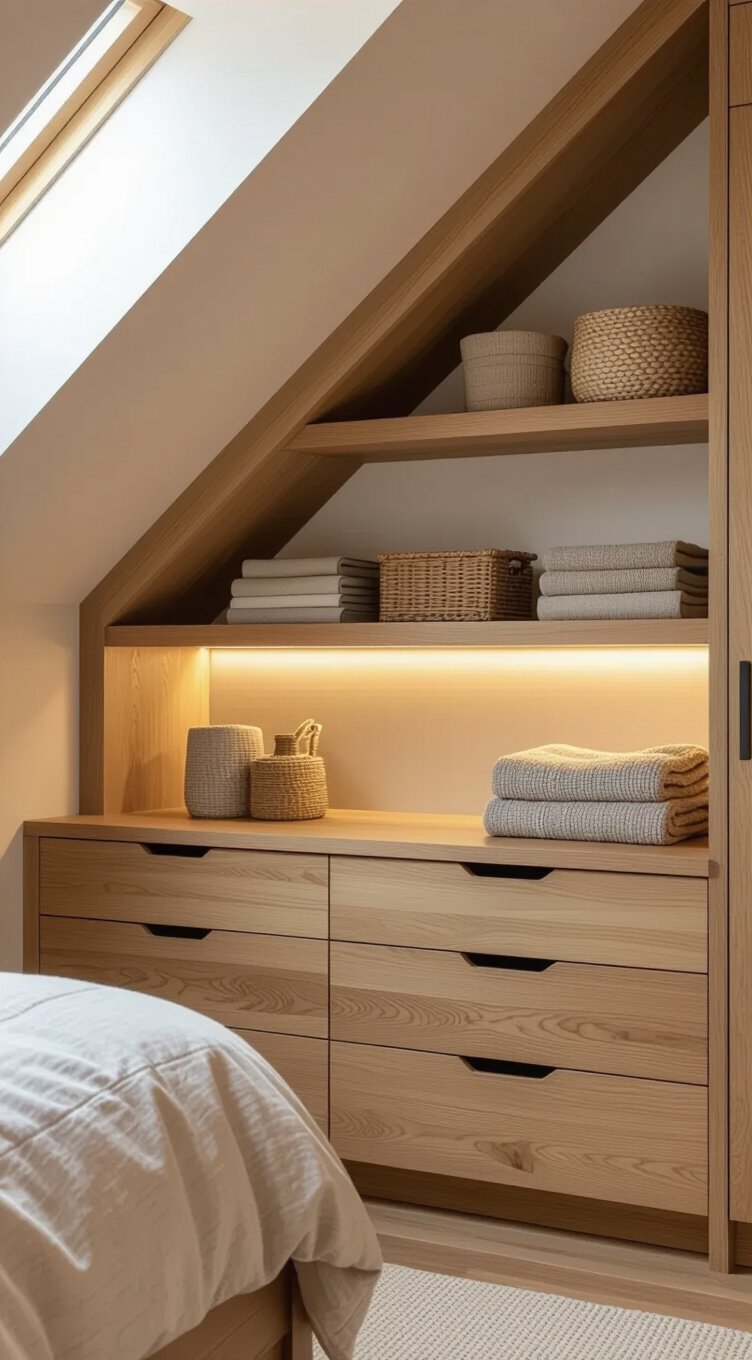
Slanted walls are one of the biggest challenges in attic rooms, but built-in storage converts them into a practical advantage. You can install under eave shelving along the lowest wall sections, creating accessible display or storage space you’d otherwise lose. Angled cabinets designed specifically for sloped ceilings maximize every inch without wasting headroom. Custom-built drawers tucked beneath the slope keep your belongings organized while maintaining an open, uncluttered feel. You’re fundamentally reclaiming square footage that standard furniture can’t touch. These solutions give your attic room a polished, intentional look while freeing up important floor space for living.
Low-Profile Beds That Fit Under a Sloped Ceiling
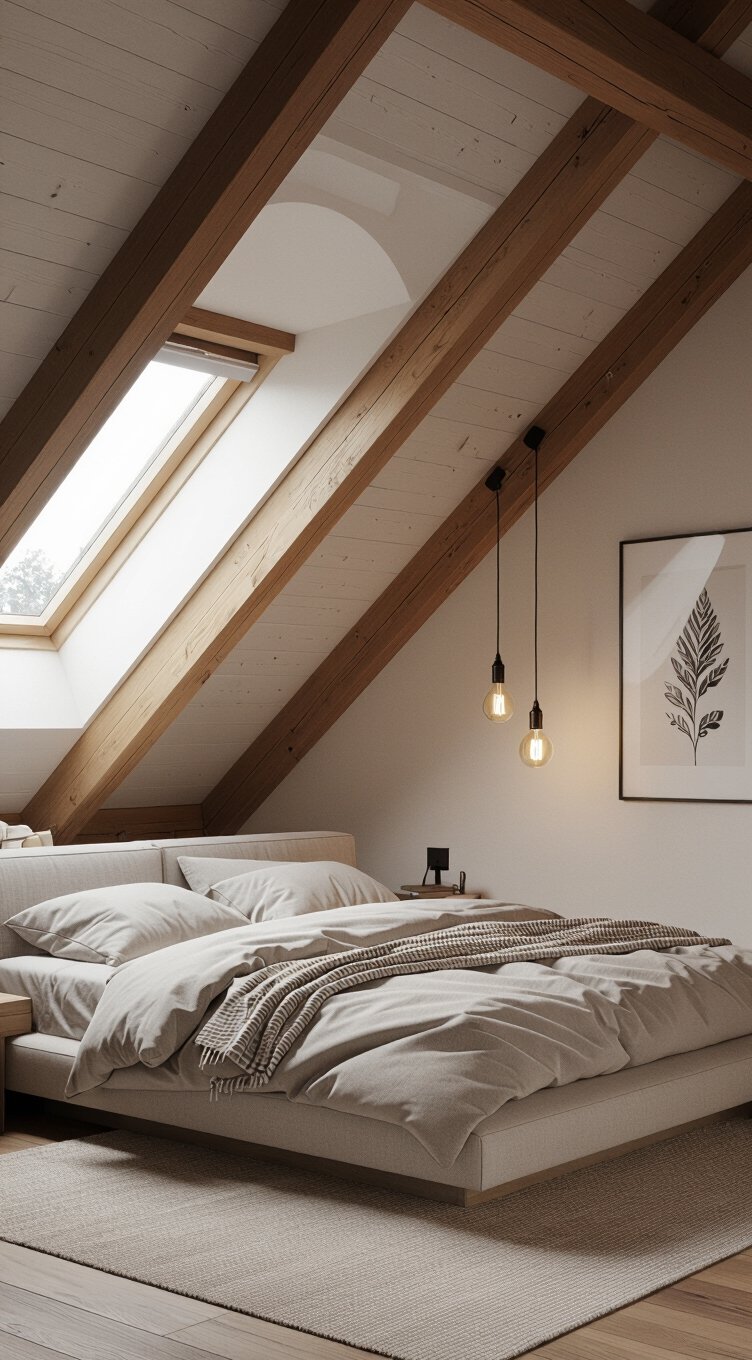
When sleeping under a slo desper roof, your bed choice makes all the difference in comfort and functionality. Platform beds and Japanese-style floor beds sit low enough to give you breathing room beneath the slope. You’ll also gain serious flexibility by choosing a bed frame with built-in under bed storage, keeping your space organized without sacrificing style. Position your bed along the lowest wall section to maximize open floor space. Pair it with wall mounted desks nearby to create a fully functional room layout. Low-profile beds let you live freely without fighting your room’s natural design.
How to Use Lighting to Open Up an Attic Bedroom
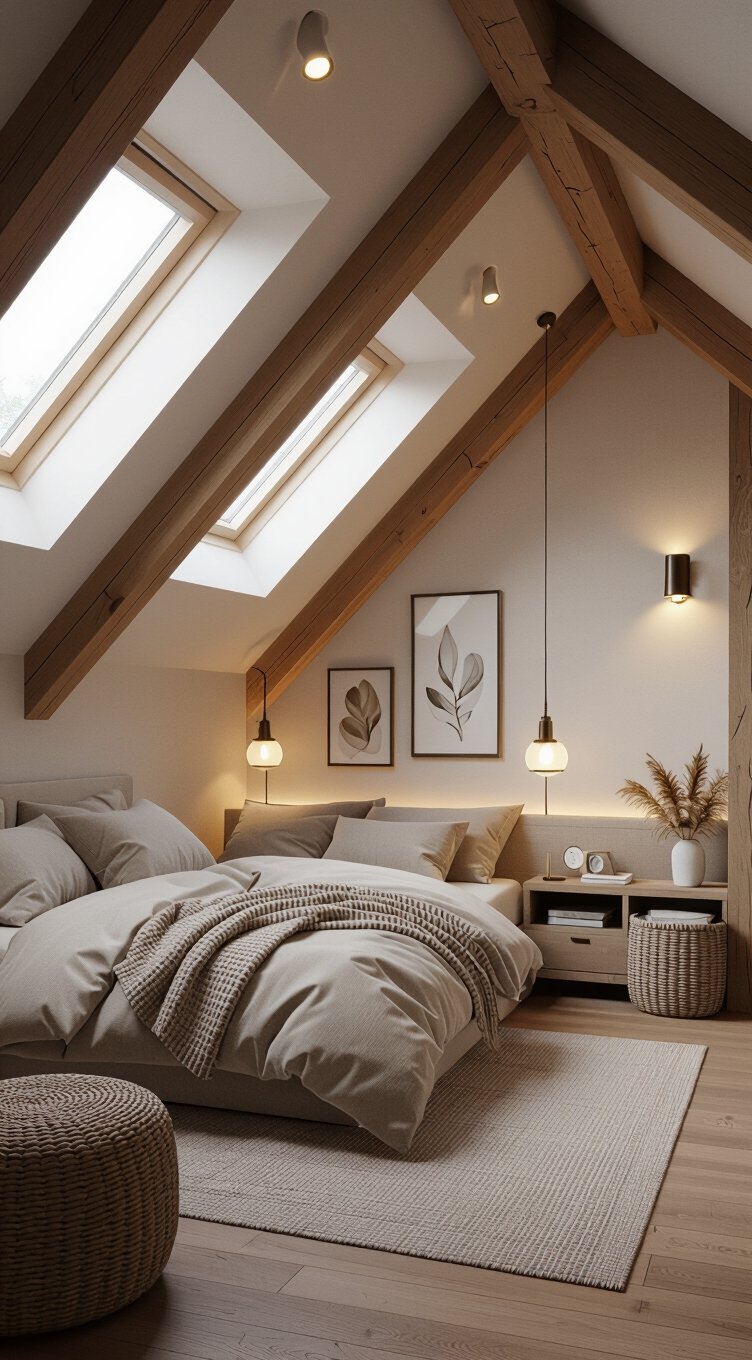
Light AA changes an attic bedroom from a cramped, shadowy space into one that feels open and inviting. Strategic ambient lighting eliminates dark corners and makes slanted walls feel less restrictive. Install recessed lights along the lowest wall sections to draw the eye upward naturally. You’ll also want accent fixtures that highlight design features, like exposed beams or interesting angles. Wall sconces work beautifully because they don’t compete with your limited ceiling height. Layer your lighting by combining overhead sources with bedside lamps, giving you full control over your room’s atmosphere whenever you need it.
Paint Colors That Make Slanted Walls Feel Intentional
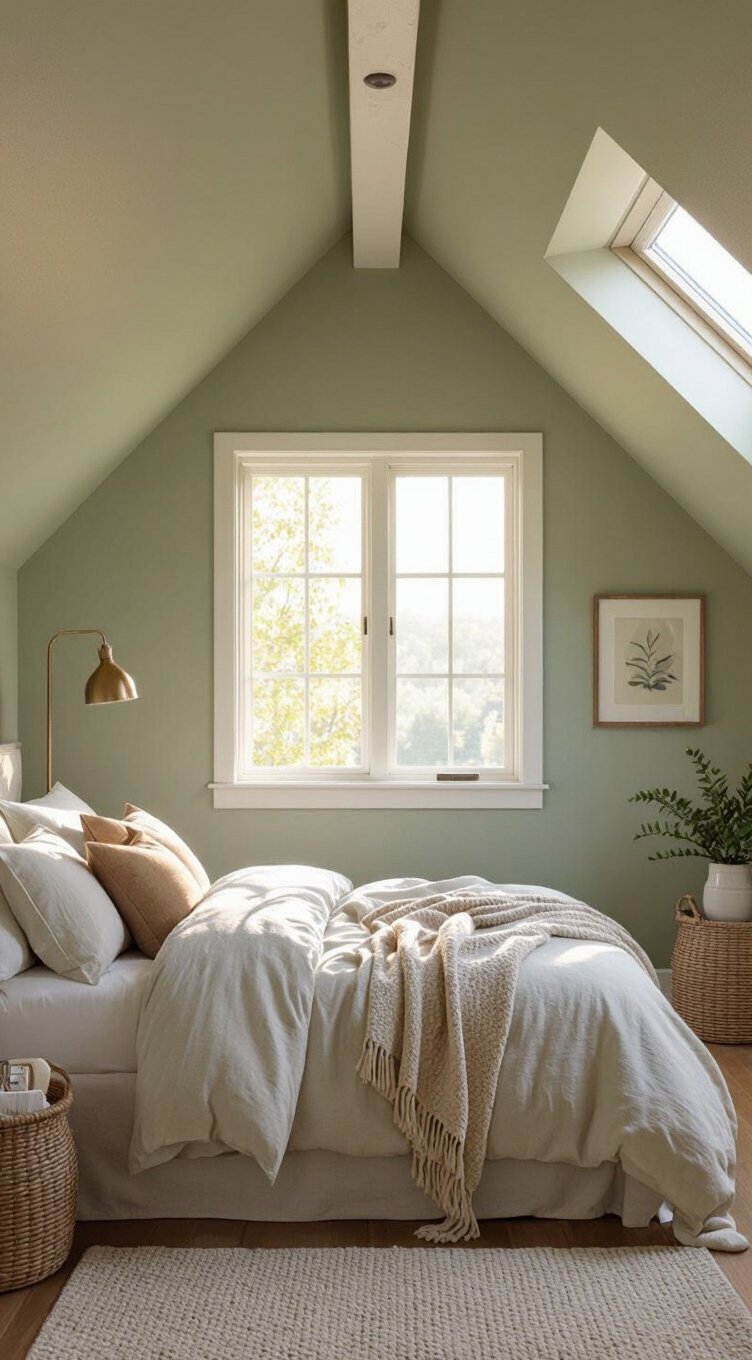
The right paint colors can completely change how your attic’s slanted walls look and feel. You don’t have to fight those angles — you can accept them instead. Try painting slanted walls and ceilings the same color to create visual flow. Calm neutrals like warm white or soft greige make spaces feel open and intentional. If you want more personality, rich earth tones like terracotta or deep olive turn awkward angles into bold design choices. Matching your trim to the wall color also reduces visual interruptions, making the whole room feel cohesive, purposeful, and completely yours.
Cozy Reading Nooks Tucked Into Tight Attic Corners
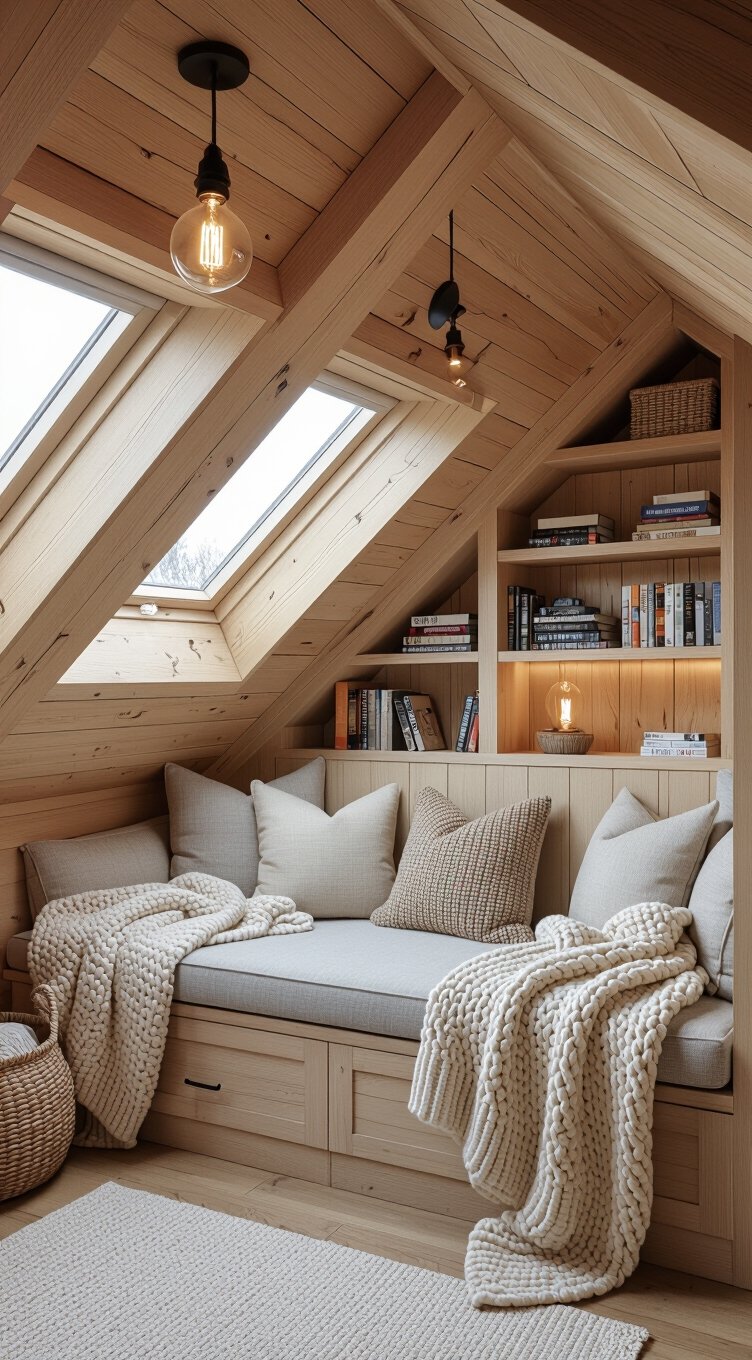
Tight attic corners are actually some of the best spots in your home for a cozy reading nook. Those awkward angles become your personal escape once you add a cushioned window seat beneath the lowest slant. You’ll gain built-in storage while creating a dedicated spot that’s entirely yours. Bookshelf corners convert unusable wall space into an organized, inspiring library within arm’s reach. Add soft lighting, a throw blanket, and a small side table to complete your retreat. These tucked-away spaces naturally feel private and intentional, giving you the freedom to design a corner that truly reflects your personality.
Skylights and Dormer Windows Worth Considering
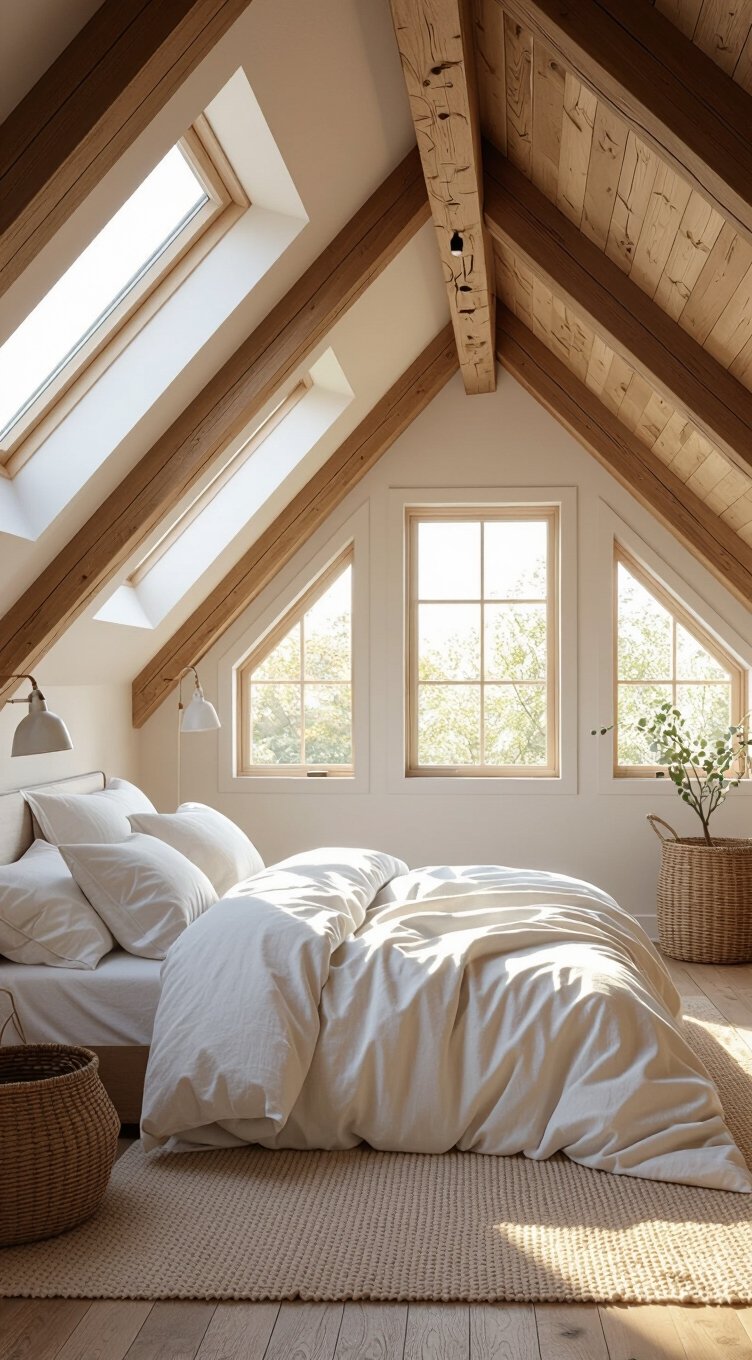
Small Attic Bedroom Ideas That Don’t Feel Cramped
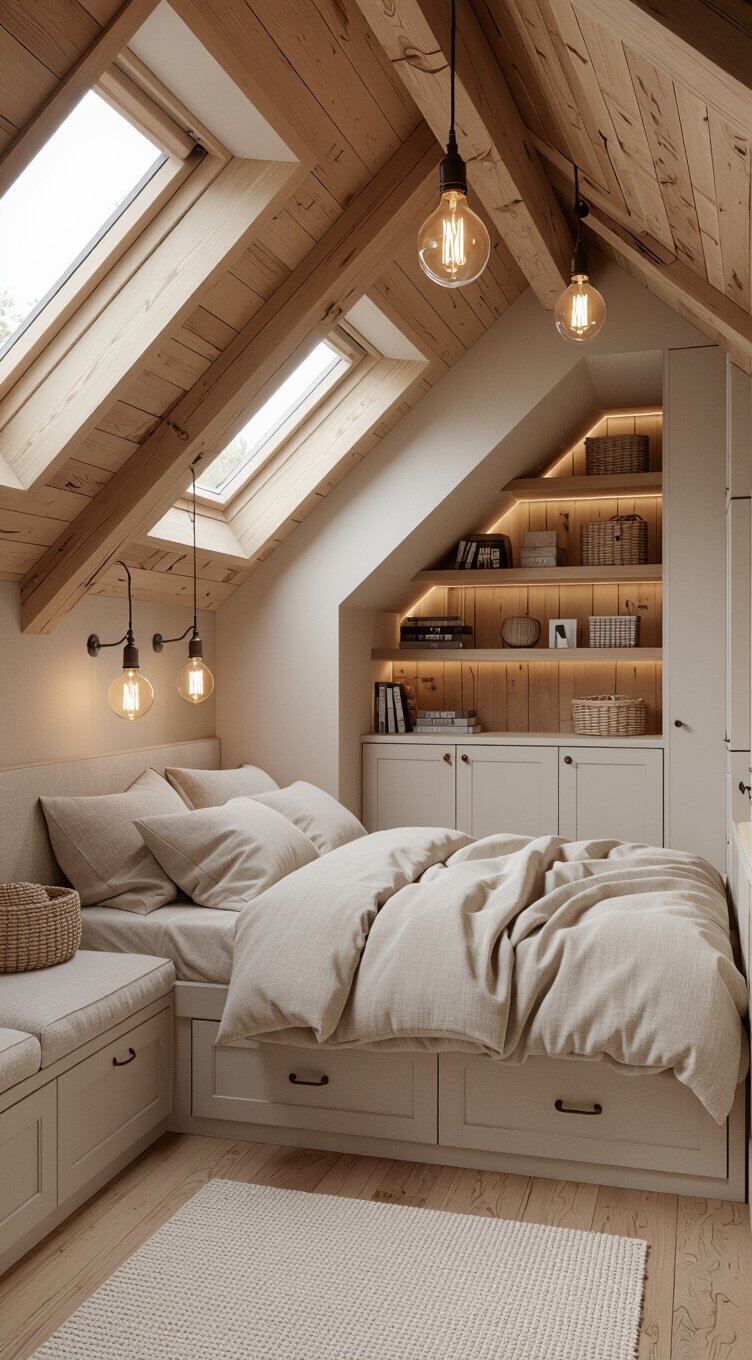
Small attic bedrooms can feel surprisingly spacious when you approach the layout with intention and creativity. Your loft remodel succeeds through smart space optimization techniques that open up the room’s potential.
- Mount shelves along slanted walls to free up floor space for movement.
- Choose a low-profile bed frame that clears the sloped ceiling comfortably.
- Install mirrors strategically to reflect light and visually expand the room.
- Use multi-functional furniture like storage ottomans or built-in drawers beneath the eaves.
These choices let you reclaim your space without sacrificing comfort or personal style.
Statement Walls That Make Slanted Ceilings the Focal Point
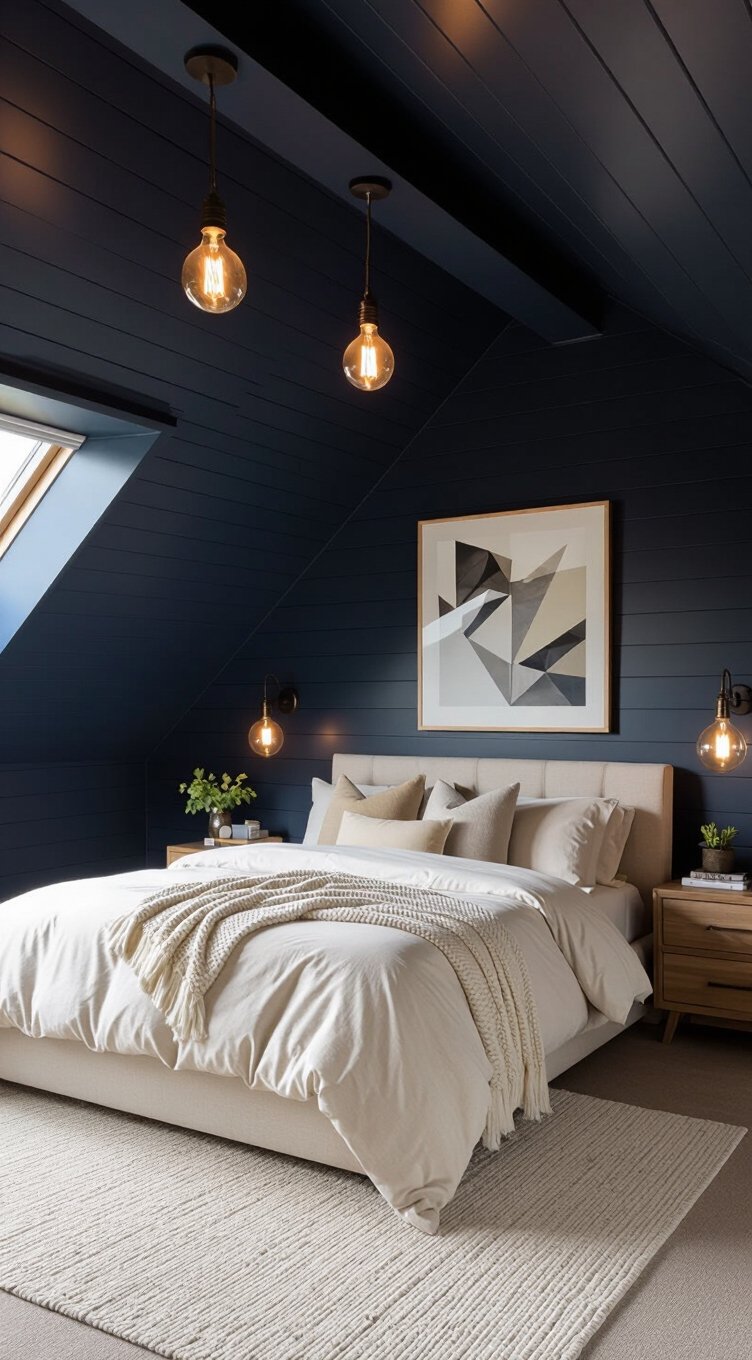
Once your layout feels spacious and functional, you can shift your focus toward the room’s most distinctive structural feature: those slanted ceilings. Don’t hide them — celebrate them. Bold murals painted directly onto angled walls instantly convert awkward slopes into artistic statements. Try geometric patterns or nature-inspired designs that follow the ceiling’s natural lines. Dramatic textures, like exposed brick wallpaper or wood paneling, add depth without overwhelming the space. Paint the slanted surfaces a darker accent color to frame the room intentionally. When you adopt these angles rather than fight them, you’ll create a bedroom that feels uniquely and powerfully yours.
Frequently Asked Questions
What Building Permits Are Required Before Renovating an Attic Into a Bedroom?
Before converting your attic, you’ll need building permits covering attic zoning compliance, structural approvals, electrical, plumbing, and egress requirements. Check your local municipality, as they’ll determine exactly what’s needed for your specific renovation project.
How Do You Properly Insulate an Attic Bedroom to Regulate Temperature?
Use thermal imaging to identify heat loss areas, then install radiant barriers along slanted walls. You’ll seal gaps, add spray foam, and layer quality insulation—giving you total control over your attic bedroom’s comfort year-round.
What Is the Minimum Ceiling Height Required for a Legal Attic Bedroom?
You’ll need at least 7 feet of ceiling clearance over 50% of the floor area for a legal attic bedroom. Always check your local zoning regulations, as they can vary and affect your freedom to design.
How Much Does a Full Attic Bedroom Conversion Typically Cost to Complete?
You’ll typically spend $10,000–$50,000 on a full attic bedroom conversion. Your cost estimation depends on insulation, flooring, and lighting needs. Don’t let budget constraints hold you back—you’ve got the freedom to prioritize what matters most!
Can Attic Bedrooms Negatively Affect a Home’s Resale Value or Appeal?
Attic bedrooms won’t necessarily hurt your resale value! You’ll attract buyers who crave unique, cozy spaces. However, you should address space limitations and maximize natural lighting to guarantee your conversion appeals to freedom-seeking homeowners craving distinctive living experiences.
Conclusion
Your attic bedroom doesn’t have to feel like a compromise. With the right built-ins, low-profile furniture, and smart lighting, those slanted walls become your greatest design asset. You can convert tight corners into cozy nooks and awkward angles into intentional style statements. Start with one change, whether it’s paint color or a platform bed, and build from there. Your attic has real potential, and now you’ve got the tools to release it.