

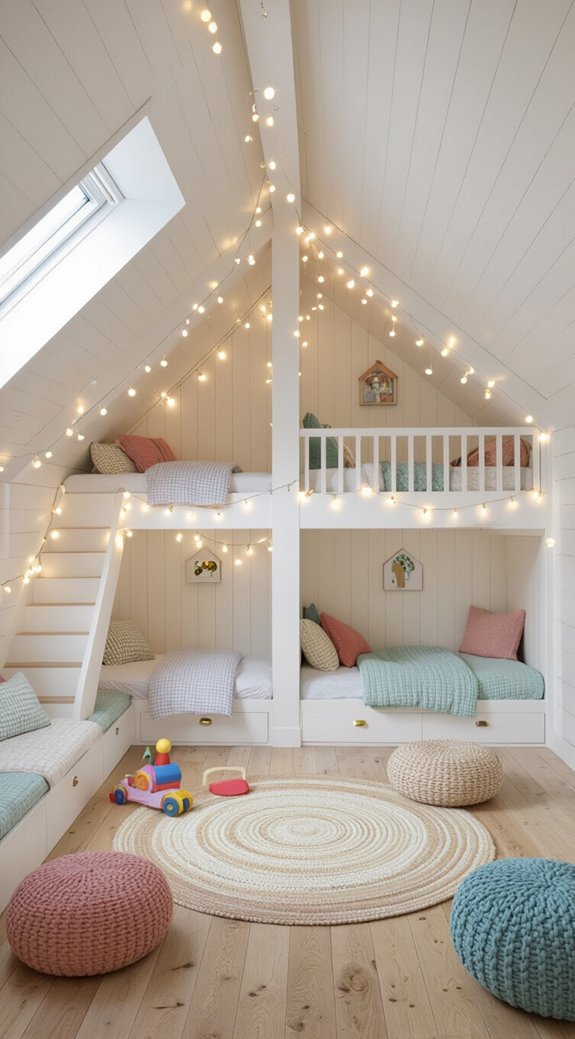
Your child’s attic bedroom doesn’t have to feel like an afterthought. With the right design choices, you can convert awkward angles and low ceilings into a space that’s both functional and genuinely fun. Built-in bunks, themed play zones, and smart storage solutions make every square foot count. Whether you’re working with dormers or skylights, these 14 ideas will show you exactly how to maximize what you’ve got — keep going to find out which ones work best.
Built-In Bunk Beds Under the Slope
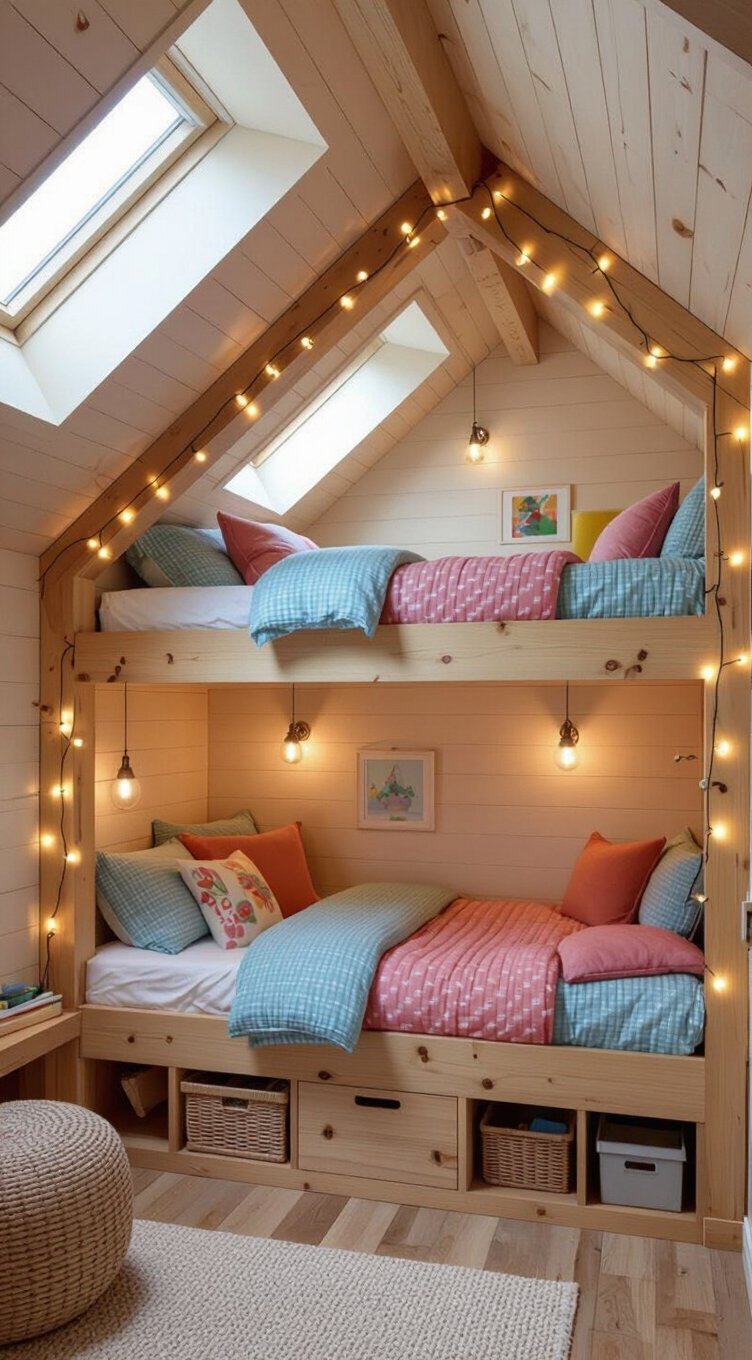
Built-in bunk beds designed to follow the roofline make brilliant use of an attic’s sloped walls and awkward angles. You’ll convert what seems like wasted space into a cozy, functional sleeping area your kids will love. Custom-built frames can tuck perfectly beneath low ceilings while maximizing vertical space. You can also incorporate underfloor storage beneath the lower bunk for toys, bedding, and seasonal items. Add secret compartments into the headboards or side panels to give kids their own private hideaways. These design choices let children feel genuinely independent while keeping their bedroom organized, practical, and uniquely their own.
Loft-Style Sleeping Nooks With Curtain Dividers
Cozy Reading Corners Tucked Into the Eaves
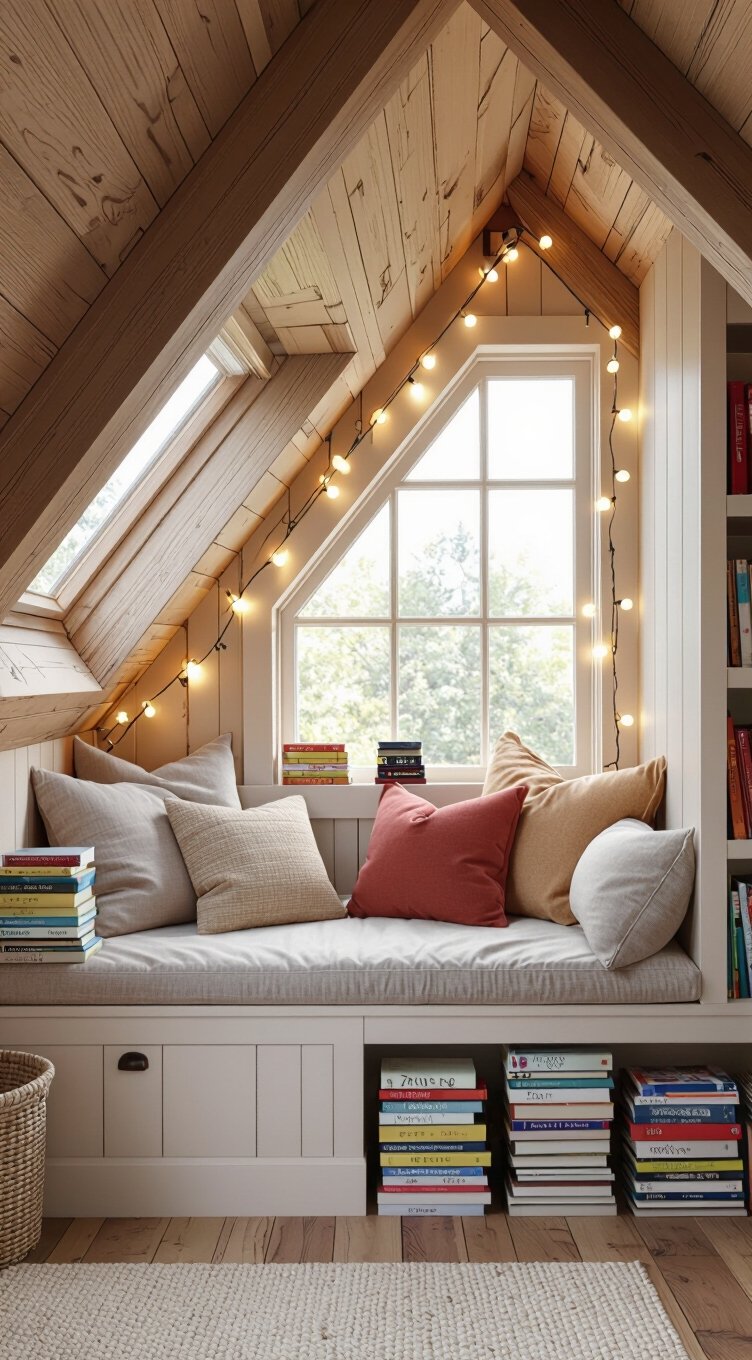
Those sleeping nooks aren’t the only spots where angled ceilings can work in your favor. The eaves create naturally sheltered alcoves that beg to become dedicated reading corners. Tuck in bean bag lounges where the ceiling slopes lowest, giving kids a snug, cave-like retreat that feels entirely their own. Window seat nooks built beneath dormers offer both natural light and a sturdy perch for hours of reading. Add built-in shelving along the sloped walls to keep books within easy reach. You’re fundamentally transforming awkward design constraints into purposeful, functional spaces your child will genuinely claim as a personal sanctuary.
Themed Play Zones That Use Every Inch
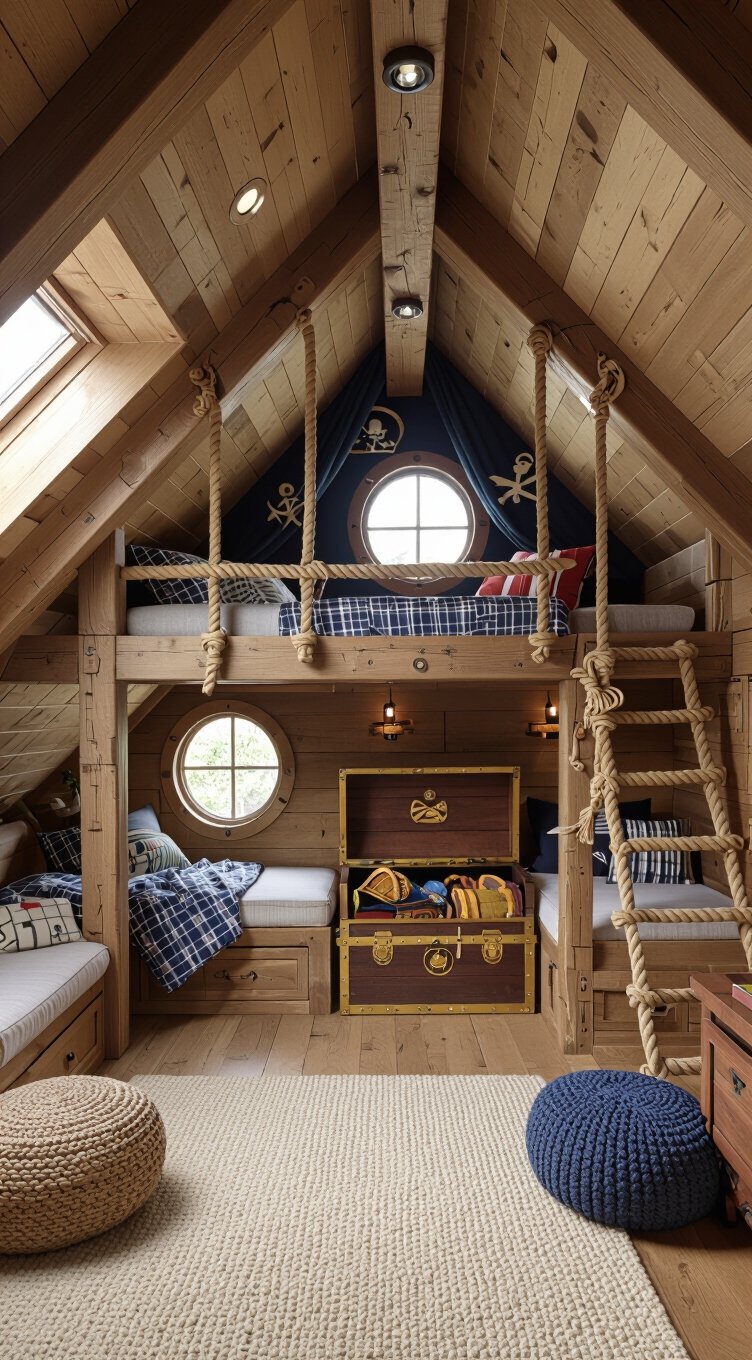
When you’re working with an attic bedroom, a strong theme changes the entire space into an immersive world your child can actually live and play inside. Every slanted wall and awkward corner becomes an opportunity. Consider these themed zone ideas:
- Fairy-tale dollhouse corner tucked beneath the lowest eave
- Pirate ship deck built around a dormer window
- Puppet theater nook framed by a sloped ceiling arch
- Space station command center using built-in shelving
- Artist studio corner with pegboard tool walls
You’re creating freedom through intentional design, letting your child’s imagination fully take over.
Slide and Ladder Combos Kids Actually Love
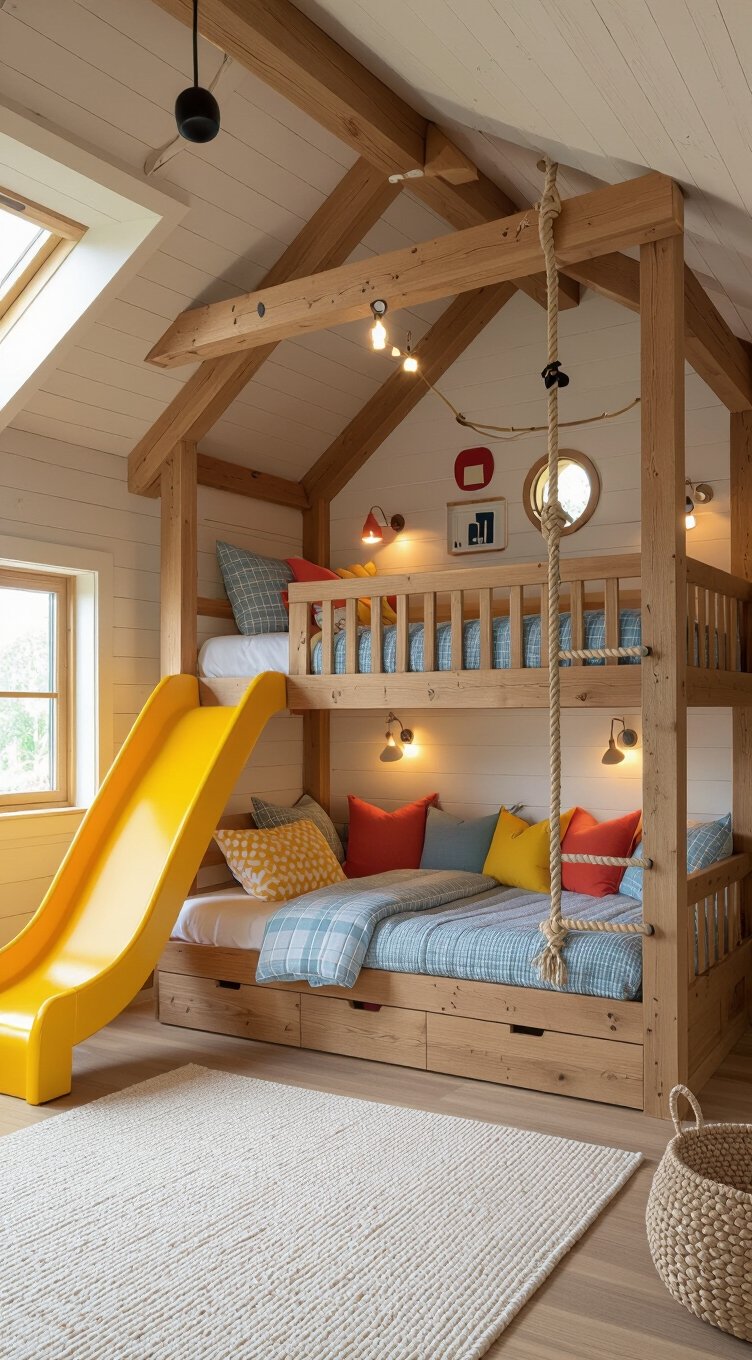
Once you’ve carved out those themed zones, you can take the fun even further by adding a slide and ladder combo. These setups convert your child’s attic bedroom into an escapade they’ll genuinely use every day. For slide safety, choose models with smooth edges, sturdy side rails, and weight-appropriate ratings. Ladder design matters just as much — opt for wide, evenly spaced rungs that small feet can grip confidently. Wall-mounted ladders save floor space beautifully. Many families install compact wooden sets that complement loft beds, combining sleeping and playing into one efficient, exciting structure your kids won’t stop talking about.
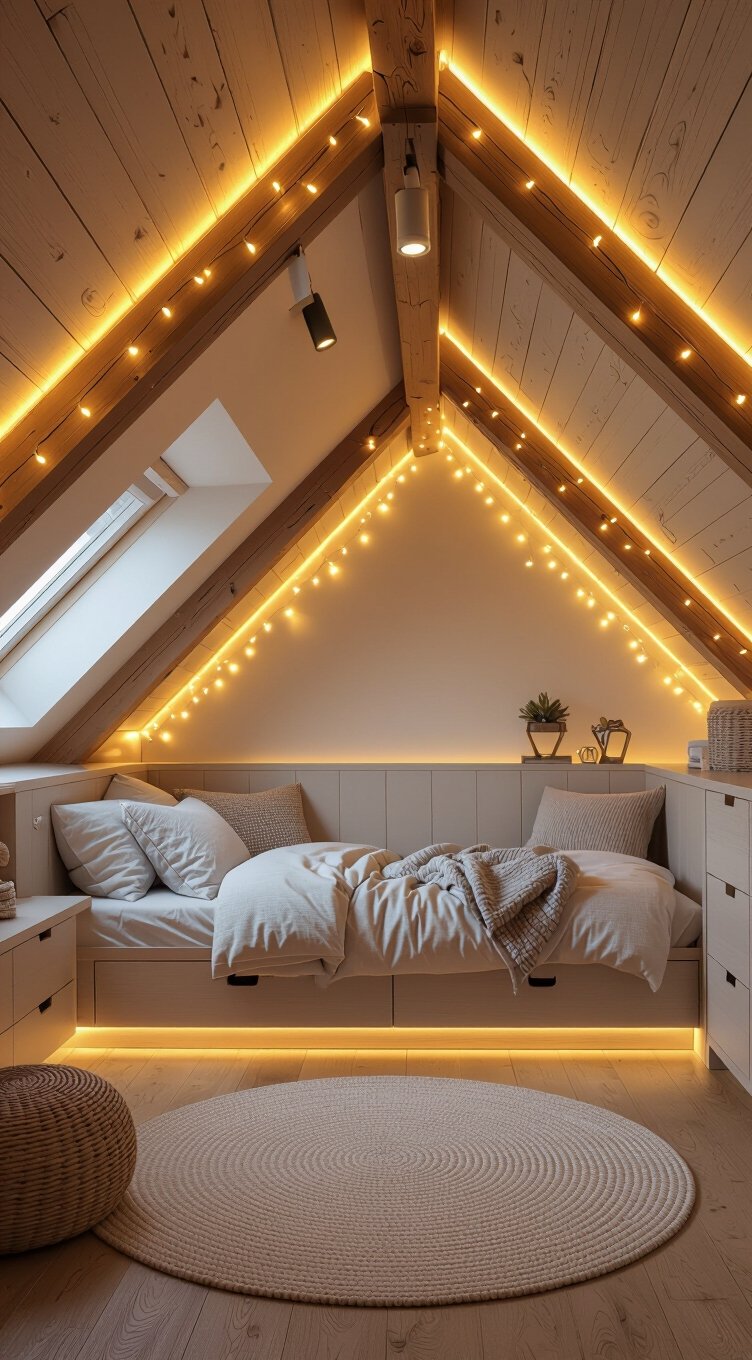
How to Light a Low-Ceiling Attic Bedroom
- Install chalkboard paint on one full sloped wall
- Add magnetic primer beneath for extra functionality
- Use whiteboard panels for colorful marker drawings
- Create interactive murals with outlined scenes kids complete
- Rotate seasonal themes to keep creativity fresh
These walls grow alongside your child, making imagination the only real boundary.
Shared Attic Rooms That Give Each Kid Their Own Zone
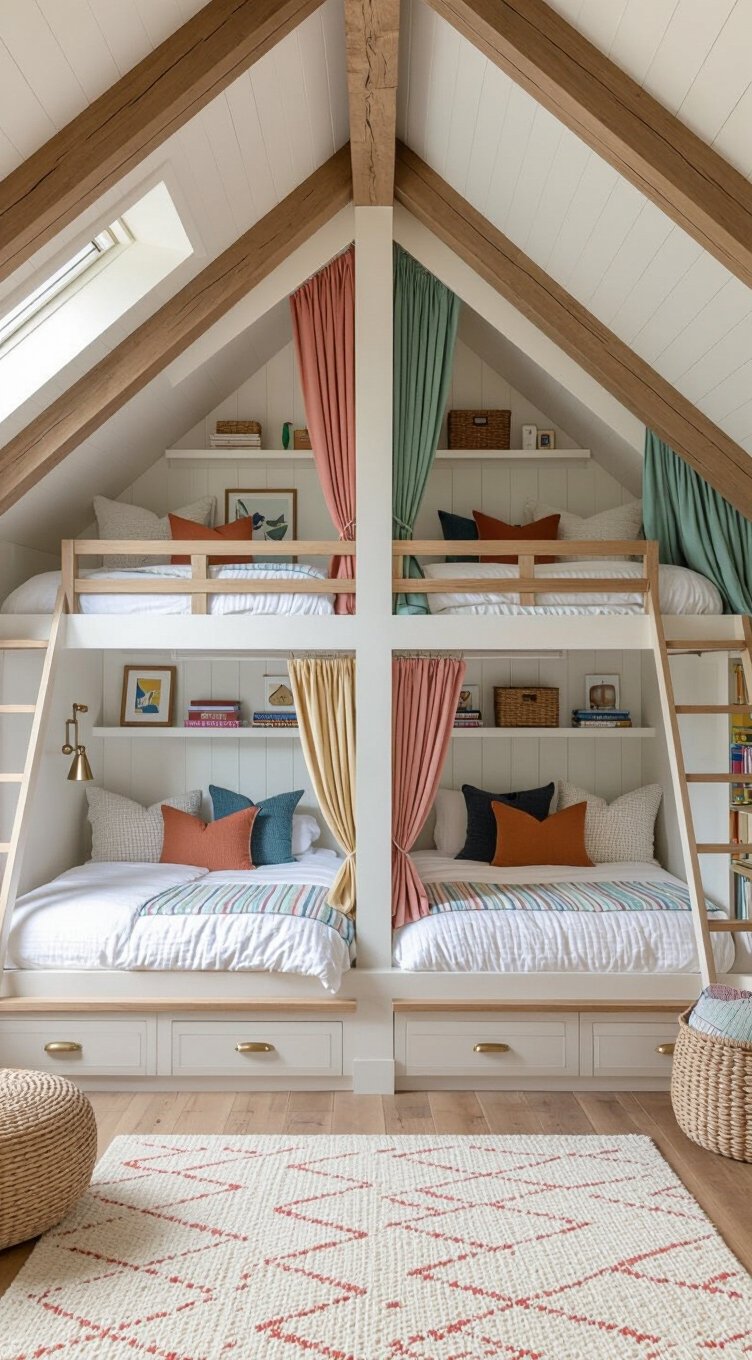
When siblings share an attic bedroom, the sloped ceilings and irregular layout actually work in your favor by naturally suggesting distinct zones. Use curtains, bookshelves, or loft beds to create bunk bed privacy without sacrificing the open feel. Each child deserves their own dedicated corner for sleeping, studying, and displaying personal items. Shared space equality means neither kid dominates the room’s best features. Assign each child a specific wall, storage unit, and lighting setup. Color-coding each zone helps reinforce personal ownership while keeping the overall design cohesive. You’re giving every kid their own territory within one connected space.
Floor-Level Beds That Make Sloped Ceilings Work for You
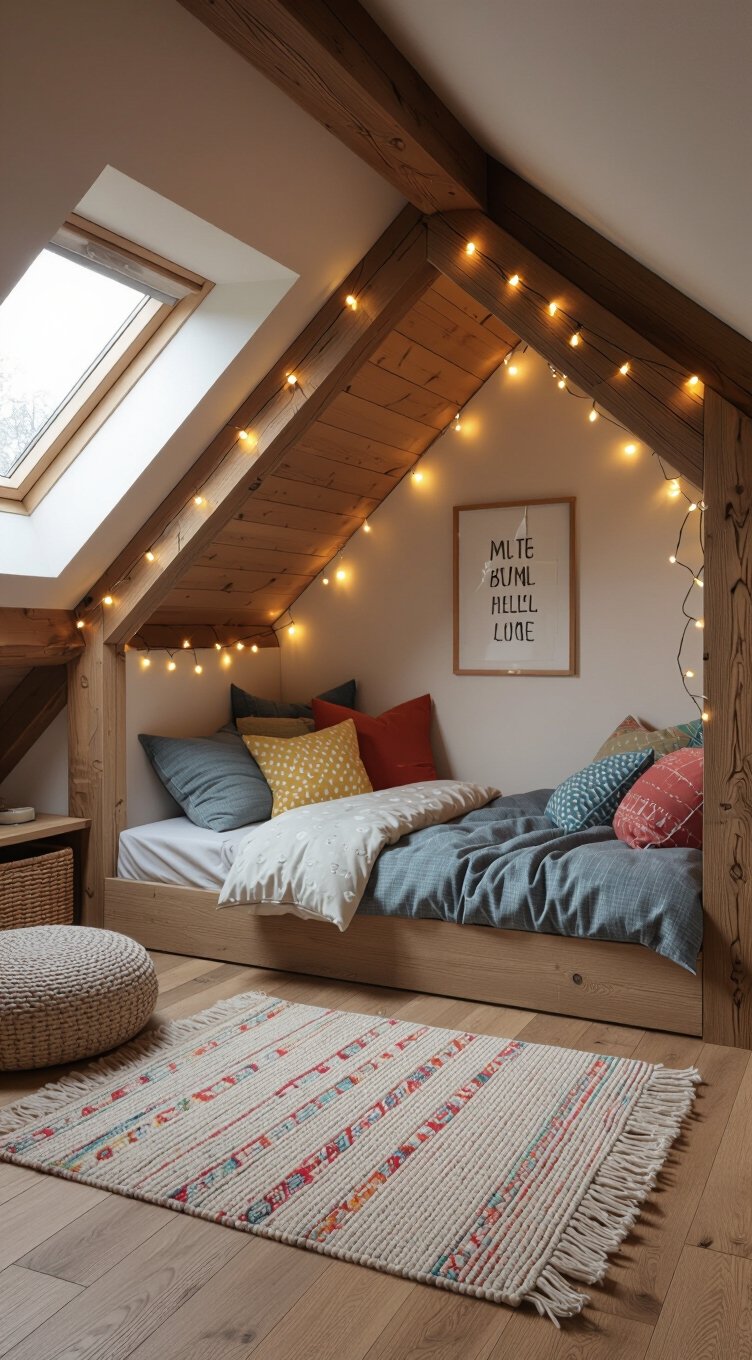
Floor-level beds turn one of the attic’s biggest challenges into a clever design advantage. Low profile frames and twin sized platforms fit naturally under sloped ceilings, freeing up space you’d otherwise lose.
- Tuck beds along the lowest wall where standing isn’t needed
- Choose platform frames under 10 inches tall for maximum clearance
- Add built-in storage drawers beneath twin sized platforms
- Use the slope as a cozy, cave-like canopy effect
- Layer rugs and pillows to make floor-level feel intentional
You’re not working against the angles anymore — you’re designing with them.
Colors and Patterns That Open Up a Tight Attic Space
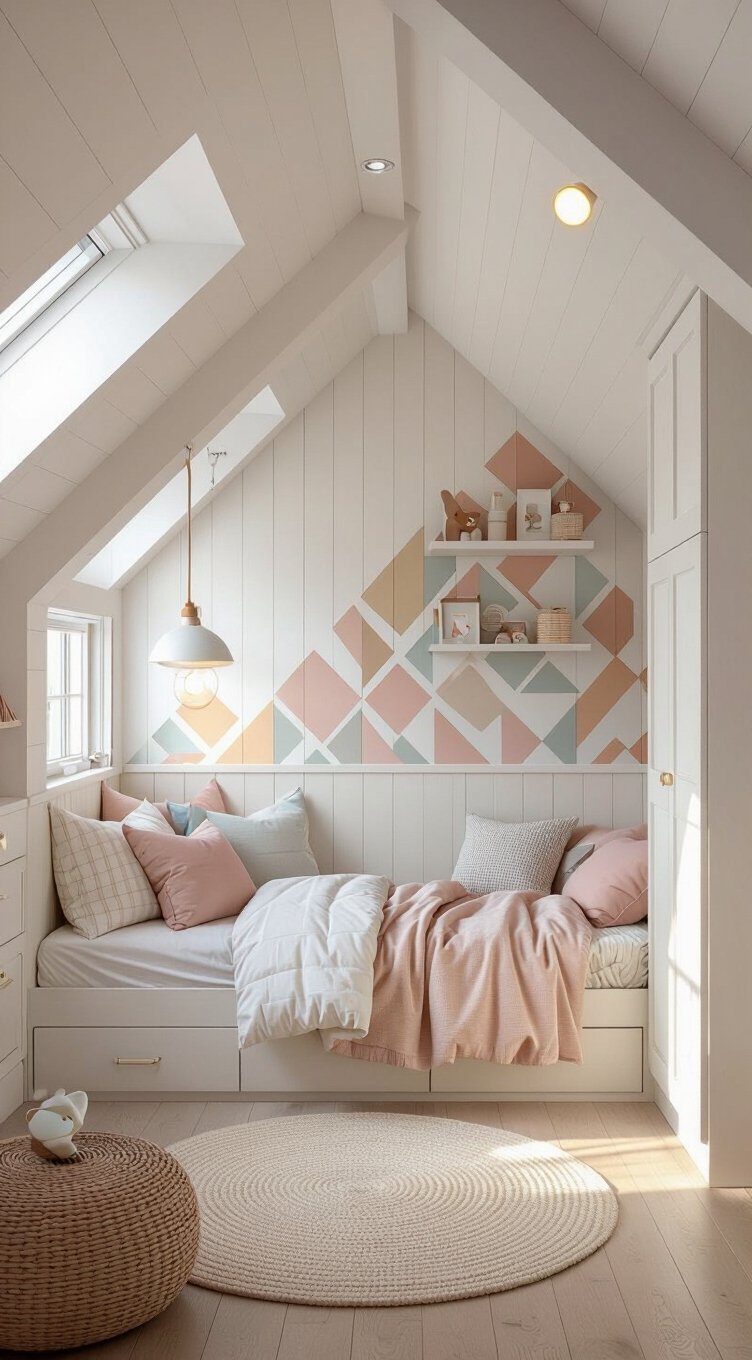
Color choices can alter a tight attic space, making walls feel farther apart and ceilings feel taller than they actually are. Light, bright colors like soft whites, pale yellows, and sky blues reflect natural light, instantly opening up cramped areas. You’ll want to paint sloped ceilings the same shade as the walls, which visually blurs boundaries and expands the room. Playful patterns work beautifully when kept small-scale and spaced evenly, preventing visual clutter. Try geometric wallpaper on one accent wall to add personality without overwhelming the space. Strategic color placement gives your child’s attic bedroom a spacious, freeing atmosphere.
Indoor Tents and Canopies That Turn Corners Into Camps
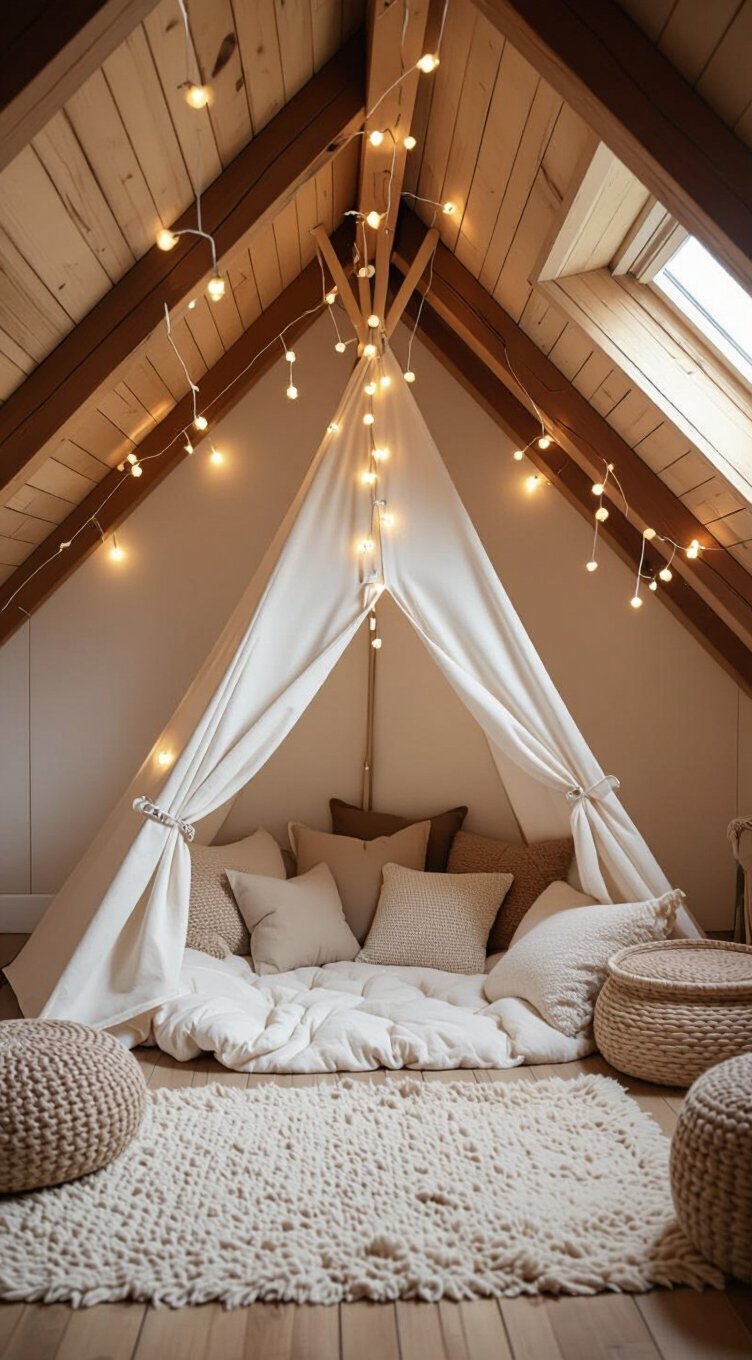
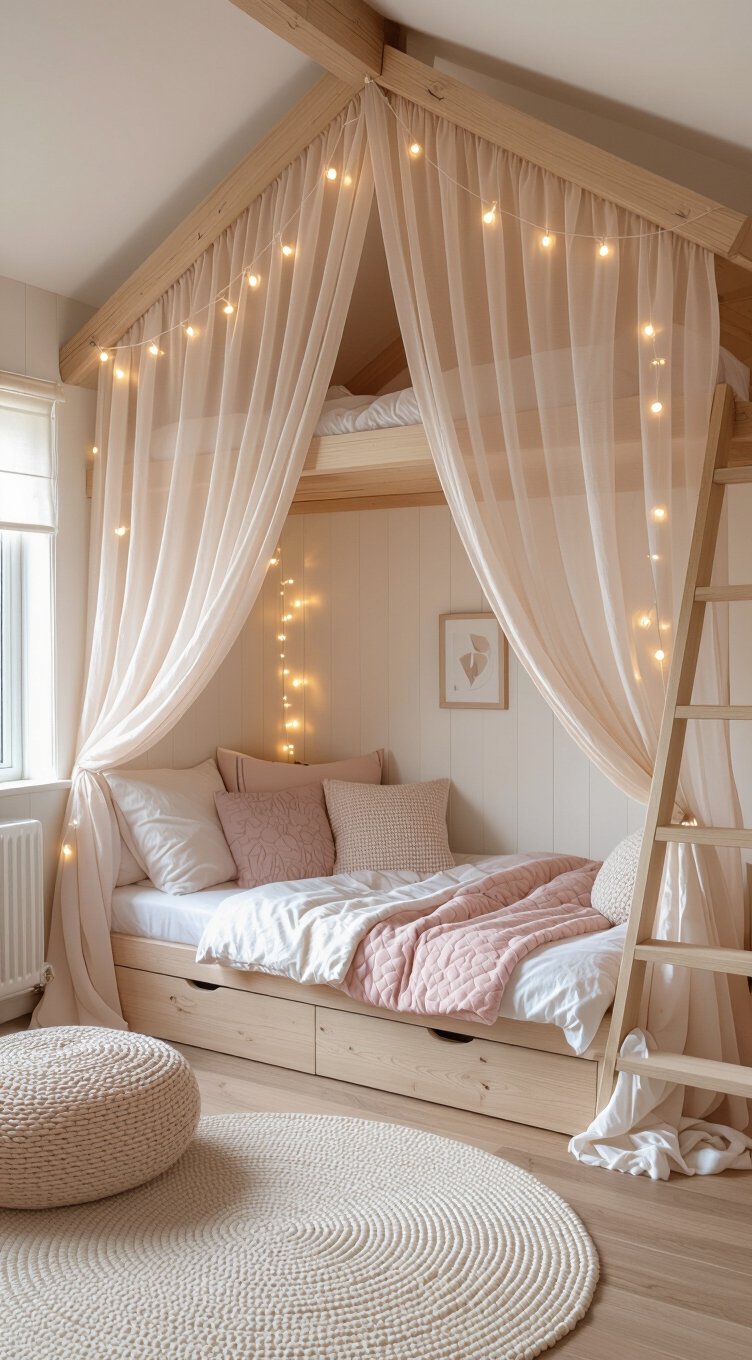
A simple indoor tent or canopy can completely change an awkward attic corner into a cozy, exploration-ready camp for your child. Tent hideouts and canopy forts let kids claim their own personal space freely.
Try these creative setup ideas:
- Drape sheer fabric from exposed beams to create flowing canopy forts
- Use pop-up play tents for flexible, movable tent hideouts
- Anchor rope lights inside for warm, magical ambiance
- Add floor cushions and blankets for comfortable lounging
- Choose neutral or journey-themed fabrics that spark imagination
Your child’s attic corner becomes their ultimate personal basecamp.
Skylights and Dormer Windows That Change Everything
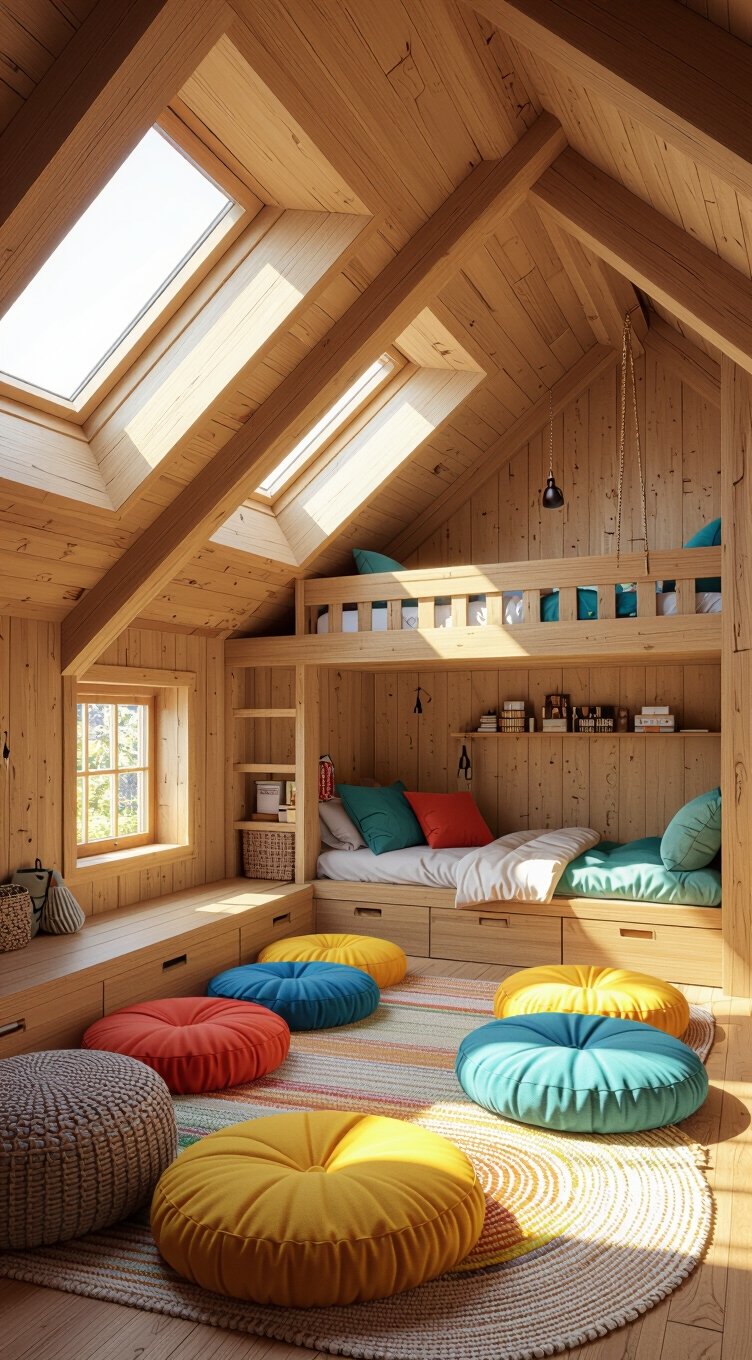
When your attic has skylights or dormer windows, they don’t just add light — they completely change how the space feels and functions. Position stargazing beds directly beneath skylights so kids can watch clouds drift by day and spot constellations at night. Create sunbeam corners near dormer windows using low shelving, cushions, and a small reading nook. These natural light sources eliminate the closed-in feeling that attics often carry. You’re fundamentally giving kids an open connection to the sky above them. Use light-filtering shades to control brightness without losing that expansive, freeing atmosphere the windows naturally create.
Rugs, Cushions, and Soft Layers That Make It Feel Finished
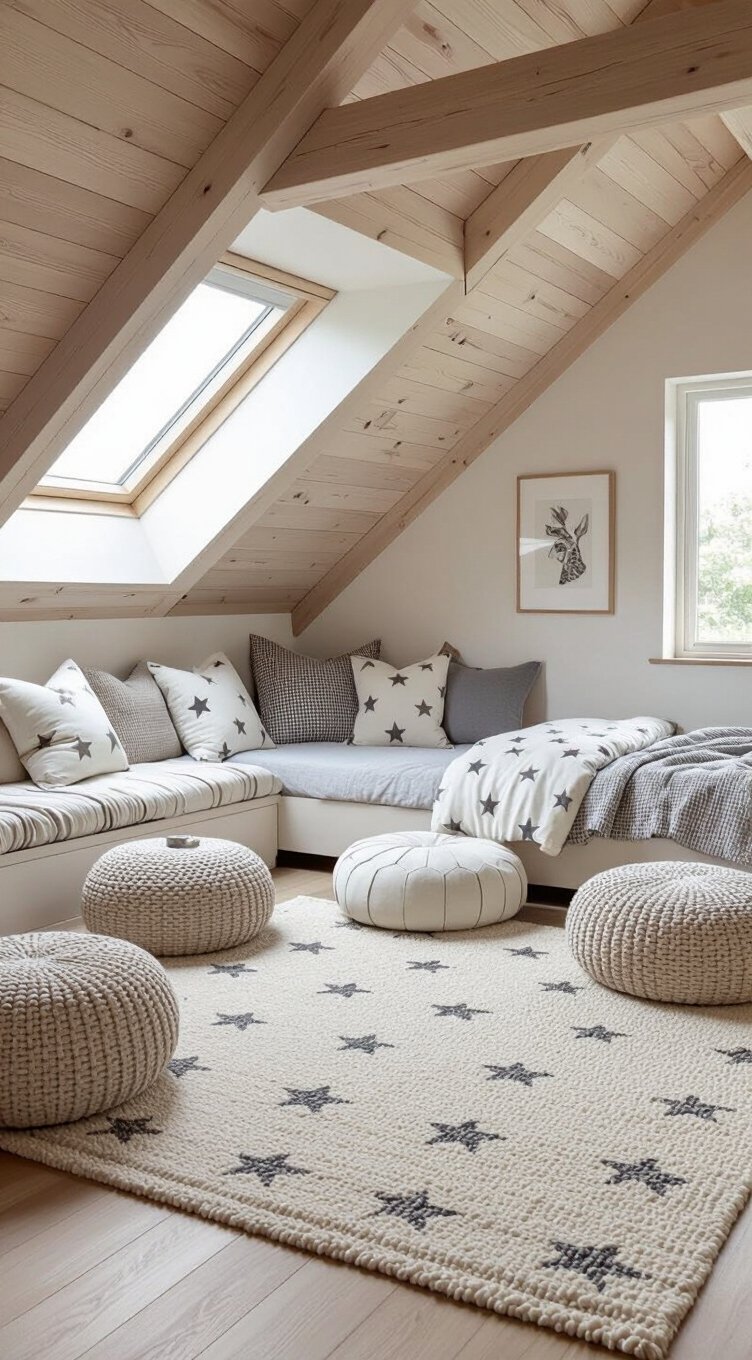
Skylights and dormer windows do the heavy lifting for light and openness, but soft layers are what make an attic bedroom feel truly livable and warm. You can reshape any awkward sloped space into a cozy retreat using plush textures and layered comfort strategically.
- Oversized area rugs anchor the room visually
- Stacked floor cushions create flexible seating zones
- Chunky knit throws add warmth without permanence
- Layered bedding invites restful, independent sleep
- Window seat cushions soften hard structural edges
These additions let kids truly own their space, making it feel personal, grounded, and genuinely theirs.
Frequently Asked Questions
What Is the Minimum Ceiling Height Required for an Attic Bedroom?
You’ll need at least 7 feet of ceiling clearance for a legal attic bedroom. Meeting headroom standards guarantees you’re free to move comfortably, design creatively, and convert that unused space into something truly extraordinary.
Do Attic Bedrooms Require Special Building Permits for Children’s Use?
Yes, you’ll likely need permits, as building codes and zoning laws govern attic conversions. Check your local regulations to guarantee your child’s space meets safety requirements, giving you the freedom to create legally compliant, worry-free rooms.
How Do You Ensure Proper Ventilation and Air Quality in Attic Bedrooms?
You’ll guarantee proper ventilation by optimizing window placement for cross-breezes, giving you natural airflow freedom. Add air purifiers to actively filter pollutants, keeping your attic bedroom’s air fresh, healthy, and comfortable year-round.
What Fire Safety Measures Are Essential for Attic Kids’ Bedrooms?
You’ll want two escape routes, properly maintained smoke detectors tested monthly, and strategic fire extinguisher placement near exits. These measures give your kids the freedom to sleep safely in their attic haven.
Are Attic Floors Structurally Strong Enough to Support Children’s Furniture?
You’ll need to verify your attic’s load capacity before adding furniture. Check your joist spacing with a structural engineer—they’ll confirm if your floor can safely support children’s beds, dressers, and play equipment.
Conclusion
Your attic bedroom doesn’t have to feel like an afterthought. With the right layout, lighting, and creative zones, you can turn even the trickiest sloped space into a room your child will love. Start with one or two ideas that fit your budget and your kid’s personality, then build from there. Small changes, like adding a reading nook or swapping in a skylight, can completely change how the space feels and functions.