

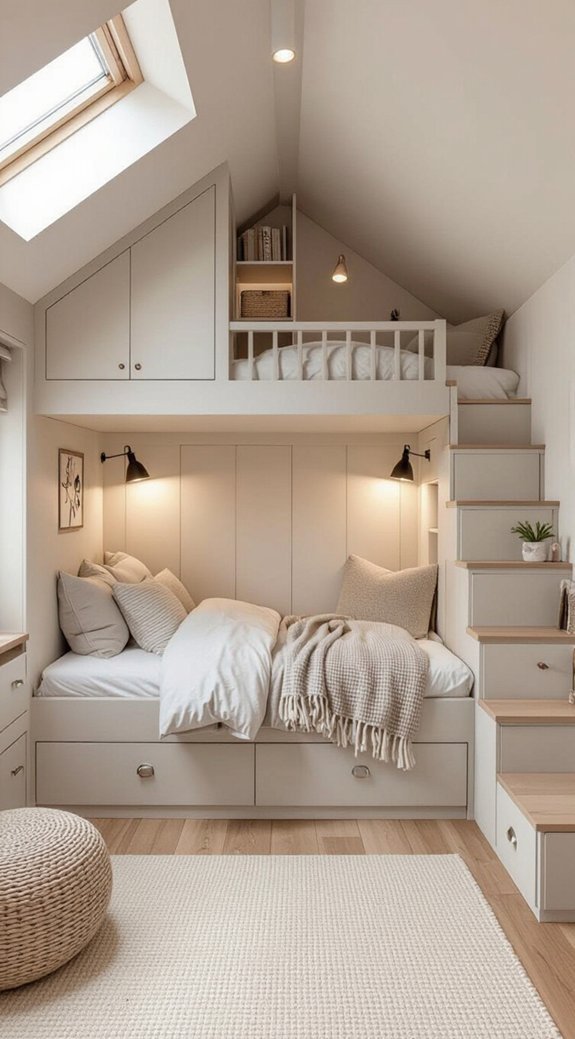
A box room doesn’t have to feel like a compromise. With the right strategies, you can convert even the tightest bedroom into a functional, comfortable space. You’ll learn how loft beds reclaim essential floor space, how built-in storage creates a seamless look, and how lighting tricks can make walls feel farther apart. Each idea builds on the next, so the most space-saving tip of all is still ahead.
Use a Loft Bed to Reclaim Floor Space
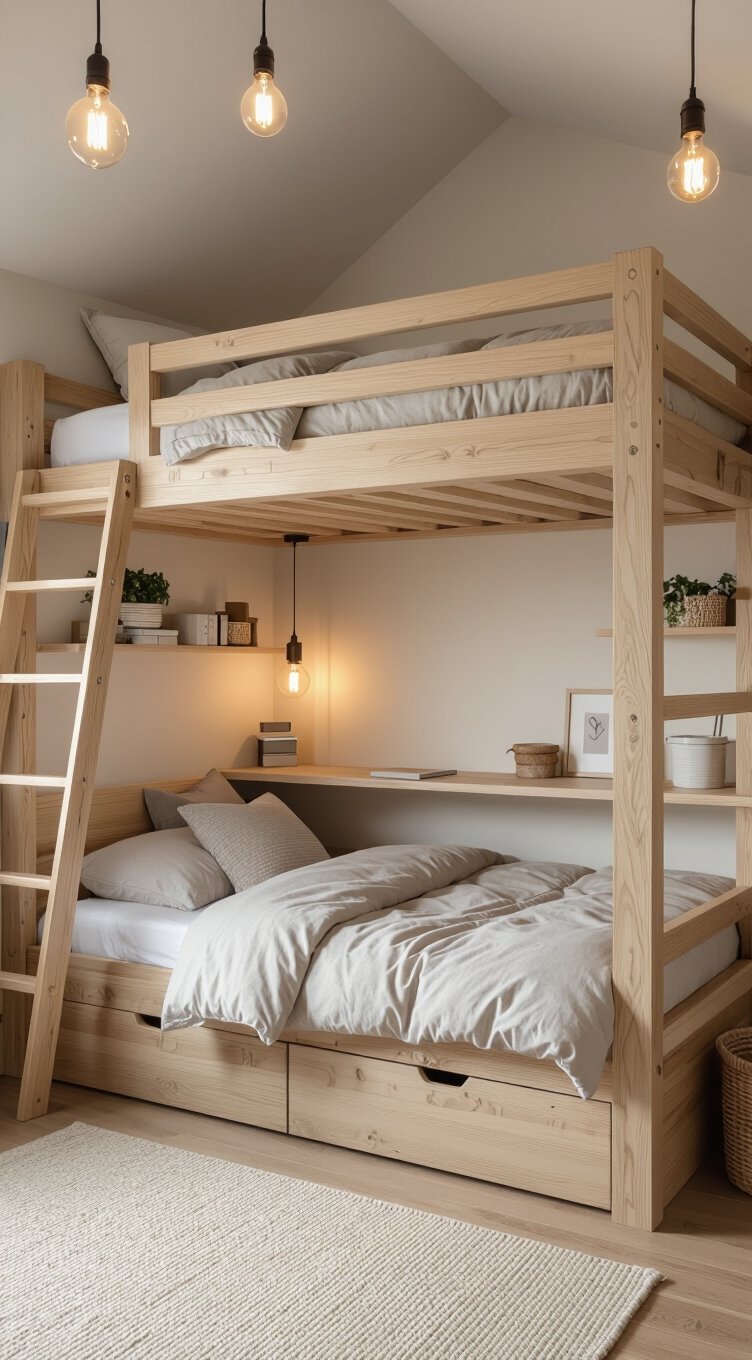
When floor space is tight, a loft bed is one of the smartest upgrades you can make to a box room. Raising your sleeping area instantly frees up important square footage below. You can use that newly reclaimed space for an enhanced workspace design, storage, or a cozy reading nook. Don’t feel locked into traditional ladders, either. Loft ladder alternatives like space-saving staircases with built-in drawers give you easier access while doubling as storage. You’re basically stacking functions vertically, which means you get more freedom and flexibility from every single inch your room offers.
Built-In Storage That Disappears Into the Walls
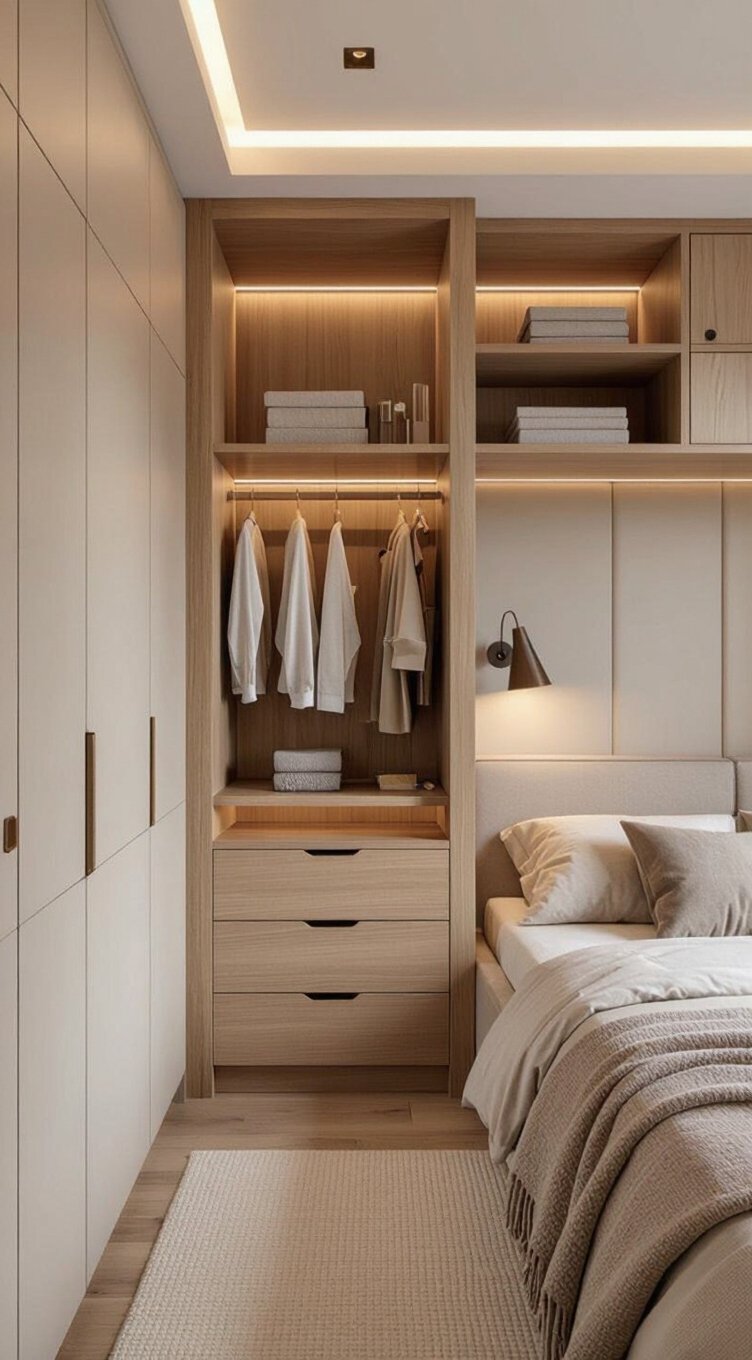
Built-in storage redefines a box room by merging your furniture seamlessly into the design of the space itself. You’ll reclaim essential room without sacrificing style. Investigate these smart solutions:
- Install shelving directly into wall cavities to free up floor space completely.
- Add hidden compartments behind framed panels for discreet, clutter-free living.
- Construct recessed wardrobes flush with walls so nothing interrupts your room’s flow.
- Use under-window storage benches that blend naturally into your room’s structure.
These built-in options give you freedom from overcrowded furniture arrangements, creating a bedroom that feels intentionally designed and genuinely open.
The Right Bed Frame Can Double Your Storage
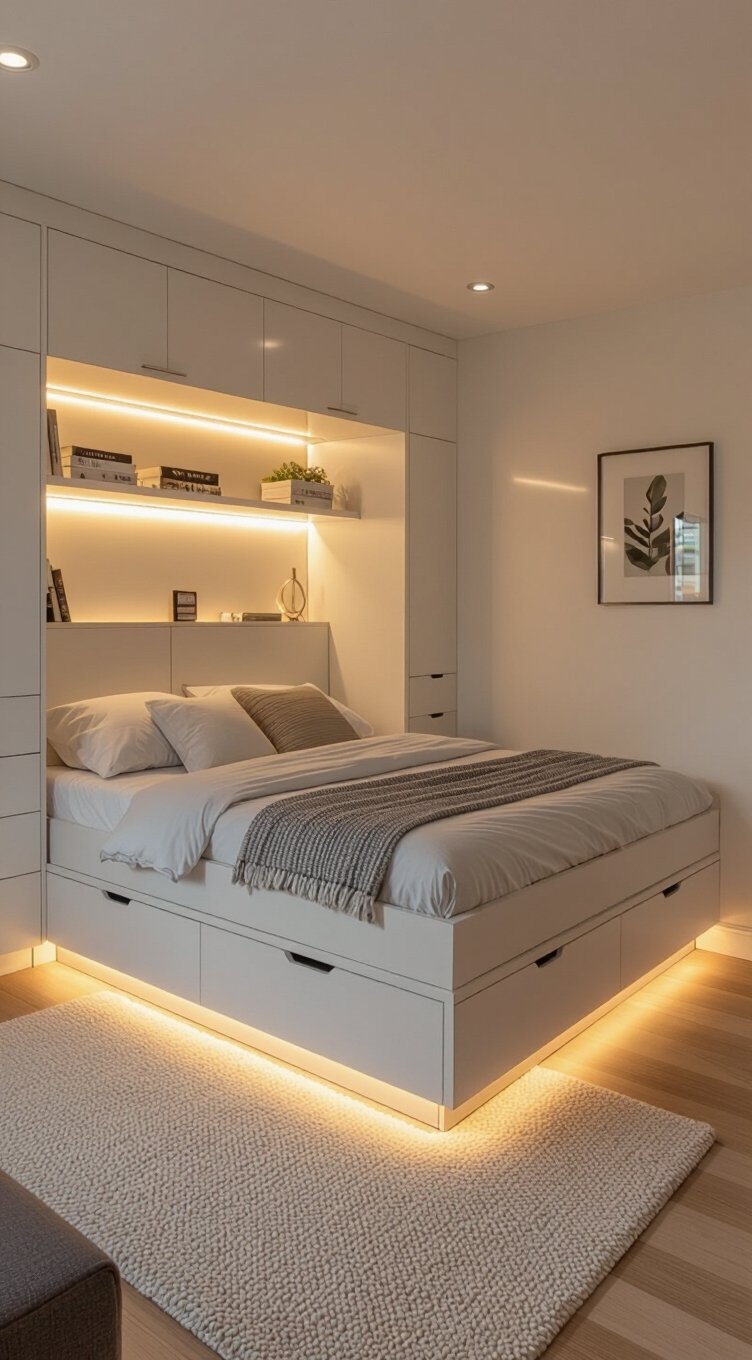
Your walls aren’t the only place to hide storage in a box room — your bed frame works just as hard. Choose a platform bed with built-in drawers underneath, and you’ll instantly gain serious storage without sacrificing floor space. Bed risers can lift a standard frame several inches, creating room for flat storage bins below. If you’re tight on space but need flexibility, trundle options slide neatly underneath and pull out only when needed. Your bed becomes a multi-functional powerhouse, giving you the freedom to keep your room clutter-free and completely on your terms.
How to Choose Furniture That Won’t Overwhelm a Box Room
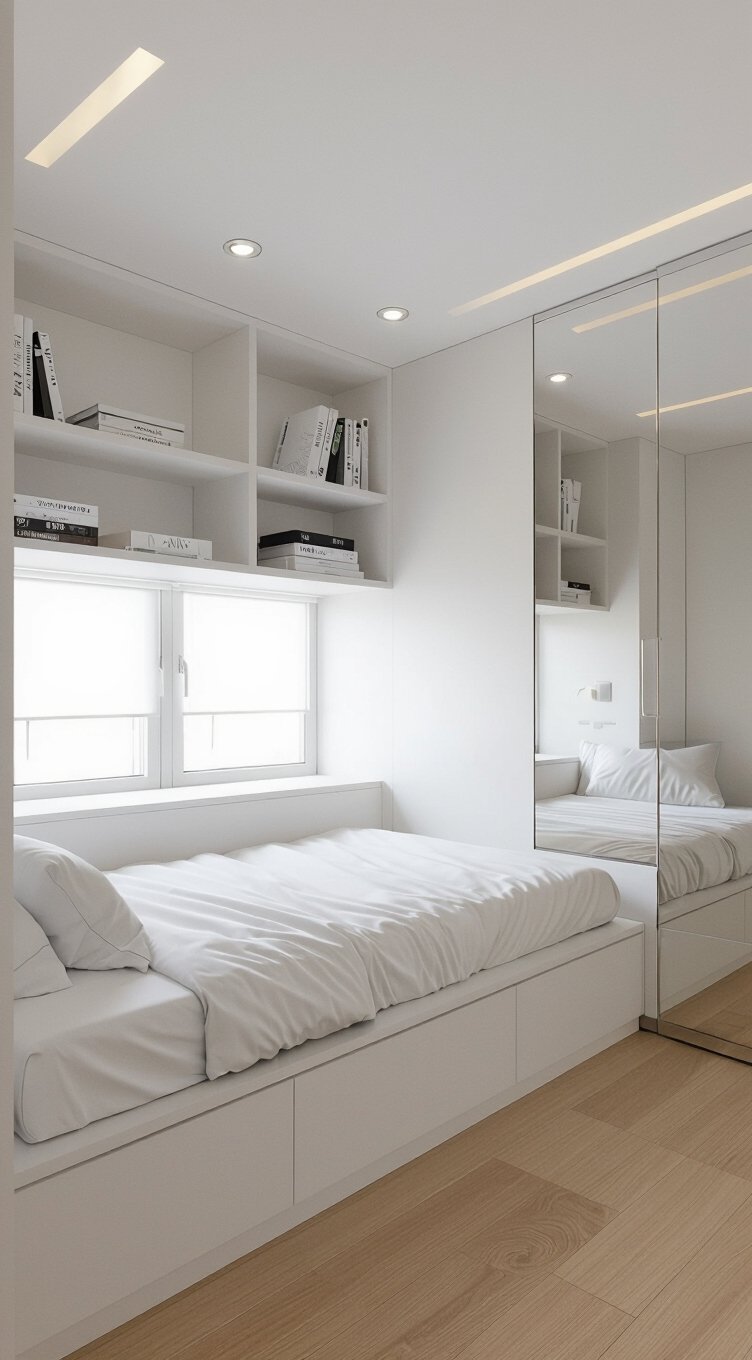
Choosing the right furniture for a box room means thinking carefully about scale, proportion, and how each piece serves your space. You don’t want bulky pieces stealing your freedom of movement. Instead, pick items that work smarter, not harder.
- Choose low-profile beds and slim wardrobes that hug walls tightly.
- Install folding desks that collapse flat when you’re not working.
- Use nesting tables instead of fixed side tables for flexible arrangement.
- Select furniture with exposed legs to create an airy, open feel.
Every piece you choose should earn its place.
Mount Everything You Can on the Walls
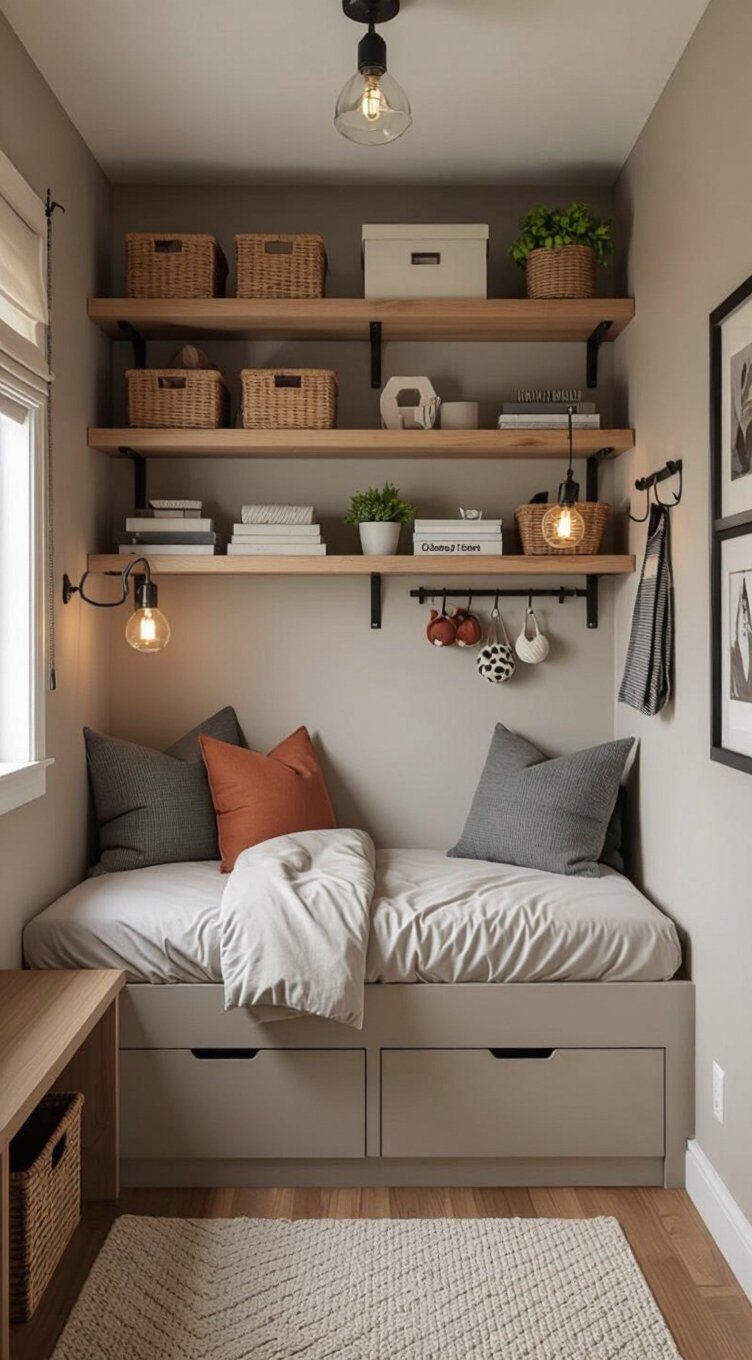
When floor space is tight, your walls become the most precious real estate in the room. Mount floating shelves above your desk, bed, or door to store books, plants, and everyday essentials without sacrificing an inch of floor space. Hang wall art strategically to create visual interest while keeping surfaces clear. Install hooks for bags, hats, and accessories to free up essential drawer space. Wall-mounted lighting replaces bulky bedside lamps, opening up your nightstand completely. Every item you move off the floor gives you breathing room, making your box room feel genuinely open and liberating.
Light Colors and Mirrors That Make Small Rooms Feel Bigger
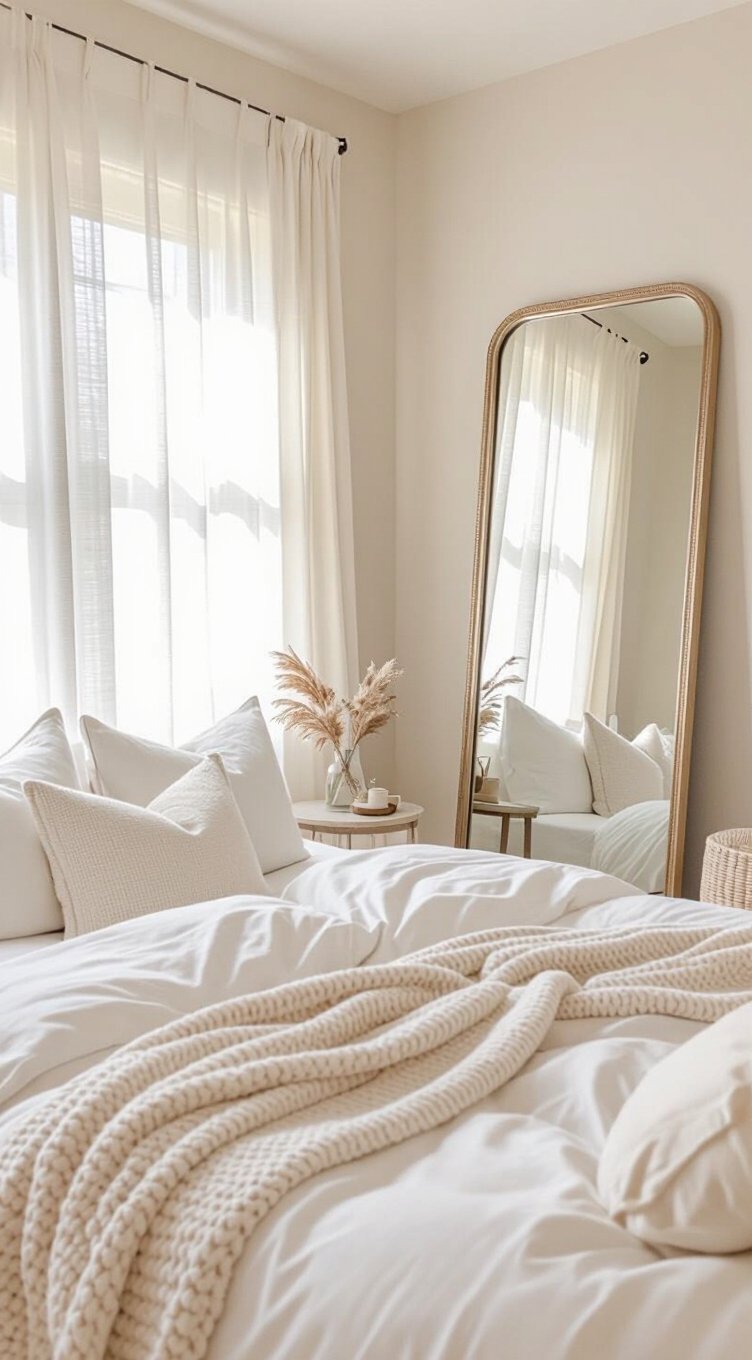
Clever Zoning for a Box Room That Does Double Duty
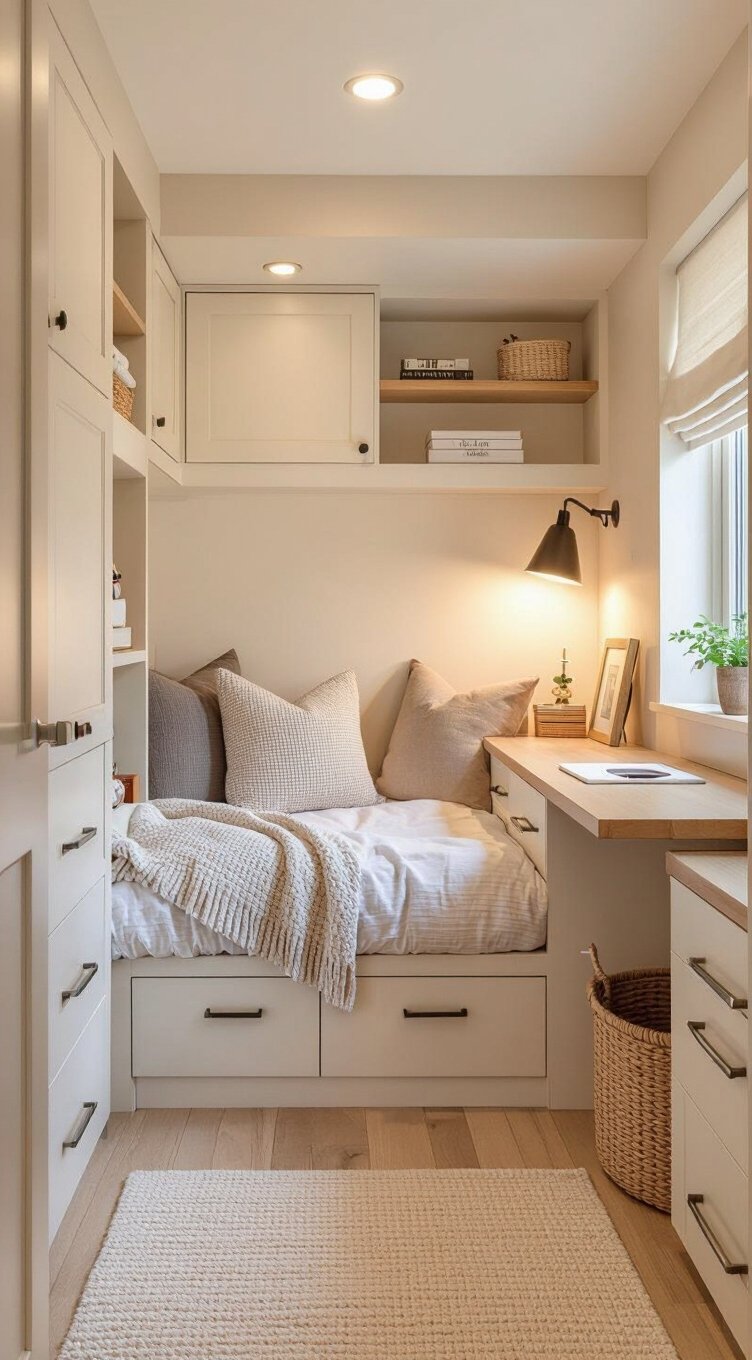
Making a box room feel bigger with light and mirrors is just the start. You can take it further by creating clever zoning that gives your small space real purpose. Room division doesn’t require walls — use a floating shelf, curtain, or area rug to define separate zones. Functional separation lets you carve out a sleeping area and a workspace without feeling cramped. Try these approaches:
- Place a desk behind the bed headboard
- Use a bookshelf as a divider
- Define zones with distinct lighting
Your box room can genuinely work harder for you.
Under-Bed Storage Ideas Worth Actually Using
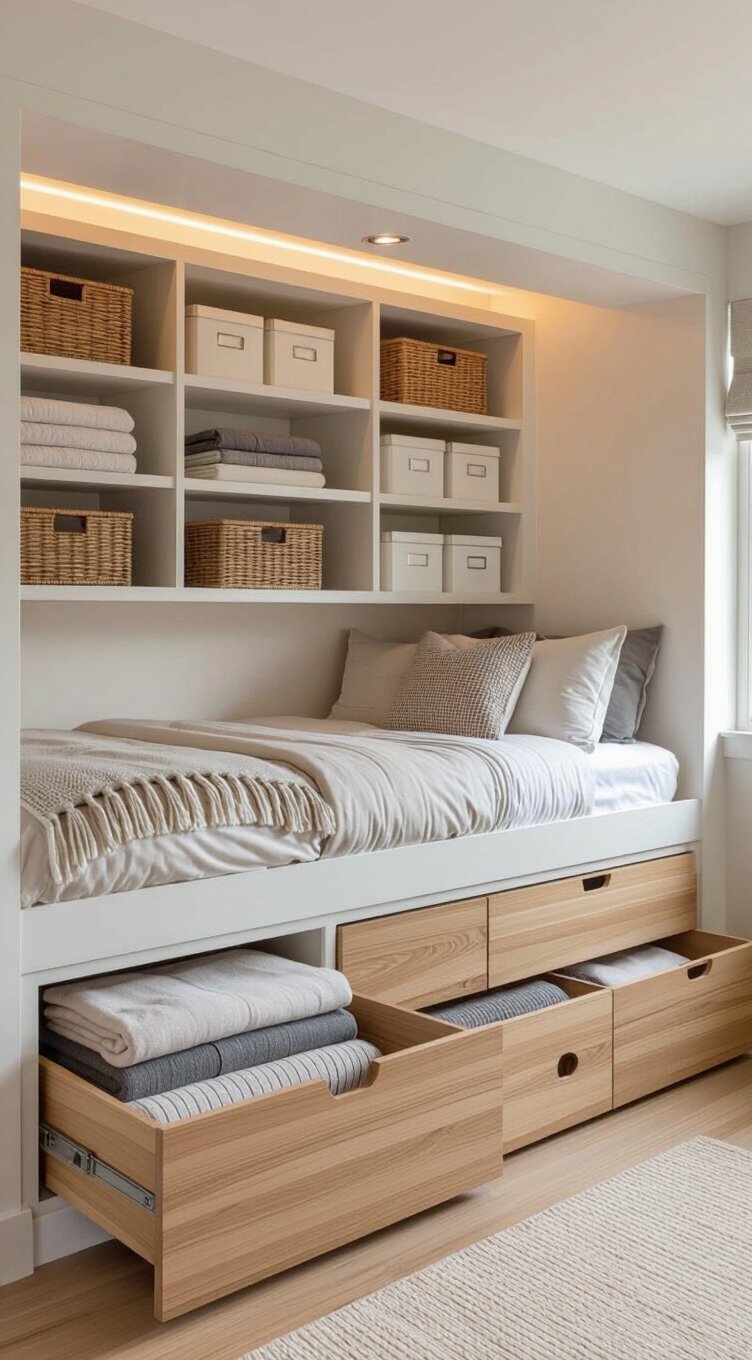
Under-bed storage is one of the smartest ways to reclaim space in a box room without sacrificing style. You’re fundamentally accessing a hidden room beneath your mattress. Here’s how to use it well:
- Install roll-out bins for easy daily access to clothes or shoes.
- Use lift-up mechanisms to store bulky seasonal items underneath.
- Label every container so you find things fast and stay organized.
- Choose slim, breathable boxes to prevent moisture buildup.
You don’t have to live cluttered. These solutions give you real freedom to breathe, move, and enjoy your space fully.
Why Fitted Wardrobes Beat Freestanding Every Time in Small Bedrooms
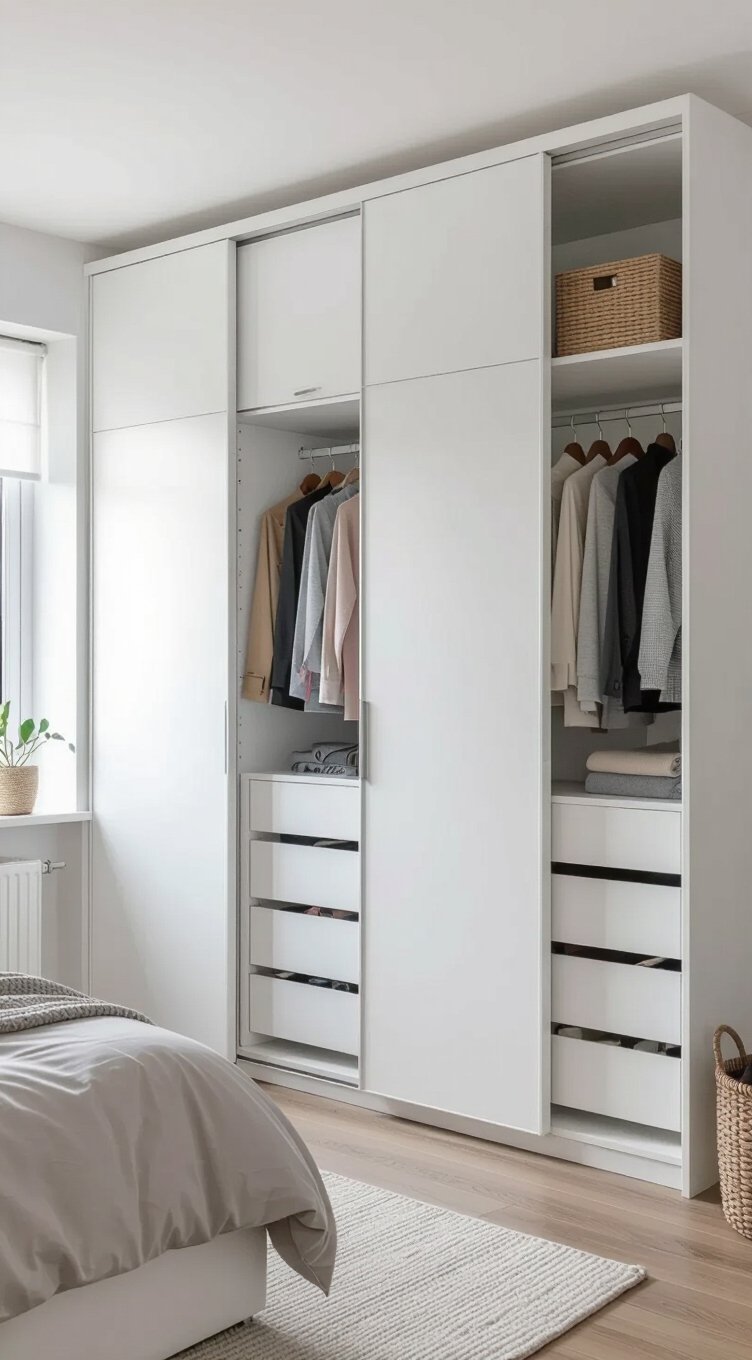
When space is tight, fitted wardrobes outperform freestanding units in almost every practical way. They’re built directly into your walls, maximizing space efficiency by eliminating wasted gaps above, beside, and behind bulky furniture. You gain full closet integration, meaning your storage works with your room’s design instead of fighting it. Fitted wardrobes reach ceiling height, doubling your usable storage instantly. You can customize shelving, hanging rails, and drawers to match exactly what you own. That freedom to design your own system means nothing gets wasted. Freestanding units can’t compete with that level of personalization in a box room.
Lighting Tricks That Open Up a Tight Space
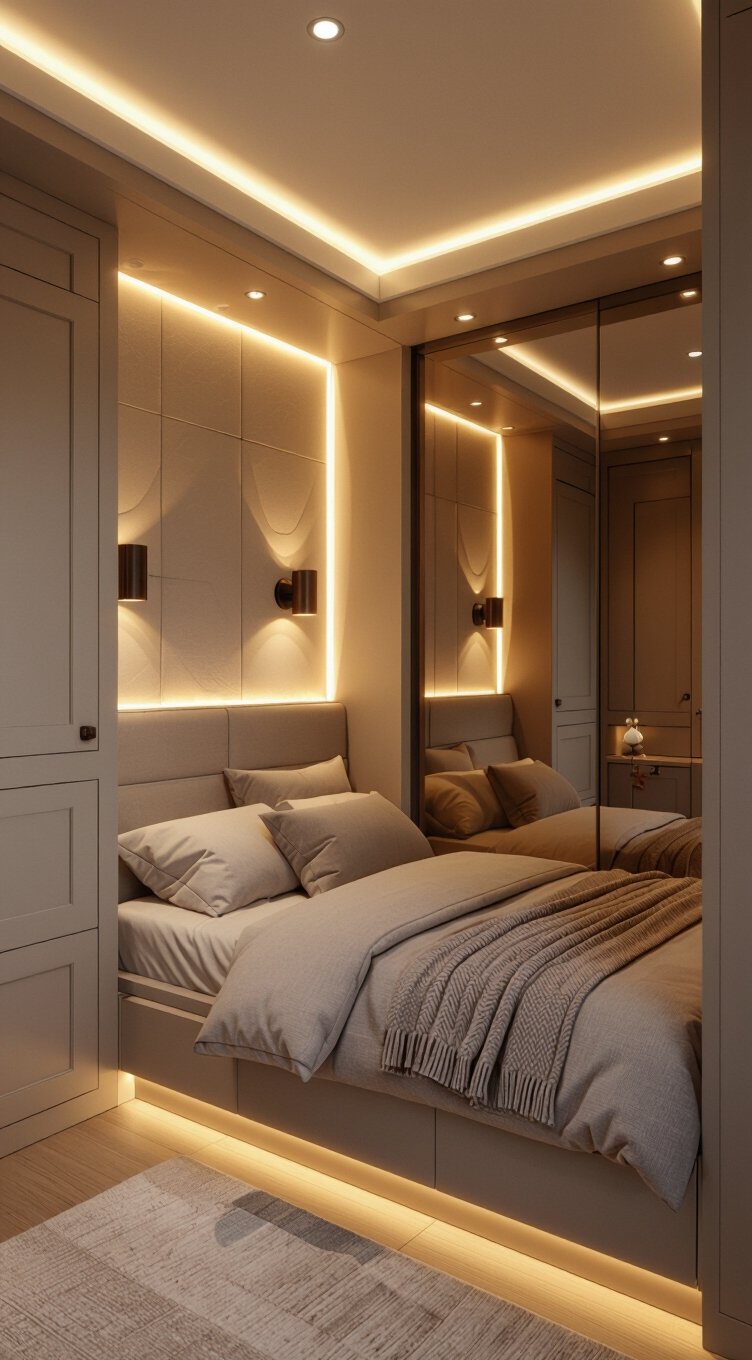
Lighting alters a box room more dramatically than almost any other change you can make without moving walls. Smart choices free your space visually and emotionally.
- Maximize natural light by keeping windows clear of heavy drapes.
- Replace bulky ceiling fixtures with flush-mount or recessed options.
- Add wall sconces to draw the eye upward and outward.
- Layer your lighting using ambient, task, and accent sources together.
Each layer creates depth that tricks your brain into perceiving more space. You’ll feel less confined and more in control of your environment.
Small Bedroom Layout Rules That Change Everything
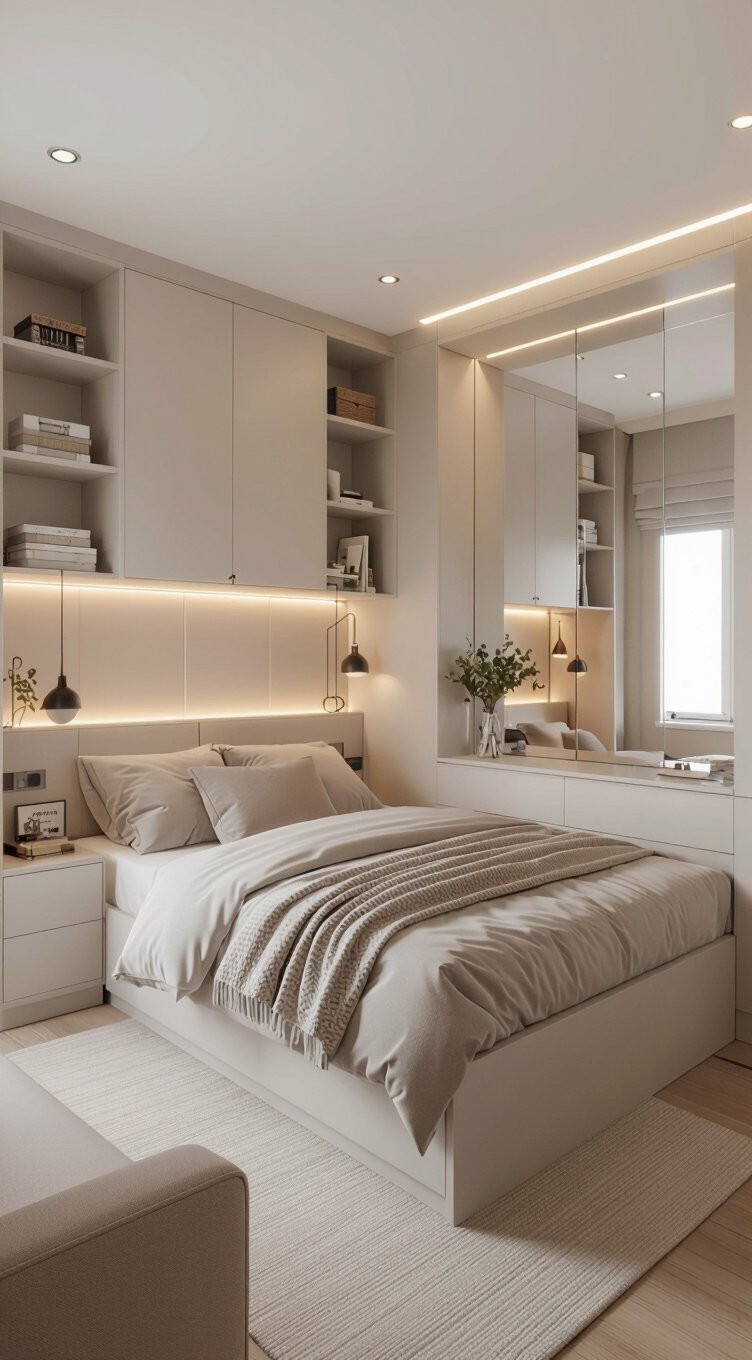
Arranging furniture in a box room bedroom isn’t guesswork — it follows a set of proven spatial rules that genuinely change how the room feels and functions. Start with space planning by placing your bed against the longest wall, freeing up walking paths. Keep visual balance in mind — avoid clustering all furniture on one side. Float your nightstand slightly instead of pushing it flat against the bed. Use vertical space with tall, narrow storage rather than wide, squat pieces. These deliberate choices give you a room that feels intentional, breathable, and entirely yours to move through freely.
Frequently Asked Questions
What Is the Ideal Minimum Square Footage for a Box Room Bedroom?
You’ll want at least 70 square feet to truly adopt space optimization and make your box room feel liberating. Maximize natural lighting to open up your personal sanctuary and create the freeing atmosphere you deserve.
Can a Box Room Legally Be Classified as a Bedroom for Selling Purposes?
Yes, you can legally classify a box room as a bedroom if it meets zoning compliance standards and egress requirements. Guarantee it’s got proper ventilation, minimum square footage, and an emergency exit to secure your freedom to sell.
How Much Does a Professional Box Room Renovation Typically Cost?
You’ll typically spend £1,500–£5,000 on a professional box room renovation, but your budget estimates can vary based on material selection. You’re free to customize costs by choosing affordable options that fit your vision perfectly.
Are There Building Regulations for Adding Windows to a Box Room?
Yes, you’ll need window permits before adding windows to your box room. Building regulations guarantee structural integrity, so check with your local authority first — you’ll gain the freedom to convert your space safely and legally.
What Temperature and Ventilation Challenges Do Box Rooms Commonly Present?
You’ll often find that box rooms struggle with poor air circulation and excessive heat retention. Their compact size traps warmth, making summers stuffy and winters damp, so you’ll need strategic ventilation solutions to create a truly comfortable, breathable space.
Conclusion
Your box room doesn’t have to feel limiting. By combining smart storage solutions, proportional furniture, and strategic lighting, you can convert even the tightest space into a functional, comfortable bedroom. Start with one change, like swapping your bed frame for a storage option or mounting shelves, then build from there. Small, intentional upgrades consistently deliver big results in compact spaces.