

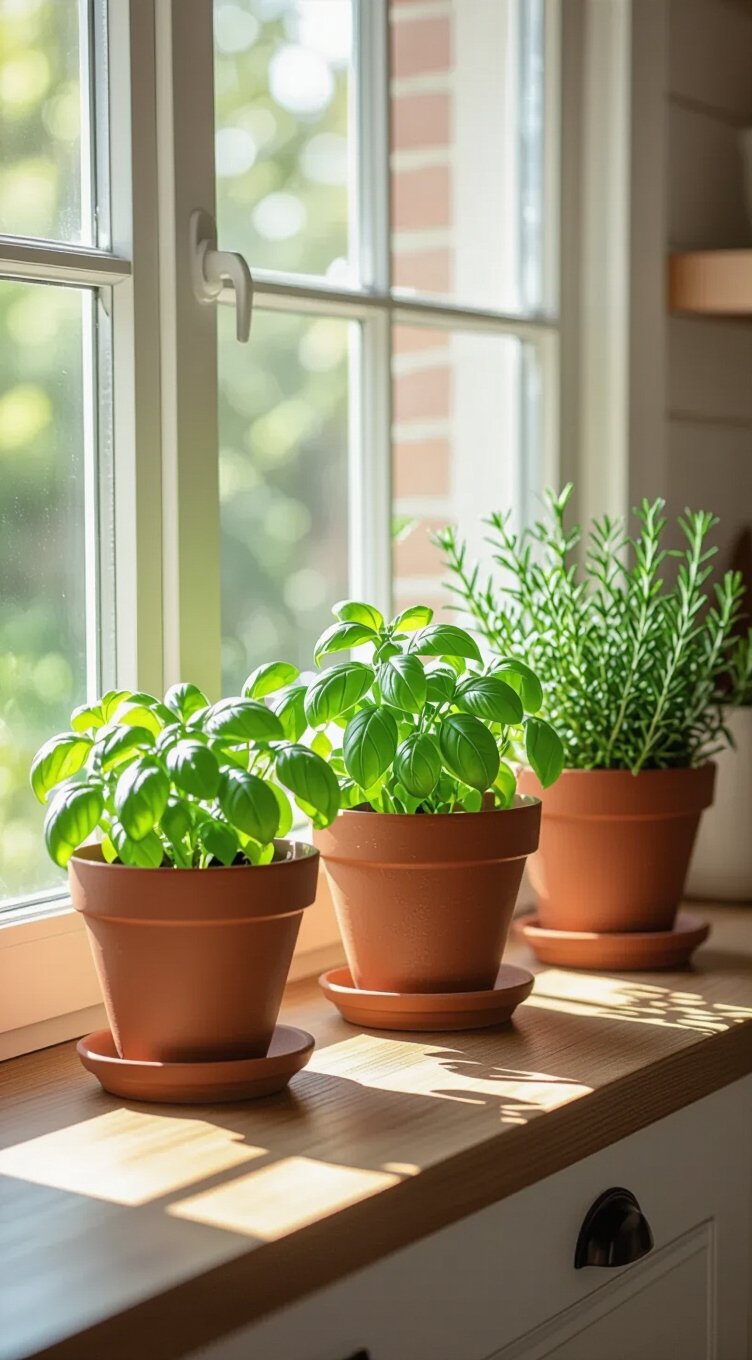
You don’t need a sprawling backyard to grow fresh herbs year-round. A small kitchen space, some smart planning, and the right containers can convert any corner into a productive herb garden. From sunny windowsills lined with terracotta pots to magnetic planters stuck right to your fridge, the options suit every kitchen size and lifestyle. Each idea ahead balances style with function, making fresh basil, mint, and thyme more accessible than you’d expect.
A Sunny Windowsill Herb Garden With Simple Terracotta Pots
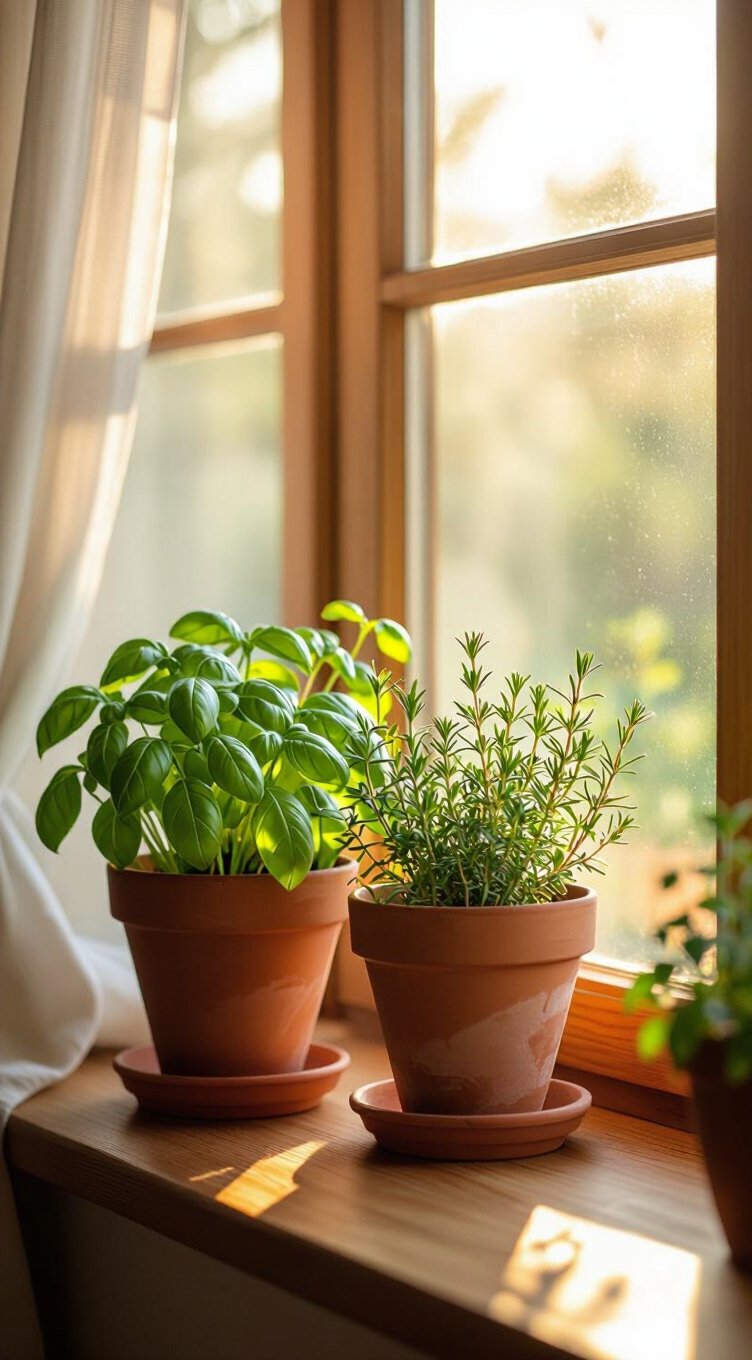
A sunny windowsill herb garden is one of the easiest and most rewarding ways to start growing your own food at home. Simple terracotta pots give your herbs the breathable, well-draining environment they need to thrive without complicated setups.
Getting Started:
- Choose a south-facing window for maximum sunlight tracking throughout the day.
- Plant basil, thyme, and parsley in individual terracotta pots for easy herb rotation.
- Water only when the top inch of soil feels dry to avoid root rot.
You’re in complete control of what you grow and when you harvest. Rotate your pots every few days to guarantee even sun exposure. You don’t need a yard or expensive equipment — just a windowsill, good light, and consistent care.
Magnetic Herb Planters That Stick Right to Your Fridge
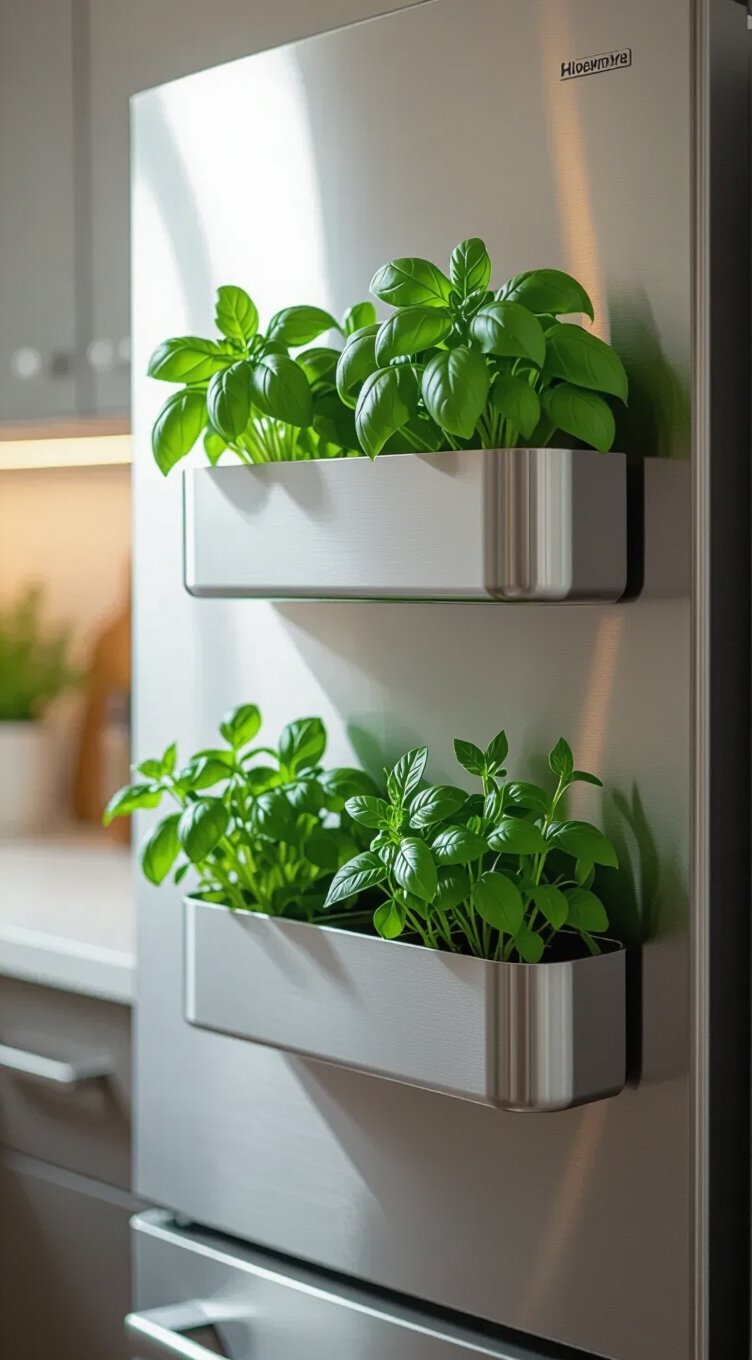
If you’re short on counter space, magnetic herb planters offer a clever solution that turns your fridge into a vertical garden. These small containers attach firmly to any magnetic surface, freeing up your counters while adding charming fridge decor to your kitchen.
Here’s how to get started with magnetic organization:
- Choose lightweight herbs like basil, thyme, or mint, since heavy root systems can strain magnetic mounts.
- Select strong magnets rated for at least two pounds to keep planters secure.
- Use well-draining containers with small drainage holes to prevent moisture buildup.
- Position planters near natural light whenever possible, or supplement with a small LED grow light.
You’ll gain fresh herbs daily without sacrificing a single inch of precious counter space.
A Hydroponic Herb Kit for a No-Mess Kitchen Garden
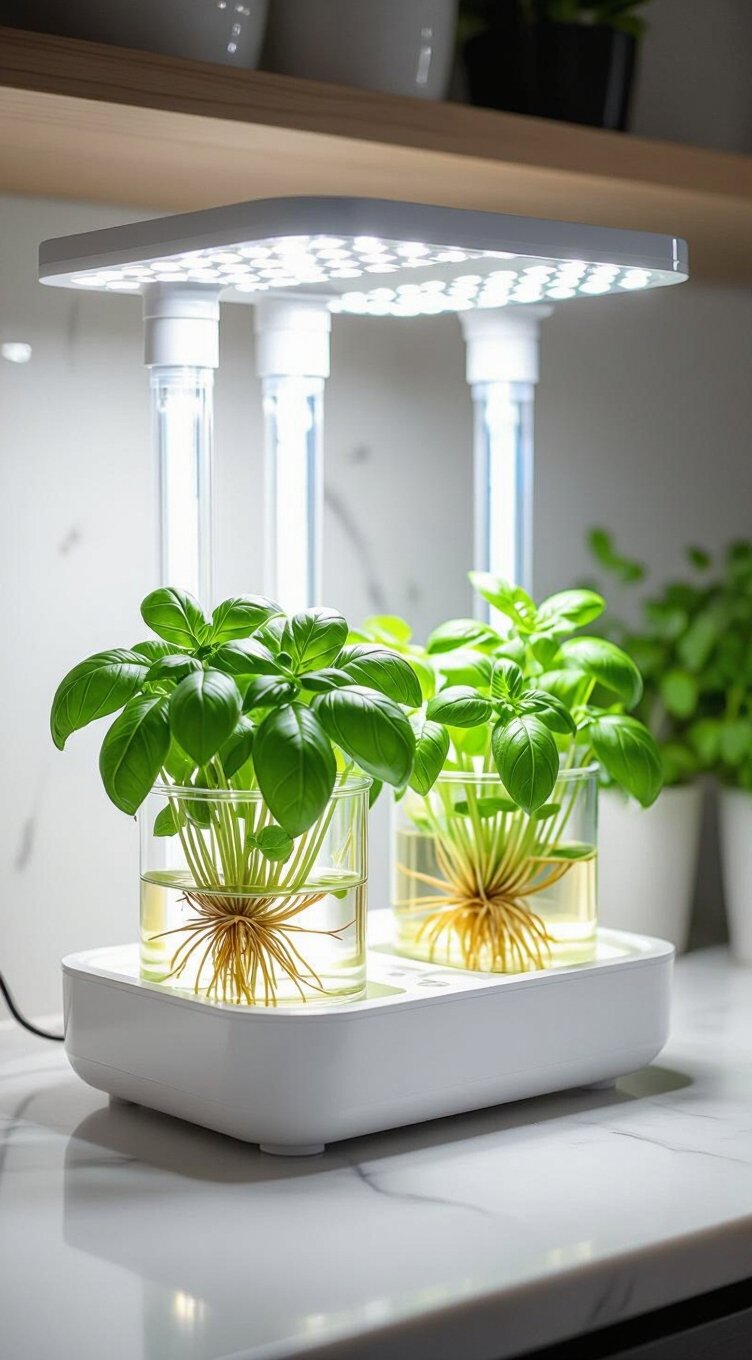
Whether you’re new to gardening or simply tired of soil messes, a hydroponic herb kit gives you a clean, efficient way to grow fresh herbs indoors. These systems use water and nutrients instead of soil, letting you grow basil, mint, and cilantro without any dirt. You control the nutrient balance, ensuring your herbs get exactly what they need to thrive. Proper root circulation keeps oxygen moving through the water, preventing rot and promoting healthy growth. Most kits include grow pods, a water reservoir, and a built-in light. Simply add water, insert your seed pods, and let the system work. You’re free from messy potting soil and unpredictable outdoor conditions. Hydroponic kits make fresh herbs accessible, dependable, and surprisingly simple to maintain year-round.
Small Self-Watering Planters for Low-Maintenance Kitchen Herbs
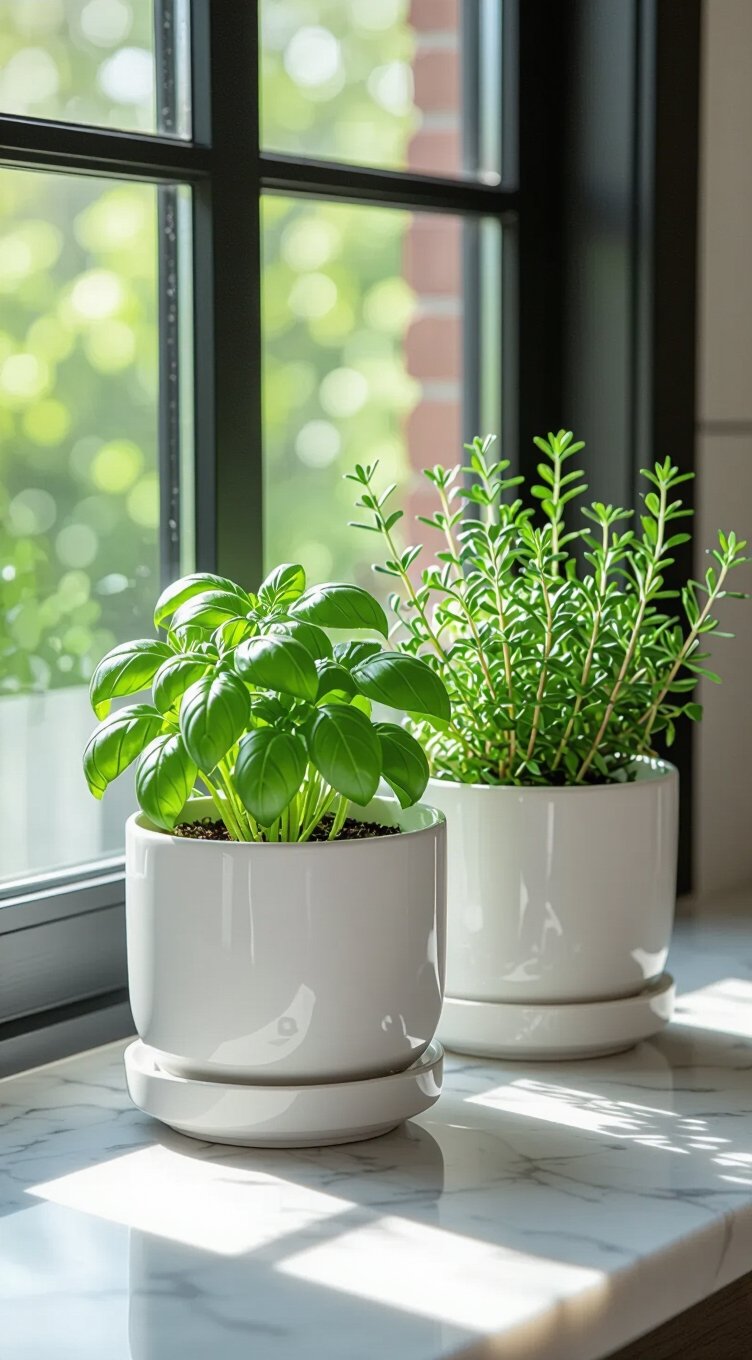
Small self-watering planters take the guesswork out of keeping kitchen herbs alive and thriving. These clever containers use smart irrigation systems that automatically deliver water directly to plant roots when needed. You’ll never stress about overwatering basil or forgetting to hydrate your thyme again.
Many modern self-watering planters include built-in moisture sensors that detect soil hydration levels and release water accordingly. You simply fill the reservoir, place your herbs, and let the planter do the hard work. This setup gives you fresh herbs without daily maintenance commitments.
Consider compact options like the Lechuza Cube or TerraGrow Self-Watering Pot for countertop use. These planters fit neatly on windowsills and keep mint, parsley, and chives thriving with minimal effort from you.
A Tiered Plant Stand for Vertical Herb Growing in Small Kitchens
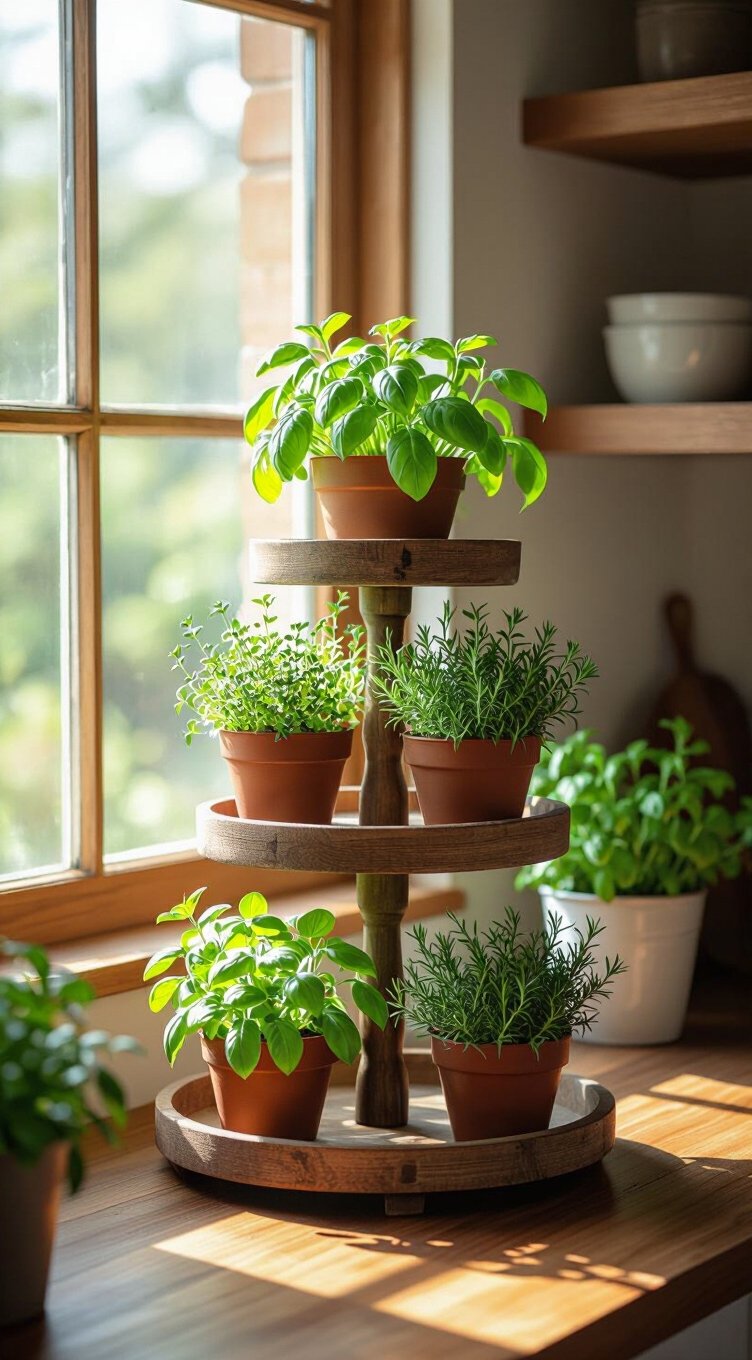
When counter space is limited, a tiered plant stand lets you grow multiple herbs vertically without sacrificing essential workspace. Its stackable design maximizes space efficiency, giving you fresh herbs without cluttering your kitchen.
Here’s what your tiered herb stand setup can look like:
- Three ascending tiers displaying basil, parsley, and thyme in terracotta pots near a sunny window
- Compact metal or wood frame fitting neatly into a corner, freeing your countertops completely
- Each shelf holding two to three small pots, creating a lush, organized herb garden
- Cascading greenery from upper tiers softening the kitchen’s hard surfaces beautifully
You’re fundamentally building a personal herb library that works on your terms. Position it near natural light, and you’ll harvest fresh ingredients daily without restrictions.
An Under-Cabinet Herb Garden That Clears Your Counter
Taking vertical growing even further, an under-cabinet herb garden moves your plants completely off the counter and into unused overhead space. You’ll reclaim essential prep space while keeping fresh herbs within easy reach. Most systems mount directly beneath your upper cabinets using simple hardware you can install yourself in under an hour.
Look for kits that include under cabinet lighting, which provides the consistent light range herbs need to thrive indoors. Many modern systems also feature hidden irrigation lines that run discreetly along the cabinet base, providing water without visible tubing cluttering your kitchen. You simply connect the reservoir, set your watering schedule, and let the system handle the rest. Basil, thyme, and chives all perform exceptionally well in these compact, ceiling-hugging setups.
Wall-Mounted Herb Pockets That Turn Dead Wall Space Into a Kitchen Garden
- Choose sturdy felt or canvas pockets that hold moisture without dripping onto your walls.
- Mount pockets near a sunny window so your herbs get at least six hours of natural light daily.
- Plant compact herbs like chives, mint, and parsley since they adapt well to shallow pocket depths.
- Label each pocket clearly so you grab exactly what you need without second-guessing.
A Floating Shelf Above the Sink for Your Most-Used Herbs
A floating shelf above the sink is one of the smartest ways to keep your most-used herbs within arm’s reach while cooking. This setup gives you complete control over your kitchen space without sacrificing counter room.
Install your floating shelf above sink level, ideally 12-18 inches above the faucet. This height keeps herbs accessible without blocking natural light from nearby windows. Choose a waterproof shelf material like sealed wood or powder-coated metal to handle occasional splashes.
Here’s what works best on this shelf:
- Basil – needs consistent warmth and moisture nearby
- Mint – thrives with regular watering access
- Chives – grows compactly in small pots
You’ll reach for fresh herbs effortlessly, making every meal more flavorful and rewarding.
Mason Jar Herb Planters for a Charming Kitchen Garden
Once you’ve got your floating shelf sorted, mason jar herb plant abodes offer another clever way to bring fresh herbs into your kitchen. They’re affordable, customizable, and totally freeing regarding placement.
Follow these steps to set up your mason jar garden:
- Drill mason jar drainage holes at the bottom of each jar to prevent root rot and waterlogging.
- Position jars near a sunny window to maximize jar herb lighting for healthy, vigorous growth.
- Add gravel layers first, then quality potting mix to improve drainage and aeration markedly.
- Label each jar clearly with herb names using chalk markers for easy, stress-free identification.
You control exactly where these jars live, making your kitchen garden completely adaptable to your lifestyle.
Upcycled Tin Cans for a Free DIY Kitchen Herb Display
Upcycled tin cans are one of the most budget-friendly ways to build a charming kitchen herb display without spending a dime. You can repurpose old soup or coffee cans at zero cost, giving them new life as functional herb planters. Start by cleaning each can thoroughly, then punch small drainage holes in the bottom using a nail and hammer. Paint or wrap the cans with twine to add rustic charm to your kitchen space. Arrange them on a windowsill or mount them on a wooden board for a creative vertical display. Plant basil, thyme, or mint directly into the cans using potting soil. You’re creating a practical herb garden while exercising complete creative freedom over your kitchen’s style and layout.
Chalkboard-Labeled Herb Pots for Instant Identification
Now that your tin can planters are set up, keeping track of which herb is which becomes your next challenge. Chalkboard decoration solves this problem beautifully, giving you complete freedom to relabel whenever your garden changes.
Here’s how to create your chalkboard-labeled herb pots:
- Paint a small chalkboard section directly onto each pot using affordable chalkboard spray paint.
- Write each herb’s name clearly with white chalk, making identification instant and stress-free.
- Add small doodles or symbols beside the herb labeling text for extra visual personality.
- Erase and rewrite labels easily whenever you swap out herbs or rearrange your display.
This simple system keeps your kitchen garden organized, flexible, and completely yours to customize freely.
A Lazy Susan Herb Tray That Puts Every Herb Within Reach
A Lazy Susan converts your herb collection into a perfectly organized, fully accessible display that puts everything within arm’s reach. This rotating storage solution eliminates the frustration of digging through crowded windowsill pots to find what you need.
Here’s how to set yours up effectively:
- Choose the right size. Select a 12-to-16-inch turntable that fits your counter space comfortably without crowding.
- Group herbs strategically. Place frequently used herbs like basil, parsley, and cilantro toward the front for easy access.
- Use uniform pots. Matching containers create visual consistency and maximize space on the tray.
A single spin gives you complete control over your entire herb garden instantly. You’ll never struggle to reach that back-row rosemary again.
A Wooden Crate Herb Box for Countertop Growing
Wooden crate herb boxes bring rustic charm and serious growing functionality to your kitchen countertop. Crate gardening lets you grow fresh herbs on your own terms, without complicated setups or expensive equipment. Wooden containers naturally regulate moisture, creating healthier root environments for basil, thyme, and parsley.
- Line your crate with burlap or plastic sheeting to prevent soil from escaping through the slats.
- Drill drainage holes along the bottom so roots never sit in standing water.
- Arrange taller herbs like rosemary toward the back, shorter varieties like chives up front.
- Stain or seal the wood with food-safe finish to protect against moisture damage and extend your crate’s lifespan considerably.
You’ll harvest fresh ingredients daily without ever leaving your kitchen.
Frequently Asked Questions
Which Fresh Herbs Grow Best Together in One Small Container?
You’ll maximize space efficiency with companion planting by grouping basil, parsley, and chives together. They’re compatible herbs that thrive in one container, letting you enjoy fresh flavors freely without overcrowding your small kitchen garden.
How Often Should Indoor Kitchen Herbs Actually Be Fertilized?
Fertilize your indoor kitchen herbs every 4-6 weeks using organic fertilizer. You’ll love how slow-release nutrients give your herbs steady growth without overwhelming them, letting you enjoy fresh, chemical-free flavors on your own terms.
Can Kitchen Herbs Survive in Low-Light Apartments Without Sunlight?
Yes, you can grow kitchen herbs in low-light apartments! You’ll need artificial lighting to replace sunlight. Mimic natural light cycles by running grow lights 12-16 hours daily, giving your herbs the freedom to thrive anywhere.
What Soil Mix Works Best for Growing Herbs Indoors?
Use a well-balanced mix combining equal parts potting soil, perlite, and compost. This blend’s drainage composition prevents root rot while moisture retention keeps herbs thriving. You’ll enjoy complete freedom to customize it for your favorite indoor varieties.
How Do You Prevent Indoor Herb Gardens From Attracting Fruit Flies?
Avoid overwatered soil by letting it dry between waterings. Keep ripening fruit away from your herb garden. You’ll stop fruit flies from invading your space and enjoy complete, uninterrupted freedom with your thriving indoor herbs.
Conclusion
You don’t need a big space to grow fresh herbs right in your kitchen. Whether you choose terracotta pots on a sunny windowsill, magnetic fridge planters, or a hydroponic kit, there’s a setup that fits your lifestyle. Start small, pick one or two ideas that match your space, and build from there. Fresh herbs are always within reach when you create a simple, functional kitchen garden.