

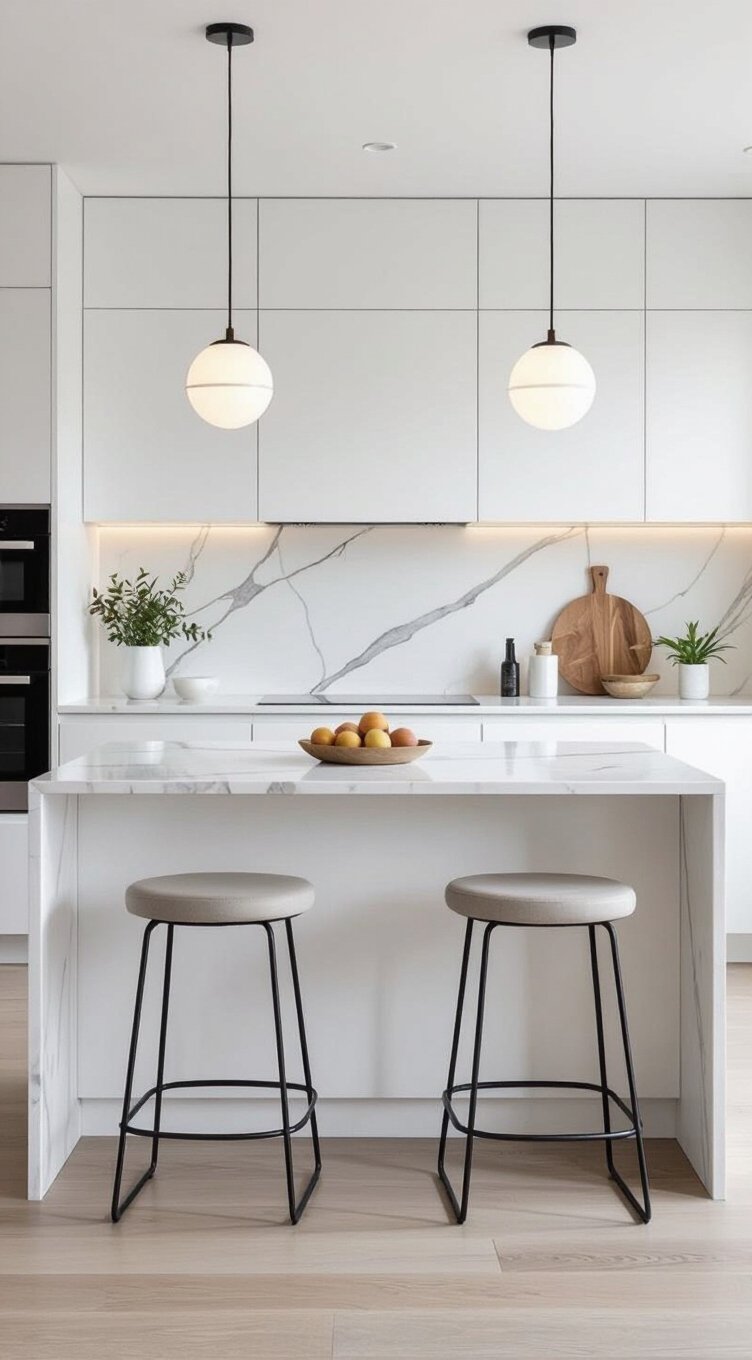
Your small kitchen doesn’t have to sacrifice style or function just because space is limited. Smart breakfast bar solutions can change tight corners, narrow walls, and unused ledges into practical dining spots. From fold-down designs that vanish when you’re done eating to peninsula bars that visually expand your layout, each option serves a specific purpose. The right choice depends on your kitchen’s dimensions, budget, and lifestyle—and the next 13 ideas break it all down.
Fold-Down Breakfast Bars That Disappear When Not in Use
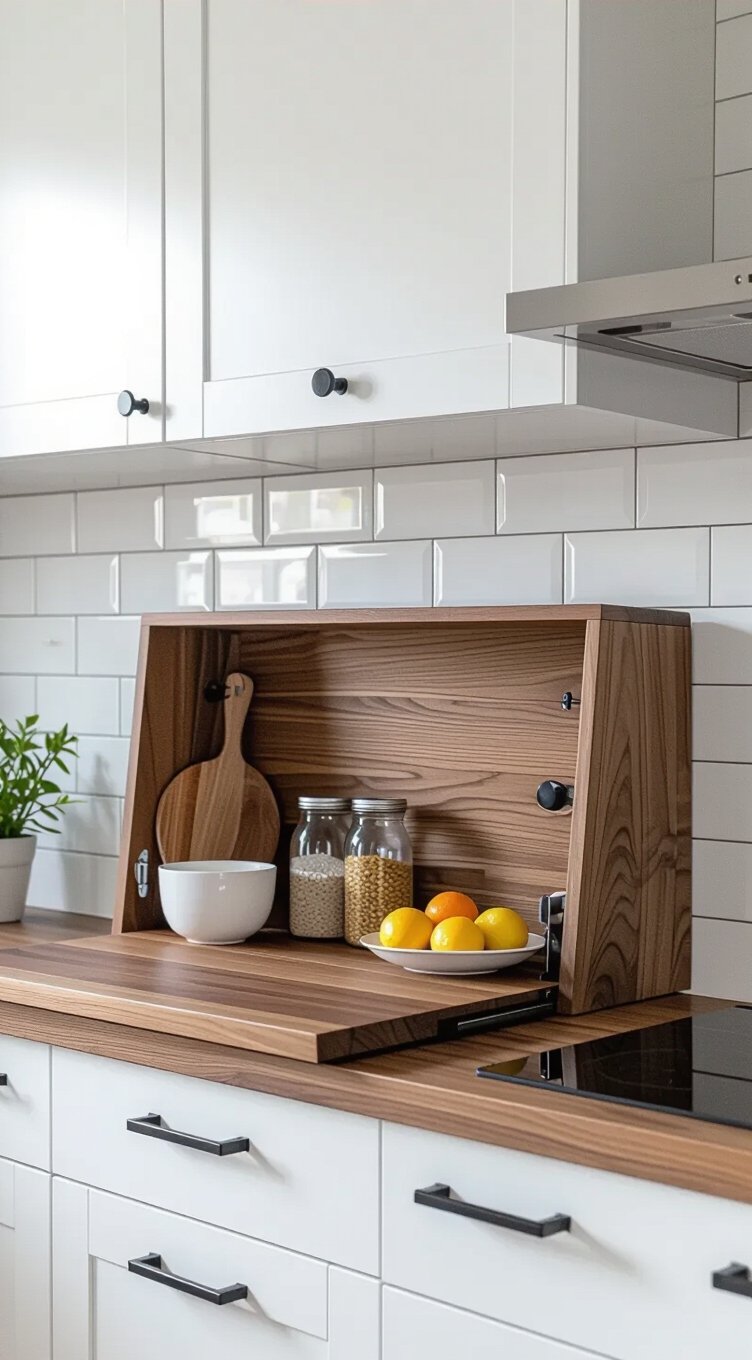
When space is tight, a fold-down breakfast bar can be a groundbreaking solution for your small kitchen. This fold-down design mounts directly onto your wall, staying completely hidden until you need it. You’ll reclaim essential floor space without sacrificing function or style.
The space-saving mechanism works through a simple hinge system that lets the surface drop flat against the wall when you’re done. Here’s how to make it work for you:
- Mount it at counter height (36 inches) for comfortable seating.
- Choose a sturdy bracket system that supports at least 200 pounds.
- Install it near an outlet for coffee makers or small appliances.
You’re fundamentally creating an on-demand dining surface that respects your freedom to move freely through your kitchen.
Peninsula Bars That Make Small Kitchens Feel Bigger
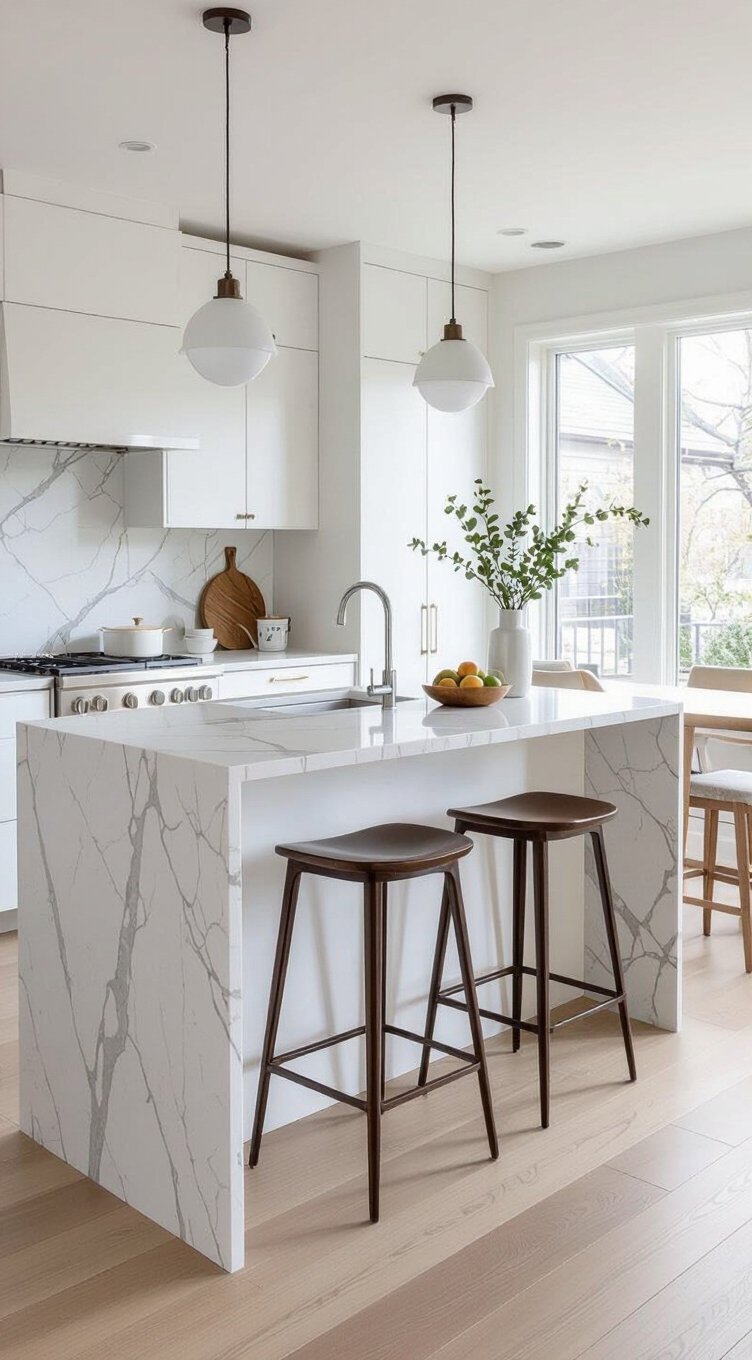
A peninsula bar is one of the smartest upgrades you can make to a small kitchen’s layout. It extends from a wall or cabinet, creating extra workspace without blocking movement. A floating peninsula adds visual openness, making your kitchen feel larger instantly.
Here’s why a peninsula bar works so well:
- It defines zones — separating cooking and dining areas naturally.
- It adds hidden storage — drawers and cabinets underneath keep clutter away.
- It creates seating — bar stools tuck underneath, saving precious floor space.
- It improves flow — you move freely without cramped corners slowing you down.
You don’t need a massive kitchen to enjoy this setup. A well-planned peninsula gives you flexibility, function, and breathing room all at once.
What Height Should a Small Kitchen Breakfast Bar Be?
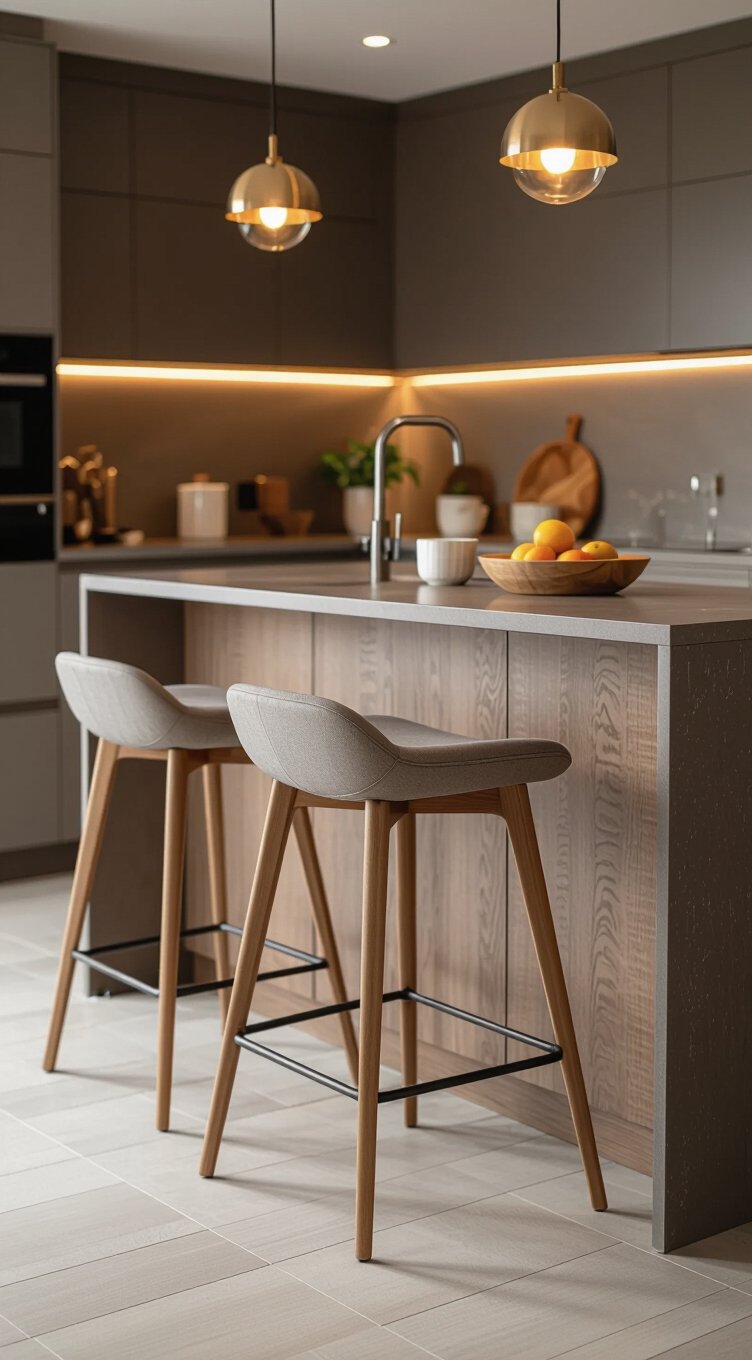
Getting the height right makes all the difference between a breakfast bar you love and one you avoid. Bar height standards give you a clear starting point for planning your space confidently.
Choose from these three standard options:
- Counter height (36 inches): Pairs with 24-26 inch stools, offering a casual, everyday feel that works well in tight spaces.
- Bar height (42 inches): Requires 28-30 inch stools and creates a pub-style atmosphere with excellent seating comfort.
- Table height (30 inches): Works with standard 18-inch chairs, making it the most flexible option for multipurpose use.
Your ceiling height, seating comfort preferences, and how you’ll use the space daily should guide your final decision. Measure twice before committing.
Wall-Mounted Breakfast Bars for Narrow Galley Kitchens
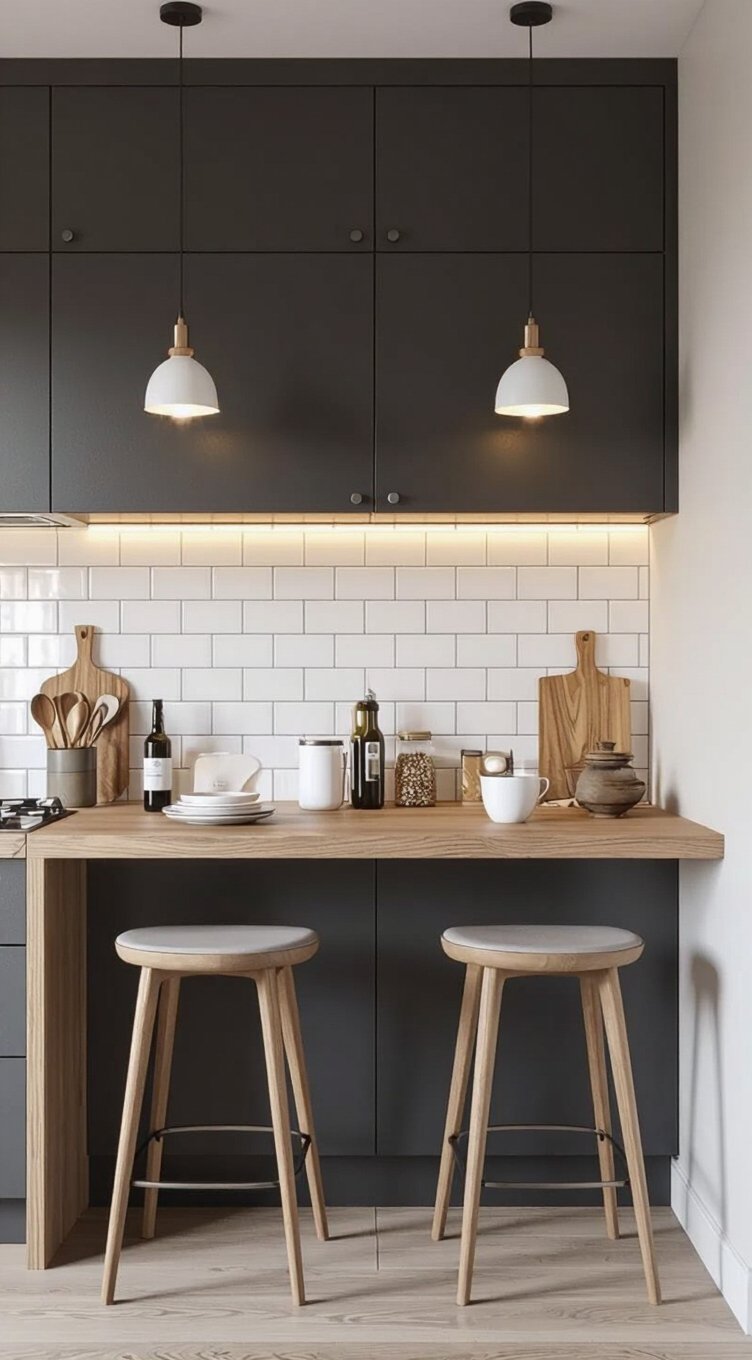
In spite of limited floor space, a wall-mounted breakfast bar can completely convert your narrow galley kitchen into a functional dining area. You’ll reclaim essential square footage while creating a stylish spot to enjoy your morning coffee.
Here’s what makes wall-mounted bars work brilliantly:
- Floating shelves double as breakfast bars when reinforced with proper brackets rated for dining weight.
- Hidden hardware keeps your design clean, eliminating bulky visible supports that crowd tight spaces.
- Fold-down designs let you collapse the surface completely when it’s not in use.
- Depth control matters—keep your bar between 12-15 inches to avoid blocking galley traffic flow.
You’re free to customize materials, finishes, and dimensions to match your lifestyle perfectly.
Built-In Breakfast Bars That Claim Dead Corner Space
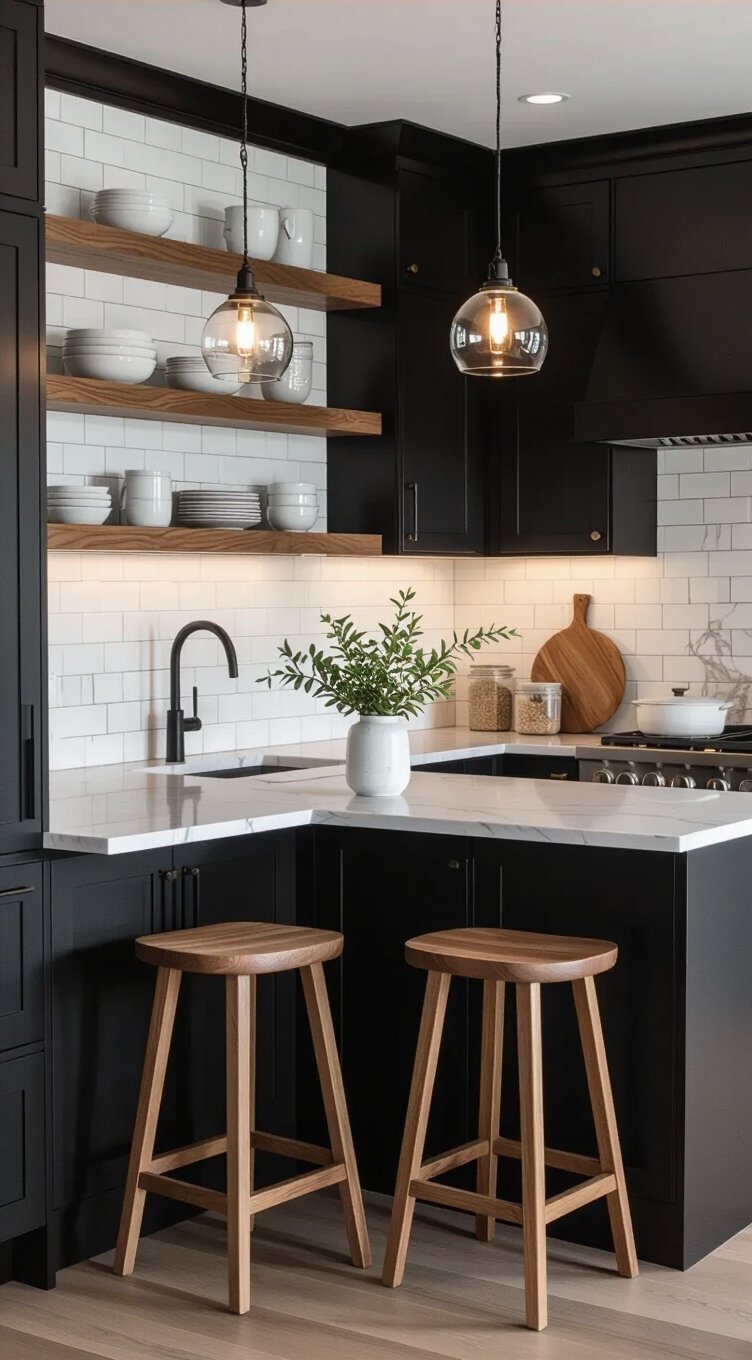
Those wall-mounted solutions work great for galley layouts, but dead corners offer a completely different opportunity worth exploring. Corner integration redefines wasted angles into functional breakfast zones that genuinely expand your usable kitchen footprint.
Here’s how you can maximize these forgotten spaces:
- Install an L-shaped counter that wraps seamlessly into the corner, creating generous surface area without consuming central floor space.
- Add angled seating positioned diagonally, which opens traffic flow while accommodating two to three people comfortably.
- Build floating shelves above the corner bar for storing everyday items within easy reach.
Smart space optimization means treating every awkward angle as potential real estate. You’ll find that built-in corner breakfast bars deliver surprising capacity, giving you genuine freedom to cook, eat, and live without feeling cramped.
Slim Waterfall Countertop Extensions for Ultra-Narrow Kitchens
A slim waterfall countertop extension can convert even the most cramped kitchen into a functional eating space without sacrificing precious square footage. You don’t need a massive renovation to create breathing room in your kitchen.
Here’s what makes this solution work for ultra-narrow spaces:
- A narrow overhang of just 10–12 inches provides enough knee clearance for comfortable seating.
- The slim waterfall edge creates a sleek, continuous surface that visually expands your space.
- Matching your extension material to existing countertops makes the addition feel intentional and seamless.
- Pairing your slim waterfall bar with backless stools keeps the area open and uncluttered.
You’re fundamentally reclaiming unused vertical space and reconfiguring it into a practical dining zone that works entirely on your terms.
Breakfast Bar Stools That Tuck Away Completely
When space is tight, the stools you choose can make or break your breakfast bar setup. Retractable stools slide directly under your counter, disappearing completely when you’re not using them. This gives you full freedom to move through your kitchen without obstacles blocking your path.
Look for hidden seating options like stackable stools, fold-flat designs, or stools mounted on ceiling tracks. These solutions reclaim your floor space instantly after every meal.
Consider these practical choices:
- Cantilever stools tuck flush against your bar’s underside
- Folding wall-mounted seats collapse flat against the wall
- Nesting stools stack together in one compact footprint
You’ll move freely, cook comfortably, and keep your small kitchen feeling open and uncluttered every single day.
Open-Plan Breakfast Bar Layouts That Actually Work
Open-plan layouts succeed when your breakfast bar acts as a natural divider between your kitchen and living space. You’ll create flow without sacrificing function. These space saving setups give you the freedom to move, entertain, and cook without feeling cramped.
Here are 4 open plan layouts that actually work:
- Peninsula bar – extends from your counter, eliminating the need for a separate table.
- Floating island bar – sits independently, letting you reposition it freely.
- Wall-mounted fold-down bar – folds flat when you’re done using it.
- Stepped counter bar – uses a raised section of your existing counter as seating space.
Each option keeps your space open, flexible, and completely yours to customize however you want.
Movable Breakfast Bars Built Into Rolling Kitchen Islands
Rolling kitchen islands give you the ultimate flexibility, letting you move your breakfast bar wherever your space demands it most. You’re not locked into one configuration, so you can push the island against a wall when cooking and roll it out for dining whenever you need extra seating.
When choosing rolling islands that double as movable bars, look for these key features:
- Locking casters that secure the island firmly during meals
- Overhang extensions of at least 12 inches for comfortable knee clearance
- Built-in storage underneath for stools, keeping your floor space clear
Movable bars work especially well in galley or L-shaped kitchens. You’ll gain a functional dining spot without permanently sacrificing essential prep or traffic space.
Window Ledge Breakfast Bars for Small Kitchens With a View
If your small kitchen has a window with some decent wall space beneath it, you’ve got a natural opportunity to create a charming breakfast bar. This window seating setup lets you enjoy your morning coffee while embracing view integration into your daily routine.
Simply install a floating shelf or narrow countertop directly beneath the window. Here’s how to make it work:
- Mount a 12-16 inch deep countertop flush against the window wall
- Add backless stools to keep sightlines open and maximize space
- Install under-counter lighting for evening meals
- Use weather-resistant materials near the glass to prevent moisture damage
You’ll change an overlooked wall into your favorite spot in the house, combining function with the freedom of an inspiring outdoor view.
Breakfast Bar Ideas That Work in Studio Apartments
Studio apartments challenge you to make every square inch count, especially when it comes to dining. A breakfast bar with a compact design gives you a dedicated eating space without eating up your floor plan. Mount a fold-down bar along an empty wall, and you’ll instantly create a functional spot that disappears when you don’t need it. A peninsula-style counter extending from your kitchen cabinets doubles as prep space and a casual dining area. Choose bar stools that tuck completely underneath to keep pathways clear. These space saving solutions let you live freely without feeling cramped. Consider a narrow floating shelf at counter height—it seats two comfortably and keeps your studio feeling open, airy, and completely yours.
Breakfast Bar Materials and Finishes That Suit Small Kitchens
The materials and finishes you choose for your breakfast bar can make a small kitchen feel larger or more closed-in. Smart material choices give you the freedom to design a space that truly works for you.
Consider these top options:
- Marble countertops add elegance and reflect light beautifully, making your space feel open.
- Glossy finishes bounce light around the room, visually expanding tight areas.
- Butcher block brings warmth and character without overwhelming smaller spaces.
- Glass or acrylic surfaces create transparency, making your kitchen feel less cramped.
Light-colored materials paired with glossy finishes consistently deliver the best results in compact kitchens. You’ll notice an immediate difference when reflective surfaces replace heavy, dark materials throughout your breakfast bar design.
Budget-Friendly DIY Breakfast Bar Ideas for Small Kitchens
Creating a budget-friendly breakfast bar doesn’t mean you have to sacrifice style or functionality in your small kitchen. You can build a unique counter using repurposed doors laid flat and supported by wall-mounted brackets. This approach cuts costs while adding character to your space.
Consider these practical DIY options:
- Pallet wood counter: Sand and seal reclaimed pallet wood to create a rustic, durable surface that costs very little.
- Repurposed doors: Mount an old door horizontally against a wall to craft an instant breakfast bar.
- Floating shelf bar: Install heavy-duty brackets with a thick wooden plank for a minimalist, space-saving solution.
Each option lets you customize dimensions, finishes, and height to perfectly suit your kitchen’s unique layout.
Frequently Asked Questions
Can a Breakfast Bar Double as a Workspace for Remote Working?
Yes, your breakfast bar can absolutely double as a remote workspace! You’ll want ergonomic seating to stay comfortable during long hours, and smart cable management keeps your setup tidy, giving you the freedom to work efficiently anywhere.
How Many People Can a Small Kitchen Breakfast Bar Comfortably Seat?
You can comfortably seat two to four people at a small breakfast bar. Keep seating capacity in mind by allowing 24 inches per person, ensuring comfort dimensions that let you enjoy your space freely and flexibly.
Are Breakfast Bars Suitable for Households With Young Children or Toddlers?
Yes, you can make breakfast bars work with young children by prioritizing child safety with rounded edges and sturdy stools. You’ll also appreciate how easy cleanup becomes, giving you more freedom to enjoy family mornings effortlessly.
Do Breakfast Bars Add Resale Value to Small Kitchen Homes?
Yes, breakfast bars can increase your property’s resale value! They enhance home staging appeal and give you a property market increase by making your small kitchen feel larger, more functional, and attractive to potential buyers seeking versatile living spaces.
What Lighting Works Best Directly Above a Small Kitchen Breakfast Bar?
Pendant lights work best directly above your breakfast bar, giving you stylish, focused illumination. You’ll also love how undercabinet lighting adds a warm, ambient glow, freeing your space from harsh overhead fixtures while creating an inviting, open atmosphere.
Conclusion
You don’t need a large kitchen to enjoy a functional, stylish breakfast bar. Whether you choose a fold-down design, a peninsula, or a window ledge setup, there’s a smart solution for your space. Focus on materials that reflect light, maximize vertical storage, and keep pathways clear. Start with one idea that fits your layout and budget, then build from there. Small changes can make a big difference in how your kitchen feels and functions.