

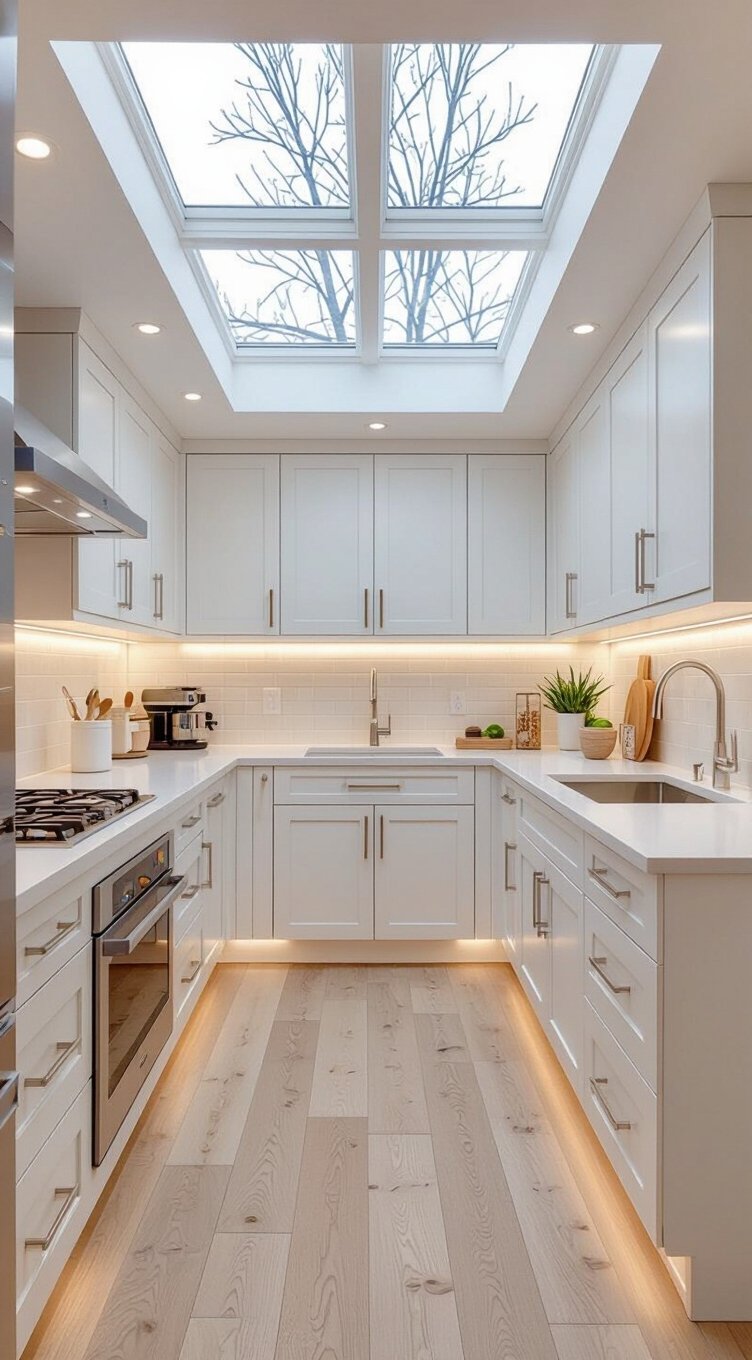
A small basement kitchen doesn’t have to feel like a dark, cramped afterthought. You can revise it into a bright, functional space with the right design choices. Light colors, strategic lighting, and smart storage solutions make a surprising difference in how spacious your kitchen feels. Whether you’re starting from scratch or updating an existing layout, these 12 practical ideas will show you exactly how to make every square foot work harder for you.
Use Light Paint Colors to Brighten a Small Basement Kitchen
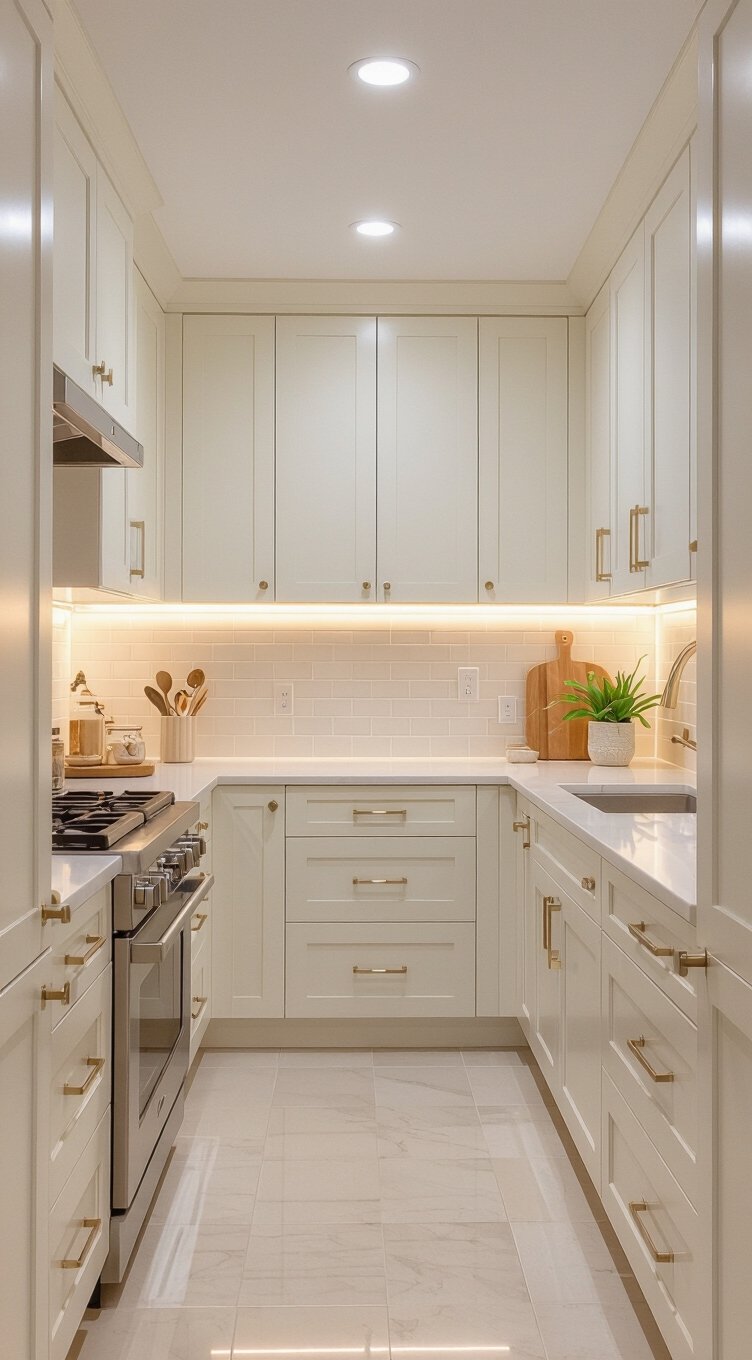
One of the simplest ways to make your small basement kitchen feel larger and more inviting is to choose light paint colors. Soft whites, warm creams, and pale grays reflect natural and artificial light effectively, making your space feel open and free. You’ll notice an immediate difference when walls stop absorbing light and start bouncing it around the room. Pair your light walls with bright accents like colorful cabinet hardware or a bold backsplash to add personality without overwhelming the space. Consider combining light paint with open storage shelving to visually expand the room further. Open storage removes visual barriers, creating an airy, uncluttered atmosphere. Together, these strategies give your basement kitchen a refreshed, spacious feel without major renovations.
Choose a Galley Layout to Maximize Tight Square Footage
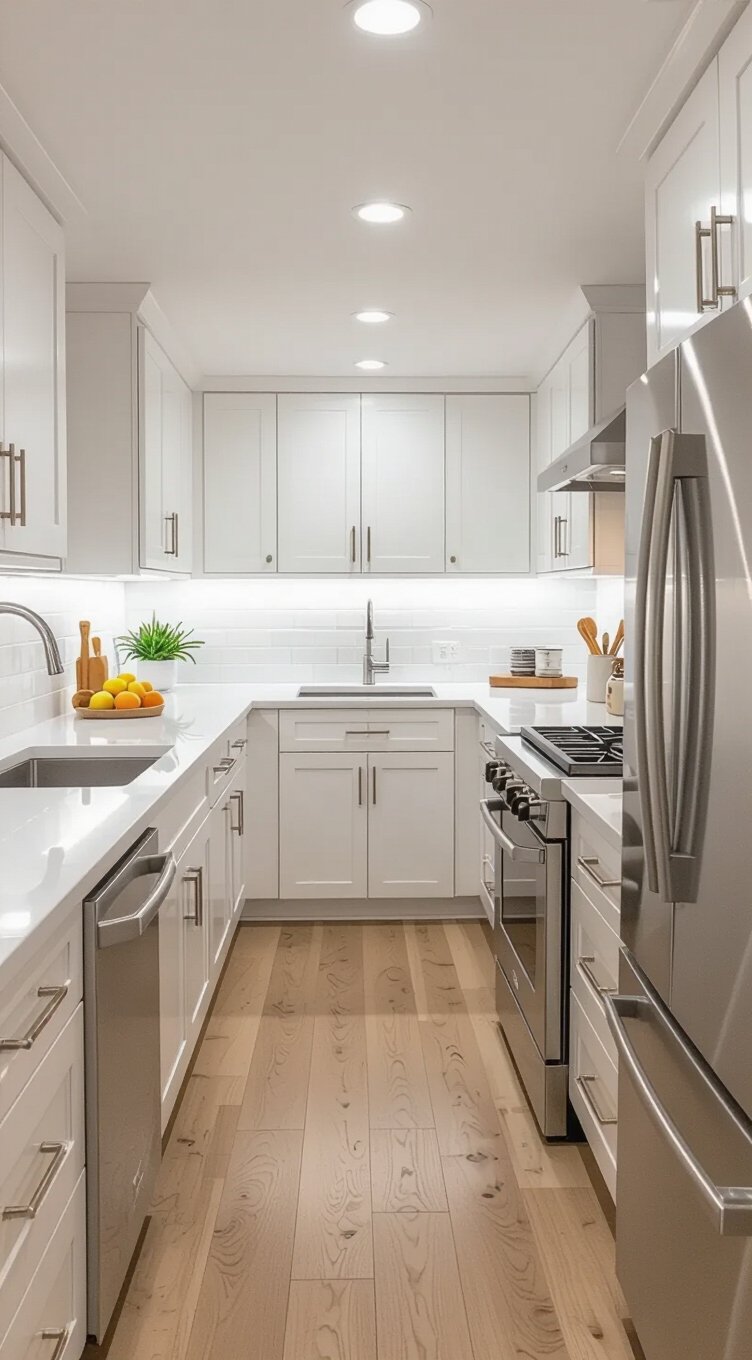
When space is tight, a galley layout can convert your small basement kitchen into an efficient, highly functional cooking zone. This two-wall configuration keeps your workflow streamlined, placing prep, cooking, and cleaning zones within easy reach. You’ll move freely without bumping into obstacles that typically slow you down.
Install open shelving along one wall to keep everyday items accessible without sacrificing precious cabinet space. This approach also makes your kitchen feel less closed-in and more breathable. Consider tucking a corner sink into an underused angle, maximizing every inch of available counter space.
Keep your galley corridor between 42 and 48 inches wide for comfortable movement. This width allows two people to work simultaneously, giving you the freedom and flexibility a functional kitchen truly deserves.
Combine Multiple Light Sources to Mimic Natural Light
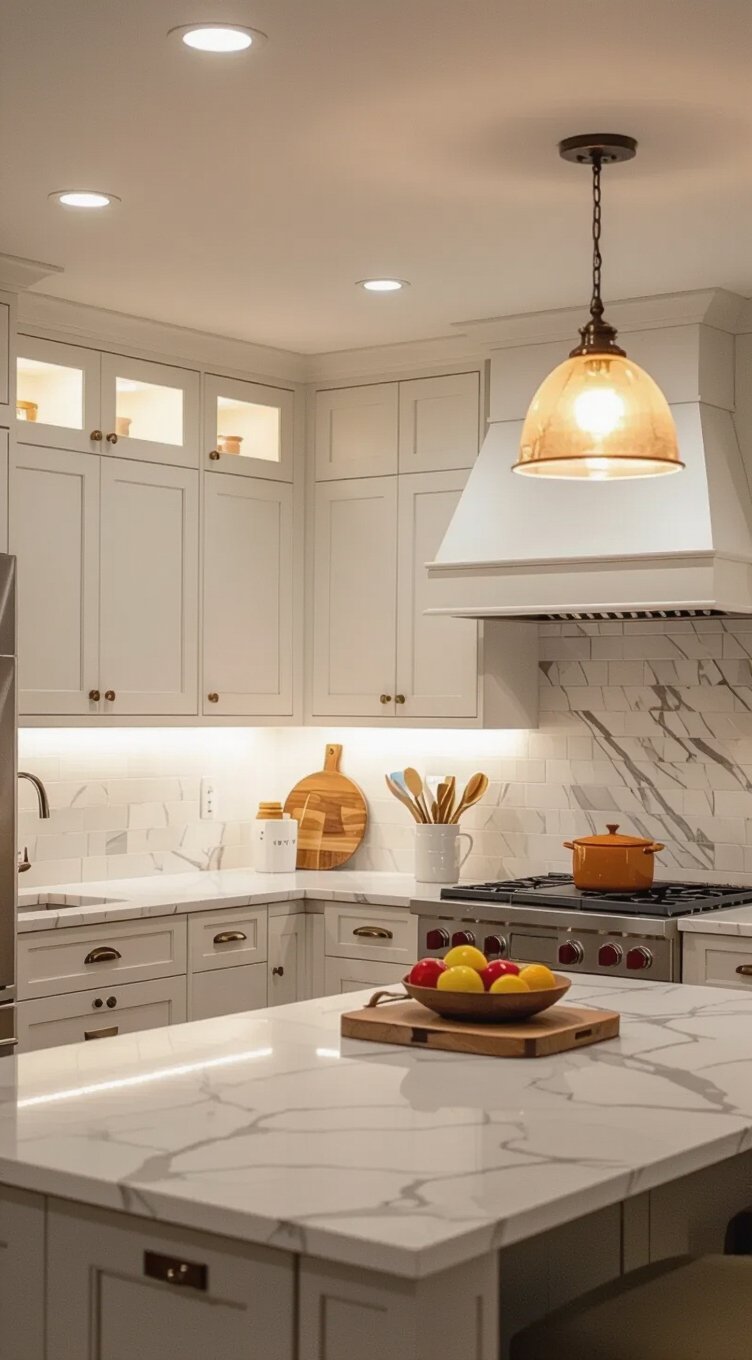
Because basements naturally lack windows, you’ll need to layer multiple light sources to create a bright, welcoming kitchen. This layering approach gives you control over your space’s atmosphere and functionality.
Start with recessed ceiling lights to establish even, general illumination throughout the room. Next, add task lighting under cabinets to brighten countertops where you’re prepping and cooking. These focused lights eliminate shadows that make small spaces feel cramped and uninviting.
Consider installing ceiling fans with built-in light kits to combine air circulation and ambient lighting efficiently. Choose bulbs with a color temperature between 3000K and 4000K, which closely mimics natural daylight. Finally, add under-cabinet LED strips for extra brightness. Together, these layered sources change your basement kitchen into a lively, functional space you’ll genuinely enjoy.
Add Recessed Lighting to Open Up a Low Basement Ceiling
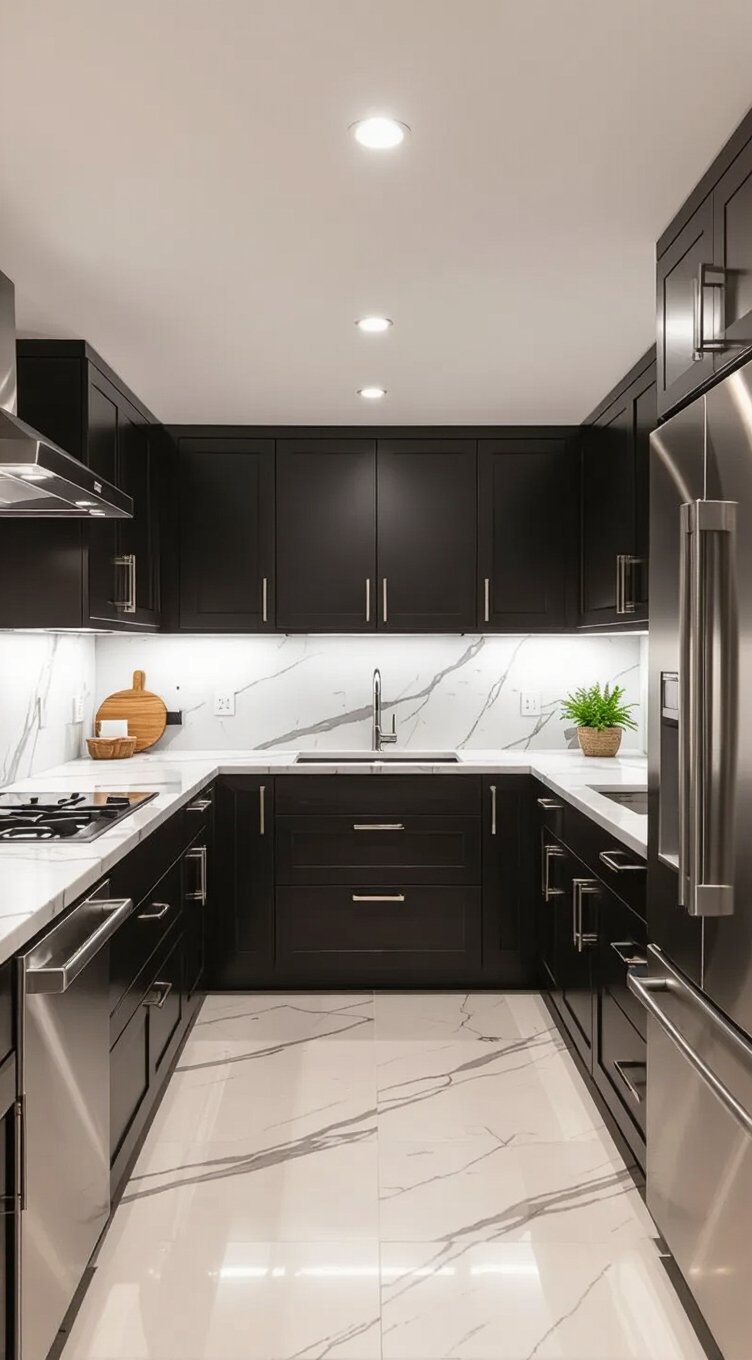
Recessed lighting is one of the smartest upgrades you can make to a basement kitchen with a low ceiling. Unlike hanging fixtures or ceiling fans, recessed lights sit flush against the surface, keeping your headspace clear and open. They create the illusion of height without stealing essential inches from your room. You’ll want to space them evenly across the ceiling to eliminate dark corners and shadows. Since basements lack natural light and window alternatives aren’t always possible underground, recessed LED lights can effectively mimic daylight when you choose bulbs with a 4000K to 5000K color temperature. Install dimmer switches to control the mood and energy use. This simple upgrade reshapes your basement kitchen from a cramped, cave-like space into a bright, functional area you’ll actually enjoy spending time in.
Install Under-Cabinet Lighting for Function and Warmth
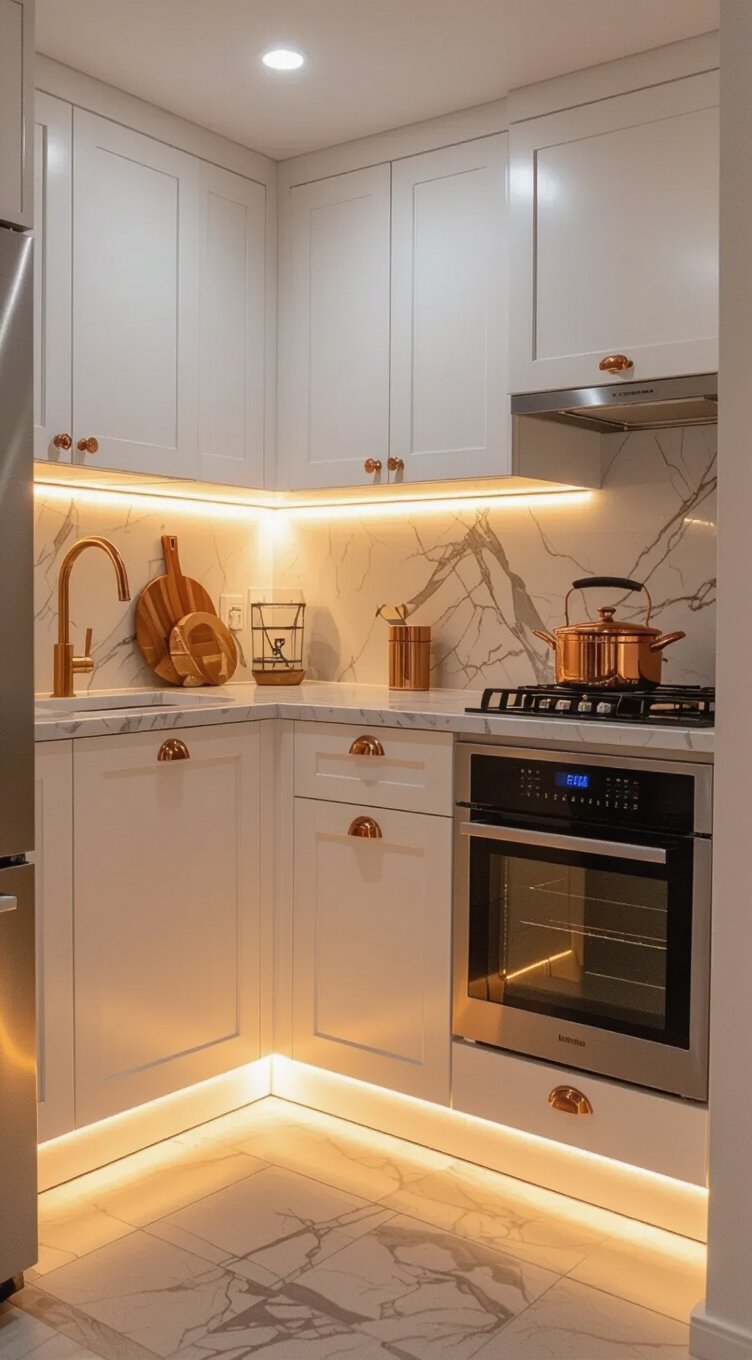
While recessed lights handle your overhead illumination, under-cabinet lighting takes care of the spaces where you actually work. These fixtures eliminate shadows on your countertops, making food prep safer and more efficient.
LED strip lights are your best option for energy efficiency, consuming far less power than traditional bulbs while lasting longer. You can install them yourself using peel-and-stick adhesive strips underneath your upper cabinets.
For lighting ambiance, choose warm white LEDs in the 2700K-3000K range. This color temperature creates an inviting glow that makes your basement kitchen feel less institutional and more like a real living space.
Dimmable options give you complete control over brightness, letting you shift from bright task lighting during cooking to softer, relaxed illumination during casual evenings.
Keep Cabinetry Light and Minimal in a Small Basement Kitchen
Your cabinet choices can either open up your basement kitchen or make it feel like a cramped storage closet. Choose white or light-toned cabinetry to reflect what little natural light you have. Flat-front doors with simple hardware keep things visually clean and uncluttered. Consider replacing some upper cabinets with open shelving to break up heavy walls and create breathing room. Open shelving also gives you quick access to everyday items without making the space feel boxed in. Add contrasting accents through cabinet pulls, drawer handles, or a small island in a darker tone. These contrasting accents create depth without overwhelming the room. Keep your upper and lower cabinets balanced, avoiding bulky crown molding that eats into your already limited vertical space.
Choose Glossy Countertops and Metallic Finishes to Reflect Light
Glossy countertops and metallic finishes are two of the smartest tools you can use to brighten a small basement kitchen. These reflective surfaces bounce natural and artificial light around the room, making tight spaces feel more open and alive. Choose quartz or high-gloss laminate countertops in white, cream, or light gray to maximize light reflection. Add stainless steel appliances or brushed brass hardware to introduce metallic finishes that work double duty as mirror accents. Even small touches, like a glossy tile backsplash or chrome pendant lights, create a noticeable difference. You don’t need a full renovation to achieve this effect. Strategic placement of reflective surfaces lets you reclaim brightness and freedom from that heavy, enclosed feeling that basement kitchens often carry.
Install a Mirror Backsplash or Glossy Tile to Amplify Brightness
A mirror backsplash is one of the most effective upgrades you can make to a small basement kitchen. It creates mirror reflection throughout the space, making the room feel larger and brighter instantly.
Here’s why a glossy surface works so well in a basement kitchen:
- Reflects artificial light back across the room, doubling its visual impact
- Amplifies natural light from any small windows nearby
- Creates depth by making walls appear to recede visually
- Adds a sleek, modern aesthetic without requiring expensive renovations
You don’t need a full mirror wall to see results. Even glossy subway tiles or mirrored mosaic panels behind your stove deliver impressive brightness. Choose materials that are easy to clean and moisture-resistant, since basements naturally attract humidity.
Draw the Eye Upward to Make Low Ceilings Feel Taller
Low ceilings are one of the most common challenges in a basement kitchen, but you can make them feel taller with the right visual tricks. Paint your walls and ceiling the same light color to blur boundaries and create a seamless upward flow. Hang open shelving higher than usual, pulling your eye toward the upper walls. Skip heavy crown molding that visually cuts the space, and instead use thin, minimal trim that hugs the ceiling. If you have exposed ceiling beams, paint them the same color as the ceiling so they blend in rather than weigh down the room. Tall, slim cabinet designs also encourage an upward gaze. These simple adjustments give your basement kitchen a more open, expansive feel without costly renovations.
Use Vertical Shelving and Pull-Out Drawers to Maximize Every Inch
When storage space is limited, vertical shelving and pull-out drawers can completely change how your basement kitchen functions. You don’t have to settle for cramped, cluttered counters when smarter storage solutions exist.
Try these four approaches to reclaim every usable inch:
- Install wall mounted racks above countertops to store pots, utensils, and spices within easy reach.
- Add pull-out drawers inside lower cabinets so you can access items in the back without frustration.
- Use corner carousels to convert awkward dead-corner spaces into highly functional storage zones.
- Stack open shelving vertically toward the ceiling, using the highest spots for rarely used items.
These strategies give you control over your space, making your basement kitchen feel organized, efficient, and completely yours.
Pick Light Flooring That Makes Your Small Basement Kitchen Feel Larger
Smart storage choices like vertical shelving can change how your basement kitchen works, but your flooring choices shape how the space actually feels. Light flooring creates a spacious illusion that opens up even the tightest basement kitchen. You’ll want to choose materials in pale tones that reflect available light rather than absorb it.
Consider these proven options:
- Light oak or blonde hardwood — natural warmth without heaviness
- Large-format light tile — fewer grout lines mean fewer visual interruptions
- Pale luxury vinyl plank — durable, moisture-resistant, and budget-friendly
Run your flooring in the longest direction of the room to stretch the space visually. Avoid dark stains or busy patterns that shrink your kitchen’s perceived size. Light flooring gives your basement kitchen room to breathe.
Add a Kitchen Island on Wheels for Flexible Extra Space
Because your basement kitchen has limited square footage, a wheeled island gives you extra counter space exactly when and where you need it. You control how your kitchen functions each day.
A rolling island offers incredible task versatility and mobile storage without permanent commitment. Here’s how to maximize yours:
- Roll it near the stove when prepping meals requiring extra surface space.
- Use lower shelves for mobile storage of pots, cutting boards, or small appliances.
- Push it against a wall to create an open pathway during gatherings.
- Choose a butcher block top for task versatility across chopping, baking, and serving.
When your kitchen adapts to your needs rather than the other way around, you’ll feel genuinely free in even the tightest basement space.
Frequently Asked Questions
Can a Basement Kitchen Add Value to My Home?
Yes, a basement kitchen can enhance your home’s increased equity and release rental potential, giving you the freedom to generate income or sell at a higher price whenever you’re ready.
Do Basement Kitchens Require Special Ventilation Systems?
Yes, your basement kitchen needs specialized ventilation to maintain air quality and moisture control. You’ll want to install a range hood, exhaust fans, and a dehumidifier, giving you a fresh, healthy cooking environment you’re free to enjoy fully.
What Permits Are Needed to Build a Basement Kitchen?
You’ll typically need building permits covering electrical, plumbing, and mechanical work. Make certain you’re following building regulations and scheduling utility inspections along the way — these steps keep you free to enjoy your basement kitchen without future legal complications.
How Do I Handle Plumbing Installation in a Basement Kitchen?
You’ll need to plan your plumbing access carefully, ensuring you’ve got proper drainage slope leading away from fixtures. Break into the concrete floor, install drain lines, and connect freely to your home’s existing water supply system.
Are Basement Kitchens Safe for Everyday Cooking and Food Storage?
Yes, you can safely cook and store food in a basement kitchen daily. You’ll need to prioritize fire safety with proper ventilation and practice moisture control to prevent mold, keeping your space completely functional and free.
Conclusion
Your small basement kitchen doesn’t have to feel dark or cramped. By combining light paint colors, smart lighting layers, and space-saving layouts, you can convert even the tightest space into a functional, inviting kitchen. Start with one or two changes, like adding under-cabinet lighting or swapping in lighter flooring, and build from there. Small, strategic updates make a big difference in how bright and open your basement kitchen feels.