

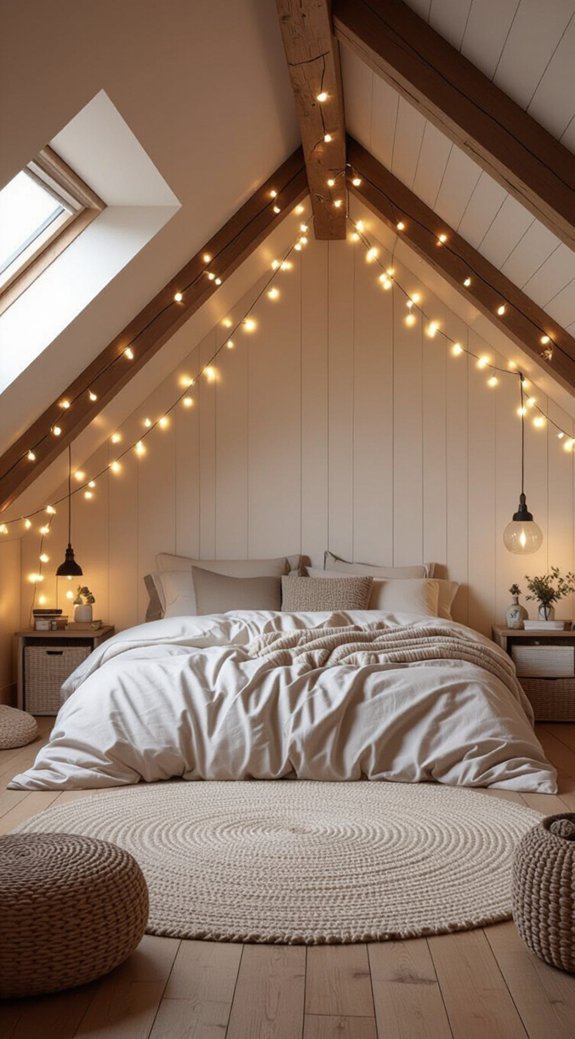
You don’t need high ceilings to create a bedroom that feels both functional and inviting. Low attic spaces present unique design challenges, but they also offer surprising opportunities for charm and smart storage. From built-in beds that follow the roofline to mirrors that visually expand tight quarters, the right strategies convert these tucked-away rooms into genuine retreats. Uncover exactly how to make every sloped wall and awkward corner work in your favor.
Built-In Beds That Hug the Roofline
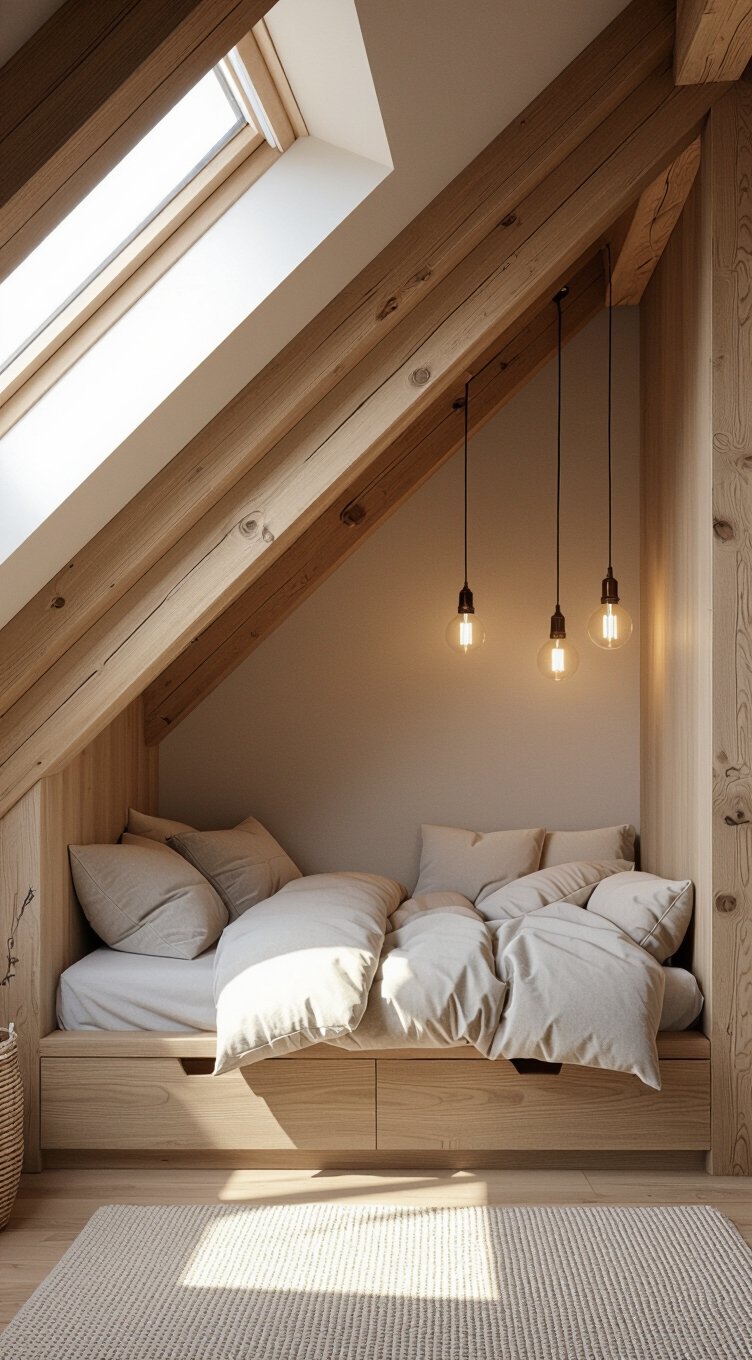
When you’re working with a low attic ceiling, a built-in bed that follows the roofline is one of the smartest design moves you can make. Custom carpentry lets you fit a sleeping nook perfectly into awkward angles, turning wasted space into something genuinely useful. You’ll gain a snug, intentional feel without sacrificing floor space. Add angled shelving along the sloped walls nearby to store books, lights, or personal items within easy reach. This approach gives you a bedroom that works entirely on your terms, maximizing every inch while keeping the space feeling open, personal, and completely your own.
Light Colors That Open Up a Low Ceiling
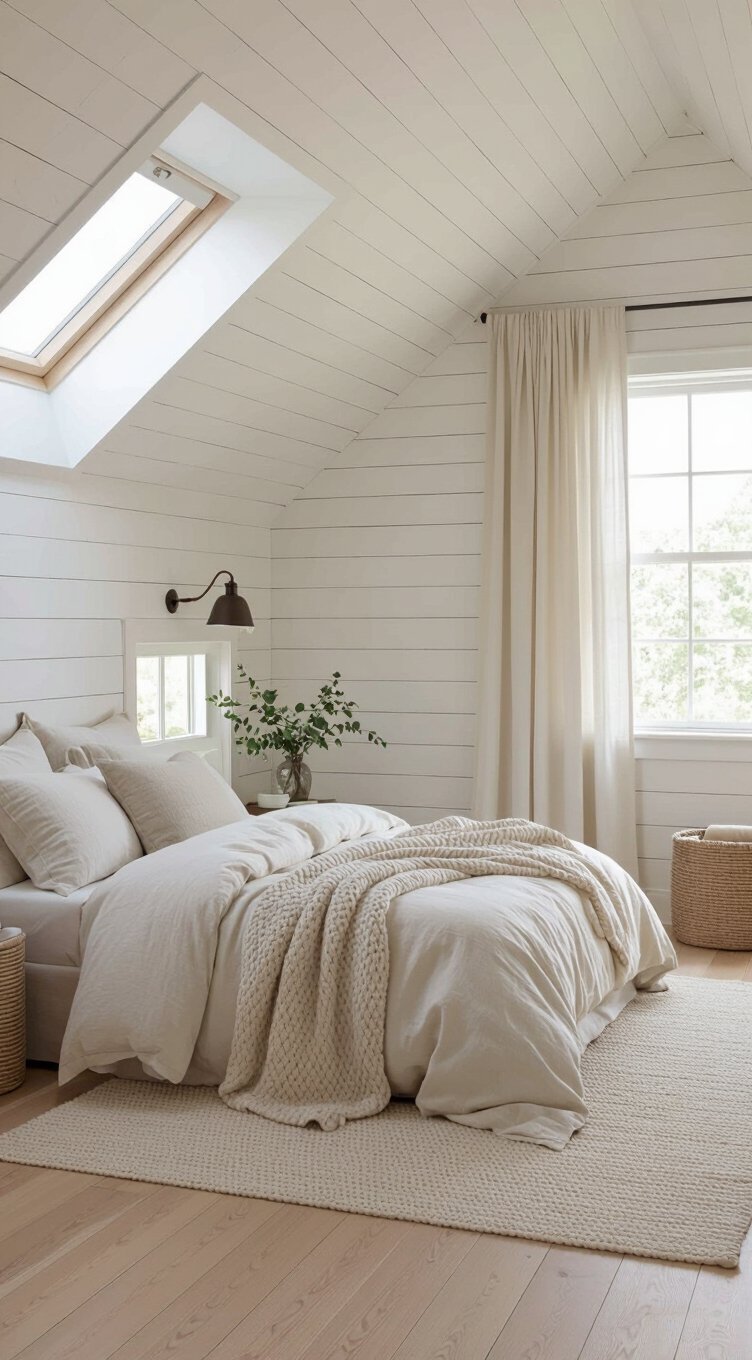
A fresh coat of light paint is one of the easiest ways to make a low attic ceiling feel taller and more open. You’ll want to reach for pale neutrals like warm beige or greige tones that bounce light naturally around the room. Soft whites work especially well when you paint both the walls and ceiling the same shade, blurring the boundaries and creating a seamless, airy flow. You don’t need expensive renovations to feel free in your space. Simply choosing the right color palette changes your tucked-away attic into a bright, breathable retreat you’ll actually love spending time in.
Skylights and Dormer Windows That Bring the Outside In
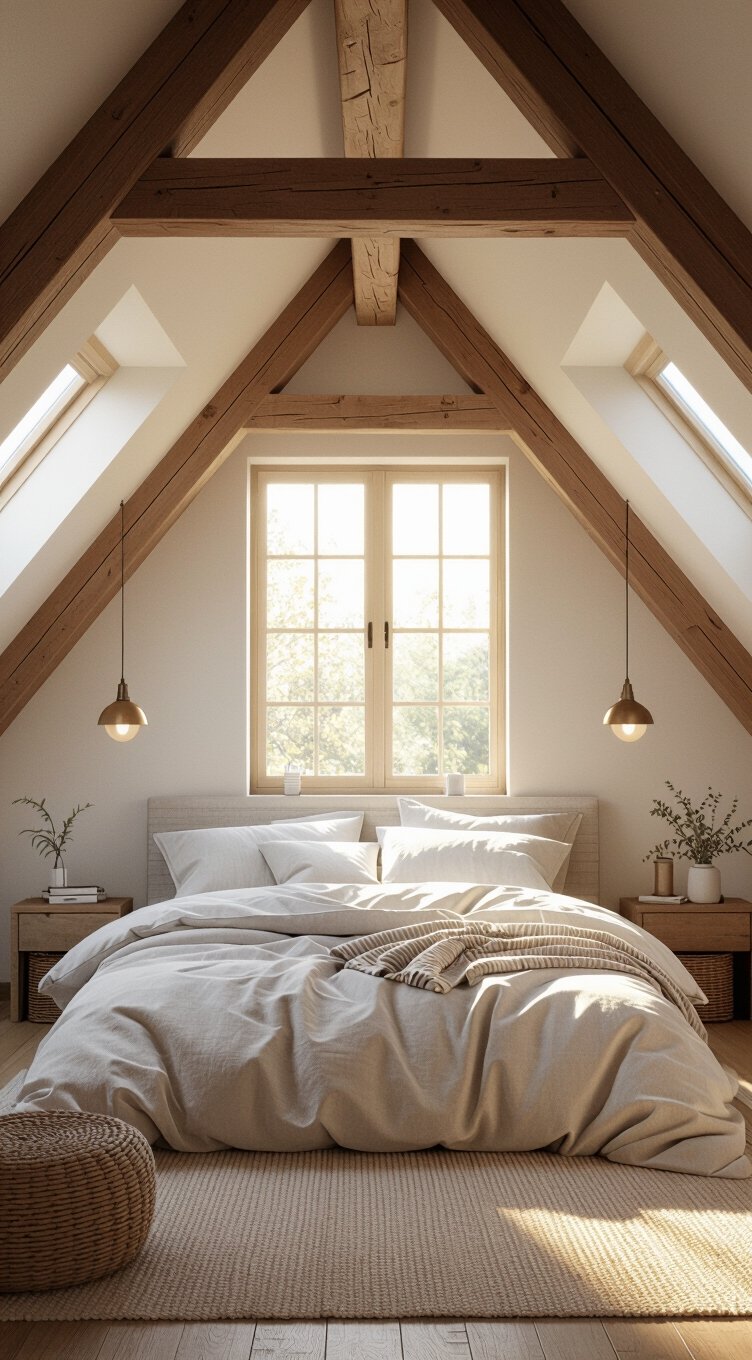
Once you’ve brightened your attic with the right paint colors, natural light takes that openness even further. Skylights cut directly into your roofline, flooding your space with sunlight during the day and offering star gazing opportunities at night. You’ll feel genuinely connected to the outdoors without sacrificing privacy. Dormer windows push outward from sloped walls, creating charming nooks while expanding your sightlines. Together, these features convert a tight attic into a breathable retreat. Choose operable skylights so you can control ventilation too. Both options give your hidden space a sense of limitless freedom that no lamp can replicate.
Platform Beds Flush to the Sloped Wall
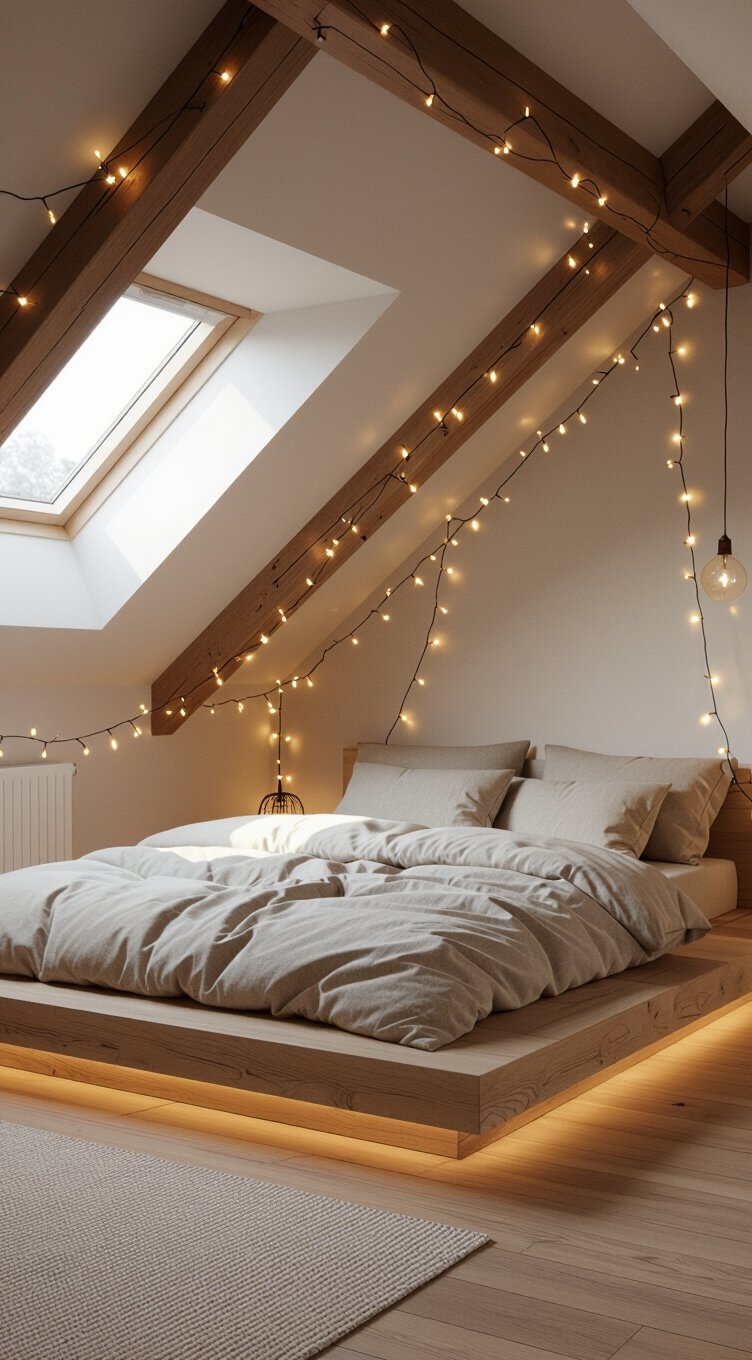
Tucking a platform bed flush against your sloped wall is one of the smartest moves you can make in a low attic bedroom. This loft integration technique maximizes every usable inch while keeping the space feeling open and intentional. You’ll gain three major advantages:
- Hidden compartments built beneath the platform store belongings invisibly
- The bed’s low profile naturally aligns with the ceiling slope
- Built-in framing eliminates bulky furniture legs cluttering your floor
Custom-built platforms let you claim your space completely on your own terms. You’re designing freedom into every corner.
Clever Under-Eave Storage You’ll Actually Use
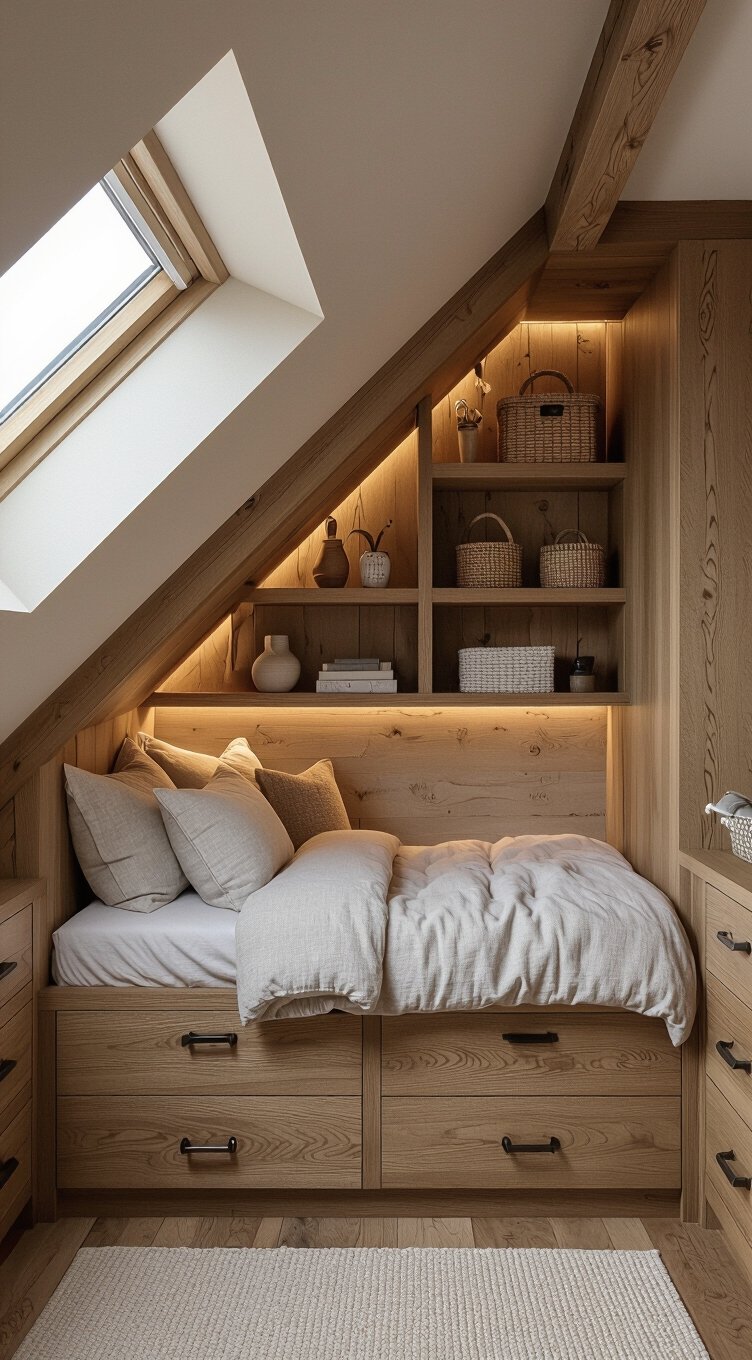
Those awkward low spaces under your eaves are actually some of the most precious real estate in your attic bedroom. Instead of letting them collect dust, convert them into storage that genuinely serves your lifestyle. Install under eave benches along sloped walls to create hidden compartments beneath lift-up seats. These double as casual seating while keeping your floor clear and your mind uncluttered. Tuck corner shelving units into angled nooks to display books, plants, or personal items without wasting vertical space. You’ll reclaim every forgotten inch, turning structural limitations into intentional, functional zones that give you more freedom to live lightly.
Low-Profile Furniture Made for Tight Headroom
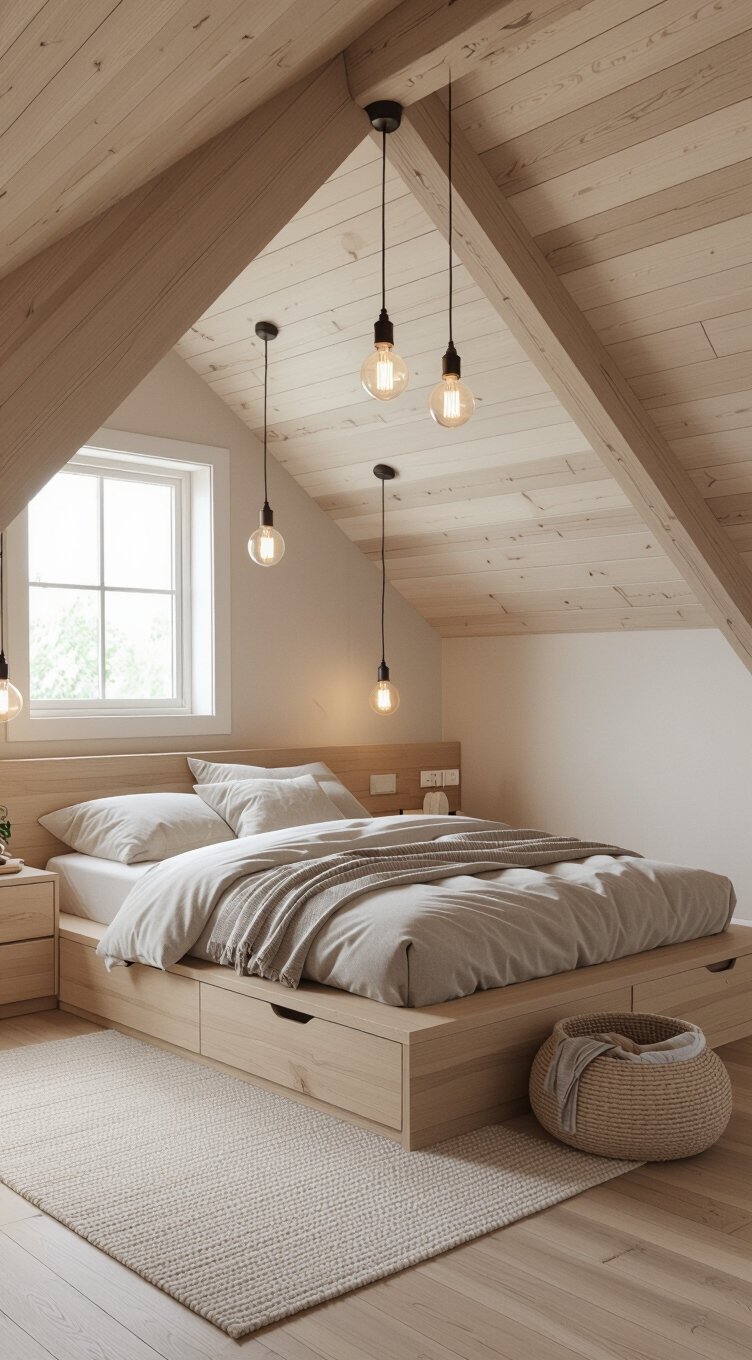
How Rugs and Textiles Add Depth Without Bulk
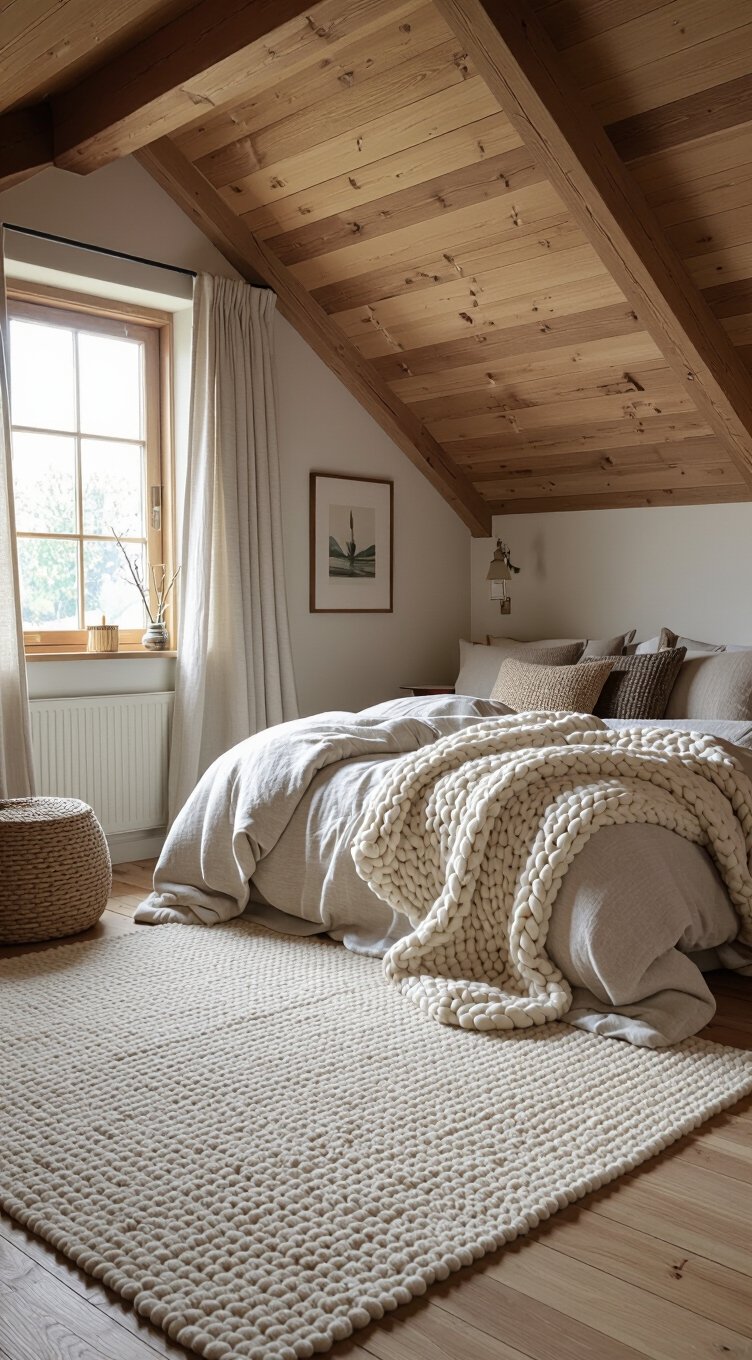
Rugs and textiles do heavy lifting in a low attic bedroom, adding visual richness without crowding your already limited vertical space. You can layer textured layers and patterned accents strategically to create depth that feels intentional. Try these three approaches:
- Place a flat-woven rug to define your sleeping zone without adding height.
- Drape lightweight throws over your bed to introduce color and warmth.
- Add patterned accents through pillow covers to shift visual focus horizontally.
These choices let your space breathe freely while feeling curated, comfortable, and uniquely yours without overwhelming the room.
Reading Nooks Carved Into the Awkward Corners
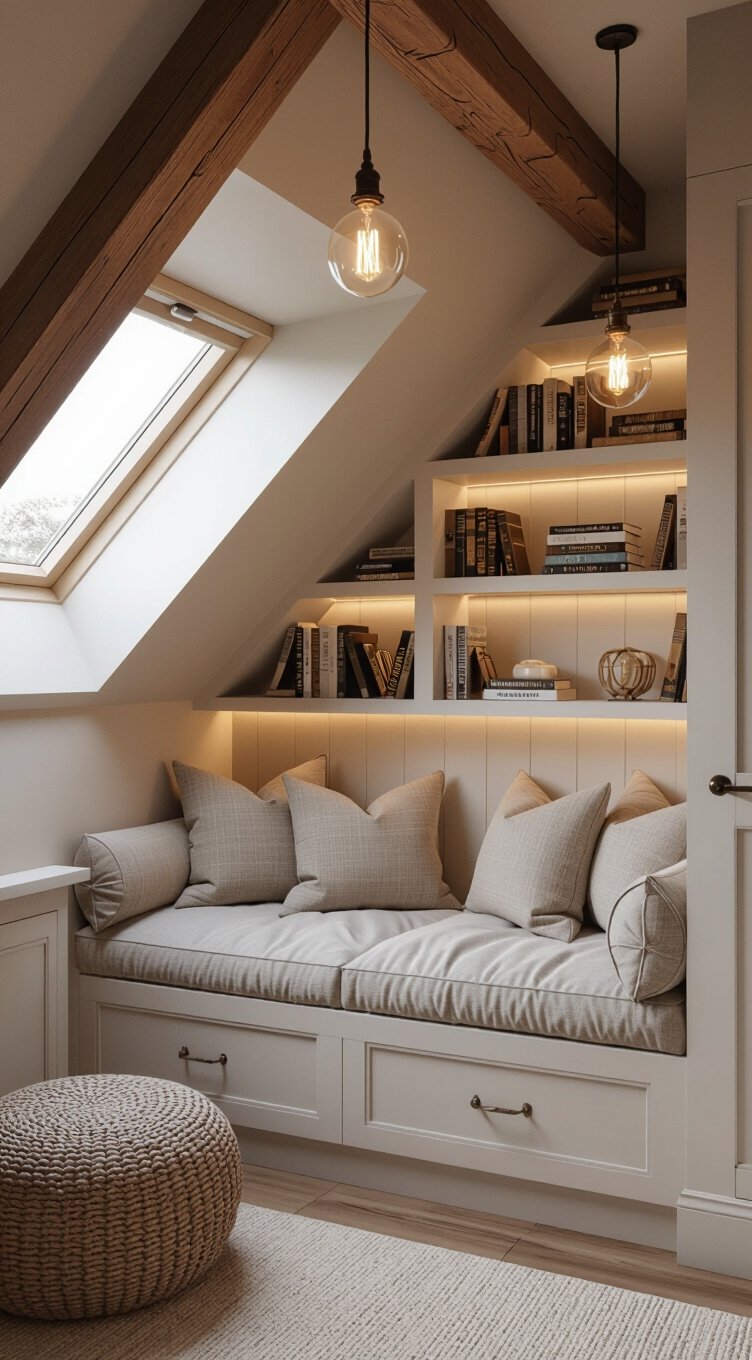
Those awkward corners under sloping eaves aren’t wasted space — they’re perfect spots for a cozy reading nook. You can install window seats with hidden storage underneath, giving you a comfortable perch and a clutter-free room. Add bookshelf alcoves along the angled walls to keep your favorite reads within arm’s reach. Layer a cushion, a few throw pillows, and a small reading lamp to complete the setup. These built-in features work with your attic’s natural shape instead of fighting it. You’ll create a personal retreat that feels intentional, intimate, and completely your own.
Mirrors That Make a Low Attic Feel Taller
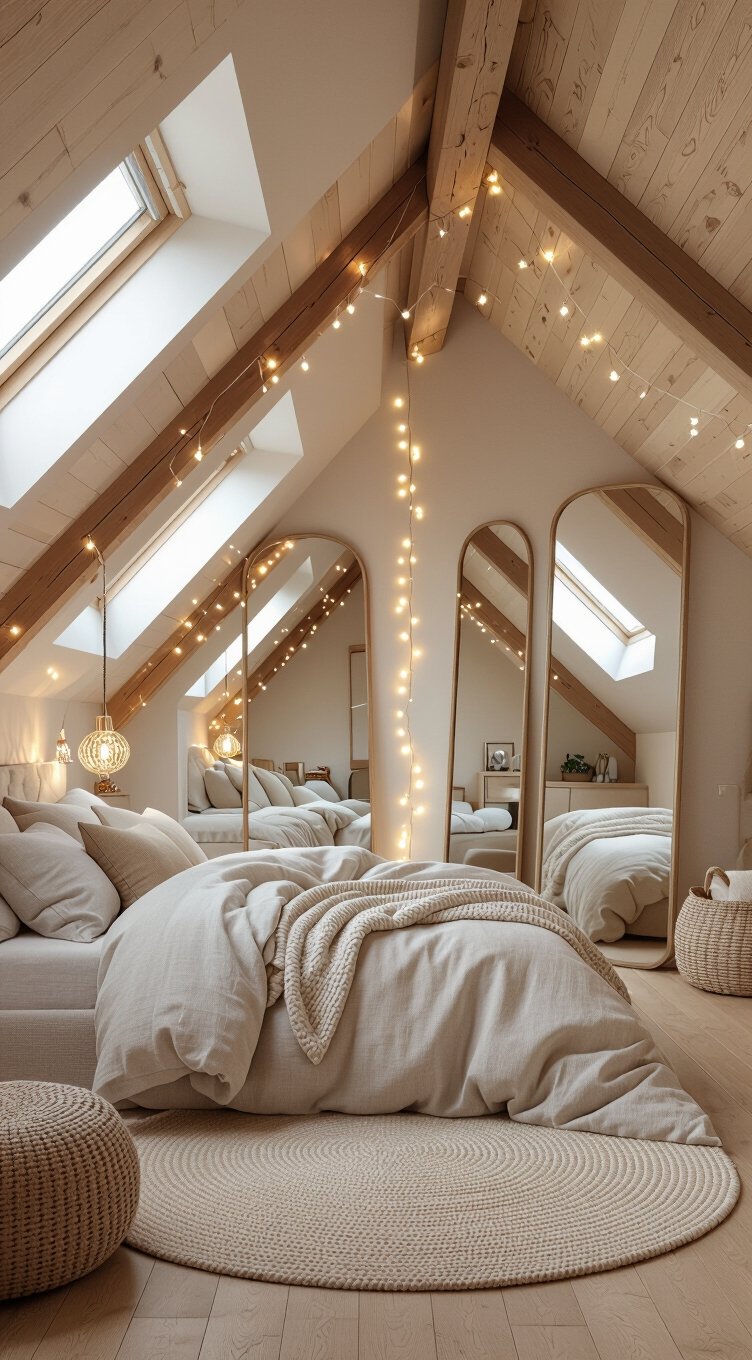
Mirrors are one of the smartest tools you can use to visually expand a low attic bedroom. Reflective surfaces bounce light around and trick the eye into seeing more space. Try these three strategic placements:
- Lean angled mirrors against sloped walls to redirect light upward.
- Install horizontal mirror panels along lower walls to widen the room visually.
- Place mirrors opposite windows to double natural light instantly.
You don’t need a massive renovation to feel free in your attic space. Small, intentional mirror choices genuinely reshape how open and tall your room feels.
Small Attic Bedroom Layouts That Actually Work
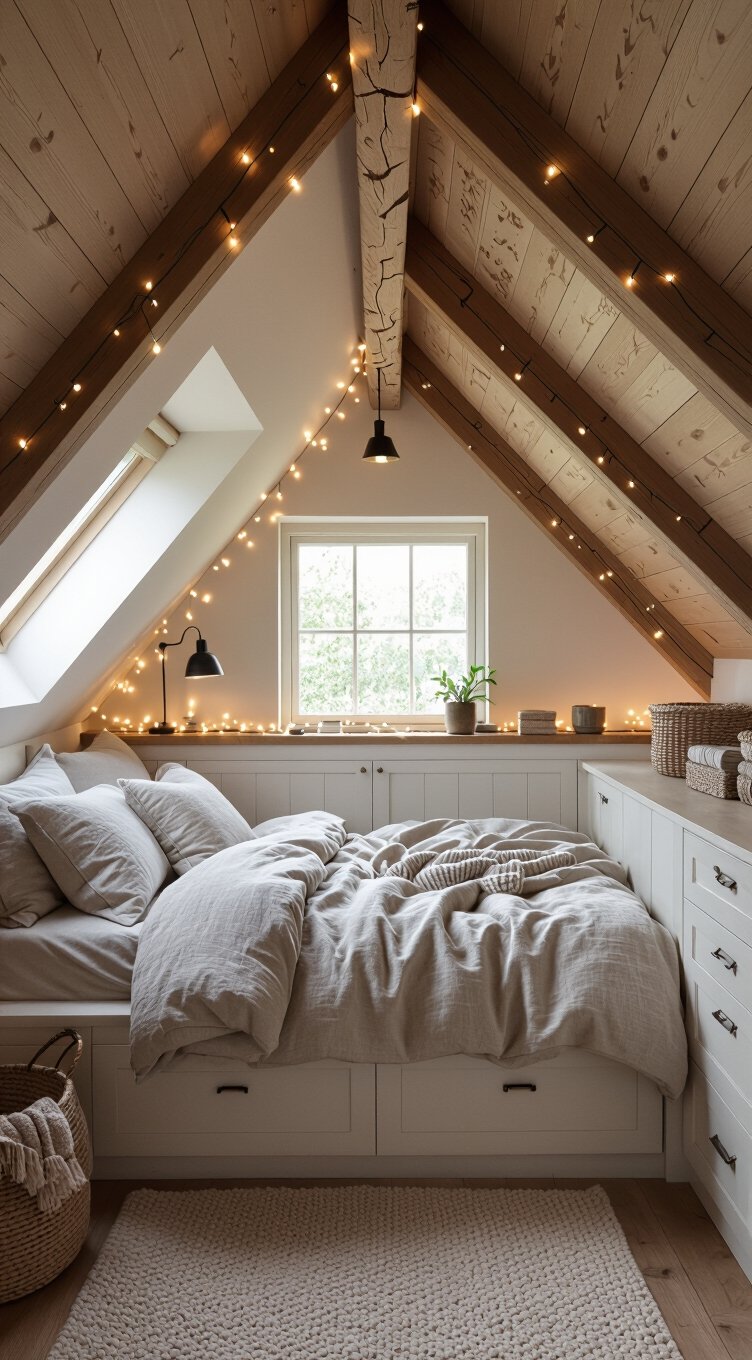
Once you’ve used mirrors to open up your attic visually, the next step is arranging your furniture in a way that actually works with the space. Try diagonal layouts to draw the eye across the room rather than into low walls. Place your bed along the tallest center peak, freeing the sloped sides for hidden shelves and compact storage. You’ll gain functional zones without sacrificing movement. Keep pathways clear and furniture low-profile. Every corner becomes an opportunity when you’re intentional about placement, letting your attic feel like a purposeful retreat rather than a forgotten, cramped afterthought.
Frequently Asked Questions
What Building Permits Are Required Before Converting an Attic Into a Bedroom?
Before converting your attic, you’ll need permits covering zoning regulations, structural inspections, electrical, and egress compliance. Check your local building department first—securing these approvals guarantees you’re free to enjoy your new space legally and safely.
How Do I Check if My Attic Floor Can Support Bedroom Furniture Weight?
Hire a structural engineer to assess your floor joist strength and perform a load capacity analysis. They’ll confirm if your attic can handle bedroom furniture, enabling you to reshape your space freely and confidently.
What Minimum Ceiling Height Is Legally Required for an Attic Bedroom?
You’ll need at least 7 feet of ceiling height for a legal attic bedroom, though 5 feet works for half the floor area. Don’t forget proper ceiling materials and safety rails to meet code requirements.
How Much Does a Full Attic Bedroom Conversion Typically Cost Overall?
You’ll typically spend $10,000–$50,000 on a full attic bedroom conversion. For smart budget planning and accurate cost estimation, your investment depends on insulation, flooring, and electrical work you’re choosing to customize freely.
Can Attic Bedrooms Be Properly Insulated for Extreme Hot and Cold Climates?
Yes, you can absolutely insulate your attic bedroom for extreme climates! Use spray foam and rigid board insulation to achieve strong thermal performance and climate resilience, giving you the freedom to enjoy your cozy space year-round.
Conclusion
Your low attic bedroom doesn’t have to feel like a compromise. By using built-in beds, smart storage, and light-reflecting surfaces, you can turn every awkward angle into an asset. Choose multi-functional furniture, keep walkways clear, and layer your lighting thoughtfully. Whether you’re working with dormer windows or tight eaves, these ideas help you create a retreat that feels intentional, cozy, and surprisingly spacious beneath the roofline.