

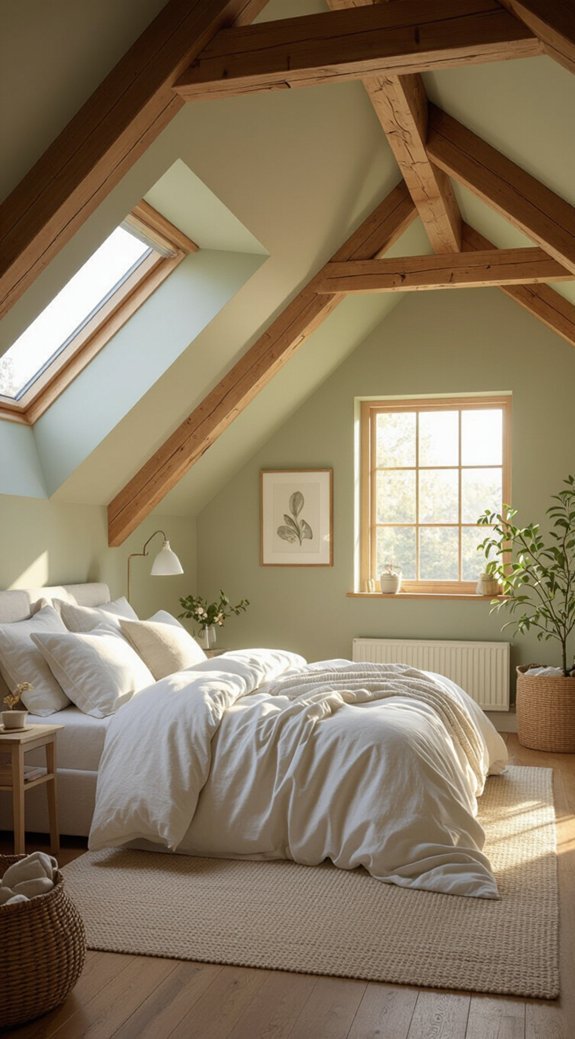
Your attic bedroom’s color scheme can completely alter how the space feels. The right paint color makes low ceilings appear taller, tight corners feel more open, and awkward angles look intentional. Whether you’re drawn to soft whites, earthy neutrals, or something more dramatic, each shade on this list serves a specific purpose. Ten carefully chosen colors await, each with the power to turn your attic into the retreat you’ve always wanted.
Soft White Shades That Make Attic Ceilings Feel Taller
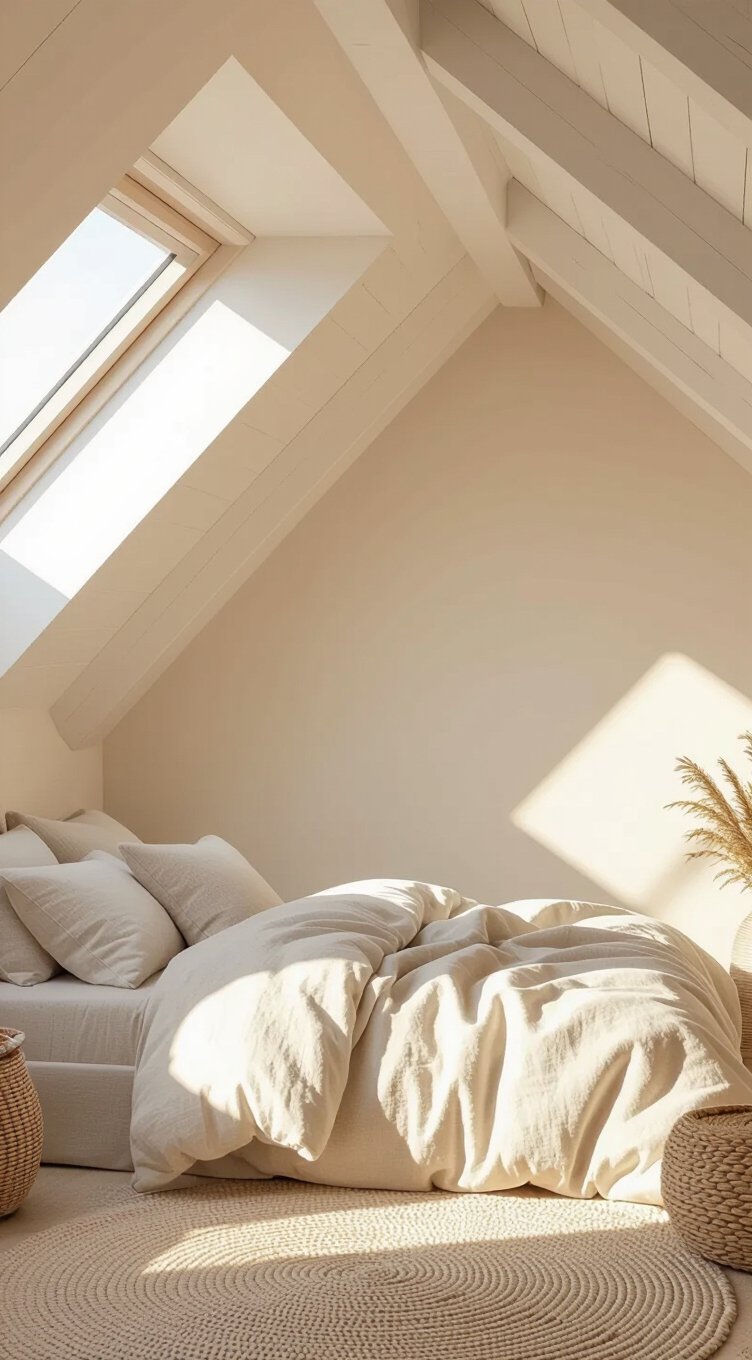
When you’re working with an attic bedroom, choosing the right white paint can convert a cramped, angular space into one that feels open and airy. Soft whites like Benjamin Moore’s “Chantilly Lace” create a ceiling height illusion by drawing your eyes upward naturally. You’ll want shades with cool or neutral undertones, since they enhance light reflection balance throughout the room. Apply lighter whites to slanted ceilings and slightly warmer tones on walls to define boundaries subtly. This strategic approach lets your space breathe, giving you that liberating, expansive feeling every attic bedroom deserves.
Warm Beige and Greige Tones for a Cozy Attic Retreat
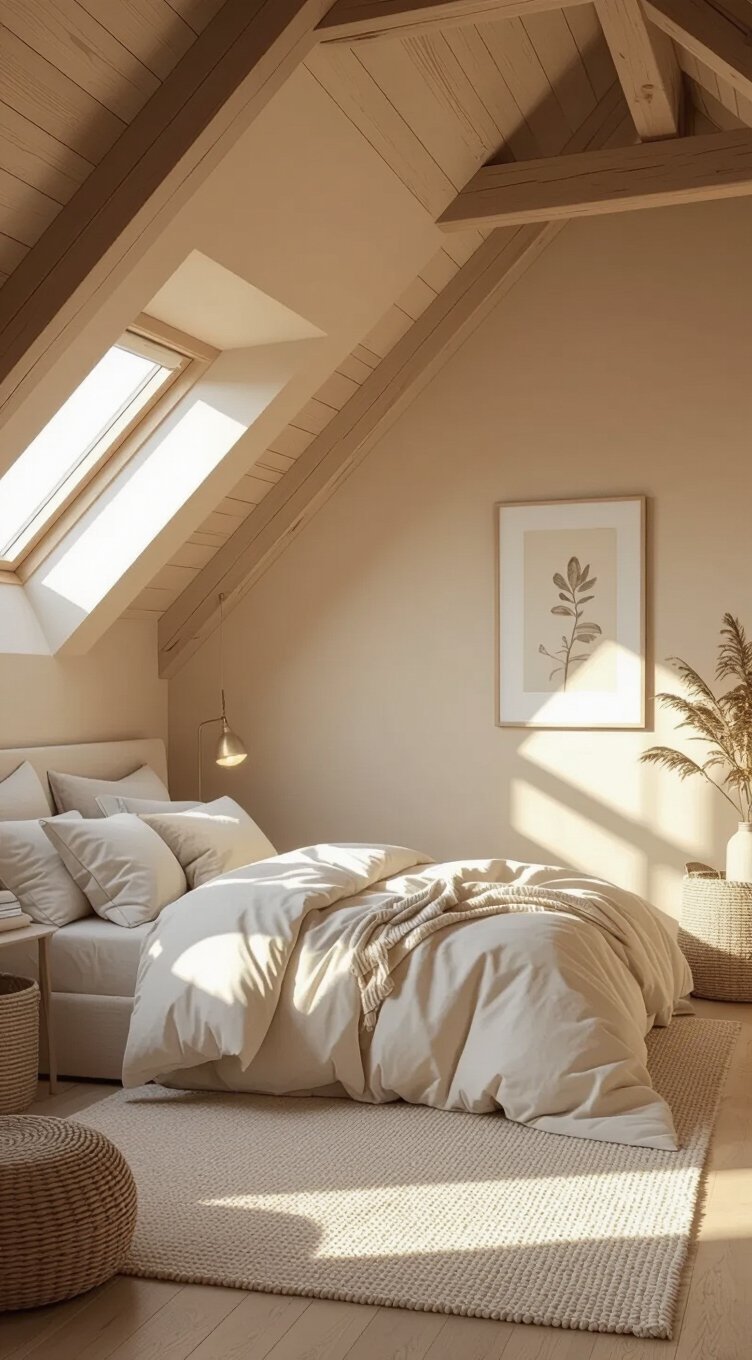
If you’re craving warmth and comfort in your attic bedroom, beige and greige tones are your best allies. These shades create a cozy ambiance that feels grounded yet open, letting you design a space truly your own. Colors like Benjamin Moore’s “Pale Oak” or Sherwin-Williams’ “Accessible Beige” deliver neutral warmth without feeling heavy or restrictive. They complement natural wood beams beautifully, enhancing your attic’s character. Paint your sloped ceilings a shade lighter than your walls to visually lift the space. You’ll create a retreat that feels both intimate and free, perfectly suited for rest and creative living.
Light Blue Hues That Open Up a Tight Attic Space
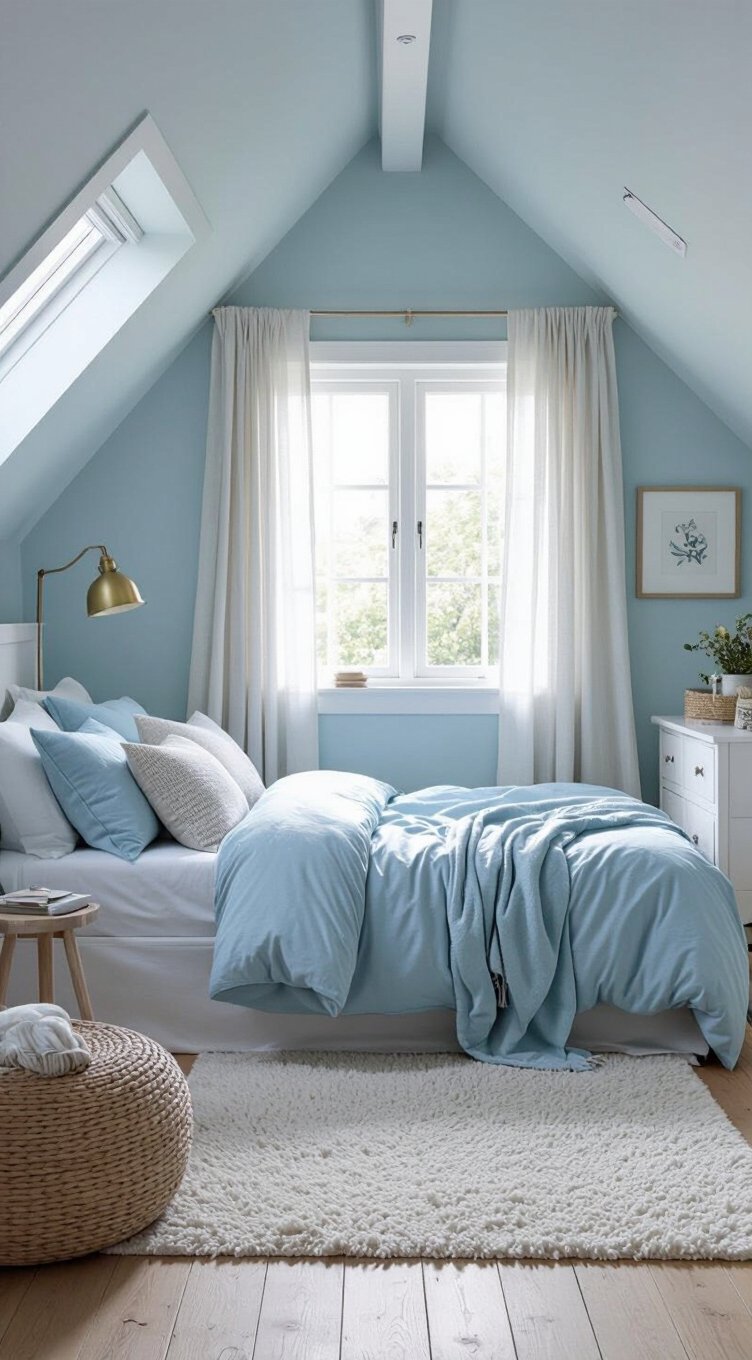
While warm beige tones create a snug cocoon, light blue hues can do the opposite — they’ll make your attic bedroom feel noticeably bigger and airier. Sky tones like powder blue, cerulean, and soft periwinkle visually push walls outward, giving you breathing room. For maximum airiness tips, try these approaches:
- Paint slanted ceilings a shade lighter than your walls.
- Choose cool, muted blues rather than saturated navy shades.
- Pair blue walls with white trim to sharpen contrast.
These simple moves convert your tight attic into a freeing, open-feeling escape you’ll genuinely love.
Sage Green for a Calm, Nature-Inspired Attic Bedroom
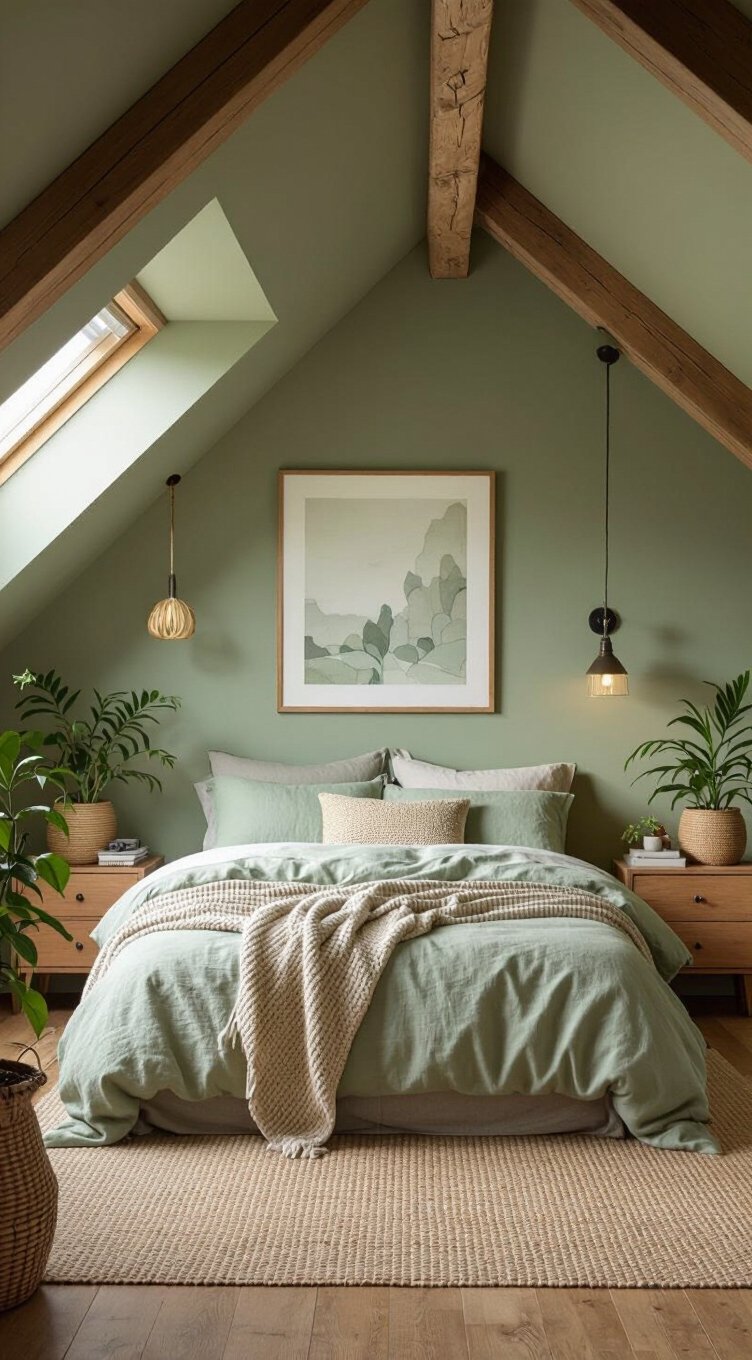
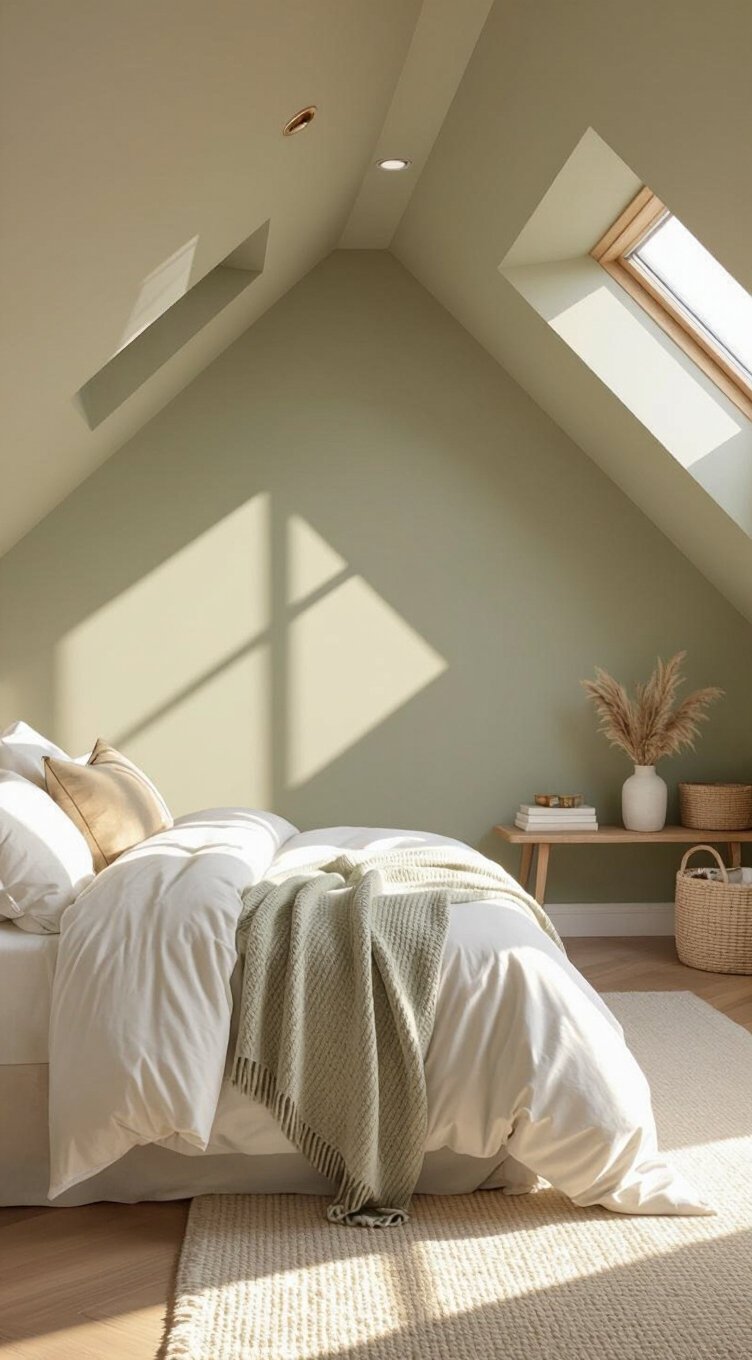
Sage green brings a soothing, nature-inspired quality to your attic bedroom that few other colors can match. It creates a peaceful escape where you can recharge on your own terms. Choose eco-friendly finishes with low VOC formulas to keep your space healthy and breathable. Sage pairs beautifully with natural wood tones, linen textiles, and vintage accents like aged brass hardware or antique frames. These elements together build a layered, organic atmosphere that feels personal and free. Keep trim white or cream to brighten the room without competing with the wall color’s quiet, grounding energy.
Pale Blush Pink That Adds Warmth Without Feeling Small
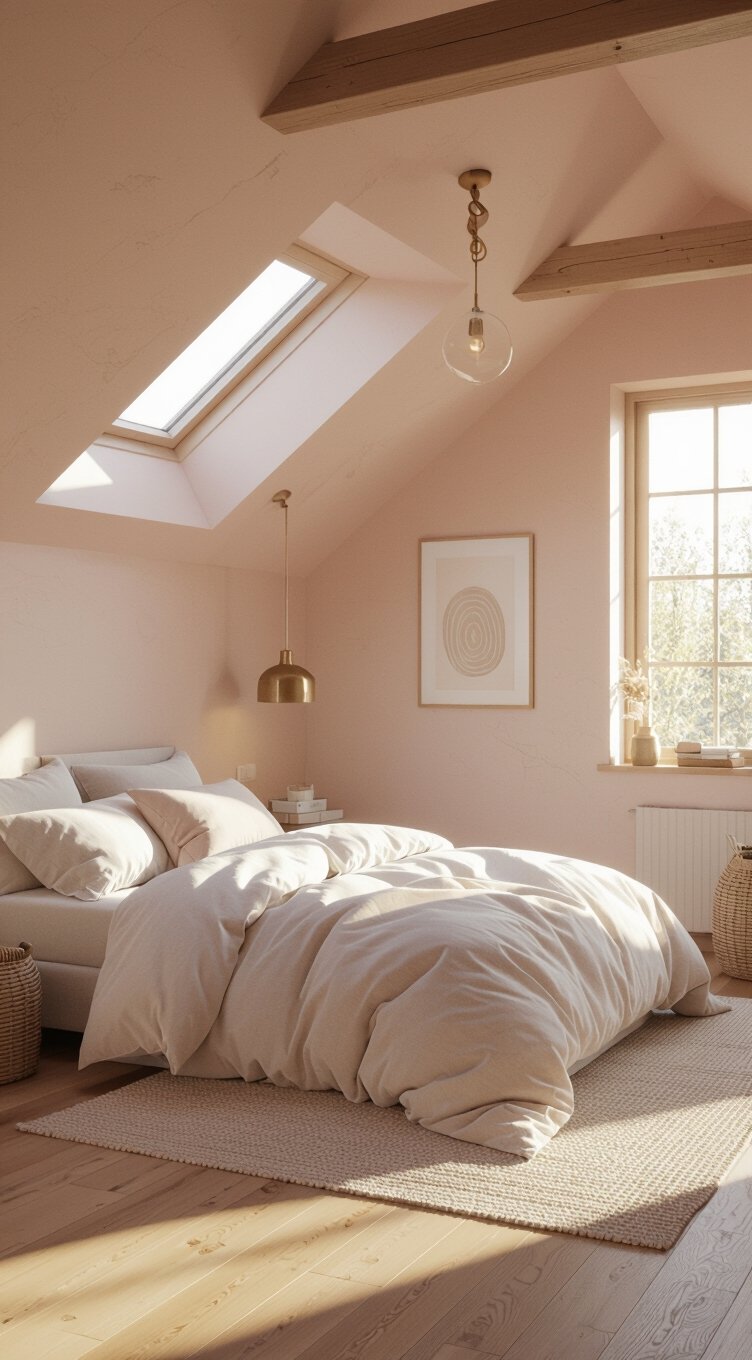
Pale blush pink is a surprisingly versatile choice that adds gentle warmth to an attic bedroom without making it feel cramped or closed in. Its soft blush undertones reflect natural light beautifully, helping your space feel airy and open. You can pair it with white trim to keep things bright and fresh. Add rosy accents through pillows, throws, or artwork to layer depth without overwhelming the room. This color works especially well under sloped ceilings, where its warmth creates coziness without heaviness. You’ll find it feels both inviting and freeing, giving your retreat a light, breathable personality.
Lavender and Lilac Tones for a Dreamy Attic Escape
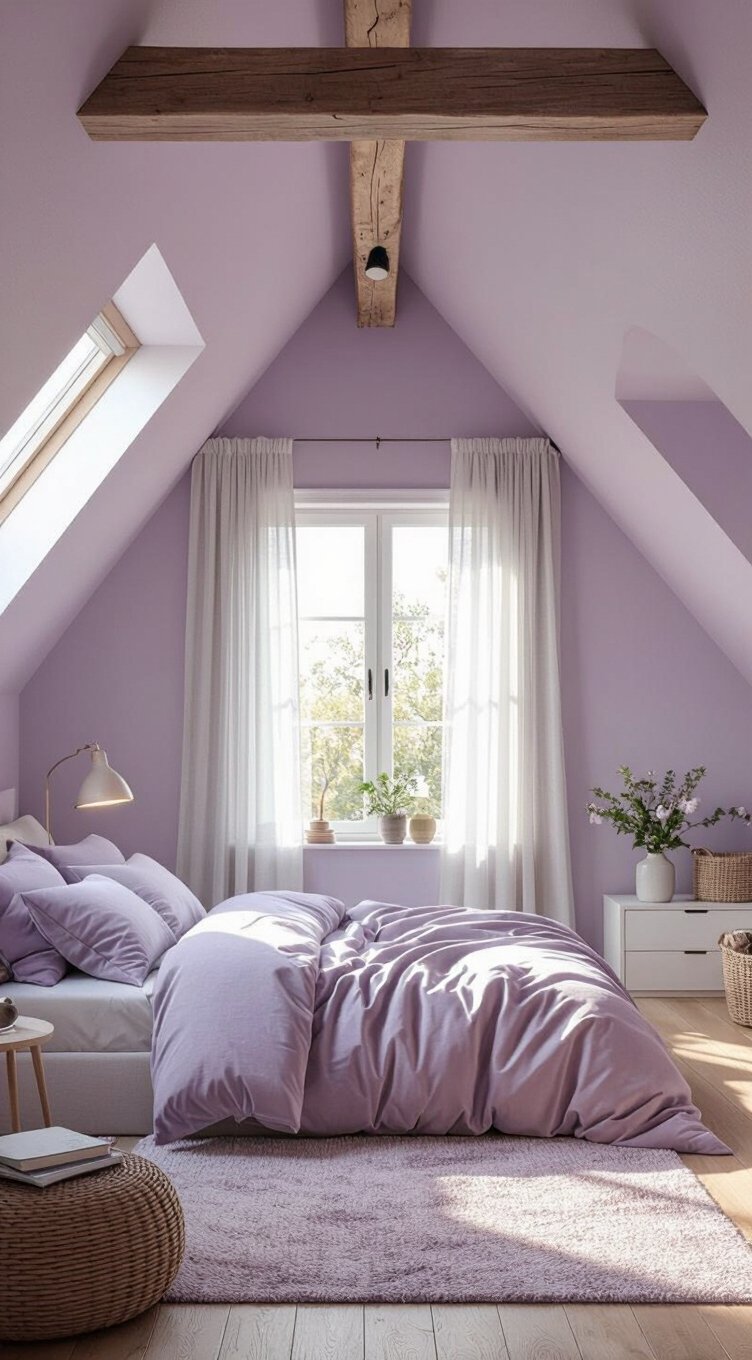
Warm Terracotta Shades That Add Character to Sloped Ceilings
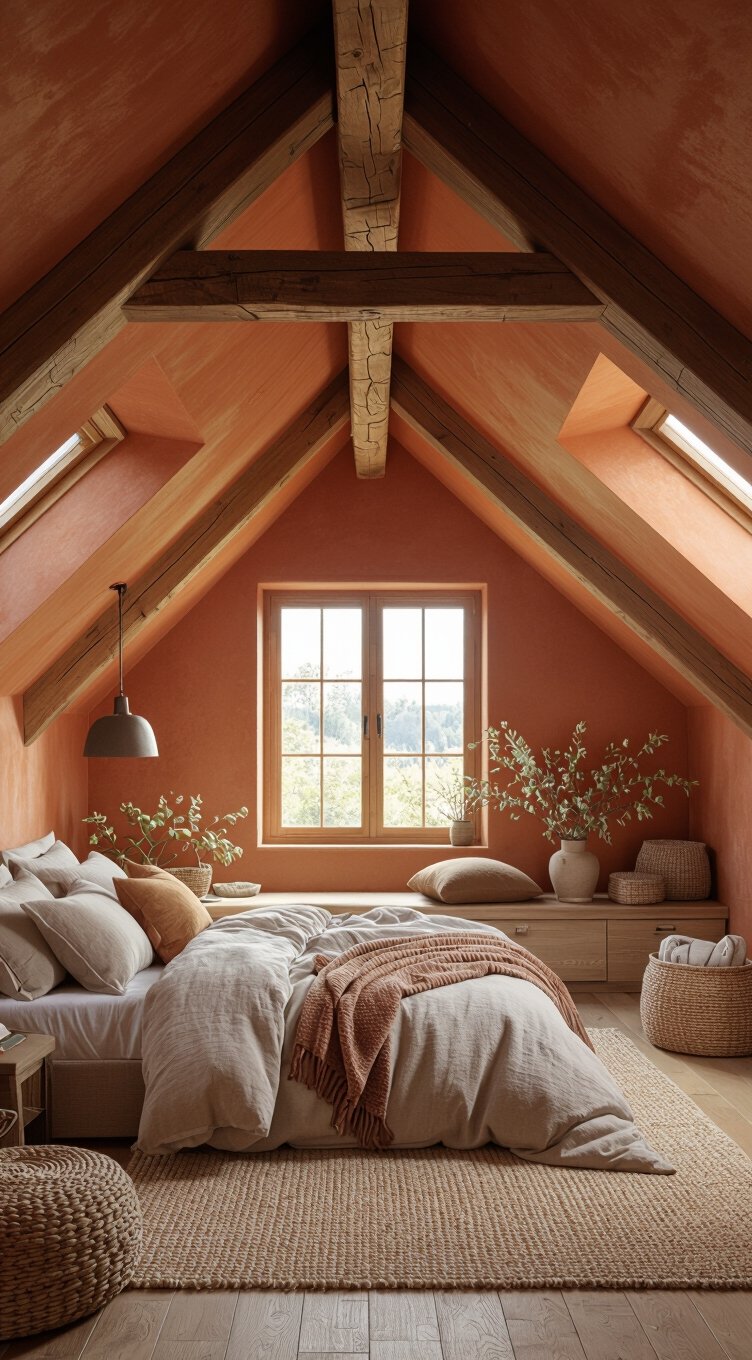
Terracotta is one of those paint colors that turns awkward attic angles into genuine design assets. You’ll find that earthy elegance comes naturally when warm, clay-inspired tones wrap around sloped ceilings and tight corners. Instead of fighting your attic’s quirky structure, you’re actually celebrating it. Terracotta’s rustic charm works beautifully against exposed wooden beams, natural linen textiles, and woven textures. Try pairing deeper terracotta shades on sloped walls with lighter, creamy neutrals on flat ceiling sections. This contrast defines your space without overwhelming it. You’re fundamentally creating a cozy, grounded retreat that feels intentional, warm, and completely your own.
How to Choose the Right Paint Finish for Attic Bedroom Walls?
Once you’ve settled on a color like terracotta or any other shade, the paint finish you choose will affect how your attic bedroom actually looks and holds up over time. Consider these three essential options:
- Matte finish – Hides imperfections on uneven sloped walls beautifully.
- Eggshell finish – Offers a soft paint finish sheen that’s easy to clean.
- Satin finish – Provides strong durability considerations for moisture-prone attic spaces.
You’ll want a finish that balances aesthetics with practicality. Choose wisely, and your attic retreat will feel both beautiful and free.
Frequently Asked Questions
How Many Paint Coats Does an Attic Bedroom Typically Need?
You’ll typically need two coats for your attic bedroom. Start with a primer, then blend your chosen colors smoothly. The right paint texture guarantees you’re free to create the dreamy, lively retreat you’ve always envisioned.
Can You Paint an Attic Bedroom Without Proper Ventilation?
You shouldn’t paint an attic bedroom without proper ventilation. You’ll risk poor air quality and moisture buildup, which can damage your walls and health. Open windows and use fans to breathe freely while painting.
What Primer Works Best on Attic Bedroom Walls and Ceilings?
For attic walls and ceilings, you’ll want a shellac-based or oil-based primer. It guarantees superior paint adhesion and moisture resistance, letting you freely change your space without worrying about peeling or humidity damage.
How Long Should Attic Bedroom Paint Dry Before Moving Furniture?
Wait at least 24 hours for paint drying time before attempting furniture relocation safety in your attic bedroom. You’ll protect your fresh walls and enjoy the freedom of a flawless, lively space you’ve created.
Does Attic Insulation Affect How Paint Adheres to Walls?
Yes, attic insulation absolutely affects paint adhesion! You’ll need proper moisture control to prevent dampness from ruining your walls. Prioritize thorough surface preparation, and you’ll enjoy paint that sticks beautifully, giving you the free, dreamy space you deserve.
Conclusion
Redefining your attic bedroom starts with choosing the right paint color for your unique space. Whether you’re drawn to soft whites, warm beiges, or calming sage greens, you’ve got plenty of beautiful options to investigate. Don’t forget to examine the right finish to maximize light and durability. Start with a few sample swatches, test them in your space, and you’ll quickly find the perfect shade that makes your attic feel like a true retreat.