

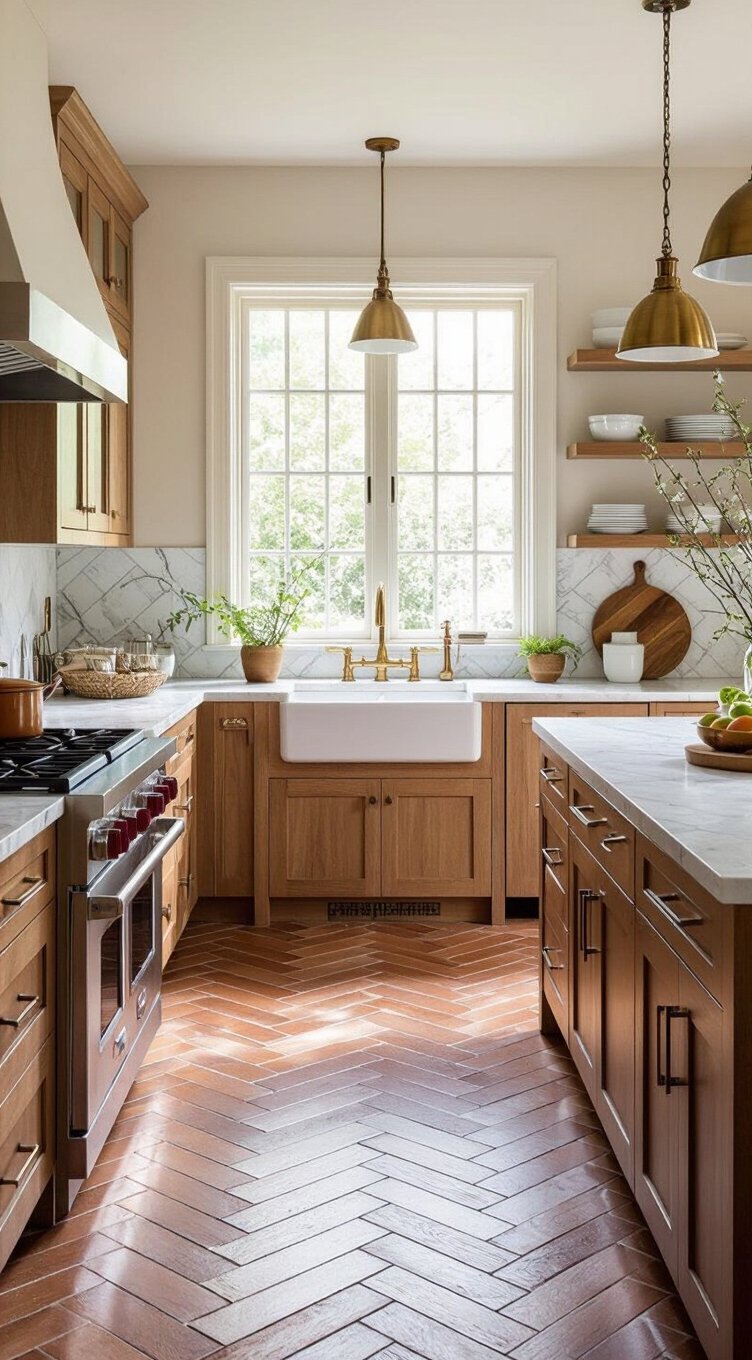
Your small kitchen deserves flooring that handles daily spills, heavy foot traffic, and decades of use without losing its appeal. From waterproof luxury vinyl plank to scratch-resistant porcelain tile, today’s durable options offer serious performance without sacrificing style. You’ll also uncover budget-friendly solutions, smart color strategies that make tight spaces feel larger, and maintenance comparisons that simplify your decision. The right choice is closer than you think—keep going to find it.
Luxury Vinyl Plank: The Best Small Kitchen Flooring Overall
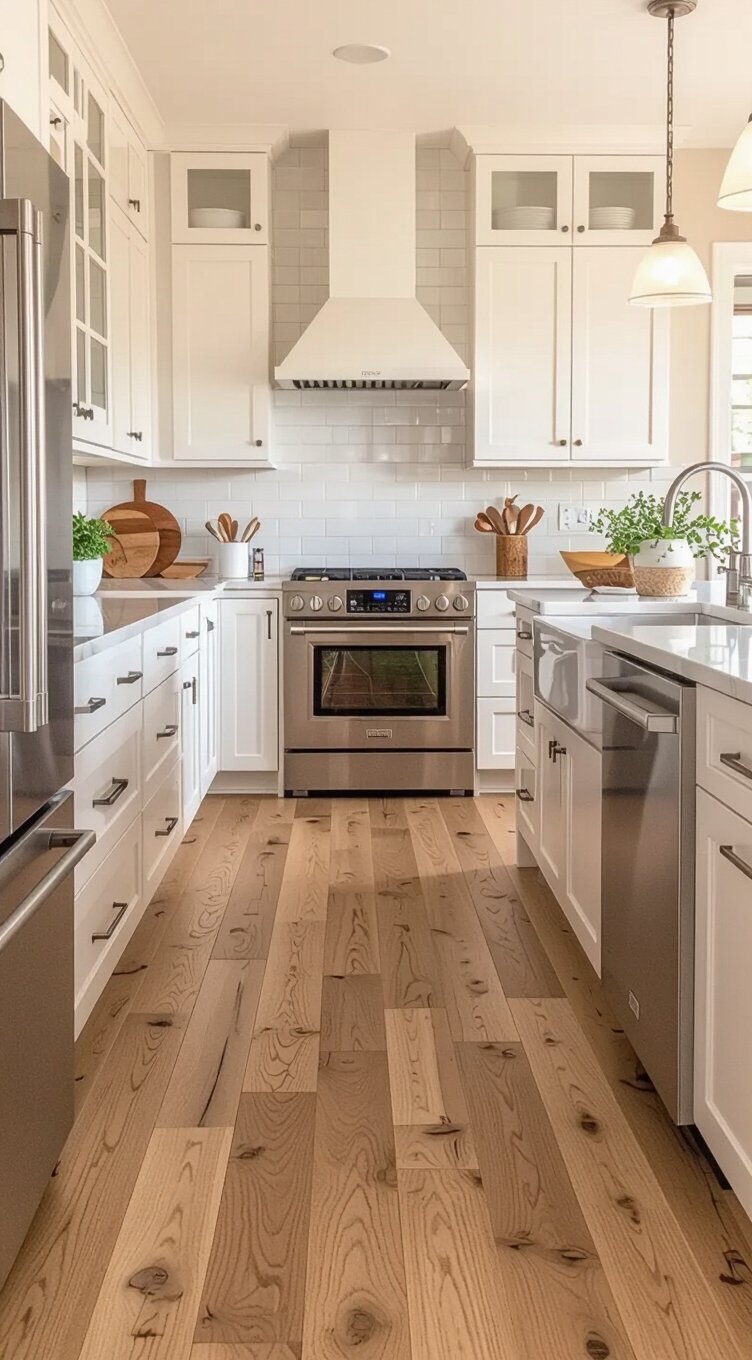
Luxury vinyl plank (LVP) flooring stands out as the top choice for small kitchens, and it’s easy to see why. Its waterproof core protects against spills, splashes, and moisture damage that constantly threaten kitchen floors. You’ll also appreciate its scratch resistant finish, which handles heavy foot traffic and dropped utensils without showing wear.
LVP gives you the freedom to choose from dozens of wood and stone looks at a fraction of the cost. Installation is straightforward, and many homeowners handle it themselves using click-lock planks. You can install LVP over most existing floors, saving you time and demolition costs.
For small kitchens, lighter LVP tones visually expand the space, making your kitchen feel open and larger than it actually is.
Ceramic Tile Kitchen Flooring That’s Built to Last
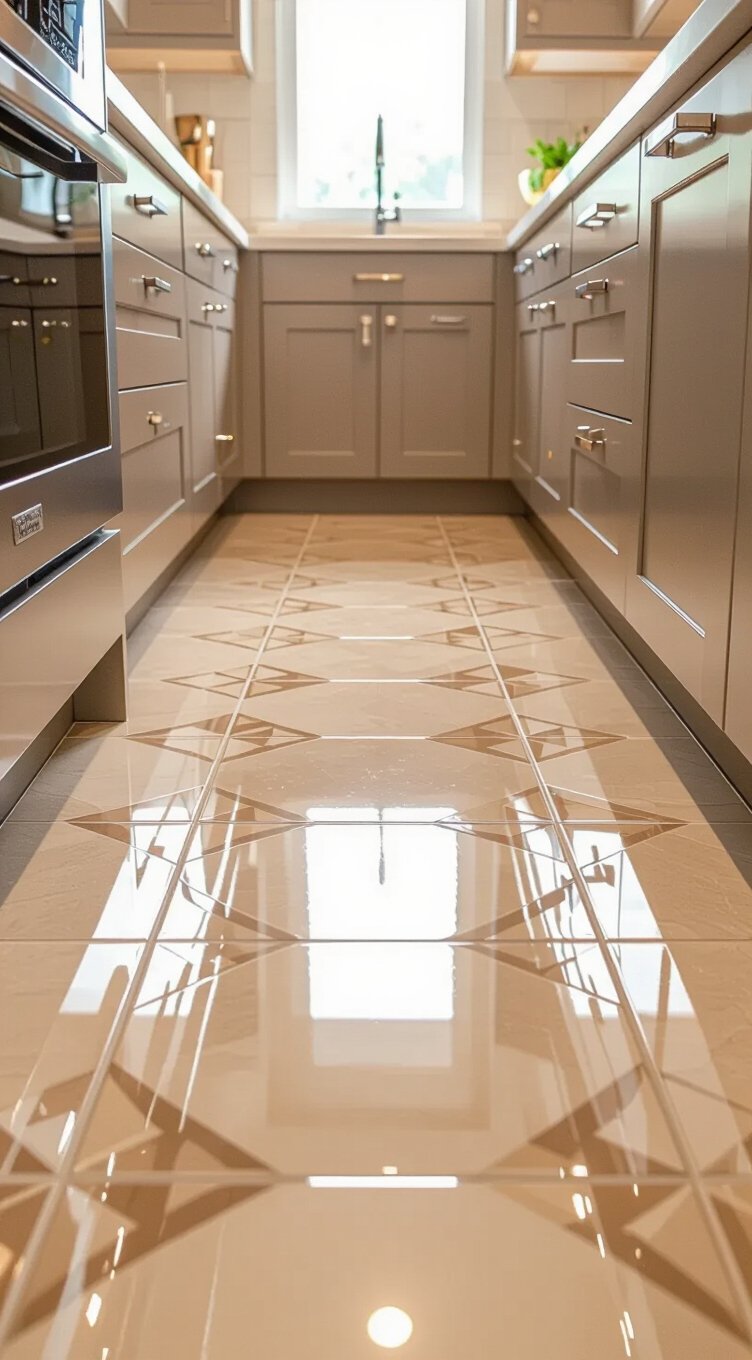
Ceramic tile ranks among the most durable flooring options you can install in a small kitchen. Its ceramic durability means it resists scratches, stains, and heavy foot traffic for decades. You’ll appreciate how tile longevity gives you freedom from constant replacements or costly repairs.
Consider these practical advantages:
- Water resistance — Ceramic tile handles spills and splashes without warping or swelling.
- Easy maintenance — A simple mop and mild cleaner keeps your floor looking fresh.
- Design flexibility — Choose from hundreds of sizes, colors, and patterns to personalize your space.
Install smaller tiles with contrasting grout to visually expand your kitchen’s footprint. Larger format tiles create a seamless, open feel. Either way, ceramic tile delivers lasting performance that truly sets you free from flooring worries.
Porcelain Tile: The Sleekest Hard Floor for Modern Kitchens
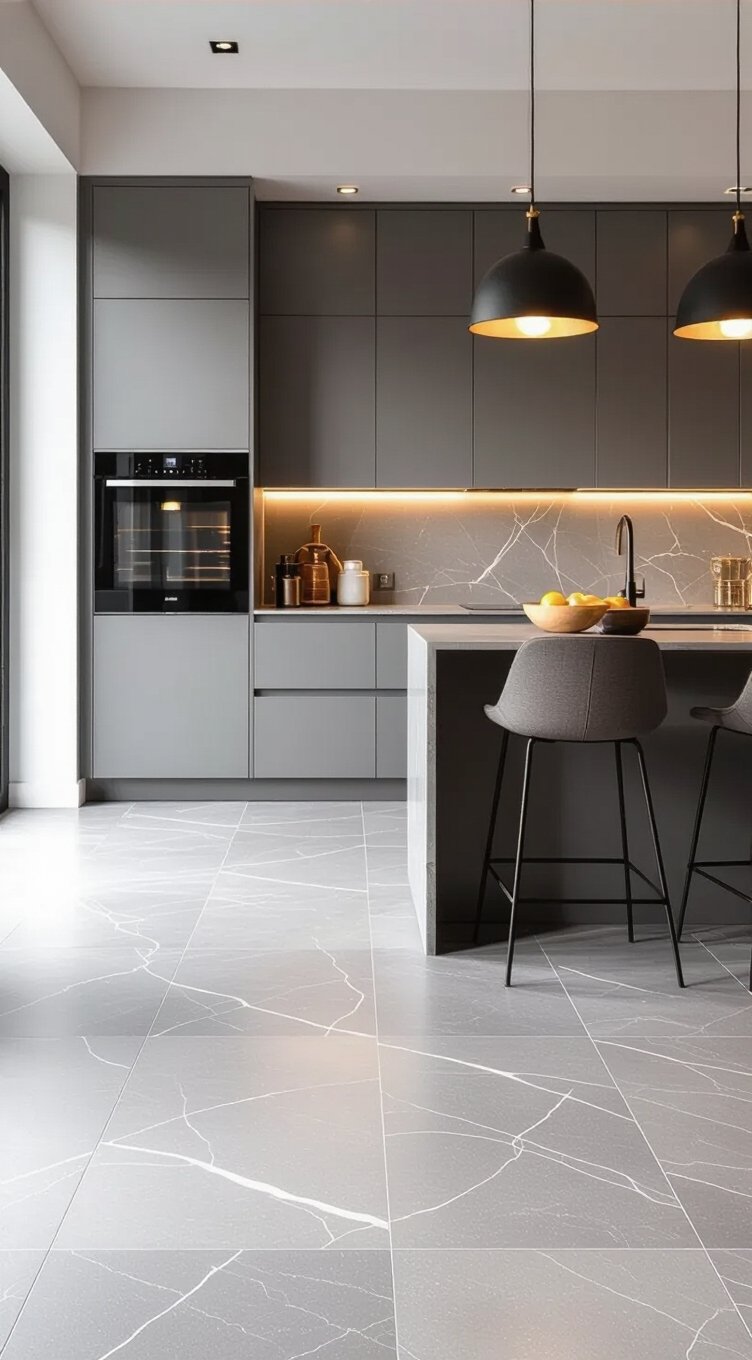
Porcelain tile brings a sleek, refined look that’s perfect for modern small kitchens. It’s denser than ceramic, making it incredibly durable and moisture-resistant. You’ll also appreciate its low thermal conductivity, keeping your floors comfortable underfoot during colder months.
Here are five reasons porcelain tile works brilliantly in small kitchens:
- Slip resistance ratings make it safer for high-traffic cooking areas
- Large-format tiles create an illusion of more space
- It handles heavy foot traffic without cracking or chipping
- Minimal grout lines reduce cleaning time markedly
- Endless design options mimic natural stone or wood beautifully
You’re free to choose bold patterns or neutral tones that reflect your personal style. Porcelain tile truly lets you design a kitchen that’s both practical and visually stunning.
Hardwood Kitchen Flooring: Beautiful but High-Maintenance
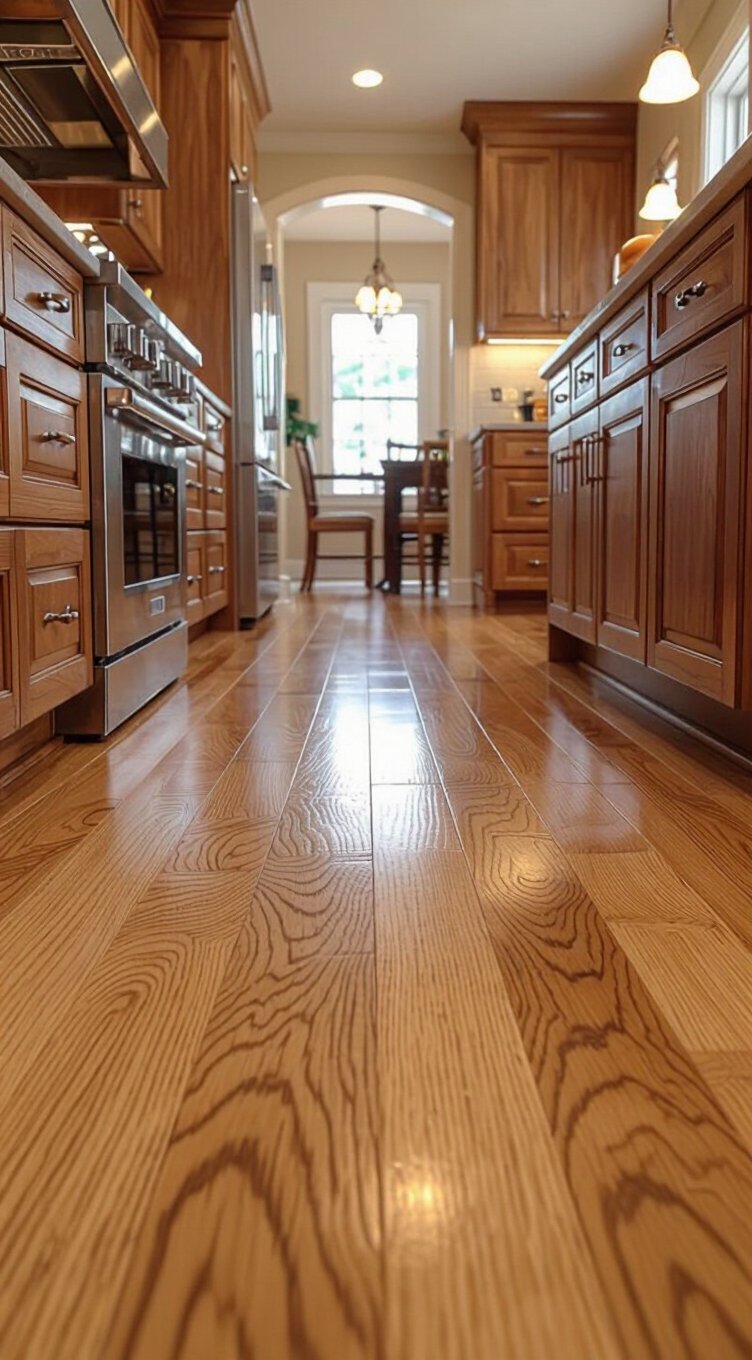
Hardwood flooring adds warmth and timeless elegance to small kitchens, but it demands consistent care to stay beautiful. Its hardwood elegance changes compact spaces into inviting, character-rich rooms you’ll love spending time in. However, be prepared for the high maintenance reality that comes with this flooring choice.
Here’s what you need to know:
- Seal it regularly — Apply polyurethane sealant every 3-5 years to protect against moisture damage.
- Wipe spills immediately — Standing water warps hardwood quickly, so keep a dry cloth nearby.
- Use area rugs — Place them near the sink and stove to reduce wear.
You’re choosing freedom through beauty, but commit to the upkeep. Hardwood rewards your effort with lasting, stunning results.
Engineered Hardwood: The Smarter Pick for Moisture-Prone Kitchens
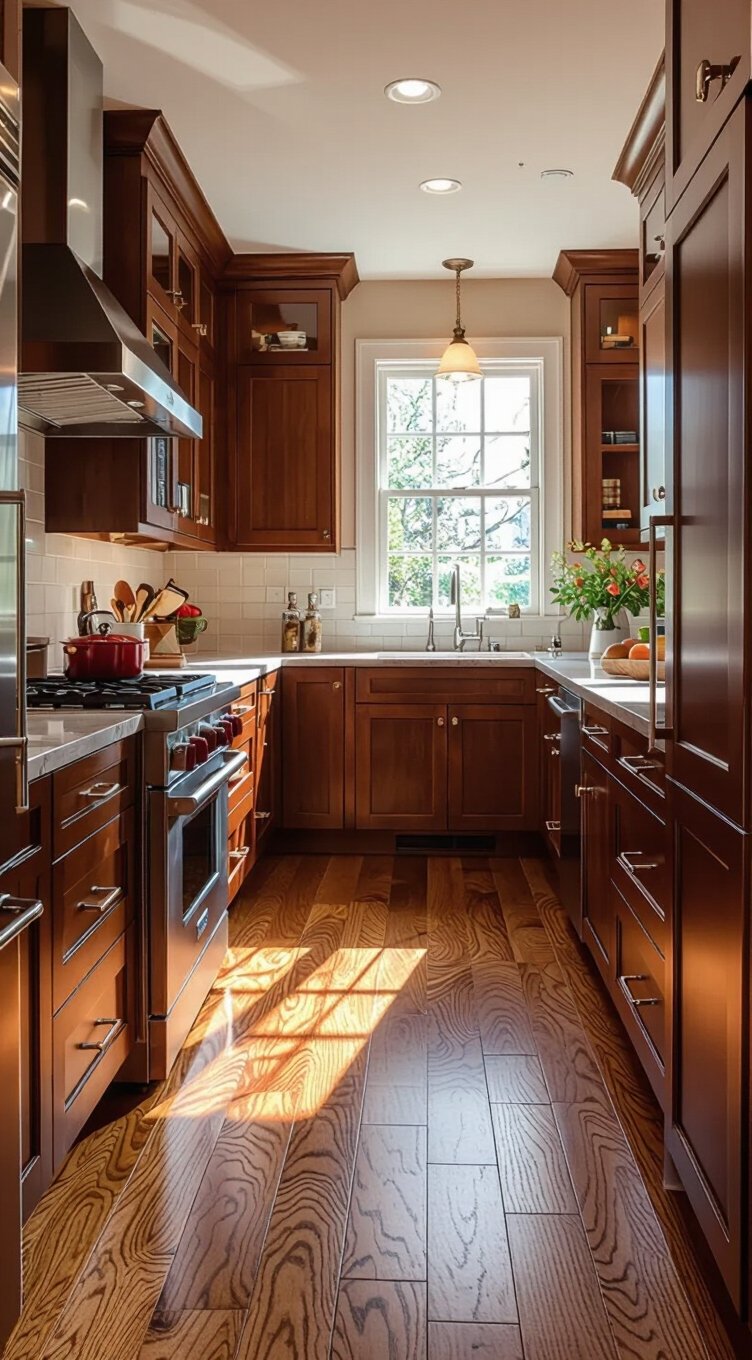
If hardwood’s moisture sensitivity has you second-guessing your choice, engineered hardwood offers a smarter solution for kitchen environments. Its core stability comes from multiple wood layers bonded together, preventing warping and expanding common in solid hardwood. You’ll get the authentic wood look you love without sacrificing durability.
Engineered hardwood’s moisture resistance makes it genuinely practical for kitchens where spills happen daily. You can install it confidently knowing it’ll hold up beautifully for years.
Key benefits you’ll appreciate:
- Resists warping from humidity fluctuations
- Mimics real hardwood’s appearance authentically
- Easier DIY installation with click-lock systems
- Compatible with radiant floor heating
- Available in wide plank styles for spacious visual appeal
Laminate Kitchen Flooring That Fools Everyone
What makes laminate such a smart choice for your small kitchen:
- Visual texture embossing creates genuine depth you can actually feel underfoot
- Waterproof core layers protect against everyday spills and splashes
- Click-lock installation lets you lay it yourself over a weekend
- Costs 60-70% less than solid hardwood while providing comparable beauty
You don’t have to sacrifice style to stay practical. Laminate gives you both, completely on your terms.
Peel-and-Stick Tile: The Best Budget Kitchen Flooring Option
Peel-and-stick tile is the most budget-friendly flooring option you can install in a small kitchen without hiring a professional. Its adhesive backing lets you lay tiles directly onto your existing floor in just a few hours. When you’re ready for a change, easy removal means you’re never locked into one look.
Here’s what makes peel-and-stick tile worth considering:
- Affordability – You’ll typically spend under $2 per square foot
- No special tools – A utility knife and ruler are all you need
- Design variety – Stone, wood, and geometric patterns are available
- Renter-friendly – Easy removal won’t damage your subfloor
- Quick installation – Most small kitchens take under four hours
Cork Flooring: Soft, Sustainable, and Surprisingly Tough
Budget-friendly peel-and-stick tiles are a great starting point, but cork flooring takes things a step further by adding comfort and eco-friendly benefits to your small kitchen. You’ll enjoy walking on its naturally cushioned surface, which reduces fatigue during long cooking sessions. Cork’s eco friendly insulation properties help regulate your kitchen’s temperature, cutting energy costs year-round. Its sound absorption qualities minimize noise, creating a quieter, more peaceful cooking environment. You’re also choosing a renewable material harvested without harming trees, giving you genuine freedom to make responsible choices. Cork resists mold and mildew naturally, making it a practical option for kitchens. Install floating cork tiles yourself to save on labor costs. Seal them properly to protect against moisture and extend their lifespan markedly.
Polished Concrete: Bold Small Kitchen Flooring for Industrial Spaces
If you’re drawn to an edgy, industrial aesthetic, polished concrete flooring can change your small kitchen into a bold, modern space. You’ll love how it opens up tight areas while providing serious durability.
Customize your concrete with these standout options:
- Exposed aggregate finishes reveal natural stones, adding raw texture and character
- Acid staining creates rich, unpredictable color variations unique to your space
- Polished surfaces reflect light, making small kitchens feel noticeably larger
- Sealed concrete resists spills, stains, and heavy foot traffic effortlessly
- Low-maintenance cleaning keeps your kitchen floor looking sharp without much effort
You’re free to design a floor that’s entirely your own. Concrete’s versatility lets you break conventional rules and create something genuinely distinctive in your kitchen.
Linoleum: The Comeback Kid of Kitchen Flooring
Linoleum has made an impressive comeback, and it’s quickly becoming one of the smartest flooring choices for small kitchens today. You’re looking at a true eco friendly material made from linseed oil, cork dust, and natural pigments. It’s durable, water-resistant, and surprisingly affordable for budget-conscious homeowners.
This vintage revival flooring comes in bold patterns and rich colors that can visually expand your compact kitchen space. You can choose geometric designs or classic marbled finishes that add personality without overwhelming the room.
Here’s what makes linoleum stand out:
- Lifespan: It lasts 25-40 years with proper care
- Comfort: It’s softer underfoot than tile or concrete
- Maintenance: Simple sweeping and occasional mopping keeps it pristine
You’re getting timeless style with real practical value.
How to Match Flooring Colors to a Small Kitchen
Choosing the right flooring color can change your small kitchen from cramped to surprisingly spacious. Light-toned floors reflect natural light, making tight spaces feel open and free.
Consider these smart color-matching strategies:
- Go lighter — pale wood tones, soft grays, or creamy whites expand visual space naturally
- Match your cabinets — complementary tones create seamless, uninterrupted sight lines
- Consider floor texture — matte finishes reduce glare while subtle patterns add depth without overwhelming
- Assess lighting impact — test flooring samples under both natural and artificial light before committing
- Contrast intentionally — dark floors against light walls create bold, confident definition
You’re not locked into one approach. Trust your instincts, test your options, and choose colors that genuinely reflect your style.
How Grout Color and Tile Tone Affect Small Kitchen Depth
When you’re tiling a small kitchen, grout color and tile tone work together to shape how deep and spacious the room feels. Choosing grout contrast carefully lets you control whether tiles feel bold and defined or soft and continuous. High contrast between grout and tile draws attention to each individual piece, which can make a floor feel busier and smaller. Matching grout closely to your tile creates tile harmony, allowing the floor to read as one uninterrupted surface. That visual continuity tricks the eye into seeing more space. Light-toned tiles with matching grout work especially well in compact kitchens. You’re free to experiment, but keeping contrast low generally opens the room up. Small, intentional choices like these give you big results without a full renovation.
LVP vs. Tile vs. Laminate: Which Small Kitchen Flooring Is Easiest to Clean?
Once you’ve nailed down how your floor looks, it’s time to think about how easy it’ll be to keep clean.
- LVP offers excellent scratch resistance and wipes clean effortlessly with minimal products
- Tile resists moisture completely but requires grout line maintenance to stay fresh
- Laminate cleans quickly but needs careful protection from standing water and spills
- Slip resistance matters most around your sink and cooking zones for daily safety
- LVP wins overall for small kitchens needing low-maintenance, durable, versatile flooring freedom
LVP handles everyday messes without demanding much effort from you. Tile stays pristine on its surface but grout can trap grease over time. Laminate looks great initially but requires consistent spill management. Choose what fits your actual lifestyle, not just your aesthetic goals.
How to Choose the Right Kitchen Flooring for Your Space and Budget
The right kitchen flooring decision comes down to three practical factors: your budget, your lifestyle, and your kitchen’s specific layout. Start by setting a realistic budget range before you visit showrooms or browse online. Budget options like LVP and laminate typically cost $2–$5 per square foot installed, while tile runs $5–$15. Next, consider flooring durability based on your household traffic. Families with kids or pets need scratch-resistant, waterproof surfaces. Finally, think about your kitchen’s size and shape. Lighter-colored floors visually expand small spaces, while large-format tiles reduce grout lines and simplify cleaning. You don’t need to spend a fortune to get a beautiful, long-lasting floor. Matching the right material to your real-life needs gives you the best results.
Frequently Asked Questions
Can I Install New Kitchen Flooring Directly Over Existing Flooring?
You can often install new flooring directly over existing floors, but you’ll want to assess the condition first. Skipping floor removal requires thorough surface preparation to guarantee your new flooring bonds properly and lasts.
How Long Does Kitchen Flooring Installation Typically Take to Complete?
Your kitchen flooring installation timeline typically spans one to three days. Floor preparation, like cleaning and leveling, takes the most time. You’ll have your beautiful, durable new floor ready faster than you’d expect!
What Thickness of Kitchen Flooring Works Best for Small Spaces?
For small kitchens, you’ll want flooring between 3/8″ to 1/2″ thick. This floor thickness balance creates an ideal space perception effect, making your kitchen feel open, free, and larger without sacrificing the durability you deserve.
Does Kitchen Flooring Require Special Underlayment for Noise Reduction?
Yes, you’ll benefit from special underlayment with acoustic insulation properties for your kitchen floor. It’s your choice to add sound dampening layers, giving you the freedom to enjoy a quieter, more peaceful cooking environment.
Which Kitchen Flooring Options Are Safest for Homes With Pets?
For pet safety, you’ll want luxury vinyl or porcelain tile. They’re both scratch-resistant, easy to clean, and won’t trap allergens. You’re free to choose durable, stylish options that keep your furry companions comfortable and safe.
Conclusion
Choosing the right small kitchen flooring doesn’t have to feel overwhelming. Whether you’re drawn to waterproof LVP, durable porcelain tile, or budget-friendly peel-and-stick options, there’s a perfect fit for your space and lifestyle. Focus on durability, moisture resistance, and how colors affect your kitchen’s perceived size. With so many stylish, low-maintenance options available, you can confidently change your small kitchen into a functional, beautiful space that’ll stand up to daily wear.