

White kitchens are gorgeous—until they start feeling like a sterile hospital cafeteria. You know what I’m talking about: all those beautiful bright surfaces suddenly make you feel like you should be disinfecting something rather than cooking dinner. The good news? You can absolutely warm up that crisp white space without losing the clean, airy vibe you fell in love with in the first place.
Bring in Natural Wood Tones
Wood is basically the universal antidote to the cold white kitchen blues. It adds instant warmth and creates that perfect balance between clean and cozy that everyone’s chasing on Pinterest.
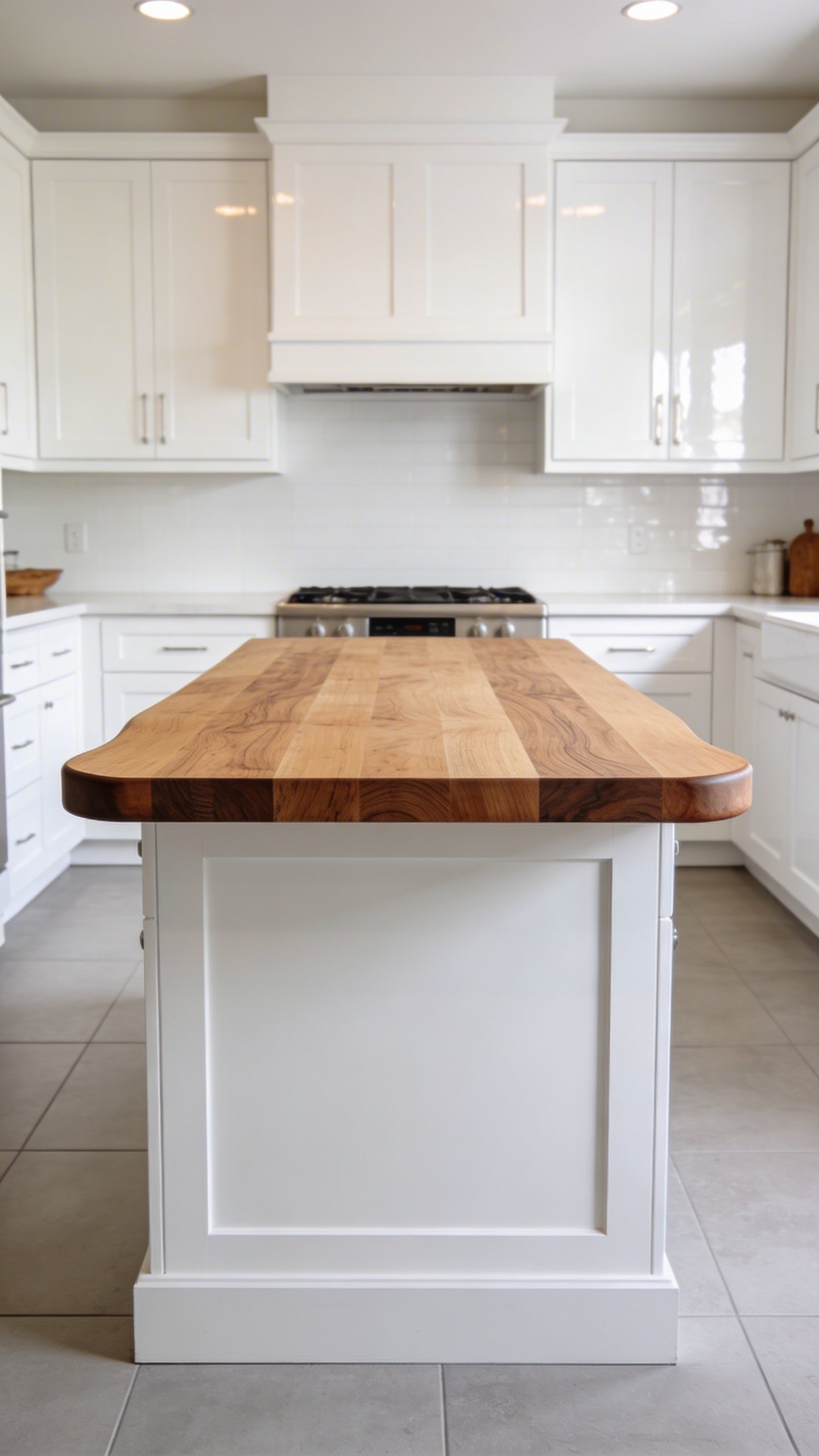
Start with your countertops if you’re ready to commit. Butcher block counters or a wooden island top can completely transform the feel of your kitchen. They get better with age too—all those knife marks and stains just add character. Plus, you can sand them down if things get too gnarly.
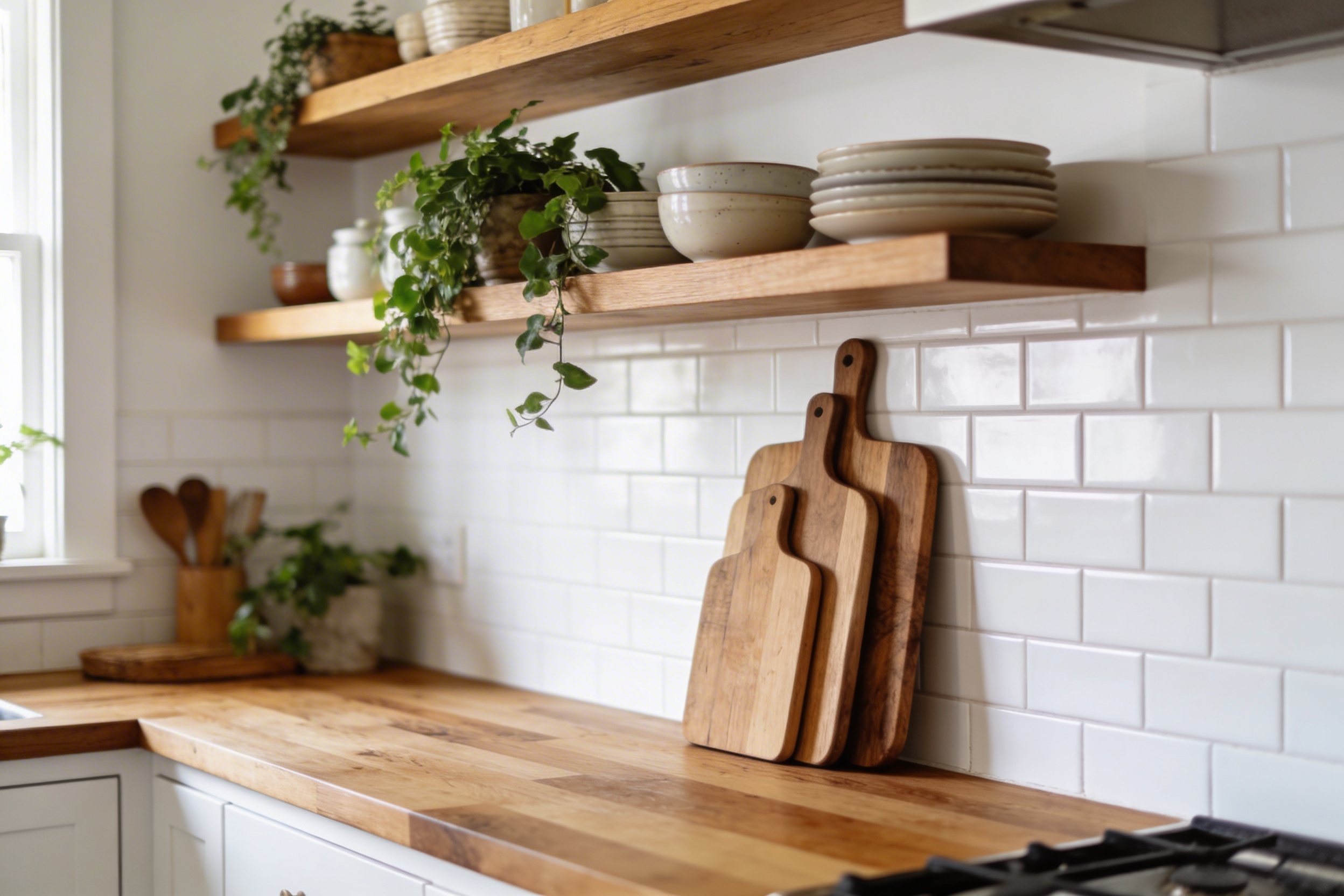
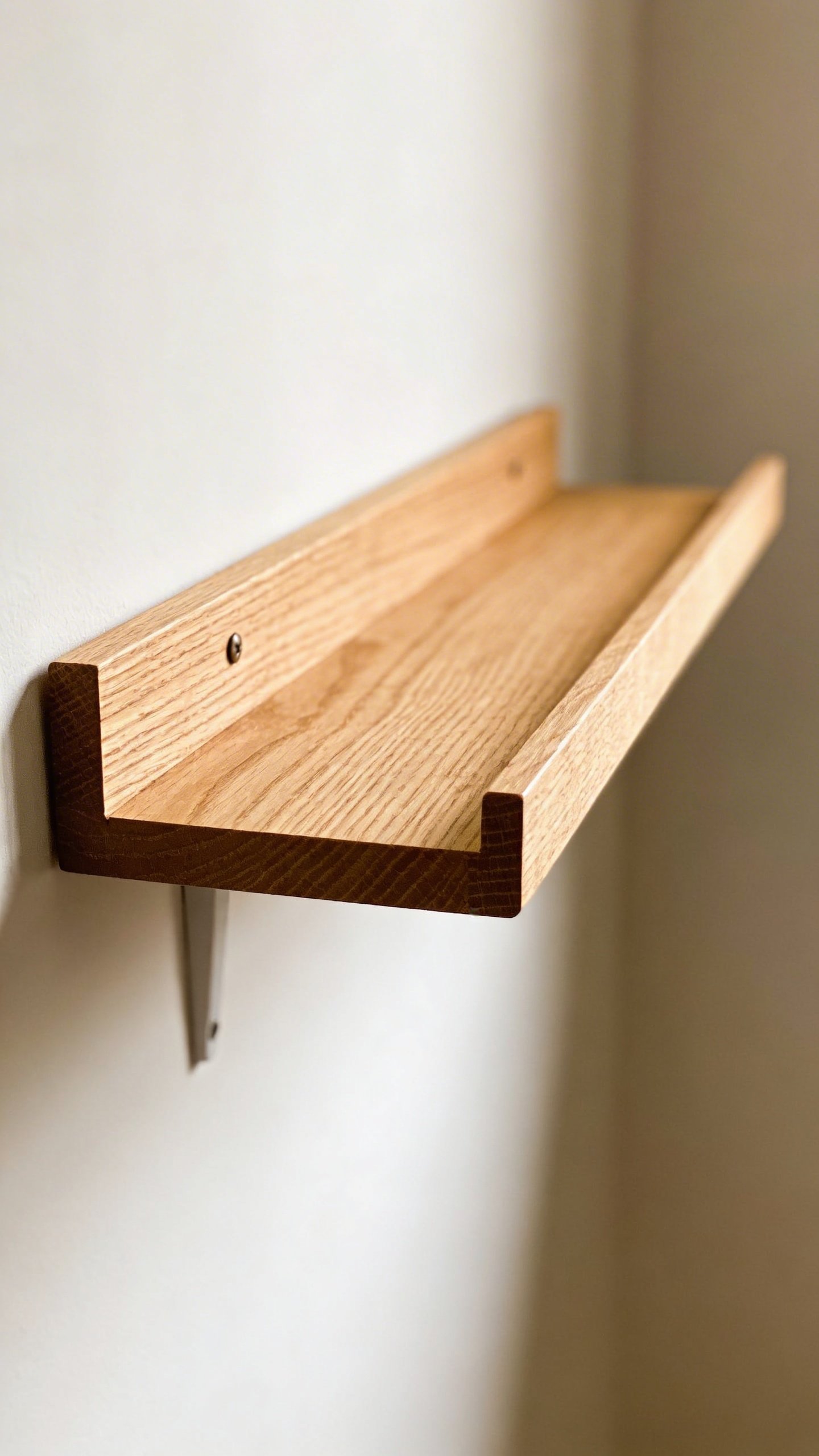
Not ready for a full countertop overhaul? No problem. Floating shelves in a warm oak or walnut will do wonders. Swap out those upper cabinets (or even just a few of them) for open wooden shelving, and suddenly your kitchen has personality. Load them up with your prettiest dishes and some greenery, and you’re golden.
Smaller Wood Accents That Pack a Punch
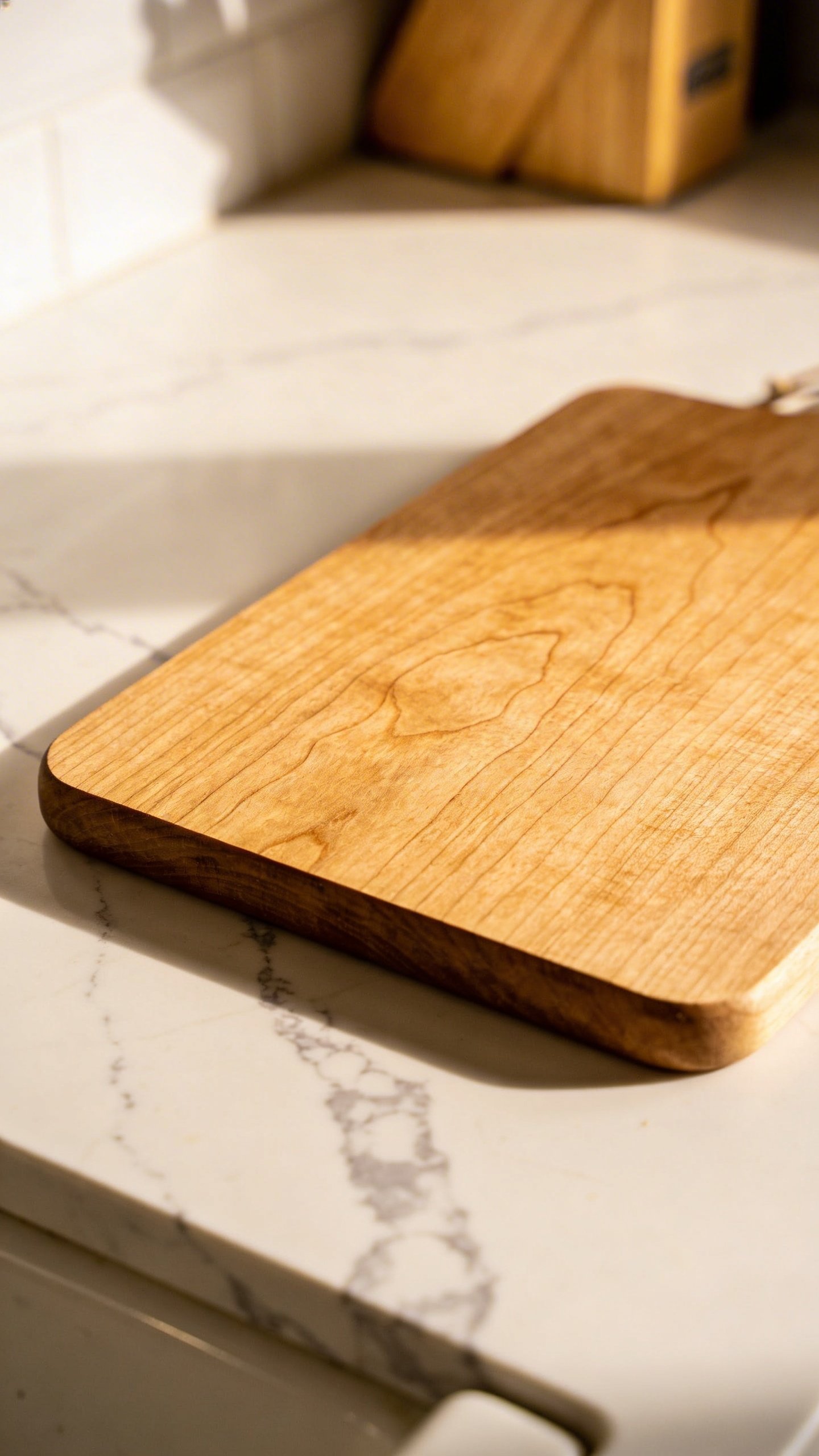
Sometimes you just need the small stuff to make a big difference. Wooden cutting boards propped up on your counter aren’t just practical—they’re décor. Get a few different sizes and lean them against your backsplash.
Wood bar stools or dining chairs around your island add warmth right where people gather. And don’t sleep on wooden utensil holders, bowl collections, or even a wooden tray to corral your coffee station. These little touches add up fast.
Layer in Warm Metals
Brass, copper, and gold are your best friends here. They reflect light beautifully while adding that warm glow that chrome and stainless steel just can’t deliver.
Your cabinet hardware is the easiest place to start. Swapping out cold silver pulls for warm brass ones is a weekend project that makes a massive impact. Seriously, it’s wild how much this changes things. You can do it yourself with just a screwdriver, and it’ll run you way less than most kitchen updates.
Light fixtures are your next move. Pendant lights in brass or copper over your island create focal points while washing everything in warmer light. Even if you keep white shades, warm metal bases do the heavy lifting.
Don’t forget about your faucet. A brushed gold or aged brass faucet becomes jewelry for your sink and ties all those other metal accents together. Mix your metals too—you’re not getting married to them. A little brass here, some copper there, maybe black metal mixed in keeps things interesting.
Choose the Right Lighting
Here’s the thing about white kitchens: they look completely different depending on your lighting situation. Cool LED bulbs will make your space feel like an operating room, while warm bulbs create that cozy atmosphere you’re after.
Switch all your bulbs to warm white or soft white options—look for anything between 2700K and 3000K on the package. The difference is night and day. Your white cabinets will take on a creamier, more inviting tone instead of that harsh brightness.
Layer your lighting too. Overhead lights alone create harsh shadows and flat illumination. Add under-cabinet lighting to eliminate dark corners and create ambiance. Throw in some table lamps or even a small lamp on your counter if you’ve got the space. Multiple light sources at different heights make any room feel warmer and more lived-in.
Incorporate Texture and Textiles
White on white on white gets boring fast. Your kitchen needs texture to feel warm and inviting, not like a showroom nobody actually uses.
Rugs are game-changers. A natural fiber runner down your galley kitchen or a vintage-inspired rug in front of your sink adds warmth underfoot and visual interest. Go for something with warm tones—terracotta, rust, mustard, or even a faded Persian-style rug if that’s your vibe.
Window treatments soften all those hard surfaces. Roman shades in linen, woven wood blinds, or even simple café curtains add texture and warmth. Just keep them light and breezy so you don’t lose that airy feel you’re going for.
Kitchen Linens That Actually Matter
Don’t underestimate the power of good dish towels. I’m not talking about those sad, threadbare things you’ve had since college. Invest in some beautiful linen or cotton towels in warm colors or interesting patterns. Drape them over your oven handle or display them on open shelving.
Pot holders, oven mitts, and even a cozy table runner for your island add softness to all that white. Stick with natural materials—linen, cotton, wool—and warm color palettes.
Add Living Elements
Nothing warms up a space quite like actual living things. Plants bring life, color, and organic shapes that contrast beautifully with clean white cabinetry.
Herbs on your windowsill are practical and pretty. Basil, rosemary, and thyme in terracotta pots add warmth and smell amazing. Plus, you’ll actually use them in your cooking, so it’s a win-win.
Bigger plants make bigger statements. A fiddle leaf fig in the corner, a potted olive tree, or even a collection of succulents on open shelving adds that organic element that makes spaces feel human. Just make sure they can handle your kitchen’s light and humidity situation.
Fresh flowers or branches in a vase are the easiest way to change up your kitchen’s mood seasonally. FYI, you don’t need fancy arrangements—grocery store flowers or even clippings from your yard work perfectly.
Introduce Warm Colors Strategically
Your white kitchen can handle color—it actually needs it. The trick is choosing the right warm tones and incorporating them without overwhelming your space.
Terracotta, rust, ochre, and warm grays are your safest bets. These earthy tones complement white beautifully and add instant coziness. You can bring them in through bar stools, pottery, artwork, or even a painted accent wall if you’re feeling bold.
Your backsplash offers a permanent way to add warmth. Terracotta zellige tiles, warm subway tiles with cream grout, or even a natural stone in honey tones can anchor your entire color scheme. If you’re renting or not ready to commit, peel-and-stick options have come a long way.
Cookware and dishes count as décor too. Display your pretty stuff—that Le Creuset dutch oven in flame, those wooden salad bowls, your collection of ceramic mugs. These everyday items add warmth while staying functional.
FAQ
What’s the easiest way to warm up a white kitchen on a budget?
Start with what you can change cheaply: swap your light bulbs to warm white, add wooden cutting boards and utensil holders, bring in plants, and style with warm-colored textiles. These small changes cost under $200 total but make a huge visual impact. Cabinet hardware is also relatively inexpensive to replace and transforms the entire space.
Will adding warm elements make my white kitchen look dated?
Not if you choose classic materials like natural wood, brass, and neutral warm tones. The all-white sterile look is actually what dates faster—those warmth-adding elements give your kitchen staying power. IMO, kitchens need some warmth to feel timeless rather than trendy.
Can I warm up a white kitchen without adding wood?
Absolutely. Focus on warm metals like brass and copper, bring in terracotta and rust-colored accents, use warm lighting, add natural fiber rugs and textiles, and incorporate plants. Stone elements in warm tones also work beautifully. Wood is just one tool in your arsenal.
What color should I avoid in a white kitchen I’m trying to warm up?
Steer clear of cool grays, stark black (small doses are fine), and cool blues. These will work against your warming efforts and emphasize the coldness you’re trying to fix. Stick with warm neutrals, earthy tones, and metals with golden undertones instead.
How do I keep my white kitchen from looking too busy when adding warm elements?
Stick to a cohesive color palette of 3-4 warm tones and repeat them throughout the space. Keep your counters relatively clear—choose a few meaningful items to display rather than cluttering every surface. Open shelving should look curated, not chaotic. Less is more, but less doesn’t mean cold.
Should I paint my white cabinets to warm up the space?
That’s your nuclear option, and honestly, you probably don’t need it. Try all the other strategies first—most people find they love their white cabinets once they’ve warmed up the surrounding elements. If you still hate them after six months of living with warm accents, then consider painting lower cabinets in a warm tone while keeping uppers white.
Conclusion
Your white kitchen doesn’t need a complete overhaul to feel warm and inviting. Start with the easy wins—swap those light bulbs, add some wood elements, bring in warm metals, and style with textiles and plants. These changes work together to transform that sterile vibe into something that actually feels like home. The beauty of a white kitchen is that it’s a blank canvas. You’re just adding the warmth that makes it feel like your canvas instead of a showroom.