

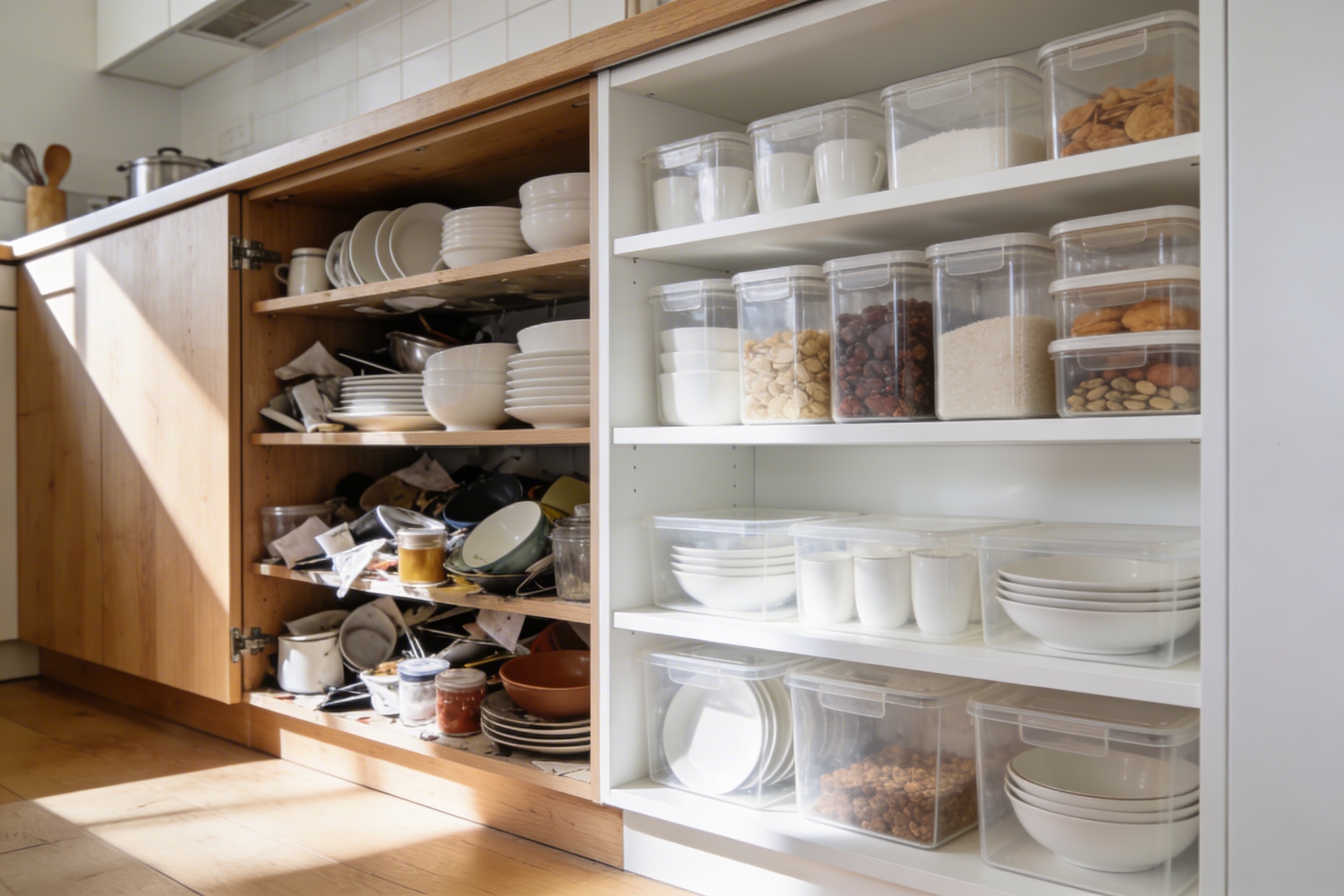
You know that moment when you open your kitchen cupboard and something falls out? Or when you buy duplicates because you can’t find what you already own? Your kitchen cupboards are probably crying out for help, and honestly, organizing them isn’t as painful as you think.
Empty Everything Out (Yes, Everything)
I know this sounds dramatic, but trust me on this one. Pull everything out of your cupboards and spread it across your counter or kitchen table. This is your “come to Jesus” moment with your kitchenware.
While everything’s out, give those shelves a proper wipe down. You’ll be shocked at the mystery crumbs and weird sticky spots you find back there. Take this opportunity to check for any expired items or things that have gone rancid without you noticing.
This step also forces you to confront exactly what you own. You might discover you have seven wooden spoons or three half-empty bottles of vanilla extract. Awareness is the first step to recovery, right?
The Great Purge: What Stays and What Goes
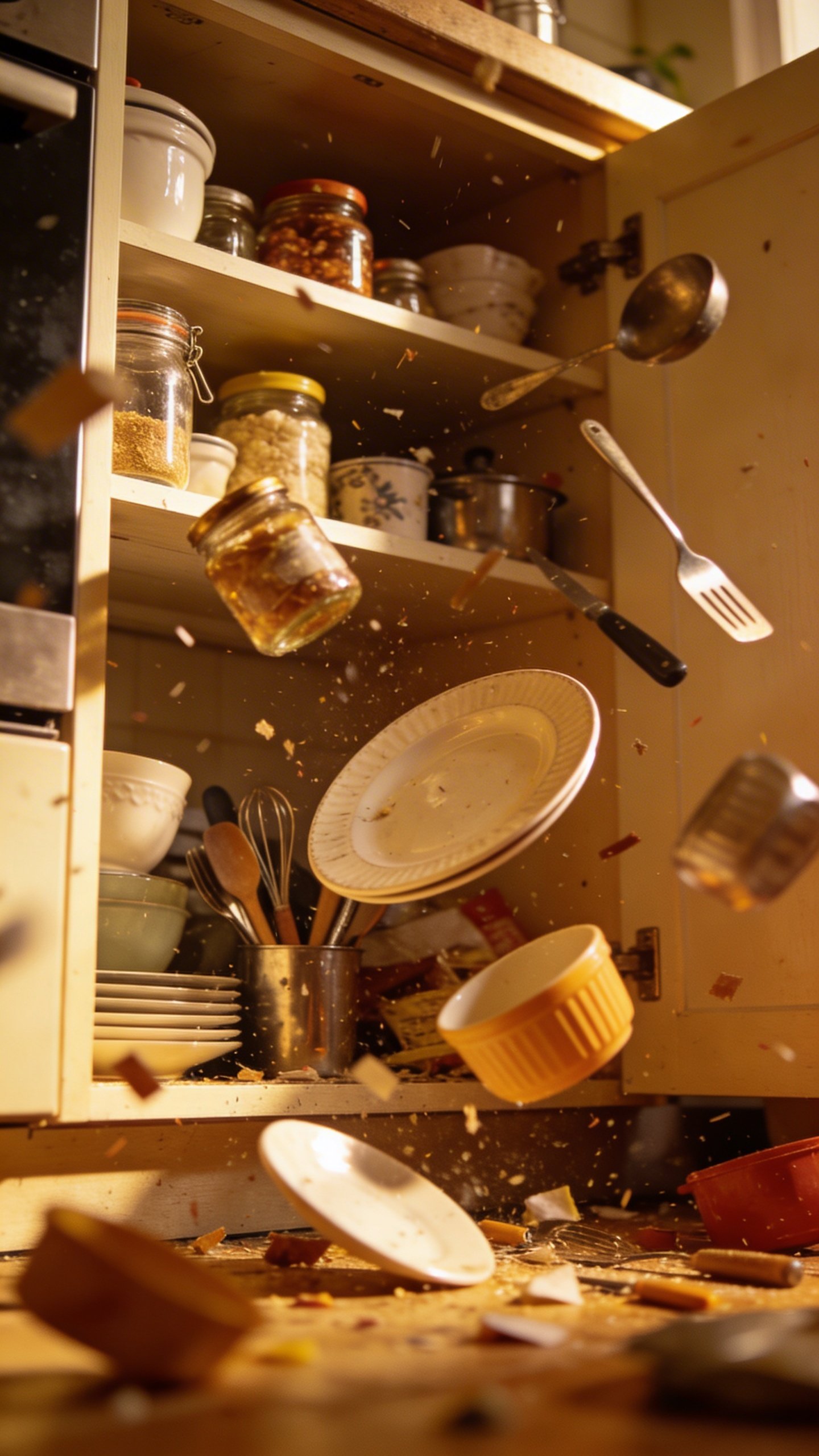
Now comes the fun part—deciding what deserves precious cupboard real estate. Be ruthless here. That bread maker you used once in 2019? It’s time to let go.
Items to Toss Immediately
- Anything chipped, cracked, or broken (you’re never going to fix it)
- Mismatched food storage containers without lids
- Expired spices and pantry items
- Kitchen gadgets you haven’t used in over a year
- Duplicate items you don’t actually need
The Maybe Pile
Create a box for things you’re unsure about. Store it somewhere for three months, and if you don’t go looking for anything in it during that time, donate the whole thing without opening it. Out of sight, out of mind, and eventually out of your house.
Zone Your Kitchen Like a Pro
Here’s where we get strategic. Your kitchen should work with your natural movements, not against them. Think about how you actually use your space.
Create zones based on function. Store your coffee maker, mugs, and coffee supplies in one area. Keep baking items together—flour, sugar, mixing bowls, measuring cups. Snacks should live in their own designated spot, especially if you have kids who constantly ask “where are the crackers?”
The zone approach means you’re not running around your kitchen like a maniac during meal prep. Everything related to one task lives in the same neighborhood. Revolutionary, I know.
The Golden Rules of Cupboard Placement
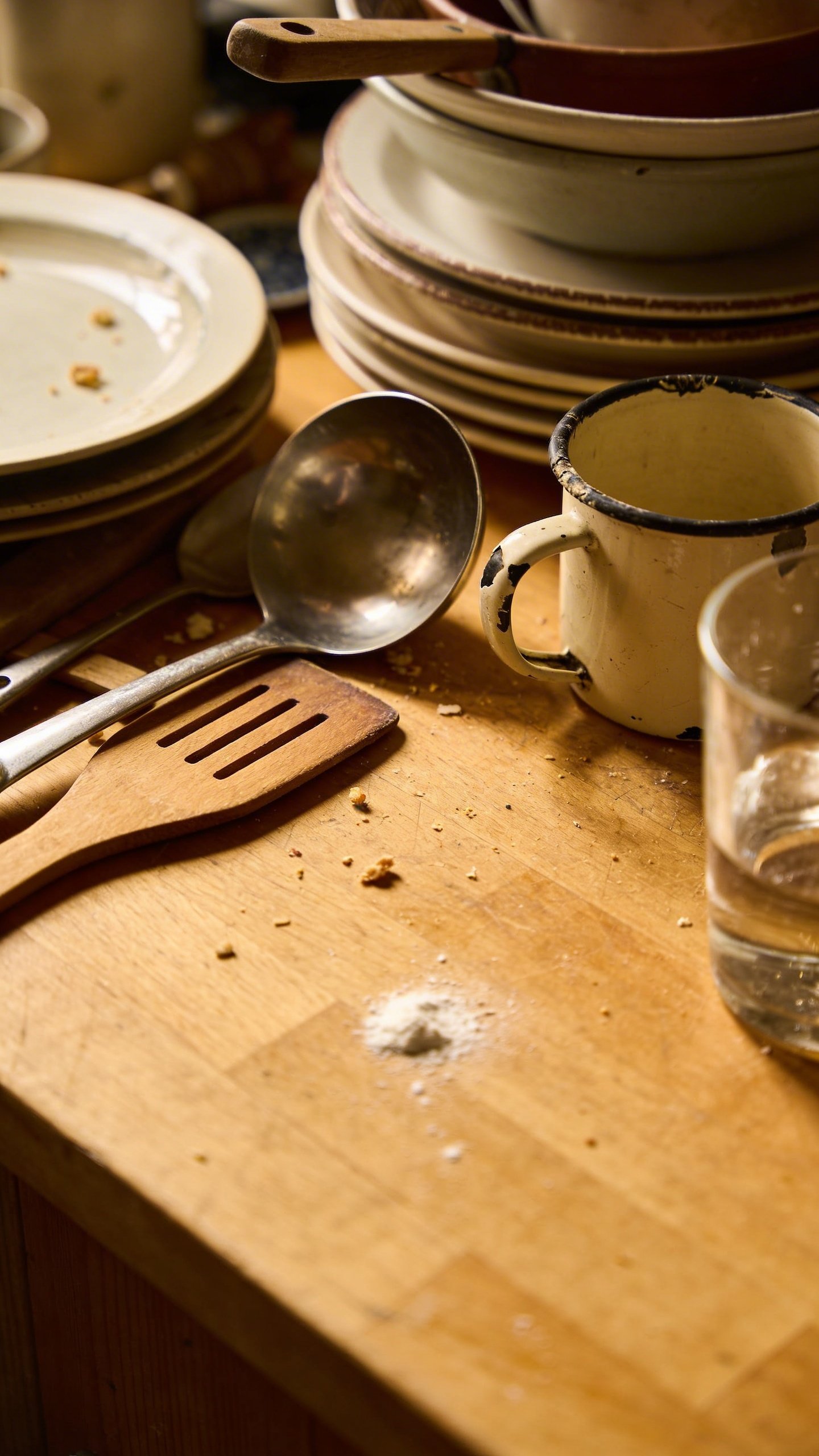
Location matters more than you think. You wouldn’t store your winter coat in the attic if you lived in Alaska, right? Same logic applies here.
Heavy items go on lower shelves—your stand mixer, big pots, and appliances belong down low where you won’t throw your back out reaching for them. Light stuff like plastic containers can live up top.
Keep your most-used items at eye level. This is prime real estate, folks. Your everyday plates, glasses, and go-to spices deserve this spot. Save the high shelves for things you only need occasionally, like that fancy punch bowl or holiday serving platters.
Items you use together should live together. Store pot lids near pots, measuring spoons with measuring cups, and lunchbox supplies in one container. FYI, this alone will save you approximately 47 hours per year of searching for stuff.
Storage Solutions That Actually Work
You don’t need to spend a fortune on fancy organizers, but a few strategic tools can make a huge difference.
Lazy Susans Are Magic
Seriously, these rotating trays are perfect for corner cupboards and deep shelves. Put your oils, vinegars, or spices on one, and you’ll never lose that sesame oil in the back again.
Shelf Risers Double Your Space
These simple platforms create two levels where you previously had one. Use them for canned goods, spices, or mugs. Suddenly you can actually see what you own instead of stacking things three deep.
Clear Containers Are Your Friends
Transfer dry goods like pasta, rice, flour, and cereal into clear, airtight containers. You’ll instantly know when you’re running low, and bonus—everything looks infinitely neater. Plus, no more stale crackers or bug surprises.
Door Organizers
Don’t sleep on the inside of your cupboard doors. Stick some adhesive hooks or small racks there for measuring spoons, pot holders, or spice packets. It’s free real estate!
Maintaining Your Masterpiece
Congrats, you’ve organized your cupboards! Now let’s keep them that way for longer than three days.
Implement the “one in, one out” rule. Buy a new mug? Donate an old one. This prevents the creeping accumulation that got you into this mess in the first place.
Do a quick five-minute tidy every week. Put strays back where they belong, wipe up spills immediately, and resist the urge to just shove things wherever they fit. Future you will be grateful.
Schedule a deeper declutter session every three to six months. Things drift, you accumulate more stuff, and needs change. A quick reset keeps chaos from building back up.
Frequently Asked Questions
How do I organize cupboards in a small kitchen?
Small kitchens require even more strategic planning. Use vertical space with stackable shelves and hanging racks. Store items inside other items—nesting bowls are your best friend. Keep only what you actually use regularly, and consider storing rarely-used items elsewhere, like in a hall closet or basement.
Should I organize cupboards by category or by use?
IMO, organizing by use beats organizing by category every time. Group items based on the task they support (baking zone, coffee zone, cooking zone) rather than what they are. This reduces the steps in your workflow and makes cooking way more intuitive.
What’s the best way to organize spices?
Store spices in a drawer with a tiered insert or on a narrow shelf where you can see all the labels. Alphabetizing helps if you have tons of spices, but grouping by cuisine type (Italian, Asian, Mexican) works great too. Just make sure you can actually read the labels without pulling everything out.
How can I stop my cupboards from getting messy again?
Give everything a designated home and make a rule that items only go back in their spot—nowhere else. Label shelves if you live with people who struggle with this concept. The easier your system is to maintain, the more likely you’ll stick with it.
What should I do with awkward corner cupboards?
Corner cupboards are notoriously frustrating. Install a lazy Susan for maximum accessibility, or use them for items you don’t need often. Some people use pull-out shelving systems, but honestly, just accepting that corners are for storing your roasting pan and punch bowl works fine too.
Do I really need drawer dividers and organizers?
You don’t need them, but they help immensely. Even simple DIY dividers made from small boxes or cardboard work wonders. The key is preventing the dreaded junk drawer effect where everything becomes a tangled mess of spatulas and rubber bands.
Wrapping It Up
Organized kitchen cupboards won’t change your life, but they’ll definitely make cooking less frustrating and help you stop buying duplicate items you can’t find. The key is creating a system that matches how you actually use your kitchen, not some Pinterest-perfect ideal that only looks good in photos.
Start with one cupboard if the whole project feels overwhelming. Even small improvements make a difference. And remember, done is better than perfect—an imperfect organization system you’ll actually maintain beats a pristine setup that falls apart in a week.