
How to Organize Corner Kitchen Cabinet Like a Pro
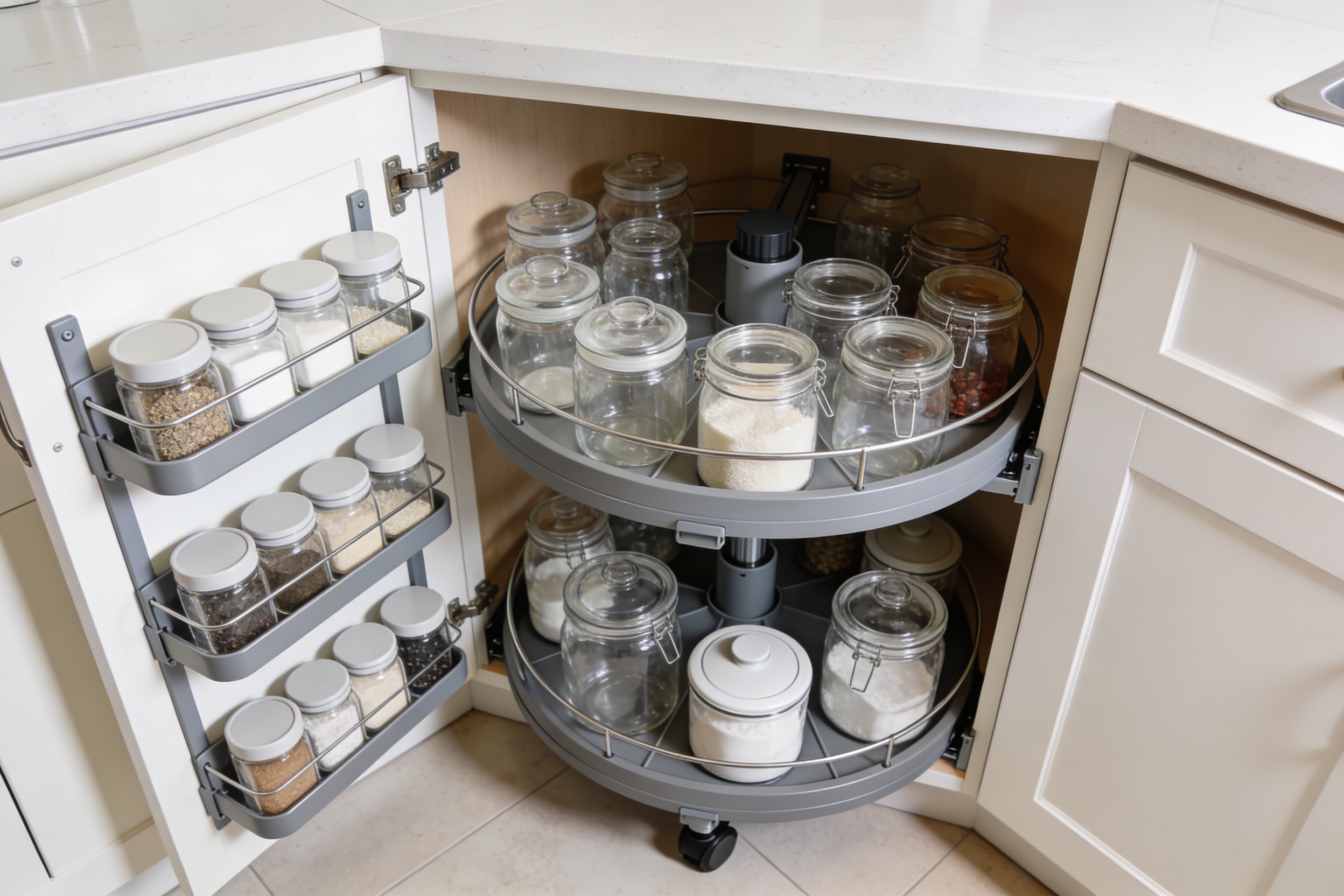
You know that awkward corner cabinet in your kitchen where Tupperware lids go to die? The one where you shove things in and pray they don’t create an avalanche when you open the door? Yeah, that one needs an intervention, and I’m here to help you stage one.
Why Corner Cabinets Are the Worst (And Why We Need to Deal With Them)
Let’s be real: whoever invented corner cabinets without thinking about actual organization deserves a strongly worded letter. These deep, dark voids are basically where kitchen items disappear into another dimension. You know you put that waffle maker in there three years ago, but good luck finding it without a flashlight and some serious flexibility.
The problem isn’t just that they’re deep—it’s that they’re awkwardly shaped. Your arm can only reach so far, and that back corner might as well be Narnia for all the access you have to it. But here’s the thing: with the right approach, you can actually make these cabinets work for you instead of against you.
Empty Everything Out (Yes, Everything)
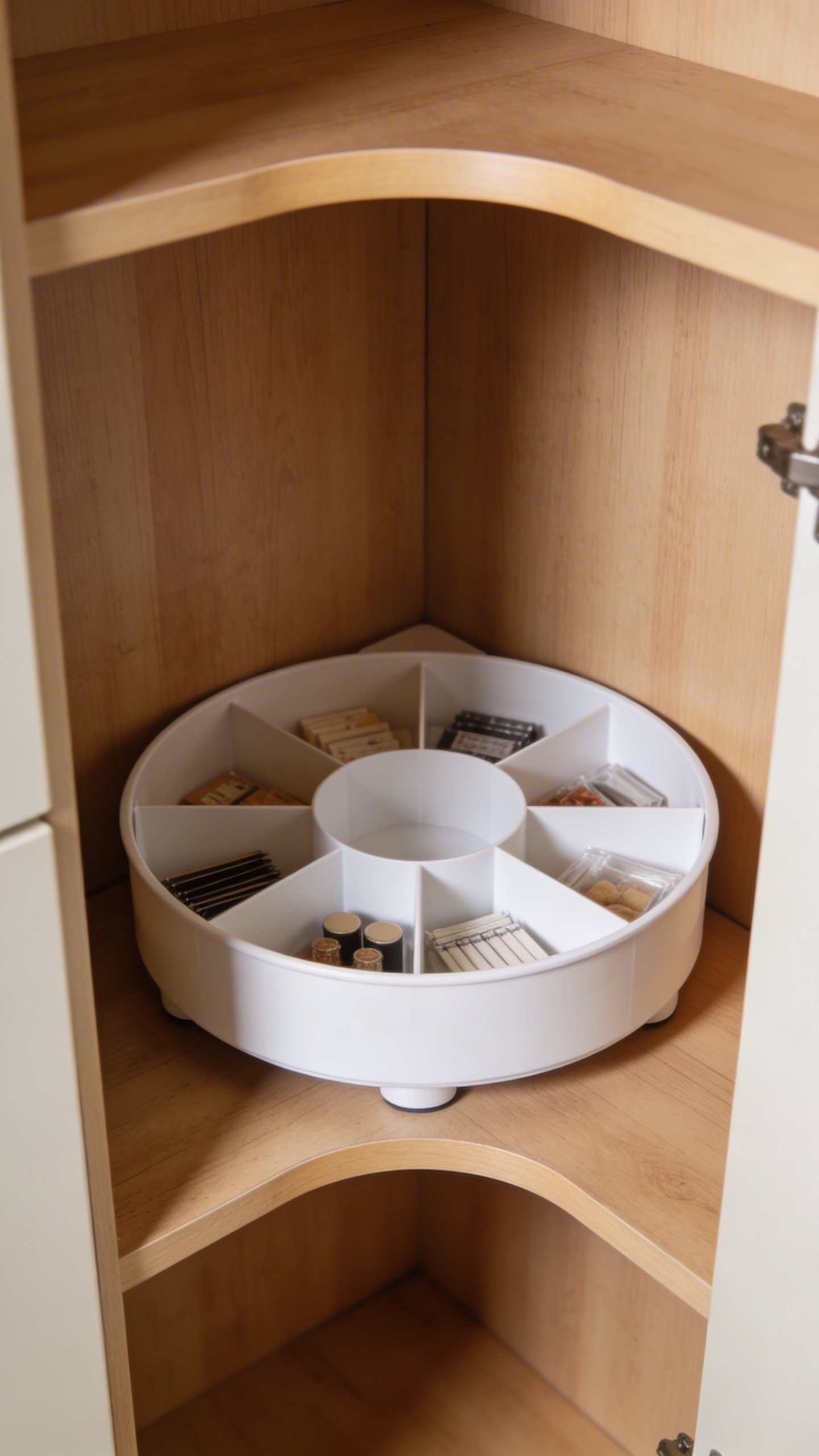
I know this sounds obvious, but you’d be surprised how many people try to organize around existing chaos. Trust me, you need to start with a completely empty cabinet. Take everything out, and I mean everything—even that mystery can from 2019 that you’re pretty sure used to be soup.
This is also your chance to do some brutal decluttering. That fondue set you got as a wedding gift and never used? Gone. The chipped bowl you keep “just in case”? Also gone. If you haven’t used something in a year and it doesn’t have serious sentimental value, it’s time to let it go.
While you’re at it, give the cabinet a good wipe-down. You’ll probably find some crumbs, mystery stains, and maybe even a petrified pea or two. It’s gross, but someone’s gotta do it.
Measure Your Space Like Your Life Depends On It
Before you run out and buy a bunch of organizing gadgets, grab a tape measure. You need to know exactly how much space you’re working with—height, width, and especially depth. Corner cabinets can vary wildly in size, and the last thing you want is to buy a lazy Susan that’s two inches too wide.
Pay attention to any obstacles too. Do you have pipes running through there? A weird shelf support in the middle? These details matter when you’re choosing your organization system.
Pro tip: take photos with a tape measure visible in the frame. This way, when you’re standing in the home goods store trying to remember if you have 18 or 20 inches of depth, you’ll have visual proof.
Choose Your Organization System

Now comes the fun part—picking how you want to tame this beast. There are several approaches, and honestly, the best one depends on your cabinet configuration and what you’re storing.
Lazy Susans Are Your Friend
The classic lazy Susan is popular for a reason. These rotating trays let you spin items into view instead of reaching blindly into the abyss. You can find them in various sizes, and some even come in multi-tiered versions for extra storage.
They work great for spices, canned goods, oils, and condiments. Just make sure you get one that fits your cabinet properly and has raised edges to prevent things from flying off when you spin it.
Pull-Out Drawers Are Game-Changers
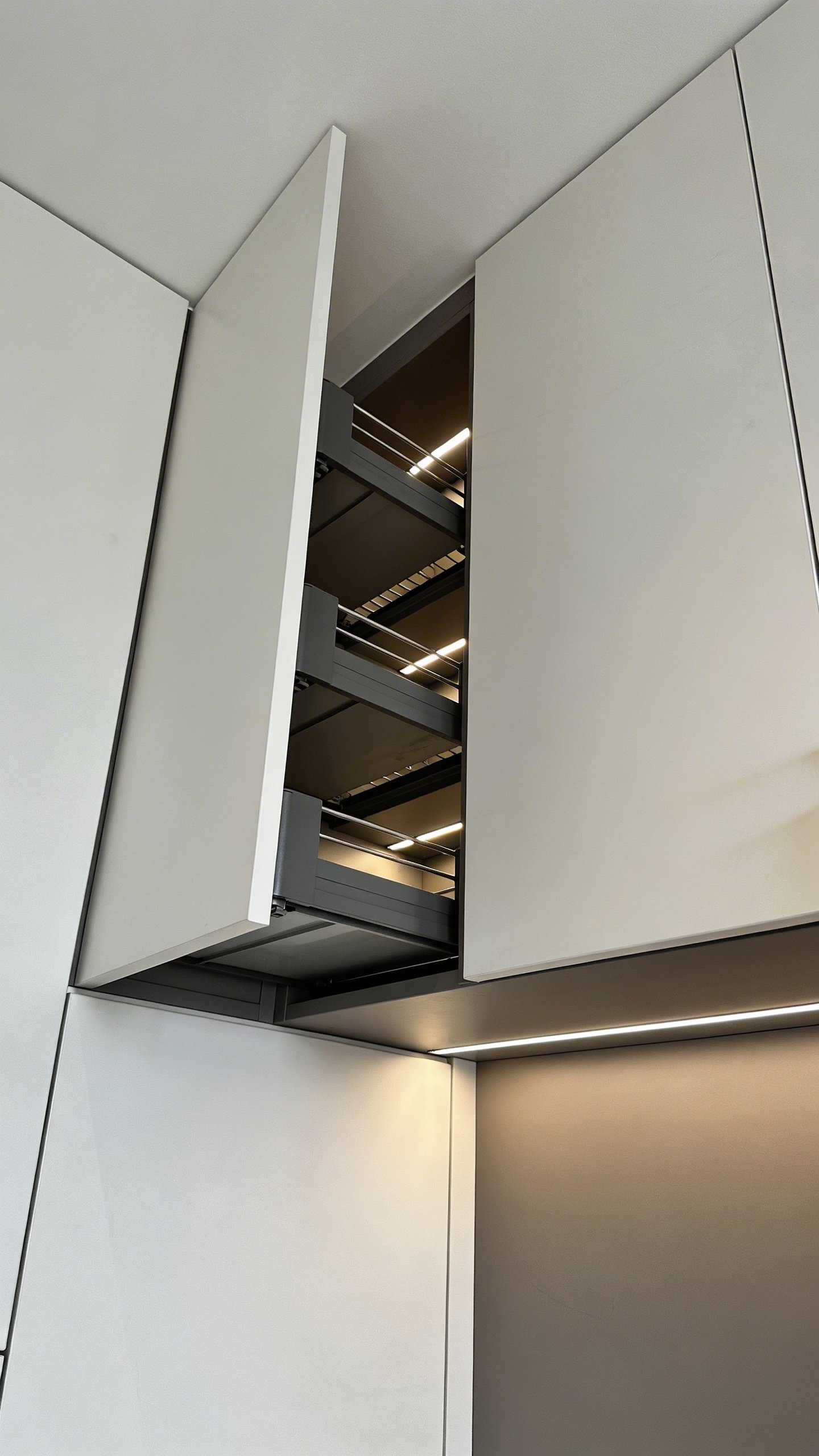
If you’re willing to invest a bit more, pull-out drawer systems are absolute game-changers. These babies slide out completely, giving you full access to everything in the cabinet. No more gymnastics required.
The downside? They’re pricier and sometimes require installation. But IMO, if you use that cabinet daily, the investment is totally worth it.
Tiered Shelving Creates Levels
Shelf risers and tiered organizers help you use vertical space efficiently. Instead of stacking things (which always ends badly), you create different levels so you can actually see what you have.
This approach works well for plates, bowls, food storage containers, and small appliances. Just make sure your risers are stable—the last thing you need is a domino effect every time you grab a plate.
Group Similar Items Together
Once you’ve got your organization system in place, it’s time to put things back strategically. The key here is to group like items together. All your baking supplies in one zone, snacks in another, and so on.
Think about what you use most frequently. Those items should live in the most accessible spots—typically the front and sides of the cabinet where you can easily reach them. The stuff you only break out for Thanksgiving can hang out in the back.
Use clear containers when possible. Being able to see what’s inside without moving everything around is a total game-changer. Plus, it looks way more organized and satisfying.
Label Everything (Yes, Really)
I used to think labeling was overkill, but then I discovered the joy of knowing exactly where things are without playing a guessing game. You don’t need fancy labels—even a piece of masking tape with marker works fine.
Label your containers, your zones, your shelves—whatever helps you maintain the system. This is especially helpful if multiple people use your kitchen. Your partner or roommate won’t have to ask where the paprika lives if it’s clearly labeled.
FYI, labeling also helps you stick to your organization system long-term. When everything has a designated home, you’re more likely to put it back where it belongs.
Maintain Your System (The Hardest Part)
Here’s the truth bomb: organizing your corner cabinet is the easy part. Keeping it organized? That’s where most people fall off the wagon.
Set a reminder to do a quick monthly audit. Spin that lazy Susan, check your containers, and make sure things haven’t gotten chaotic again. It takes maybe five minutes but prevents you from ending up back where you started.
Also, resist the urge to shove random stuff in there “just for now.” That’s how the chaos begins. If something doesn’t have a designated spot, either find it one or accept that maybe it doesn’t belong in that cabinet.
FAQs
What’s the best thing to store in corner cabinets?
Corner cabinets work great for items you don’t need to access constantly but still use regularly—think mixing bowls, serving platters, small appliances you use weekly, or pantry staples. Avoid storing things you need daily unless you have a pull-out system that makes access easy.
Are lazy Susans really worth it?
Absolutely. A good lazy Susan transforms a corner cabinet from frustrating to functional. Just make sure you get the right size and one with edges to keep items from sliding off. Two-tiered versions give you even more storage capacity.
How do I deal with super deep corner cabinets?
For really deep cabinets, consider stacking multiple lazy Susans or using pull-out drawer systems. You can also dedicate the very back to items you rarely use (like special occasion serving dishes) and keep frequently used items toward the front.
Should I store heavy items in corner cabinets?
You can, but make sure whatever organization system you’re using can handle the weight. Pull-out drawers rated for heavy items work well for pots, pans, and small appliances. Just avoid stacking heavy items too high where they become difficult to reach safely.
What if my corner cabinet has a weird shape or obstruction?
Get creative! Look for adjustable shelving systems or stackable organizers that you can configure around obstacles. Sometimes custom solutions work better than off-the-shelf products for unusually shaped cabinets.
How often should I reorganize my corner cabinet?
A full reorganization once or twice a year is usually enough, but do quick maintenance checks monthly. Toss expired items, wipe down surfaces, and make sure everything’s still in its designated spot.
Final Thoughts
Corner cabinets don’t have to be the black holes of your kitchen. With the right organization system and a commitment to maintaining it, you can actually make that awkward space work efficiently. Whether you go with a lazy Susan, pull-out drawers, or tiered shelving, the key is choosing something that fits your space and your lifestyle.
Start with a complete cleanout, measure carefully, pick your system, and group items logically. And remember—the best organization system is the one you’ll actually use. Don’t overcomplicate it. Keep it simple, keep it accessible, and you’ll finally be able to find that waffle maker when the craving hits.