
How to Organize Bedroom Without Losing Your Mind
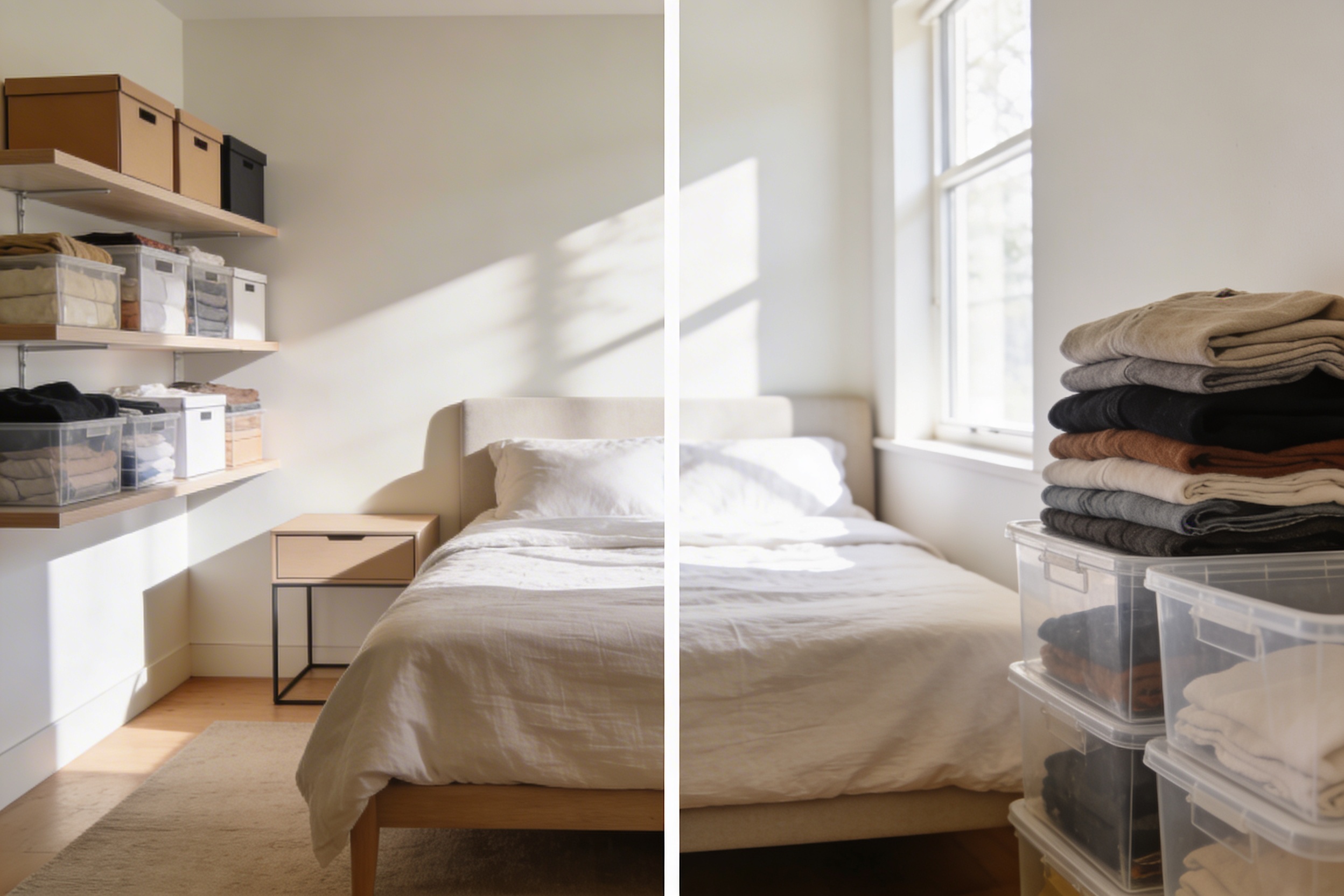
Your bedroom probably looks like a crime scene right now, doesn’t it? Clothes draped over that chair (you know the one), random stuff piled on your nightstand, and let’s not even talk about what’s hiding under the bed. The good news is that organizing your bedroom doesn’t require a PhD in Marie Kondo studies or spending your entire paycheck at The Container Store.
Start With a Clean Slate (Yes, That Means Everything)
Before you start playing Tetris with your belongings, you need to see what you’re actually working with. Strip your bed, clear off every surface, and yeah—pull everything out from under the bed too. I know it’s terrifying, but trust me on this one.
This total clearout gives you a bird’s eye view of your space and, more importantly, forces you to confront exactly how many coffee mugs you’ve been hoarding in your room. Once everything’s out, give the room a proper clean. Dust those neglected corners, vacuum under where your dresser usually sits, and wipe down all surfaces.
Think of this as your bedroom’s factory reset. You’re starting fresh, and it feels pretty great once you get past the initial chaos.
The Great Purge: Deciding What Stays and What Goes

Now comes the moment of truth. You need to sort through everything you just pulled out and make some tough calls. Create three piles: keep, donate, and trash. Be ruthless here—if you haven’t worn that shirt in a year, you’re not suddenly going to start now.
Clothes Reality Check
Your wardrobe is probably the biggest culprit of bedroom clutter. Go through every single item and ask yourself: Does it fit? Have I worn it in the past six months? Does it still look good, or is it pilled and faded? If you’re answering “no” to these questions, into the donate pile it goes.
Don’t fall into the “but I might need it someday” trap. You won’t. That formal dress from 2015 isn’t coming back into rotation, I promise.
Books, Papers, and Random Stuff
Those magazines you’re keeping for “inspiration”? Photograph the pages you actually want and recycle the rest. Books you’ll never read again? Donate them. Old electronics, broken jewelry, mystery cables—make decisions about all of it. The less stuff you have, the less stuff you need to organize.
Create Zones for Different Activities
Your bedroom isn’t just for sleeping (let’s be real), so you need to designate specific areas for different activities. This keeps things from bleeding into each other and turning into general chaos.
Set up a sleeping zone that’s just your bed and nightstands—keep this area calm and clutter-free. If you get ready in your room, create a getting-ready zone with your mirror, makeup, or grooming supplies. Got a reading habit? Designate a relaxation corner with a chair and good lighting.
When everything has its place, you’re way less likely to dump random items wherever there’s empty space. Your bedroom starts functioning like the organized sanctuary it should be instead of a catch-all storage unit.
Master the Closet Situation
Your closet is prime real estate, so use it wisely. Organize clothes by category first (all shirts together, all pants together), then arrange by color within each category. This isn’t just for aesthetics—it genuinely makes getting dressed faster.
Invest in matching hangers if you can. Seriously, this small change makes a huge visual difference and prevents clothes from slipping off onto the floor. Use the vertical space with hanging organizers for shoes, bags, or accessories.
The top shelf is perfect for out-of-season items or things you don’t use daily. Store them in clear bins so you can actually see what’s inside without playing a guessing game. The floor of your closet works great for shoes—use a shoe rack to maximize space and keep pairs together.
Tackle the Dresser and Nightstand
Drawer organization is where most people give up, but it doesn’t have to be complicated. Use drawer dividers to create sections for different items—socks, underwear, accessories, whatever you’re storing. You can buy fancy organizers or just use small boxes you already have.
The Nightstand Strategy
Your nightstand should only hold things you actually use before bed or first thing in the morning. A lamp, your current book, maybe a small dish for jewelry or your watch. That’s it. Everything else is just creating visual clutter right where you’re trying to relax.
Add a small basket or drawer organizer to corral the truly necessary items like phone chargers, reading glasses, or lip balm. Keep the surface as clear as possible—future you will appreciate falling into a clean, calm space at the end of long days.
Utilize Under-Bed Storage (But Don’t Go Crazy)

The space under your bed is valuable storage real estate, but it’s not a black hole for things you don’t want to deal with. Use flat storage containers specifically designed to fit under beds—the ones with wheels are chef’s kiss because you can actually access your stuff.
Store seasonal items, extra bedding, or those special occasion shoes you wear twice a year. Label everything clearly so you’re not pulling out three bins every time you need something. And FYI, if you have to climb over obstacle courses to reach what’s under there, you’ve defeated the purpose.
Leave some breathing room under the bed too. Not every square inch needs to be utilized, and air circulation is actually important for keeping things fresh.
Maintain the System (The Hardest Part)
Organizing your bedroom once is the easy part—keeping it that way is where the real challenge begins. The secret? Daily five-minute resets. Before bed, spend just five minutes putting things back where they belong.
Hang up clothes instead of draping them over furniture. Put jewelry back in its designated spot. Stack those books. Place dirty clothes in the hamper (revolutionary concept, I know). These tiny daily habits prevent the chaos from building back up.
Do a weekly deeper tidy where you change sheets, dust surfaces, and reassess if your organization system is actually working. If something consistently ends up out of place, maybe that item needs a different home. Your organizational system should work for your real-life habits, not against them.
Frequently Asked Questions
How long does it take to fully organize a bedroom?
For a thorough organization session, plan for 4-6 hours depending on your room size and current clutter level. You don’t have to do it all in one day though—break it into manageable chunks if marathon organizing sounds overwhelming. Just don’t let “chunks” turn into “I’ll finish this next month.”
What’s the best way to organize a small bedroom?
Vertical storage is your best friend in small spaces. Use wall-mounted shelves, over-door organizers, and stackable containers to maximize every inch. Multi-functional furniture like beds with built-in drawers or ottomans that open for storage are total game-changers. Keep surfaces minimal and use light colors to make the space feel bigger.
How do I stop my bedroom from getting messy again?
Make putting things away easier than leaving them out. If you constantly dump clothes on a chair, put a hamper right there instead. If jewelry ends up scattered, place a catch-all dish exactly where you take it off. Work with your natural habits rather than fighting them, and commit to that nightly five-minute reset.
Should I organize by season or keep everything accessible?
Keep your current season’s clothes easily accessible and store off-season items in harder-to-reach spots like top shelves or under the bed. Swap them out as seasons change. This reduces daily clutter and makes getting dressed way less overwhelming when you’re not sorting through winter sweaters in July.
What bedroom items should I definitely get rid of?
Anything broken that you haven’t fixed in six months, clothes that don’t fit, expired makeup or medications, dried-up nail polish, mystery electronics and cables, and duplicates of things you only need one of. Also, IMO, those decorative pillows that you just throw on the floor every night? Reconsider if they’re worth the hassle.
How many organizational products do I actually need?
Way fewer than stores want you to think. Start with what you have—boxes, baskets, or containers already in your home. Only buy specific organizers after you’ve decluttered and know exactly what you need to store and where. Otherwise, you’re just adding more stuff to organize.
Conclusion
Organizing your bedroom isn’t about achieving some impossible Pinterest-perfect aesthetic—it’s about creating a space where you can actually relax and find your stuff without having a meltdown. Start with the decluttering, set up systems that match your real-life habits, and commit to small daily maintenance. Your organized bedroom is waiting on the other side of that initial effort, and honestly? Waking up in a calm, tidy space might just be the life upgrade you didn’t know you needed.