
How to Clean Kitchen Cabinets Wood Without Ruining Them
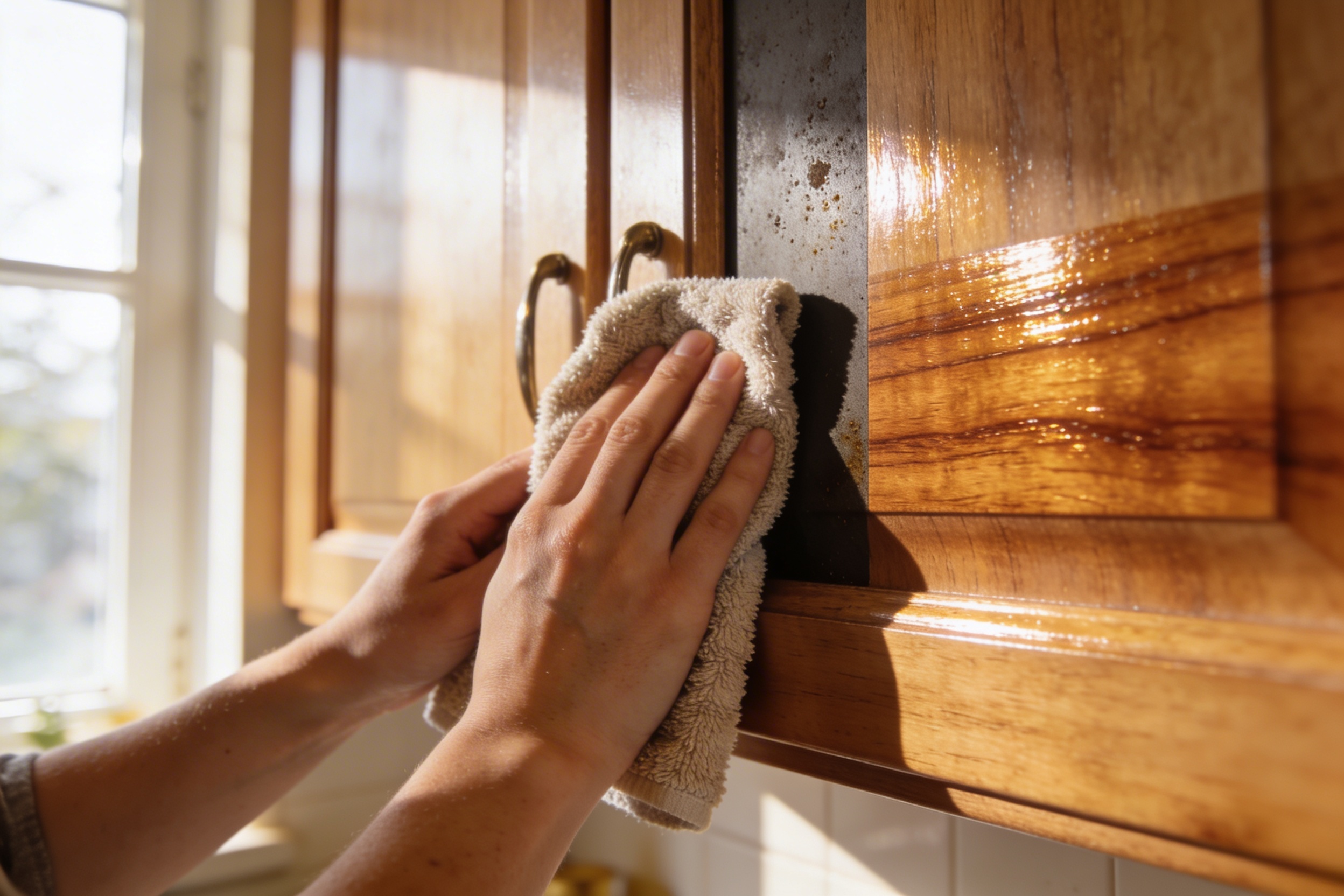
Your kitchen cabinets are probably covered in a lovely patina of cooking grease, mysterious splatters, and that weird sticky residue that appears out of nowhere. Wood cabinets especially love to collect all that gunk, and if you’ve been avoiding cleaning them because you’re terrified of ruining the finish, I totally get it. But here’s the thing: cleaning wood cabinets isn’t actually that scary, and your kitchen will look about ten years younger once you tackle this project.
Why Wood Cabinets Need Special Treatment
Let’s talk about why you can’t just spray your wood cabinets with whatever cleaner is under your sink and call it a day. Wood is porous and sensitive, kind of like that friend who cries during every movie. Too much water? You’ll damage the finish. Wrong cleaning product? Hello, stripped wood or cloudy residue.
Different finishes require different approaches too. You might have painted cabinets, varnished ones, or that trendy matte finish everyone’s been installing. Each one has its own personality and demands specific care. The good news is that once you figure out what you’re working with, the cleaning process becomes pretty straightforward.
Gather Your Cleaning Arsenal
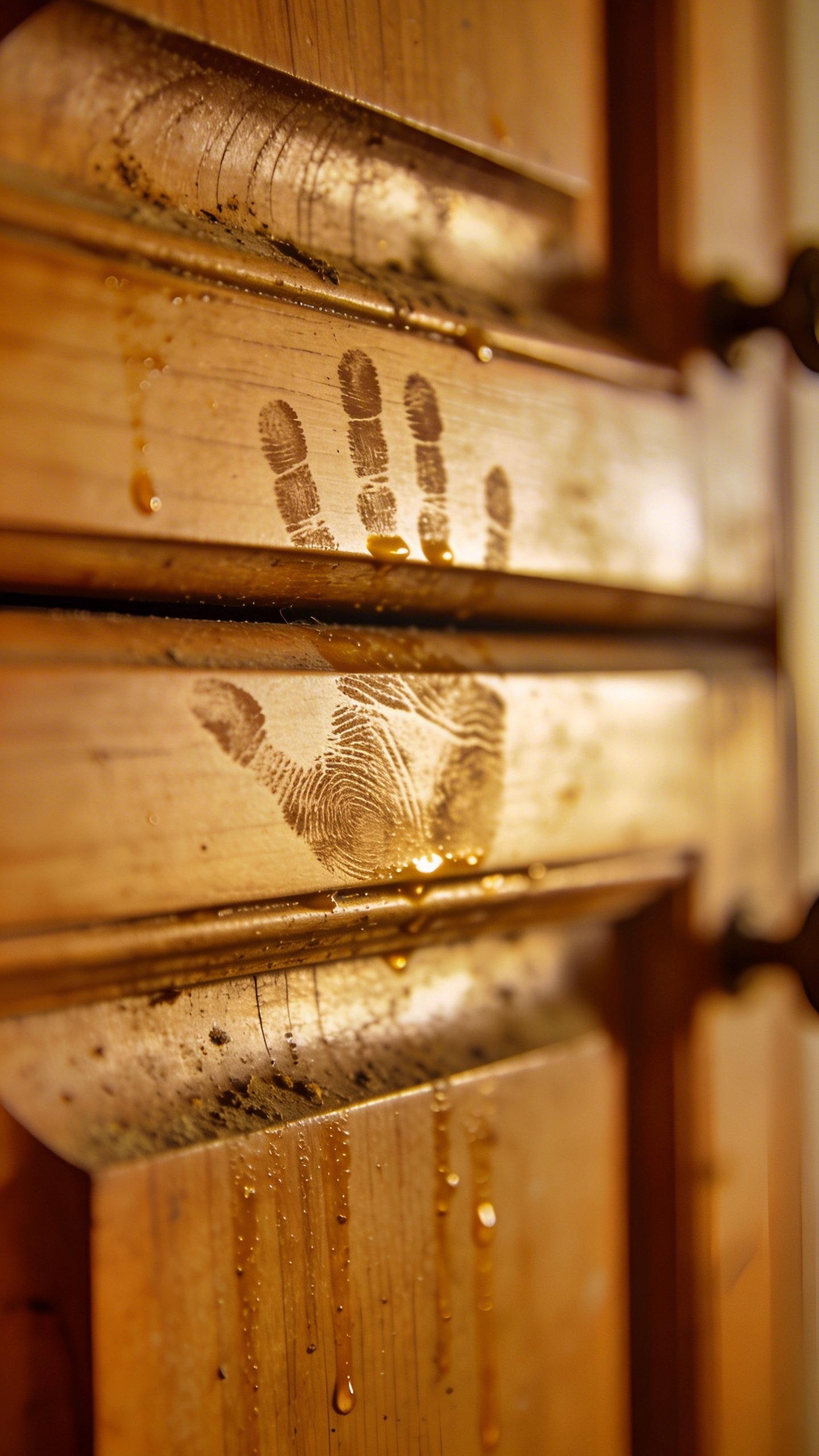
Before you dive in, let’s round up everything you’ll need. Trust me, nothing’s worse than being elbow-deep in cabinet grime and realizing you forgot something crucial.
Here’s your shopping list:
- Microfiber cloths (grab like 6-8 of them)
- Dish soap (the gentle, grease-cutting kind)
- White vinegar (your cleaning BFF)
- Baking soda (for those stubborn spots)
- Commercial wood cleaner (optional but handy)
- Two buckets or bowls
- Old toothbrush (for detailed areas)
- Wood polish or conditioner (for the grand finale)
Whatever you do, avoid anything with ammonia, bleach, or abrasive scrubbers. These are basically kryptonite for wood finishes.
The Basic Cleaning Method That Works Every Time
Alright, let’s get to the actual cleaning part. This method works for most wood cabinets, whether they’re oak, maple, cherry, or that mystery wood from the previous homeowner.
Start With a Dry Dusting
Grab a dry microfiber cloth and wipe down all your cabinet surfaces. You’re removing the loose dust and debris before introducing any moisture. Think of it as clearing the battlefield before the real action begins.
Mix Your Cleaning Solution
Fill one bucket with warm water and add just a few drops of dish soap. We’re talking maybe a teaspoon for a whole bucket—you want sudsy water, not a bubble bath. In the second bucket, put plain warm water for rinsing.
The golden rule here: barely damp is your friend. Wring out your cloth until it’s almost dry. You want it moist enough to clean but not dripping wet.
Wipe Down the Surfaces
Start from the top and work your way down (gravity is real, people). Wipe in the direction of the wood grain—this prevents streaking and helps you avoid looking like an amateur.
For those grimy spots near the stove that seem welded to the cabinet, make a paste with baking soda and a tiny bit of water. Gently rub it on the spot with your finger or that old toothbrush, then wipe it away with your damp cloth.
Rinse and Dry Immediately
Use your second bucket of clean water with a fresh cloth to remove any soap residue. Then—and this is crucial—dry everything immediately with a clean, dry cloth. Standing water on wood is a disaster waiting to happen.
Deep Cleaning for Extra Grimy Situations
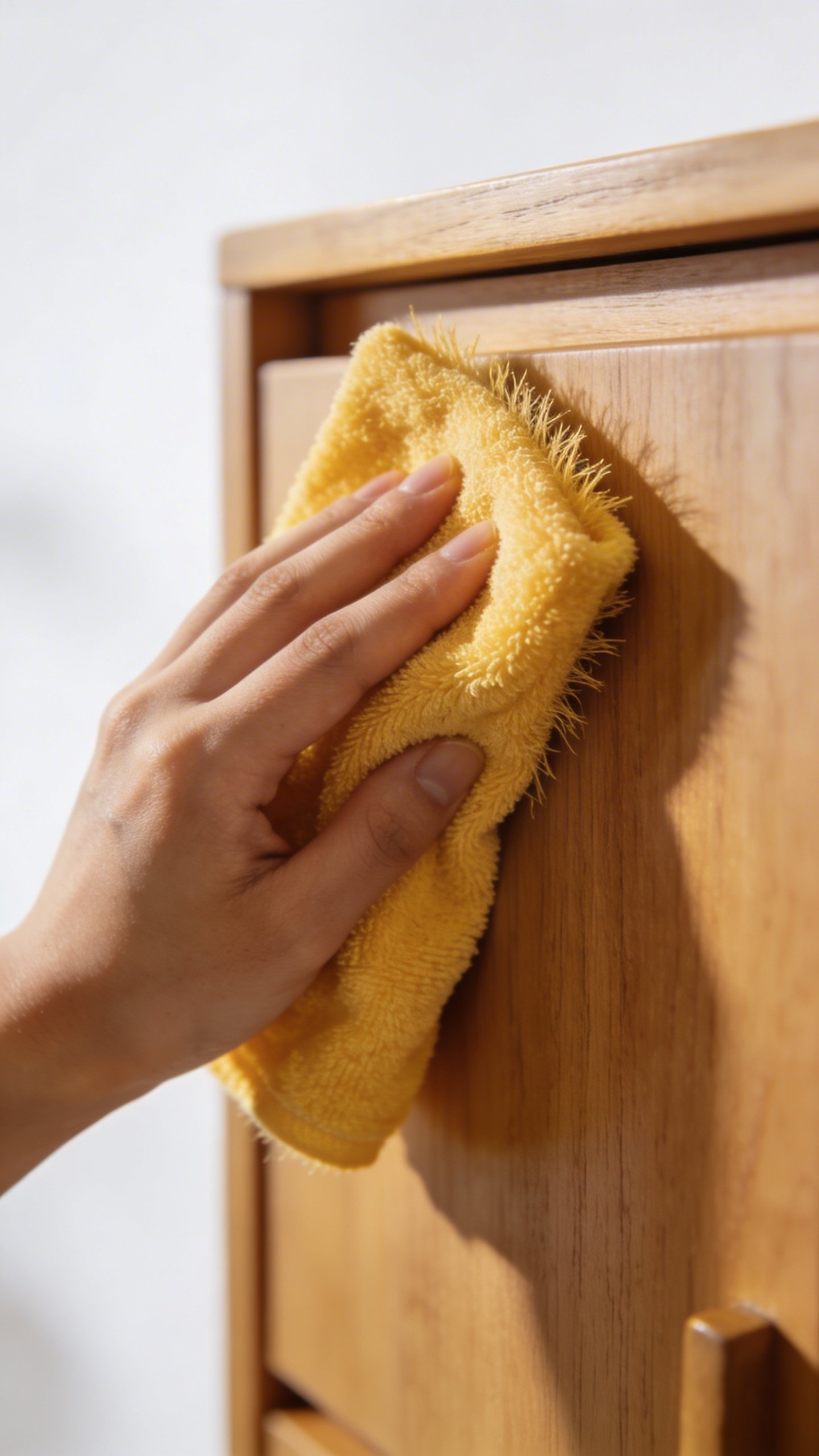
Sometimes your cabinets need more than a gentle wipe-down. Maybe you just moved in, or perhaps you’ve been “meaning to clean them” for the past three years. No judgment.
For serious grime buildup, try this vinegar solution: mix equal parts white vinegar and warm water. The vinegar cuts through grease like nobody’s business. Just remember to keep your cloth barely damp, rinse thoroughly, and dry everything right away.
You can also use commercial wood cleaners designed specifically for kitchen cabinets. Murphy Oil Soap is a classic choice that many people swear by. Just follow the directions on the bottle and don’t go rogue with the dilution ratios.
Dealing With Different Cabinet Finishes
Painted Cabinets
Painted wood cabinets are slightly more forgiving than natural wood, but you still need to be gentle. The soap and water method works great here. For scuff marks, a magic eraser (used very lightly) can work wonders, but test it in a hidden spot first because these things are basically sandpaper in disguise.
Stained and Varnished Cabinets
These need the gentlest touch. Stick with minimal moisture and consider using a commercial wood cleaner designed for finished wood. Oil-based cleaners can help maintain the luster without risking the finish.
Matte or Flat Finishes
Matte finishes show every fingerprint known to humanity, but they’re actually pretty easy to clean. Use the basic soap and water method, but be extra cautious about rubbing too hard—you don’t want to create shiny spots on your matte finish.
Protecting and Maintaining Your Freshly Cleaned Cabinets
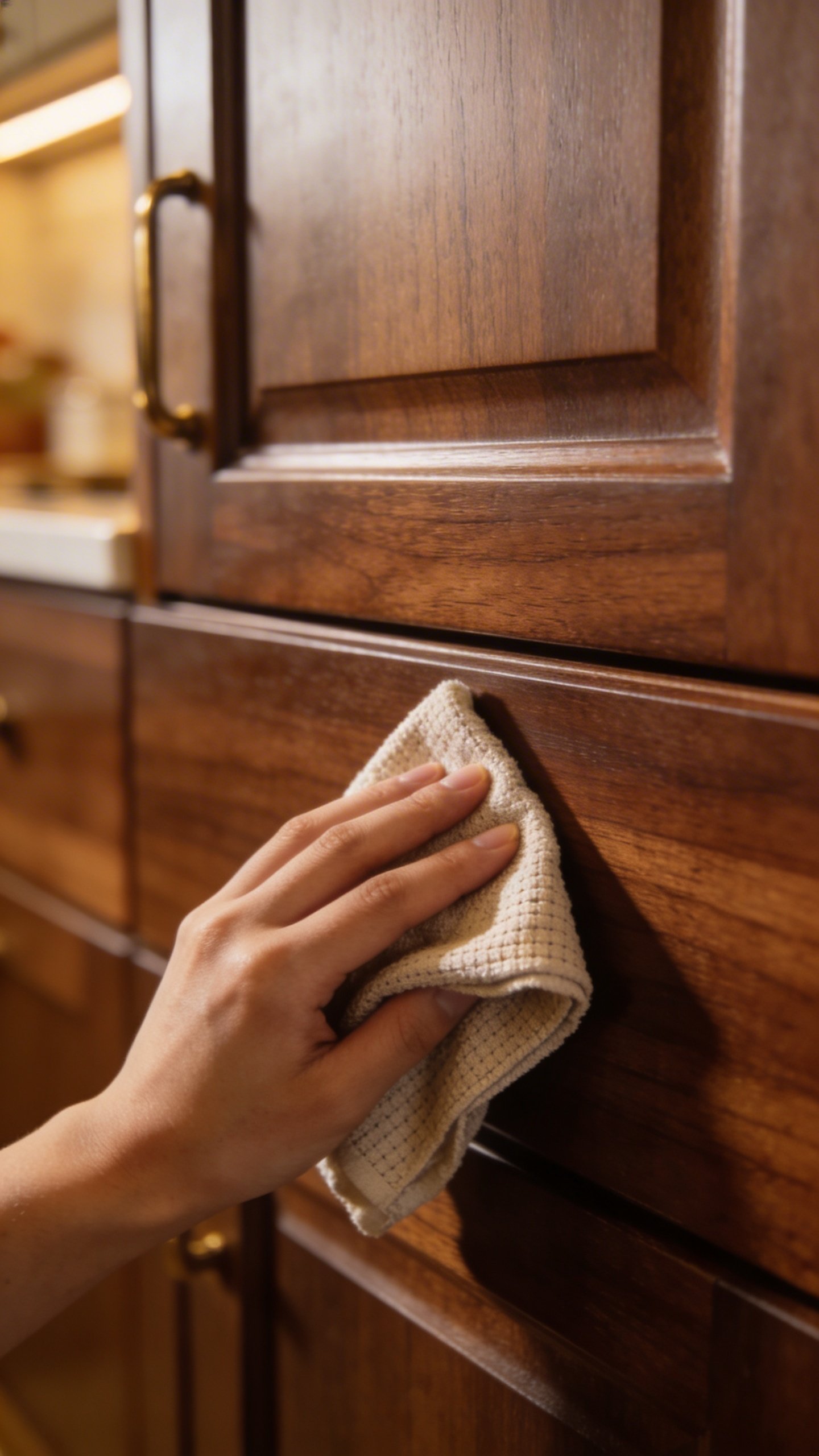
Now that your cabinets are clean, let’s keep them that way. FYI, a little regular maintenance beats a massive deep-clean any day of the week.
Polish them occasionally with a quality wood polish or conditioner. This adds a protective layer and makes future cleaning easier. Plus, it makes your cabinets look like you have your life together.
Wipe up splatters immediately. That marinara sauce splatter you ignore today becomes a permanent resident tomorrow. Keep a microfiber cloth handy and do quick daily touch-ups around high-traffic areas like near the stove and sink.
Consider cabinet liners inside your cabinets. They catch spills and crumbs before they become science experiments, and they’re way easier to replace than cabinet interiors.
Frequently Asked Questions
How often should I clean my wood kitchen cabinets?
Give them a light wipe-down weekly, focusing on handles and high-touch areas. Do a more thorough cleaning every 3-6 months, depending on how much cooking you do. If you’re frying bacon every morning, lean toward the more frequent end of that spectrum.
Can I use lemon oil or olive oil to clean wood cabinets?
Not recommended, actually. While lemon oil sounds fancy, it can build up over time and attract more dust. Olive oil from your pantry will eventually go rancid and smell funky. Stick with products specifically designed for wood furniture or the simple soap and water method.
What do I do about water stains or rings on wood cabinets?
Try rubbing the area gently with a paste of baking soda and water, or use a tiny bit of non-gel toothpaste (weird, but it works). For stubborn stains, a product like Howard’s Restor-A-Finish can work miracles. Sometimes you need to embrace that the stain adds character—IMO, a few imperfections make your kitchen feel lived-in.
Is it safe to use vinegar on all types of wood cabinets?
Vinegar is generally safe for sealed wood cabinets when diluted with water, but I’d avoid it on unfinished or waxed wood. Always test any cleaning solution in an inconspicuous spot first. The inside of a cabinet door is perfect for this test run.
How do I clean cabinet hardware without removing it?
Wrap a cloth around your finger and clean around the hardware, or use that old toothbrush to get into crevices. For a deeper clean, it’s worth the ten minutes to remove the hardware and soak it in warm soapy water. You’ll be amazed at the gunk that comes off.
Can steam cleaning damage wood cabinets?
Yes, avoid steam cleaners on wood cabinets. The combination of heat and moisture can warp the wood, damage the finish, and cause all sorts of problems. Stick with the barely-damp cloth method for happy, healthy cabinets.
Conclusion
Cleaning wood kitchen cabinets doesn’t require a chemistry degree or expensive specialty products. With some dish soap, microfiber cloths, a little elbow grease, and a respect for the “barely damp” rule, you can transform your grimy cabinets back to their former glory. The key is being gentle, drying everything thoroughly, and staying consistent with maintenance so you never face another three-year grease buildup again. Your kitchen will thank you, and honestly, you’ll probably find yourself admiring your handiwork every time you grab a coffee mug. Now get out there and show that cabinet grime who’s boss!