

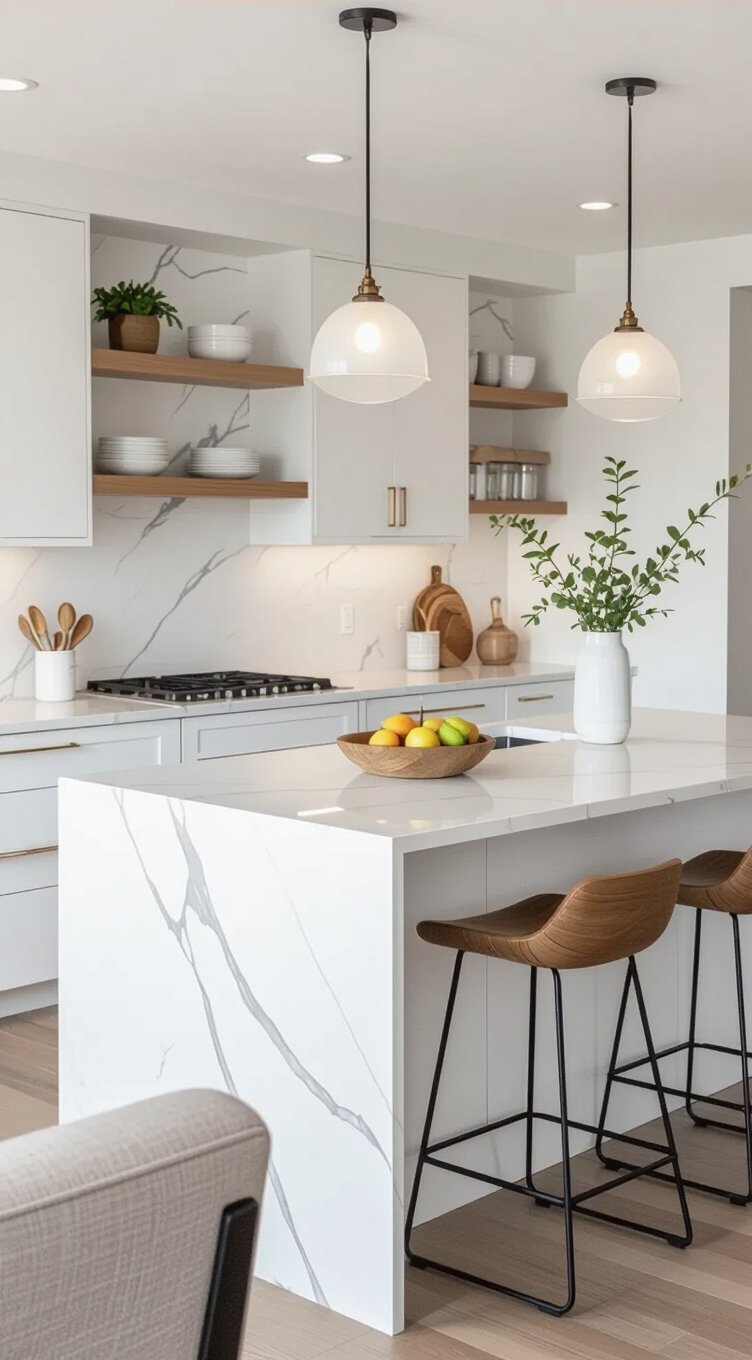
If your small kitchen feels cramped and short on counter space, a peninsula might be the solution you’ve been overlooking. You don’t need a massive renovation to make it work. From L-shaped designs that reclaim dead corners to floating units that maintain an open feel, there are 14 practical options worth considering. Each idea addresses a specific kitchen challenge, and the right choice depends on your layout, budget, and lifestyle needs.
The L-Shaped Peninsula That Turns Dead Corners Into Workspace
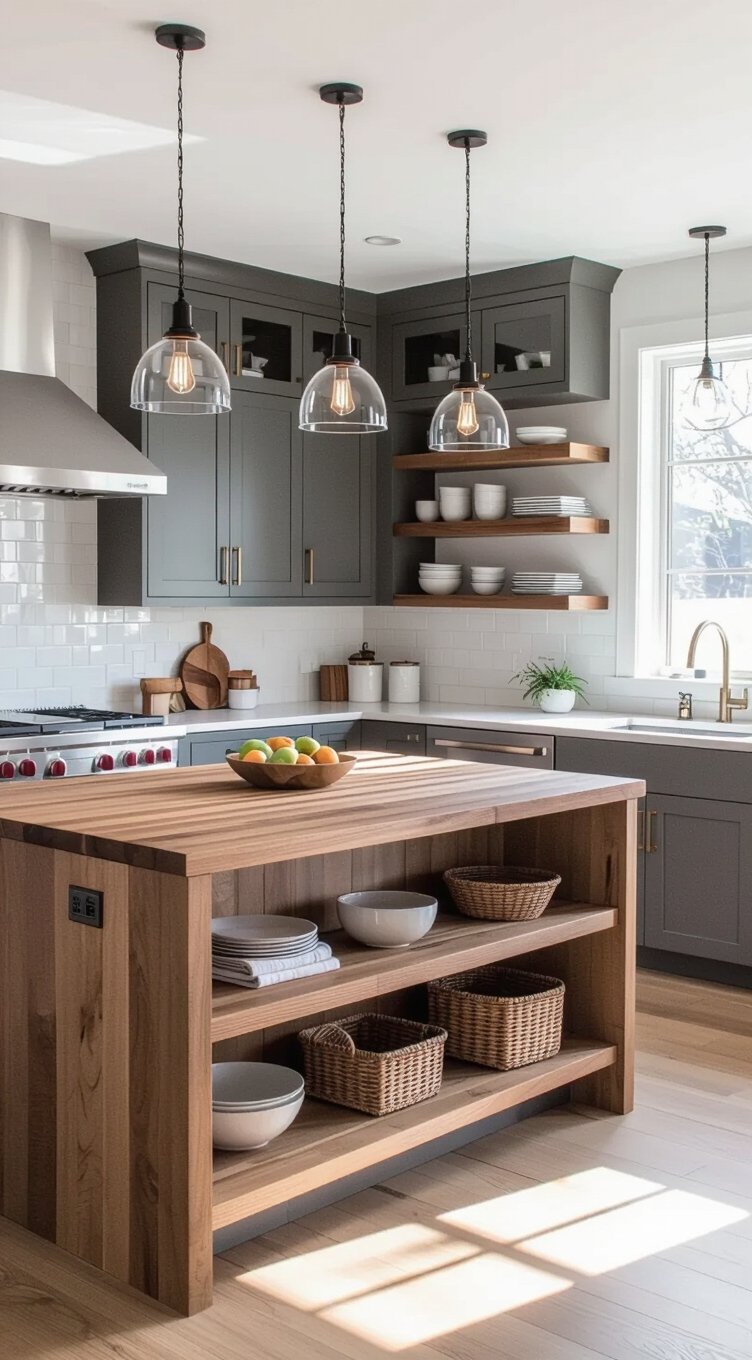
If your kitchen has an awkward corner eating up important space, an L-shaped peninsula might be exactly what you need. This smart layout excels at corner utilization, turning wasted angles into functional cooking and prep zones. You’ll gain extra counter space without sacrificing your kitchen’s open feel.
The workspace conversion process is simpler than you’d think. Consider these key benefits:
- Extended prep surface — You’ll have room for multiple tasks simultaneously.
- Natural traffic flow — The L-shape guides movement without creating bottlenecks.
- Flexible seating options — Add bar stools along one side for casual dining.
You’re basically reclaiming territory that your kitchen previously wasted. With proper planning, that once-awkward corner becomes your most productive workspace.
A Breakfast Bar Peninsula That Doubles as a Dining Area
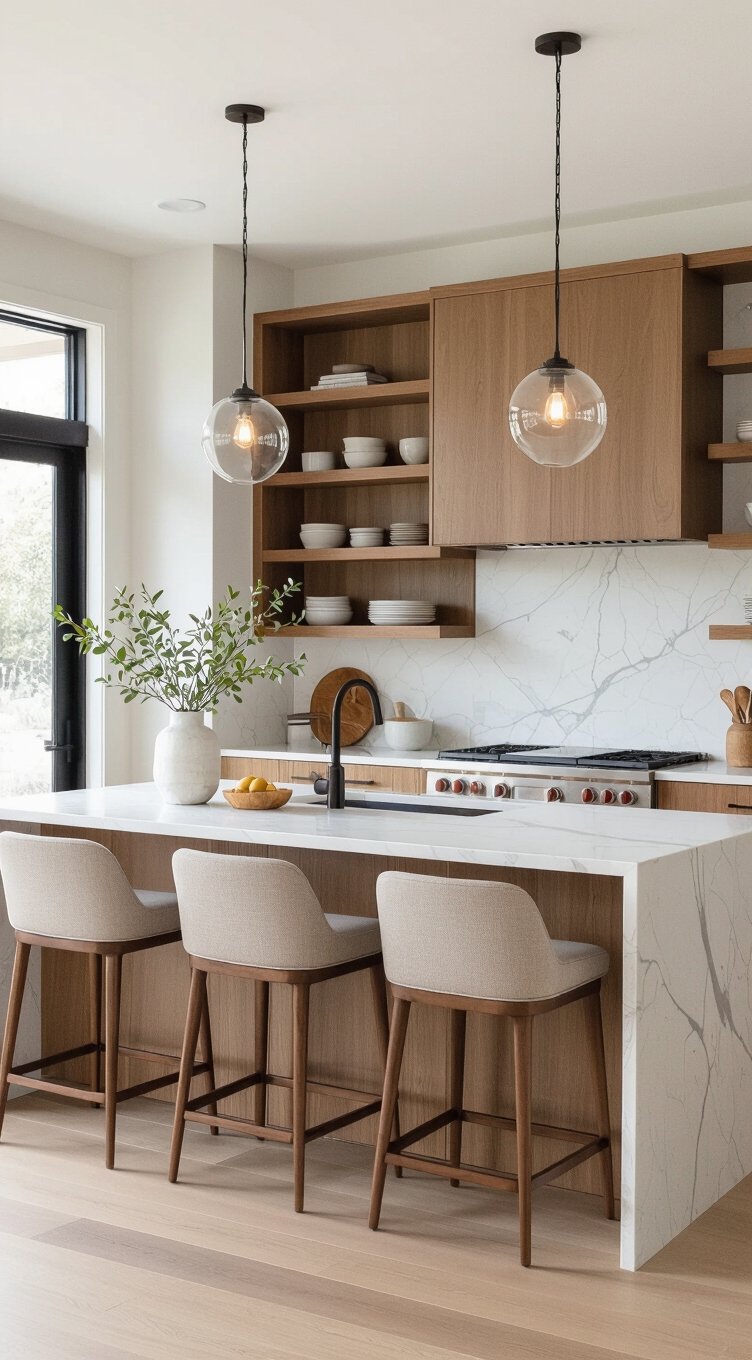
While an L-shaped peninsula solves your corner problem, a breakfast bar peninsula tackles a different challenge — giving you a dedicated dining spot without needing a separate room. You can extend your counter outward, add stools underneath, and instantly create a seating nook that works for meals, homework, or morning coffee. This setup frees you from squeezing a bulky dining table into your already tight space. Your morning nook becomes the place where the day starts — casual, efficient, and completely yours. Choose counter-height stools that tuck away cleanly to keep the space open. Add pendant lighting directly above the overhang to define the area visually. You’ll gain both extra counter space and a functional dining zone without sacrificing square footage.
The Floating Peninsula That Keeps Small Kitchens Open
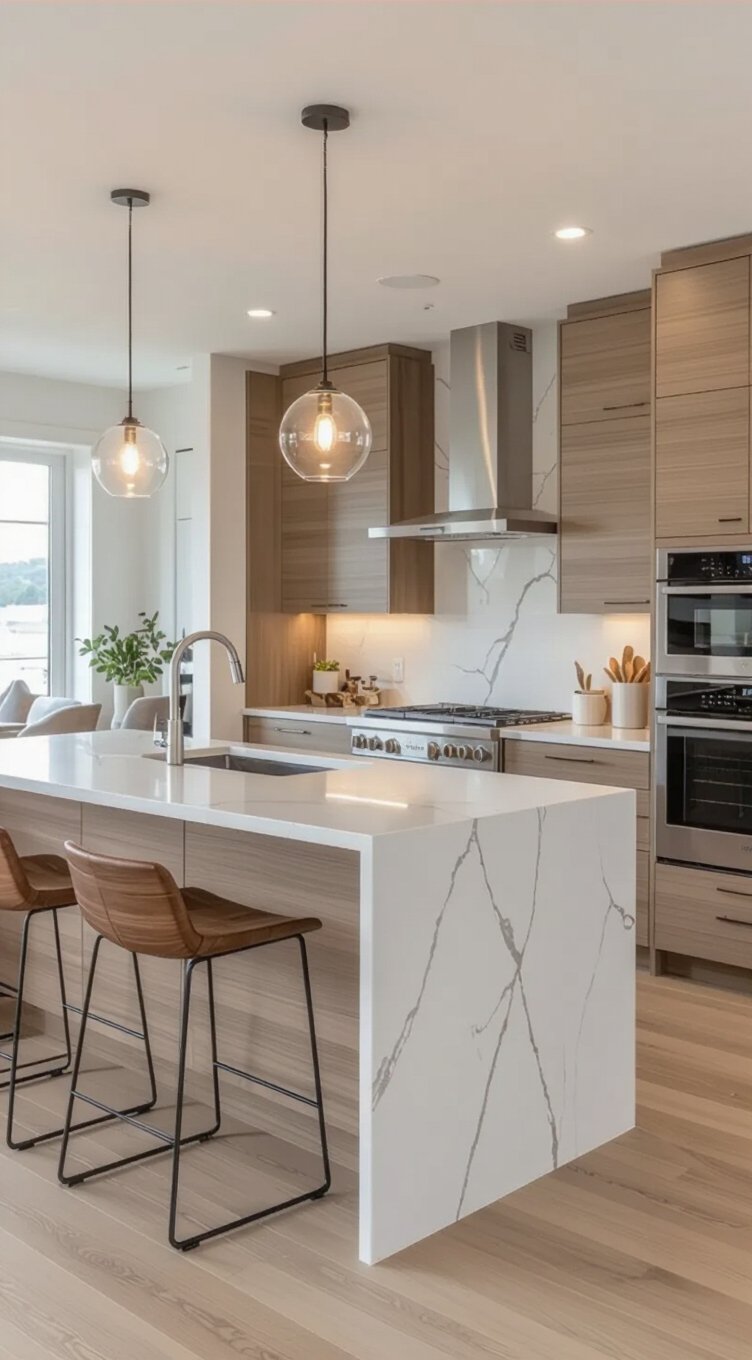
A floating peninsula gives your small kitchen breathing room by sitting away from the wall on at least one side. This design preserves your open layout while adding essential counter space and storage underneath. You can incorporate floating shelves above the peninsula to store cookbooks, plants, or everyday essentials without closing off sightlines.
Here’s why this setup works so well:
- Visual openness — The gap between the peninsula and walls makes your kitchen feel larger and less confined.
- Flexible movement — You can move freely around multiple sides without feeling trapped.
- Customizable storage — Add floating shelves, hooks, or drawers to suit your lifestyle.
This approach lets you define your kitchen space on your own terms, without sacrificing function or freedom.
A Peninsula With Built-In Cabinets and Drawers Underneath
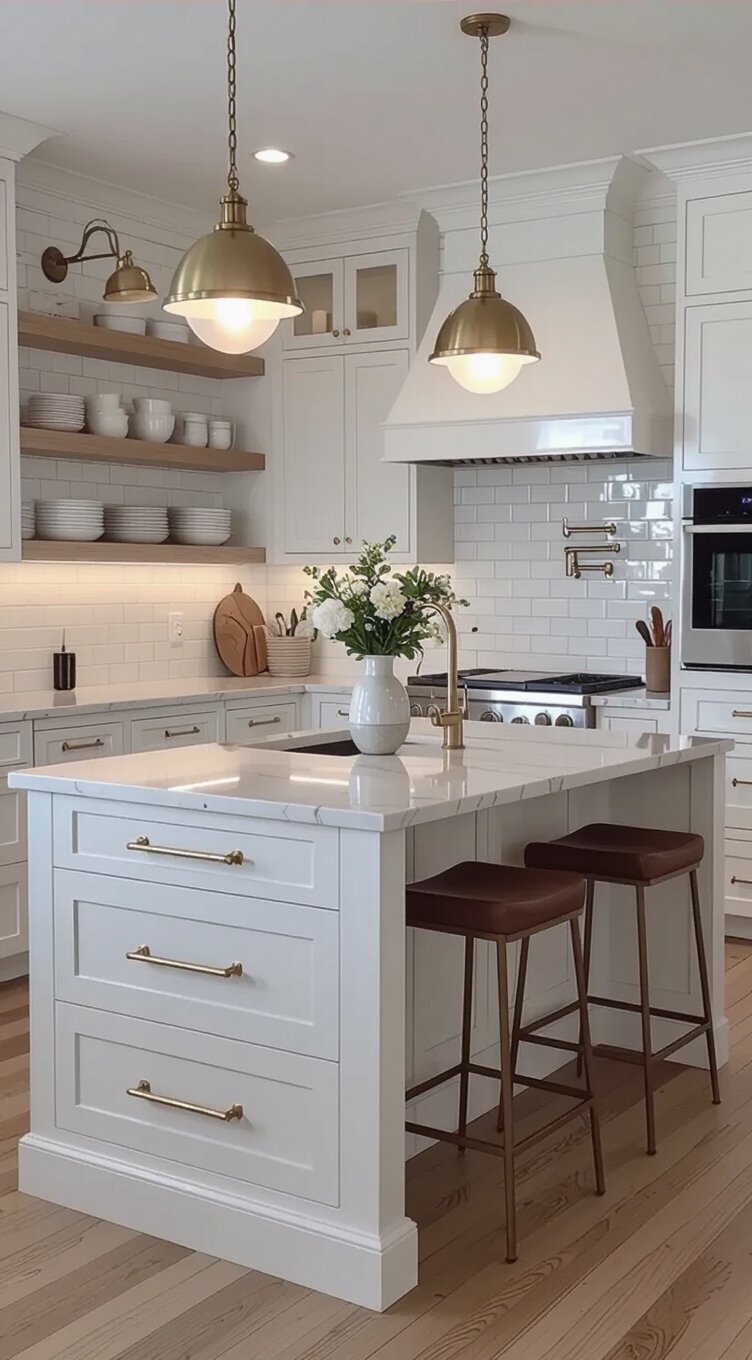
Built-in cabinets and drawers beneath your peninsula take storage to the next level, turning dead space into a hardworking part of your kitchen. You’ll gain organized spots for cookware, utensils, and pantry items without sacrificing an inch of floor space. Concealed hinges keep cabinet doors looking sleek and uncluttered, giving your kitchen a clean, polished appearance. You can also add undercounter lighting inside open shelves or along the base to brighten the workspace above. Consider these smart storage options:
- Deep drawers for pots, pans, and lids
- Pull-out shelves for easy access to back corners
- Divided compartments for organizing small tools
This setup lets you reclaim your countertops, work more efficiently, and enjoy a kitchen that truly works for you.
Budget-Friendly Small Kitchen Peninsula Ideas With Stock Cabinets and Butcher Block
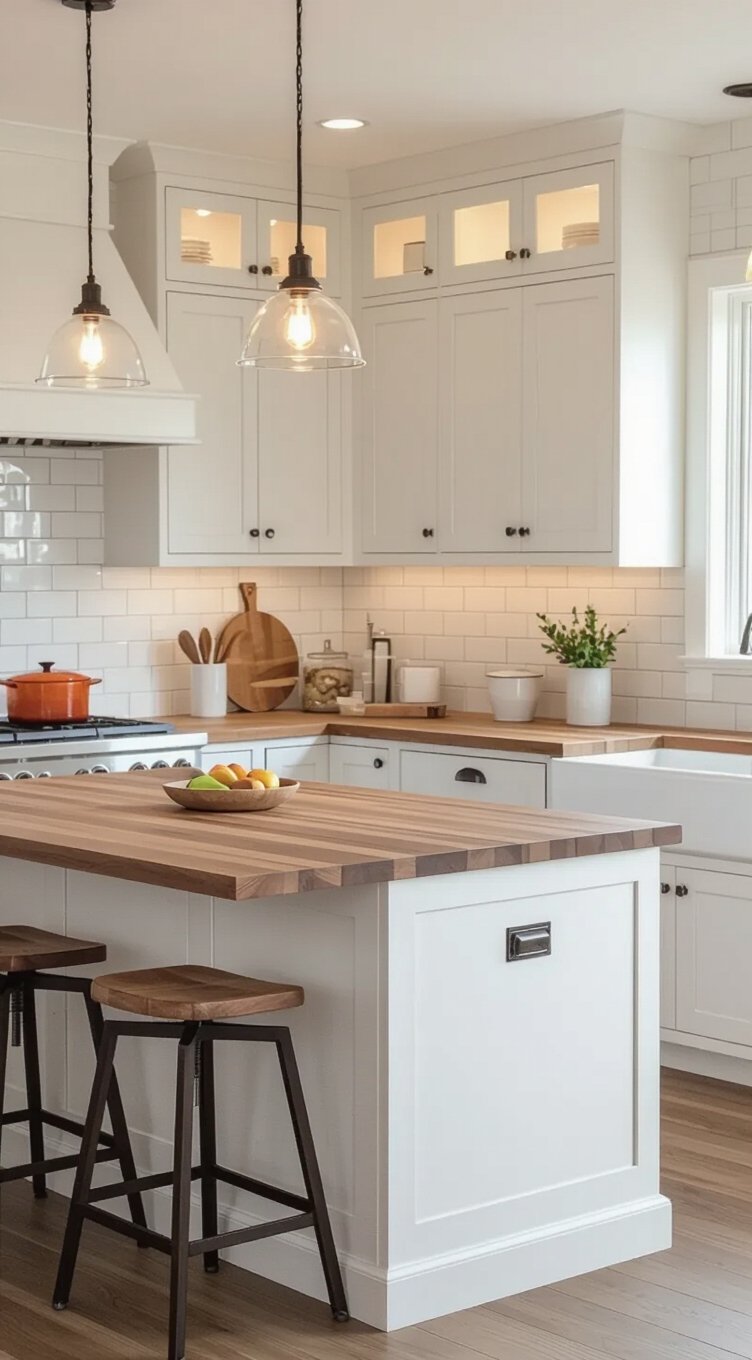
Creating your own small kitchen peninsula doesn’t have to drain your budget when you use stock cabinets and butcher block countertops. A stock cabinet extension gives you instant structure without expensive custom work. You’re building real function on your own terms.
Here’s how to make it work:
- Choose base cabinets wisely — Select 36-inch stock cabinets that align with your existing kitchen layout for a seamless look.
- Add a butcher block overhang — Extend your countertop 12 inches beyond the cabinet edge to create comfortable seating space.
- Finish the exposed sides — Apply matching cabinet panels or beadboard to create a polished, intentional appearance.
This approach costs markedly less than custom builds while providing genuine counter space and storage you’ll actually use daily.
Rolling Peninsulas You Can Move When Space Gets Tight
When your kitchen layout changes or guests arrive unexpectedly, a rolling peninsula gives you the flexibility that fixed installations simply can’t match. You can reposition a mobile base in minutes, freeing up walking space during busy cooking sessions or holiday gatherings. Choose a unit with locking casters so it stays put while you prep meals. A movable surface with a butcher block top doubles as extra counter space and a casual dining spot. Look for models featuring built-in storage drawers and open shelving underneath for maximum functionality. When you’re not using it, simply roll it against a wall to reclaim your floor space. This solution genuinely enables you to reshape your kitchen environment based on your actual daily needs, not just your home’s original design limitations.
The Small Galley Kitchen Peninsula That Maximizes a Narrow Space
While a rolling peninsula works beautifully in open layouts, a narrow galley kitchen calls for a smarter, more permanent approach. A space saving design built along one wall converts your tight corridor into a highly functional workspace. Narrow layout optimization lets you reclaim every inch without feeling boxed in.
Here’s how a galley peninsula gives you real freedom:
- Extend one counter wall to create prep space without blocking your walking path.
- Add lower cabinets beneath the overhang to store appliances and free up your mind.
- Install a slim breakfast bar ledge so you can eat, work, or simply breathe in your own space.
You don’t need a large kitchen to live well — you just need the right setup.
A Two-Tier Peninsula That Keeps Your Cooking Mess Away From Guests
A two-tier peninsula gives you a smart way to separate your cooking zone from where guests sit and socialize. The lower tier sits at standard counter height, giving you full workspace for chopping, mixing, and prepping meals. The raised upper tier creates a natural visual barrier, keeping your cooking mess out of your guests’ direct sightline.
This two-tier design puts you in control of your kitchen’s flow. Here’s how to maximize it:
- Use the lower tier for active food prep and small appliances.
- Reserve the upper tier for drinks, snacks, or casual dining.
- Install pendant lights above the raised section to define the guest separation zone clearly.
You’ll enjoy cooking freely without worrying about exposed clutter.
An End-Panel Peninsula With Open Shelving for Easy Access
The end-panel peninsula with open shelving turns an often-overlooked surface into functional, accessible storage. You’ll reclaim counter space while keeping everyday essentials within easy reach. Open storage eliminates the frustration of digging through closed cabinets.
Here’s why this design works for you:
- Freedom to grab items instantly — your most-used cookware and ingredients stay visible and accessible without barriers.
- Personalized display options — arrange your items your way, reflecting your unique cooking style and personality.
- Expanded workspace — open shelving creates breathing room, making your small kitchen feel less restrictive and more inviting.
Install floating shelves on your peninsula’s end panel using sturdy brackets rated for at least 50 pounds. This simple addition converts dead space into a practical, organized storage zone you’ll actually enjoy using.
A Peninsula With a Built-In Cooktop for Better Workflow
Placing your cooktop directly into the peninsula alters how efficiently you cook, putting heat, prep space, and serving areas within arm’s reach. This cooktop integration removes the back-and-forth movement that wastes time and energy during meal prep.
For strong workflow optimization, consider these key advantages:
- Centered cooking zone – You can stir, chop, and plate without crossing the kitchen repeatedly.
- Social cooking – Face your dining or living area while cooking, staying connected with guests.
- Ventilation planning – Install a ceiling-mounted range hood directly above to handle smoke and steam effectively.
Choose a gas or induction cooktop based on your cooking style and available utilities. This setup genuinely frees you from a cramped, inefficient kitchen layout, giving you full control over your cooking experience.
A Peninsula With Seating on One Side for Casual Dining
Beyond cooking efficiency, your peninsula can pull double duty as a casual dining spot. Adding counter seating on one side converts your kitchen into a flexible, open space where you can eat, work, or entertain freely.
Here are three ways counter seating improves your casual meals:
- It eliminates the need for a separate dining table, freeing up essential floor space.
- It creates a natural gathering spot, so conversations flow easily while someone cooks.
- It adapts to your lifestyle, working equally well for a quick breakfast or a relaxed dinner.
Choose bar-height stools that tuck completely under the counter when not in use. This keeps your kitchen feeling open, uncluttered, and ready for whatever your day brings.
A Compact Peninsula With a Sink to Free Up Counter Space
Adding a sink to your compact peninsula is one of the smartest upgrades you can make in a small kitchen. Sink integration moves your prep and washing zone away from the main counter, instantly creating more usable workspace behind you. You’ll free up your primary countertop for chopping, cooking, and assembling meals without clutter crowding your flow.
Space efficiency improves dramatically when your peninsula handles both food prep and cleanup simultaneously. You’re no longer bouncing between two cramped areas. Consider an undermount or corner sink to maximize the basin’s footprint without sacrificing surface area. Pair it with a pull-down faucet for added flexibility.
This setup gives you genuine control over your kitchen’s layout, letting you work smarter and move more freely throughout your space.
How to Match Your Peninsula to Existing Cabinets
Once your peninsula has a functional role in the kitchen, the next step is making sure it looks like it belongs there. Cabinet matching and color coordination don’t have to feel overwhelming — you have options that give you creative control.
Follow these three steps to create a cohesive look:
- Match the cabinet style by using the same door profile and hardware finish already in your kitchen.
- Coordinate colors by choosing the same paint, stain, or laminate as your existing cabinetry.
- Align the height and depth so your peninsula flows naturally with surrounding cabinets.
Getting these details right changes your peninsula from an afterthought into a purposeful design choice. You’ll create a kitchen that feels intentional, unified, and completely yours.
Waterfall Edge Peninsulas That Look High-End in a Small Kitchen
A waterfall edge peninsula makes a bold statement by extending the countertop material vertically down to the floor on one or both sides. This seamless design creates a clean, uninterrupted flow that instantly enhances your small kitchen’s appearance. You don’t need a massive space to pull off luxury finishes like quartz, marble, or concrete. Even a compact peninsula with a waterfall edge commands attention and adds serious visual value. Choose a material that matches or complements your existing countertops for a cohesive look. Lighter stones like white quartz brighten smaller spaces while still feeling upscale. You’ll also gain a finished, furniture-like quality that makes your kitchen feel intentional and designed. It’s one upgrade that delivers maximum impact without requiring a full renovation.
Frequently Asked Questions
What Is the Minimum Square Footage Needed to Add a Kitchen Peninsula?
You’ll need at least 100 square feet to add a kitchen peninsula. This size gives you layout flexibility and space efficiency, letting you move freely while enjoying extra counter space without feeling cramped.
Can a Peninsula Be Added to a Rental Kitchen Without Permanent Changes?
Yes, you can add a peninsula to your rental kitchen! Adopt temporary solutions like freestanding kitchen islands or non-invasive installations using furniture-style units. You’ll gain extra counter space without drilling, damaging walls, or risking your security deposit.
How Much Weight Can a Standard Kitchen Peninsula Typically Support?
Your standard kitchen peninsula can support 50-100 lbs per square foot, but you’ll want to verify its structural integrity before loading it up. Don’t exceed the weight capacity, or you’re risking damage to your space.
Does Adding a Peninsula Require an Electrical Permit or Professional Contractor?
You’ll likely need a permit if your peninsula involves electrical work. Permit requirements vary by location, so check local codes. Contractor involvement isn’t always mandatory—you can DIY if you’re skilled, but hiring one guarantees compliance.
Can a Peninsula Improve Kitchen Resale Value in Smaller Homes?
Yes, a peninsula can enhance your home’s resale value! You’ll gain increased functionality that attracts buyers, while its aesthetic appeal revolutionizes your kitchen into a standout space, giving you the freedom to command a higher selling price.
Conclusion
You don’t need a large kitchen to create a functional, stylish space. Whether you choose an L-shaped corner peninsula, a floating design, or a budget-friendly butcher block option, there’s a solution that fits your layout and lifestyle. Focus on maximizing storage, counter space, and seating to get the most from every square foot. Start with one idea from this list and convert your small kitchen into a hardworking, well-organized space.