

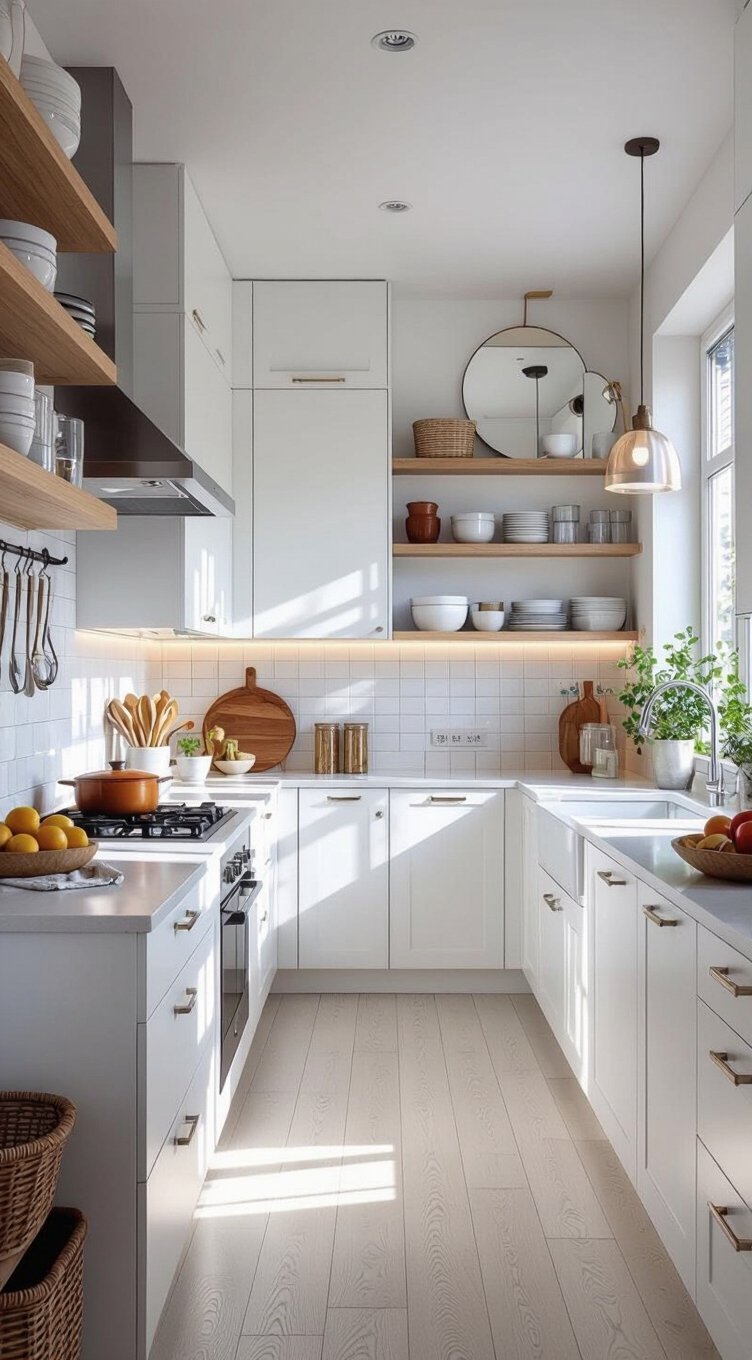
A narrow kitchen doesn’t have to feel cramped or limiting. With the right design choices, you can convert even the tightest space into something functional and visually open. From strategic color palettes to smart storage solutions, small changes make a surprisingly big difference. Whether you’re working with a galley layout or a single-wall setup, these 15 ideas will show you exactly how to maximize every inch—and avoid the common mistakes that make narrow kitchens feel even smaller.
Use Light Colors on Walls, Cabinets, and Ceilings
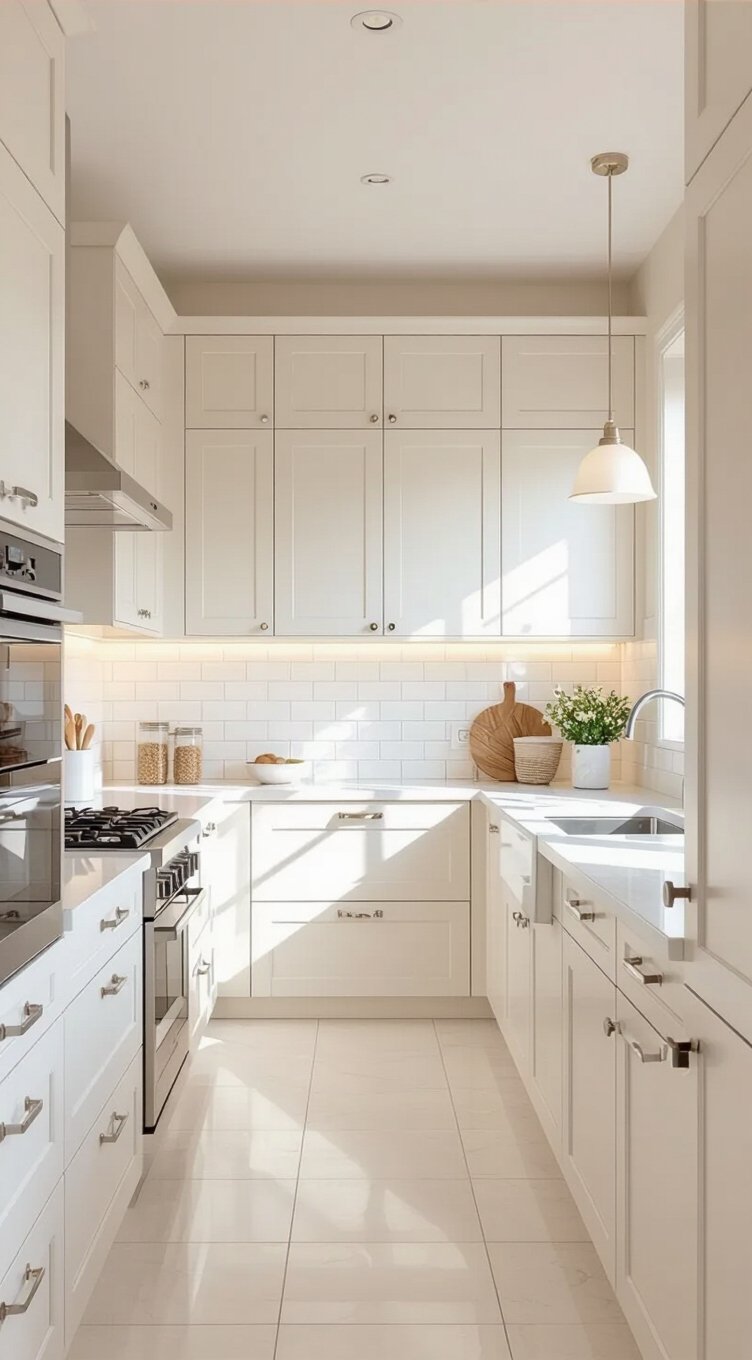
Light colors can make your small kitchen feel more open and airy than it actually is. Whites, creams, and soft grays reflect natural light beautifully, creating an airy ambiance that changes even the tightest spaces. You’ll immediately notice how these shades push walls outward visually, giving you breathing room without any renovation.
Consider these practical applications:
- Walls: Choose soft white or pale gray paint to maximize light reflection.
- Cabinets: Select light finishes like ivory or warm white to blend seamlessly with your walls.
- Ceilings: Paint them slightly lighter than your walls to draw eyes upward, enhancing height.
You’re fundamentally tricking the eye into perceiving more space. These simple color choices give you freedom to enjoy your kitchen without feeling confined.
Keep Your Color Palette Consistent Throughout the Kitchen
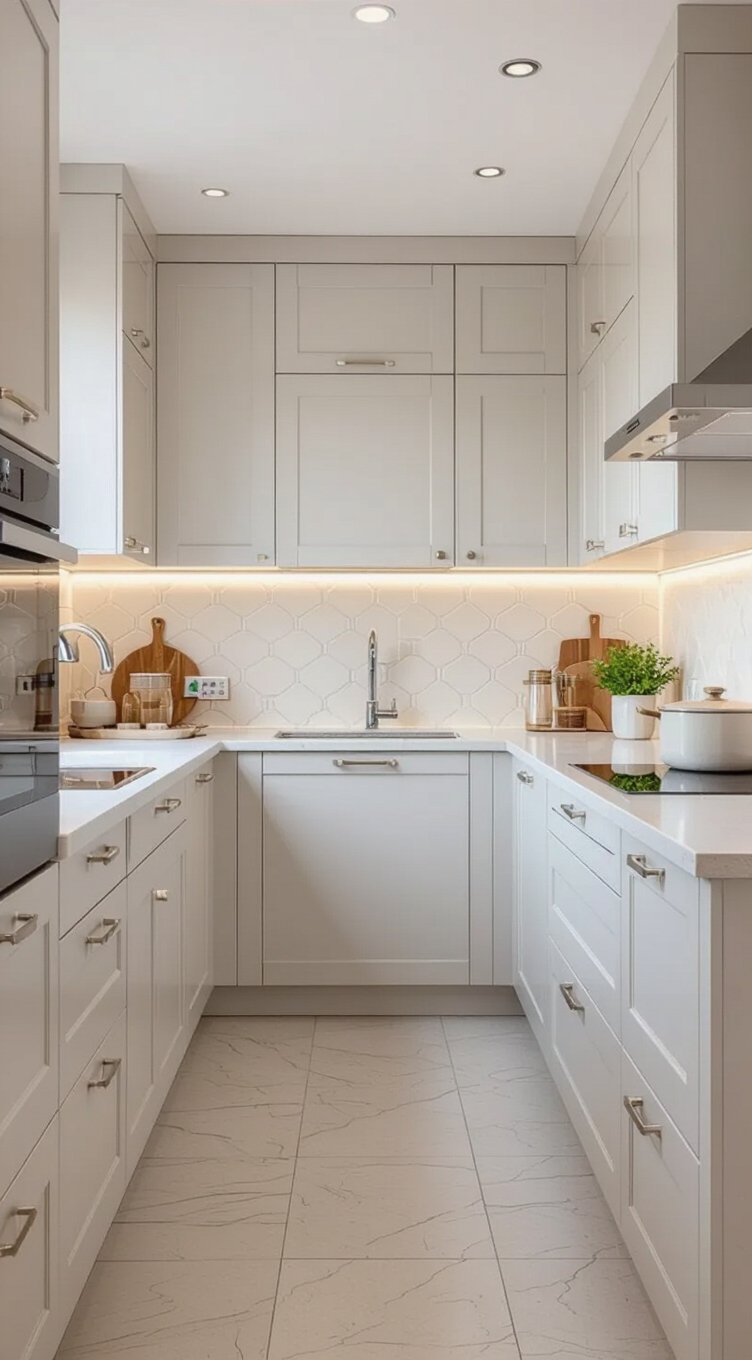
A consistent color palette ties your small kitchen together, making it feel intentional and spacious rather than cluttered. Color harmony creates a seamless visual flow that tricks the eye into perceiving more space than actually exists.
Choose two or three complementary colors and stick with them throughout your kitchen. Apply them to your cabinets, walls, countertops, and even small appliances. A monochromatic theme, using varying shades of one color, works especially well in tight spaces.
Here’s how to maintain consistency:
- Match your hardware finishes to your appliance colors.
- Coordinate your backsplash with your cabinet tones.
- Use similar undertones across all surfaces.
You’ll find that disciplined color choices free your kitchen from visual chaos, giving you a space that feels open and intentionally designed.
How Does a Galley Layout Maximize a Small Kitchen?
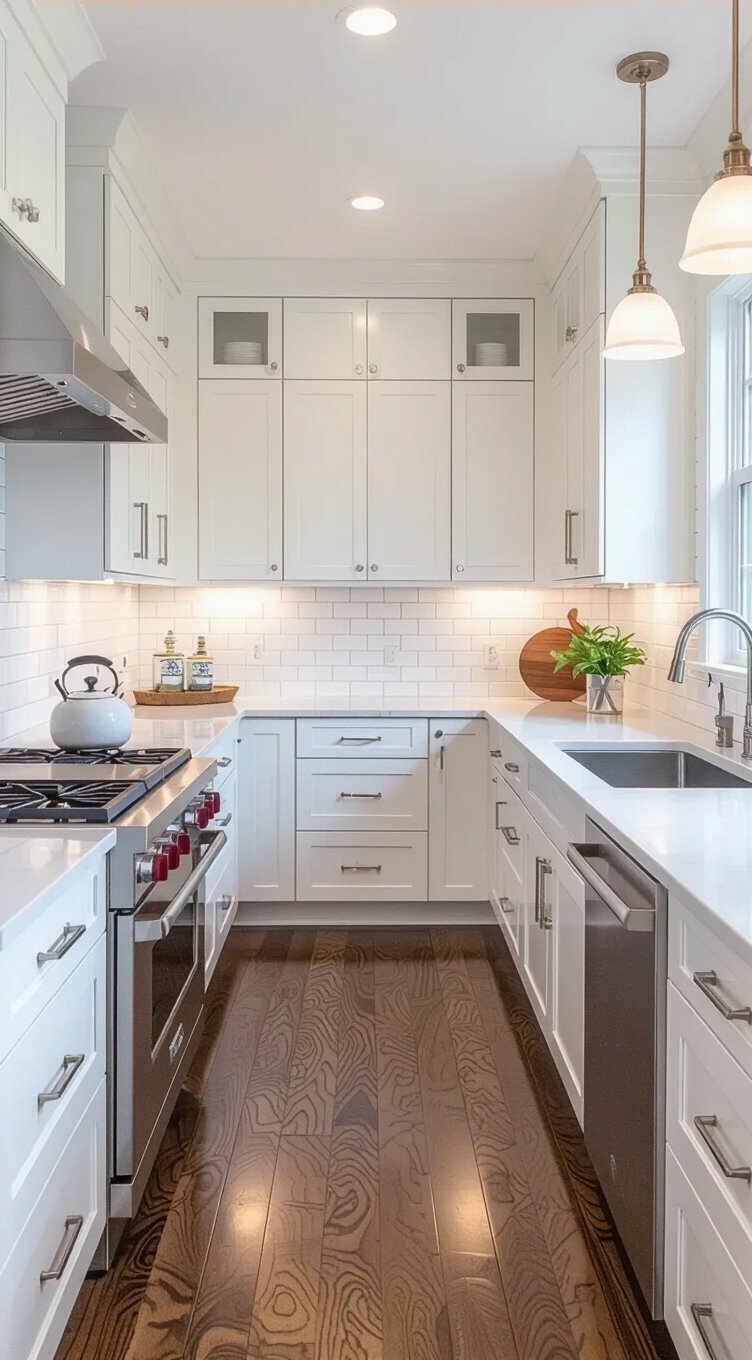
When space is tight, the galley layout stands out as one of the most efficient kitchen designs you can choose. It places two parallel counters facing each other, creating a natural corridor that supports efficient workflow. You can move seamlessly between cooking, prepping, and cleaning without wasting steps or energy.
Smart space zoning makes this layout even more powerful. Dedicate one side to cooking and prep, then assign the opposite side to storage and cleaning. This simple division keeps everything purposeful and within reach.
You’ll also gain uninterrupted counter runs, which give you more usable surface area than broken-up layouts. By keeping each zone clearly defined, you free yourself from kitchen chaos and reclaim full control over how your space works for you.
Try a Single-Wall Layout in the Narrowest Kitchens
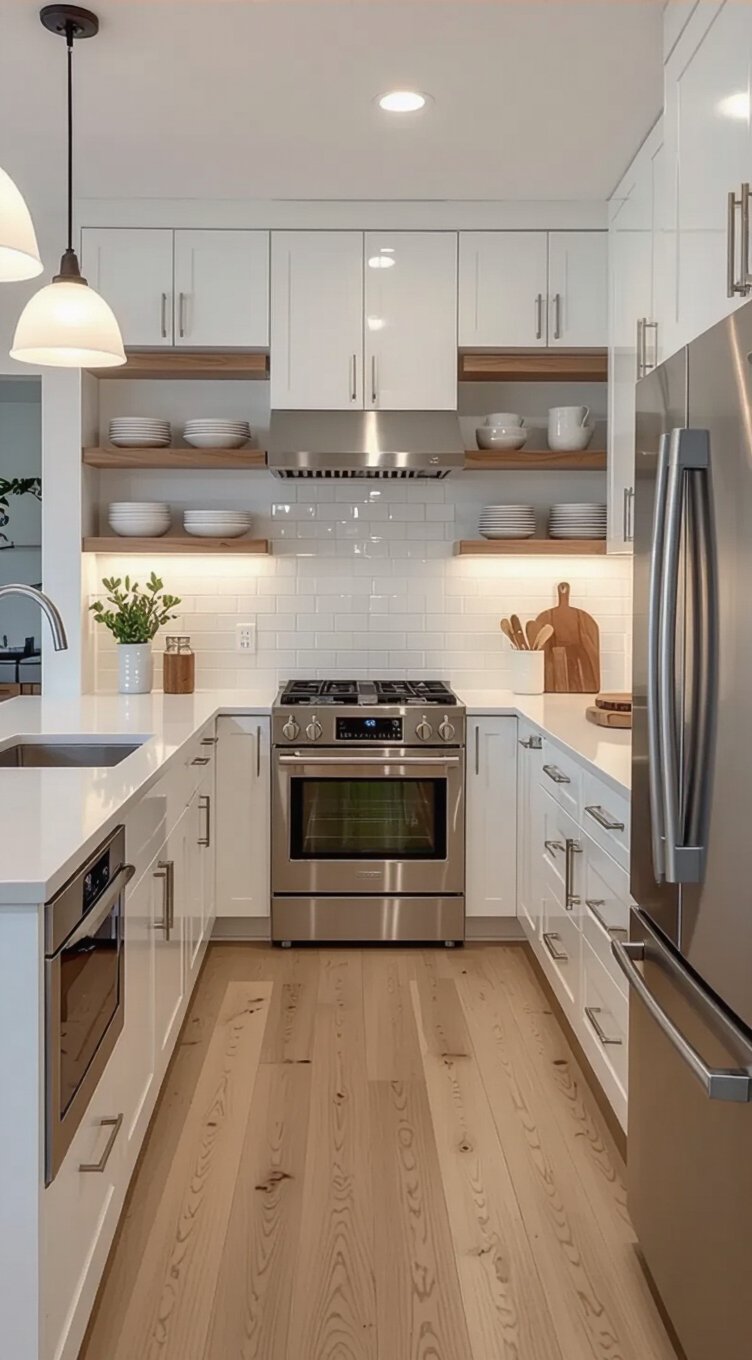
Not every narrow kitchen has room for two parallel walls of cabinetry, and that’s where the single-wall layout earns its place. You align everything — your sink, appliances, and storage — along one wall, keeping the opposite side completely open. This space saving approach gives you full freedom of movement without feeling boxed in.
Embracing a minimalist design philosophy helps you work smarter here. Choose tall upper cabinets that draw the eye upward and maximize vertical storage. Install open shelving between cabinets to avoid a heavy, closed-off feeling. A slim pull-out pantry beside your refrigerator adds serious storage without stealing floor space.
You don’t need a sprawling kitchen to cook well. One well-organized wall can absolutely handle everything you need.
Install Open Shelving Instead of Bulky Upper Cabinets in Small Narrow Kitchens
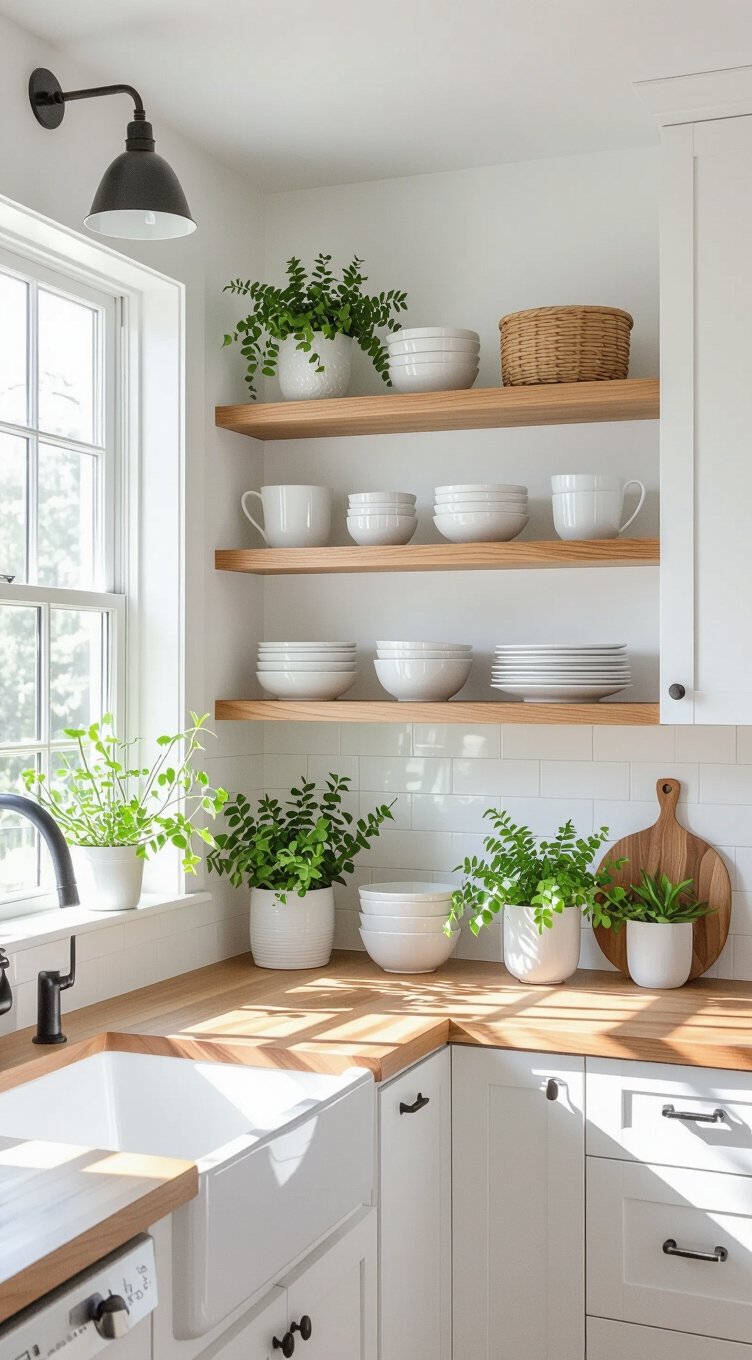
Swapping out bulky upper cabinets for open shelving is one of the smartest moves you can make in a small, narrow kitchen. Floating shelves free up visual space and give your kitchen a minimalist design that feels open and breathable. You’re no longer boxed in by heavy cabinet doors competing for room.
Here’s why open shelving works so well:
- It creates visual depth, making walls appear farther apart
- It keeps your most-used items within easy reach
- It lets natural light travel freely across the room
- It gives you full control over your kitchen’s look
You decide what stays visible and what gets stored elsewhere. That freedom makes open shelving both practical and personally expressive in tight spaces.
Add Vertical Storage to Draw the Eye Upward
Once you’ve opened up your wall space with shelving, it’s time to think vertically and make the most of every inch above you. Install hanging racks from your ceiling to store pots, pans, and utensils within easy reach. These racks free up counter space while adding a stylish, functional element to your kitchen. You can also incorporate vertical gardens along unused wall sections, growing fresh herbs that you actually use while adding life to the space. Stack your storage solutions tall, using tiered shelving units that rise toward the ceiling. This approach draws the eye upward, creating the illusion of height. The result is a kitchen that feels more open, organized, and completely yours to enjoy every single day.
Use Pull-Out Drawers and Hidden Storage to Reclaim Space
Hidden storage solutions can completely change how you use your kitchen’s existing footprint. You don’t need extra square footage to gain more functional space. Instead, work smarter with what you already have by incorporating these four upgrades:
- Install a sliding pantry between appliances or beside the refrigerator
- Add pull-out shelves inside lower cabinets for easier access
- Use concealed bins inside cabinet doors for waste and recycling
- Mount pull-out spice racks inside narrow cabinet walls
Each of these options lets you reclaim dead space you’re currently wasting. A sliding pantry, for example, can hold an entire week’s worth of groceries. Concealed bins keep clutter hidden without sacrificing convenience. These smart storage choices give you a kitchen that finally works on your terms.
Choose Slim, Multi-Function Appliances for Tight Kitchens
The right appliances can make or break a small kitchen’s functionality without taking up precious counter or floor space. Choosing slim, multi-function appliances gives you the freedom to cook, clean, and store food without feeling cramped. Slim dishwashers, typically 18 inches wide, fit neatly beside narrow cabinets while still handling daily loads efficiently. Compact refrigerators with freezer compartments save significant floor space without sacrificing essential storage capacity. Consider a combination microwave-convection oven that eliminates the need for two separate appliances entirely. An induction cooktop with two burners frees up counter space when you’re not actively cooking. Look for appliances with built-in storage features, like oven drawers or refrigerator door organizers, to maximize every available inch in your kitchen layout.
Hang Mirrors and Reflective Surfaces to Make Narrow Kitchens Feel Wider
Mirrors and reflective surfaces are one of the smartest, most affordable tricks you can use to visually expand a narrow kitchen. Strategic mirror placement and reflective backsplashes bounce light around the room, making walls feel farther apart. Try these four approaches:
- Mount a large mirror on one end wall to double the perceived depth instantly.
- Install reflective backsplashes using stainless steel, mirrored tiles, or glossy subway tiles behind your stove or counters.
- Place mirrors opposite windows to maximize natural light reflection throughout the space.
- Use metallic cabinet hardware and glossy paint finishes to add subtle reflectivity everywhere.
You don’t need a renovation budget to pull this off. Small, intentional choices with reflective materials can completely change how open and free your kitchen feels.
Use Glass Cabinet Doors to Add Depth Without Bulk
Swapping solid cabinet doors for glass-fronted ones is one of the easiest ways to add visual depth to a small kitchen without adding bulk. Glass transparency lets your eye travel beyond the cabinet’s surface, making walls feel farther apart. You’ll instantly create the illusion of more space without tearing anything down or spending a fortune.
Cabinet minimalism works perfectly here because glass doors encourage you to keep shelves tidy and intentional. Store only what you love or regularly use. Try these simple approaches:
- Choose clear glass for maximum openness.
- Use frosted glass if you prefer partial privacy.
- Backlight shelves with LED strips for dramatic depth.
You’re freeing your kitchen from visual clutter, one cabinet at a time.
Set Up the Right Lighting for a Small Narrow Kitchen
Lighting can completely change a small, narrow kitchen by making it feel open, airy, and far more functional. Strategic lighting layers convert tight spaces into kitchens you’ll actually enjoy using every day.
Here are four lighting strategies to brighten your narrow kitchen:
- Install pendant lights above your island or peninsula to add focused, stylish illumination.
- Add under cabinet lighting to brighten countertops and eliminate dark, cramped shadows.
- Use recessed ceiling lights to spread even light without consuming visual space.
- Choose warm-toned bulbs (2700K–3000K) to create an inviting, expansive atmosphere.
You don’t need a massive kitchen to have great lighting. Layer these options thoughtfully, and your narrow kitchen will feel surprisingly open, freeing you to cook and move comfortably.
Pick Flooring Patterns That Make Narrow Kitchens Look Wider
Did you know that the right flooring pattern can visually stretch a narrow kitchen and make it feel much wider? You don’t need to knock down walls to create the illusion of space. Instead, let your floors do the heavy lifting.
Try laying diagonal tiles at a 45-degree angle across the kitchen’s width. This clever trick draws the eye outward, making the room feel broader and more open.
Another powerful option is the herringbone pattern, which creates energetic movement across the floor. Its zigzag design naturally guides your gaze sideways, expanding the perceived width of your kitchen.
Lighter-colored flooring in either pattern amplifies the effect even further. You’re not just choosing floors—you’re strategically designing freedom and breathing room into your everyday space.
Clear Your Countertops to Gain Back Visible Space
While the right flooring patterns can visually open up your kitchen, what sits on your countertops plays an equally powerful role in how spacious your kitchen feels. Clutter clutter your countertops, and you’ll instantly shrink your space. Keeping your countertops clear gives your eyes room to breathe and move freely. Try these four steps to reclaim your space:
- Store small appliances inside cabinets when not in use.
- Mount your microwave under cabinets to free up surface area.
- Use a pegboard wall system for utensils and tools.
- Keep only one decorative item on display at a time.
You’ll immediately notice how much larger your kitchen feels once you remove unnecessary items from your surfaces.
Consider Fold-Down Tables and Narrow Rolling Islands for Tight Kitchens
When counter space is scarce, fold-down tables and narrow rolling islands give you flexible work areas without permanently eating up your floor space. These solutions let you reclaim your kitchen on your own terms. Fold-down tables mount directly to the wall and fold flat when you’re done, keeping your kitchen open and breathable. You can use them for meal prep, dining, or even a quick workspace. Rolling islands on wheels slide out when you need extra surface area and tuck away just as easily. Look for models under 20 inches wide to maintain comfortable movement through your kitchen. Both options give you real functionality without locking you into a permanent layout, so you stay in control of how your space works for you.
Mistakes That Make Your Small Narrow Kitchen Feel Even Smaller
Smart storage and flexible furniture go a long way, but certain common mistakes can quietly shrink your kitchen even further. Avoiding these pitfalls gives you more breathing room and daily freedom.
Watch out for these four common mistakes:
- Cluttered counters steal visual space and make movement feel restricted.
- Poor scale furniture overwhelms narrow layouts and blocks natural traffic flow.
- Dark paint colors absorb light and make walls feel like they’re closing in.
- Bulky overhead cabinets positioned too low create a cramped, suffocating atmosphere.
You don’t have to live with these limitations. Clear your counters, choose appropriately scaled pieces, and let light work for you. Small adjustments create noticeable improvements that alter how spacious your kitchen actually feels.
Frequently Asked Questions
Can I Make a Narrow Kitchen Feel Spacious Without Renovating?
Yes, you can! Paint your walls in light colors to instantly open up the space. Swap closed cabinets for open shelving, and you’ll create a sense of freedom and airiness without touching a single wall.
What Is the Minimum Width Required for a Functional Narrow Kitchen?
You’ll need at least 40 inches of width to create a functional space. Adopt kitchen zoning to maximize every inch, and choose appliance scaling wisely—smaller units liberate your workflow, giving you the freedom to move and cook effortlessly.
How Do I Maximize Natural Light in a Windowless Narrow Kitchen?
You’ll maximize light reflection by installing mirrors and glossy surfaces throughout. Use artificial daylight bulbs to mimic sunlight, giving you a bright, open feel that liberates your windowless narrow kitchen from any sense of confinement.
Should I Hire a Professional Designer for My Narrow Kitchen Makeover?
You don’t have to! Weigh your cost considerations carefully—if your budget’s tight, DIY options offer freedom. However, a designer’s skill can reveal creative solutions for your narrow kitchen that you might never uncover alone.
Can Renters Implement Narrow Kitchen Space Solutions Without Landlord Permission?
You can absolutely make temporary modifications without landlord permission! Add removable backsplashes, use freestanding shelving, and hang tension rod organizers. These renter-friendly solutions maximize your narrow kitchen’s potential while keeping your freedom and deposit intact.
Conclusion
Your narrow kitchen doesn’t have to feel cramped or limiting. By combining light colors, smart layouts, and clever storage, you’ll convert even the tightest space into a functional, airy kitchen. Start with one or two changes, like clearing your countertops or adding under-cabinet lighting, and build from there. Small adjustments create big visual impact. With the right design choices, you can make your narrow kitchen feel surprisingly spacious and enjoyable to use.