

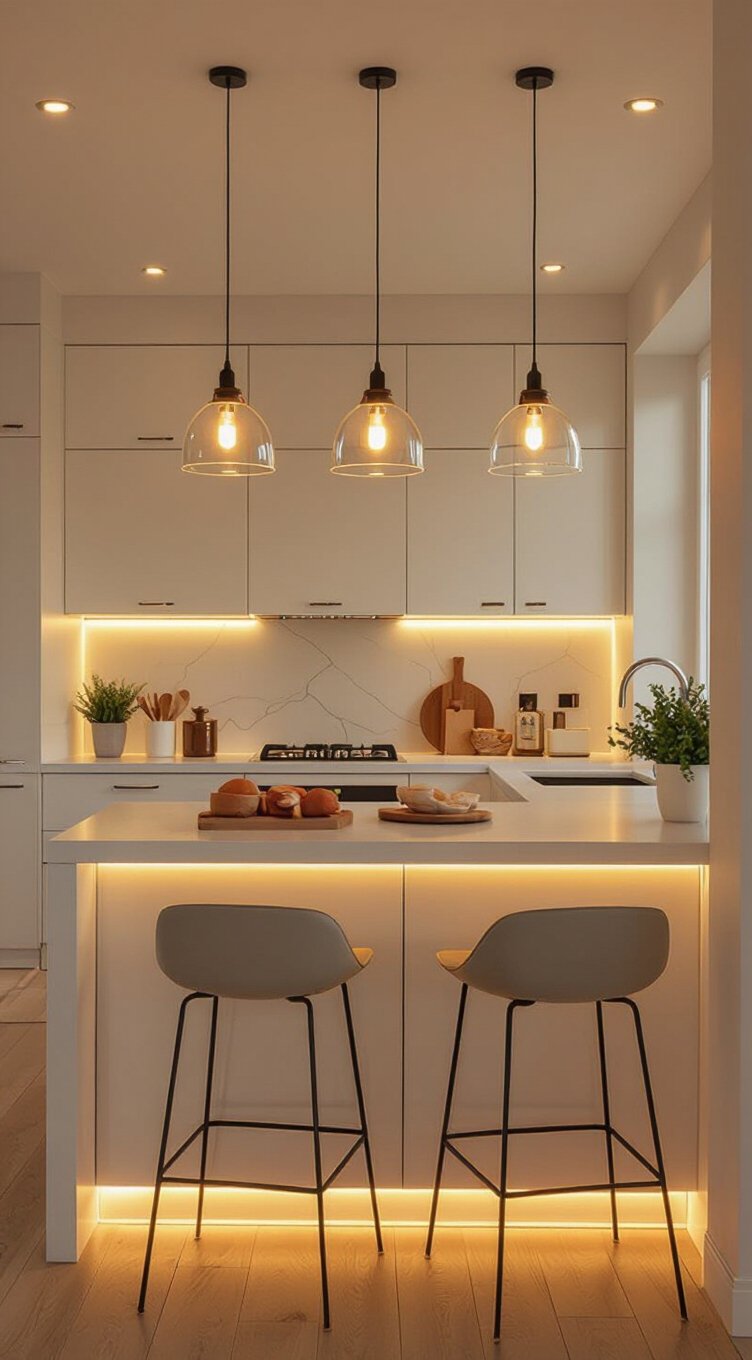
Your small kitchen doesn’t have to feel dim or cramped. With the right lighting strategy, you can convert even the tightest space into a bright, functional area that works harder for you. From layered lighting techniques to smart controls and reflective finishes, there’s a practical solution for every layout and budget. The details make all the difference, and knowing exactly which upgrades to prioritize will save you time, money, and frustration.
How Much Light Does a Small Kitchen Actually Need?
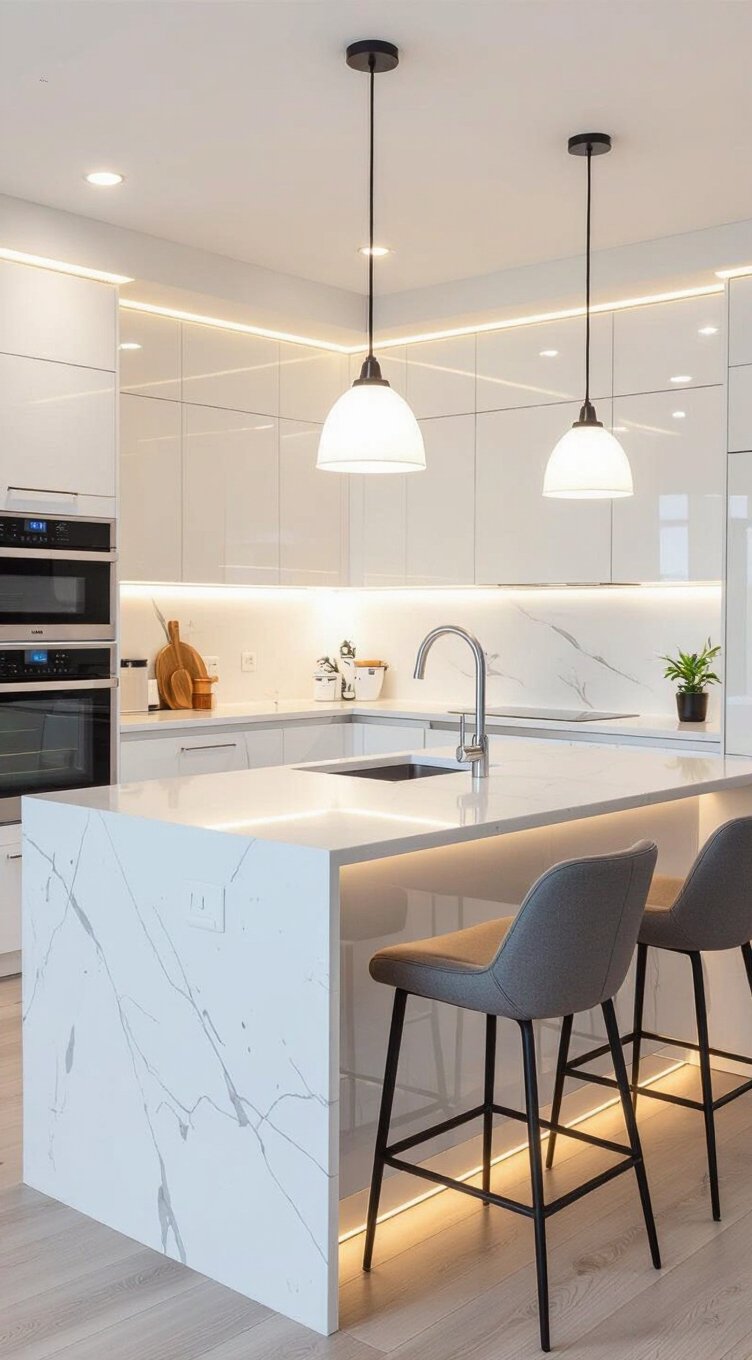
When planning your kitchen lighting, understanding the right amount of light makes all the difference. Most small kitchens need between 50 to 100 foot-candles of light for safe, efficient cooking. You’ll want to layer your lighting strategically to cover every corner without overwhelming the space.
Consider these key factors:
- Natural daylight reduces your dependence on artificial lighting considerably, saving energy costs.
- Window placement directly impacts how much supplemental lighting you’ll actually need throughout the day.
- Task areas like countertops require brighter, focused lighting than general ambient spaces.
You don’t need to flood your kitchen with harsh overhead lights. Instead, combine natural and artificial sources thoughtfully. Smart lighting choices give you full control over your kitchen’s atmosphere and functionality.
The Layered Lighting Approach for Small Kitchens
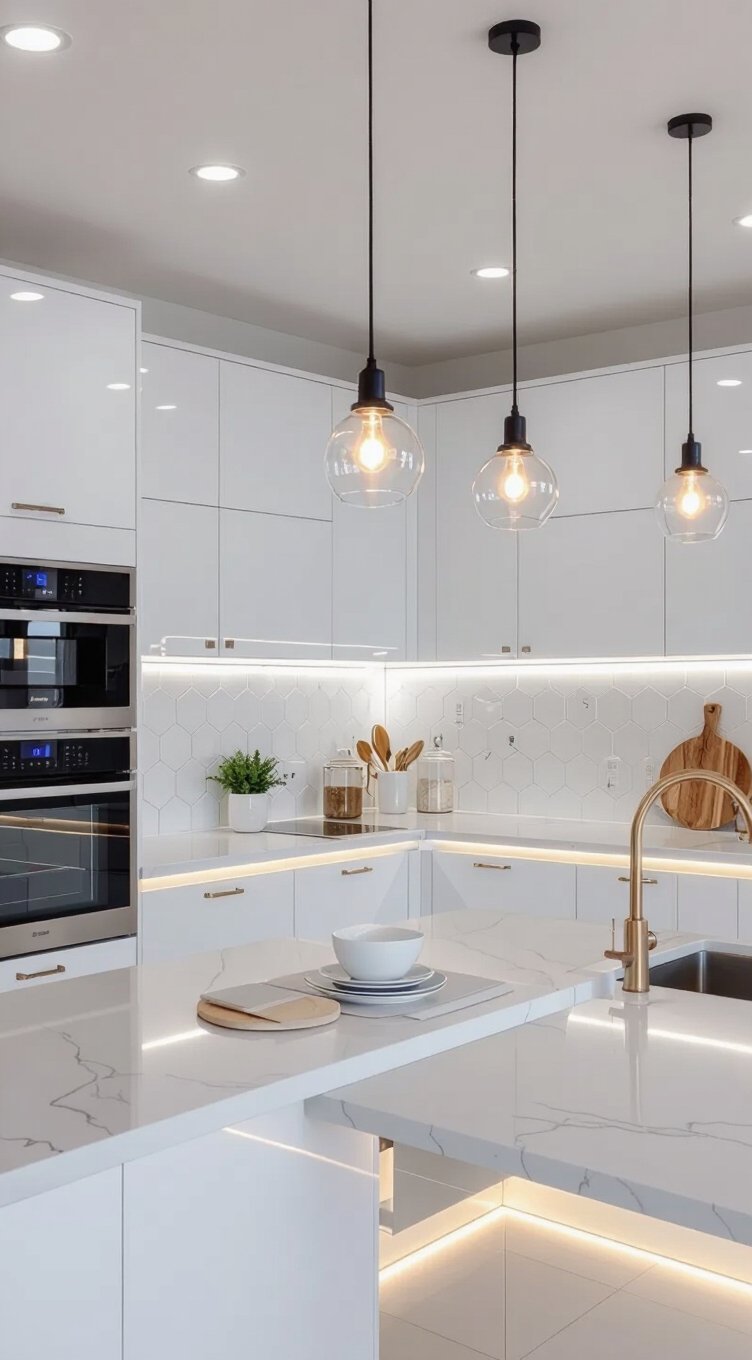
Layering your kitchen lighting changes a cramped, dim space into a functional and inviting area that works for every task. You’re not stuck with one overhead bulb doing all the work. Instead, combine three types of light to create real flexibility:
- Ambient lighting sets your kitchen’s general brightness, replacing harsh overhead fixtures with softer, even coverage.
- Task lighting targets countertops and prep areas where you actually need focused, direct light.
- Natural and artificial balance means maximizing window light during the day while letting artificial sources take over at night.
You control how your kitchen feels and functions by mixing these layers intentionally. Start small, add one layer at a time, and you’ll revolutionize your kitchen without overwhelming yourself or your budget.
The Right Bulb Temperature for Small Kitchen Spaces
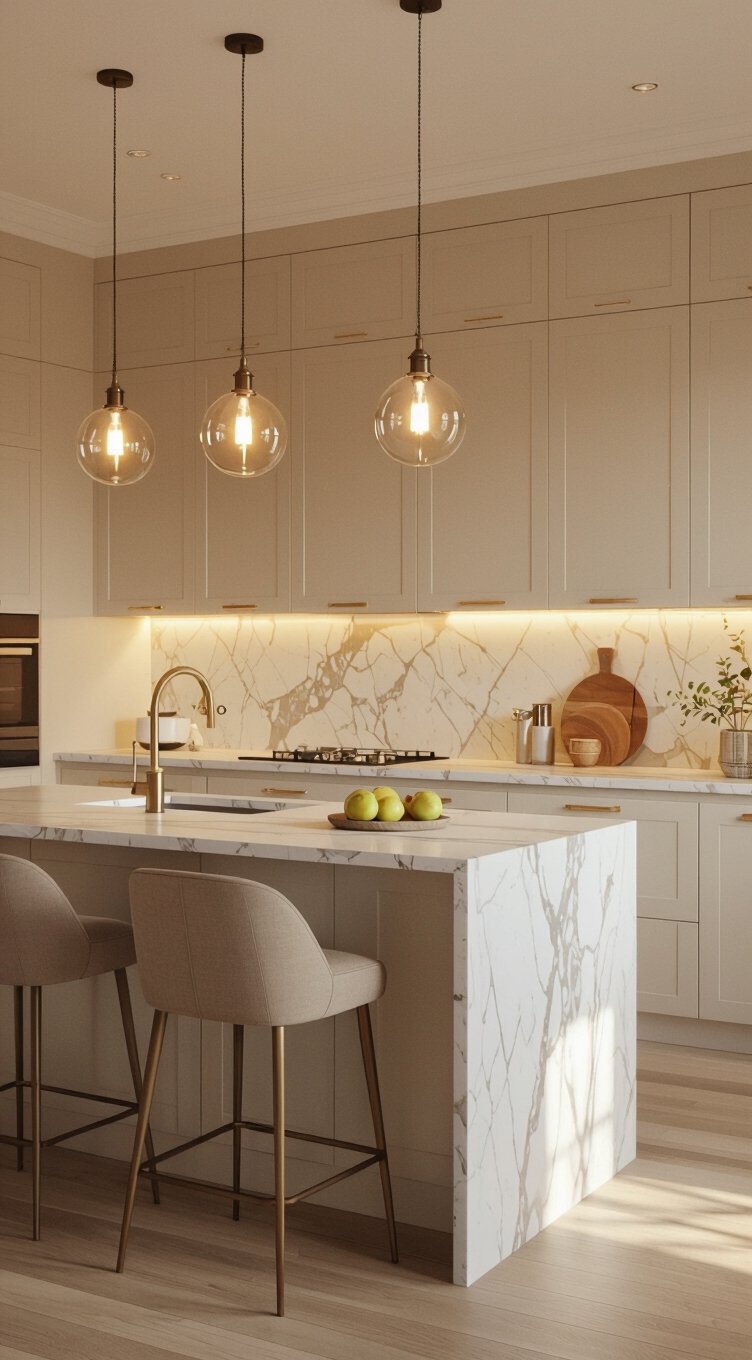
Choosing the right bulb temperature changes how your small kitchen looks and feels every single day. You’ll want to balance warm ambiance with natural brightness to create a space that feels open and functional. Bulb temperature is measured in Kelvins (K), and your choice directly affects your kitchen’s mood.
- 2700K–3000K: Creates a warm ambiance perfect for cozy, inviting kitchens
- 3500K–4000K: Offers neutral, balanced light for everyday cooking tasks
- 400些什么–5000K: Delivers natural brightness that makes small spaces feel larger
- 5000K–6500K: Mimics daylight, enhancing visibility for detailed prep work
You’re free to mix temperatures across different fixtures. Use warmer tones for ambiance lighting and cooler tones for task areas, giving your kitchen both beauty and practicality.
Under-Cabinet Lighting That Frees Up Counter Space
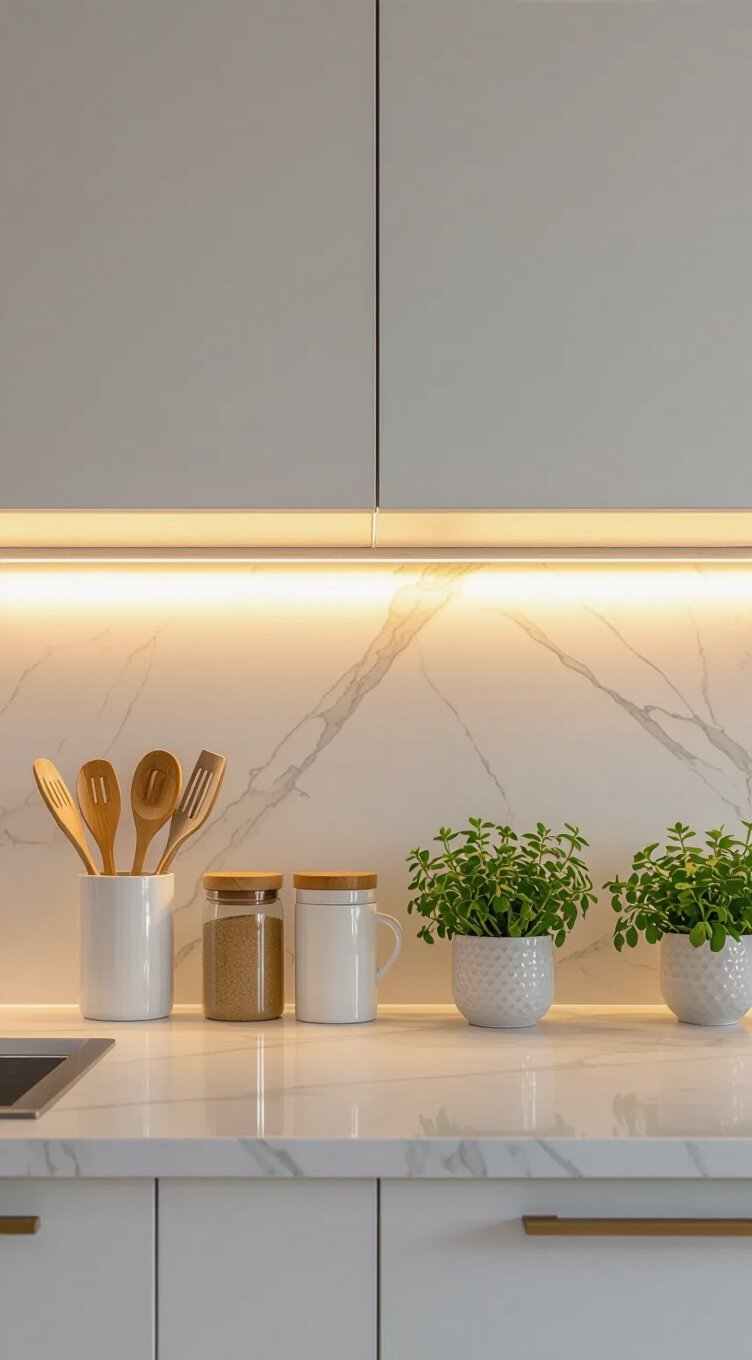
Under-cabinet lighting is one of the smartest upgrades you can make in a small kitchen. It delivers space saving illumination directly where you need it most — your countertops — without consuming important surface area. You’re fundamentally reclaiming workspace that bulky lamps or portable fixtures would otherwise steal.
LED strip lights and puck lights are your best options here. They’re thin, energy-efficient, and create streamlined brightness across your prep zones. Installation is straightforward:
- Choose adhesive LED strips for a tool-free setup
- Position lights toward the cabinet’s front edge for maximum coverage
- Select a warm-white or neutral tone (2700K–3500K) for functional clarity
This single upgrade lets you cook, prep, and move freely without shadows cramping your style or your space.
Recessed Lighting That Keeps Your Ceiling Clean and Open
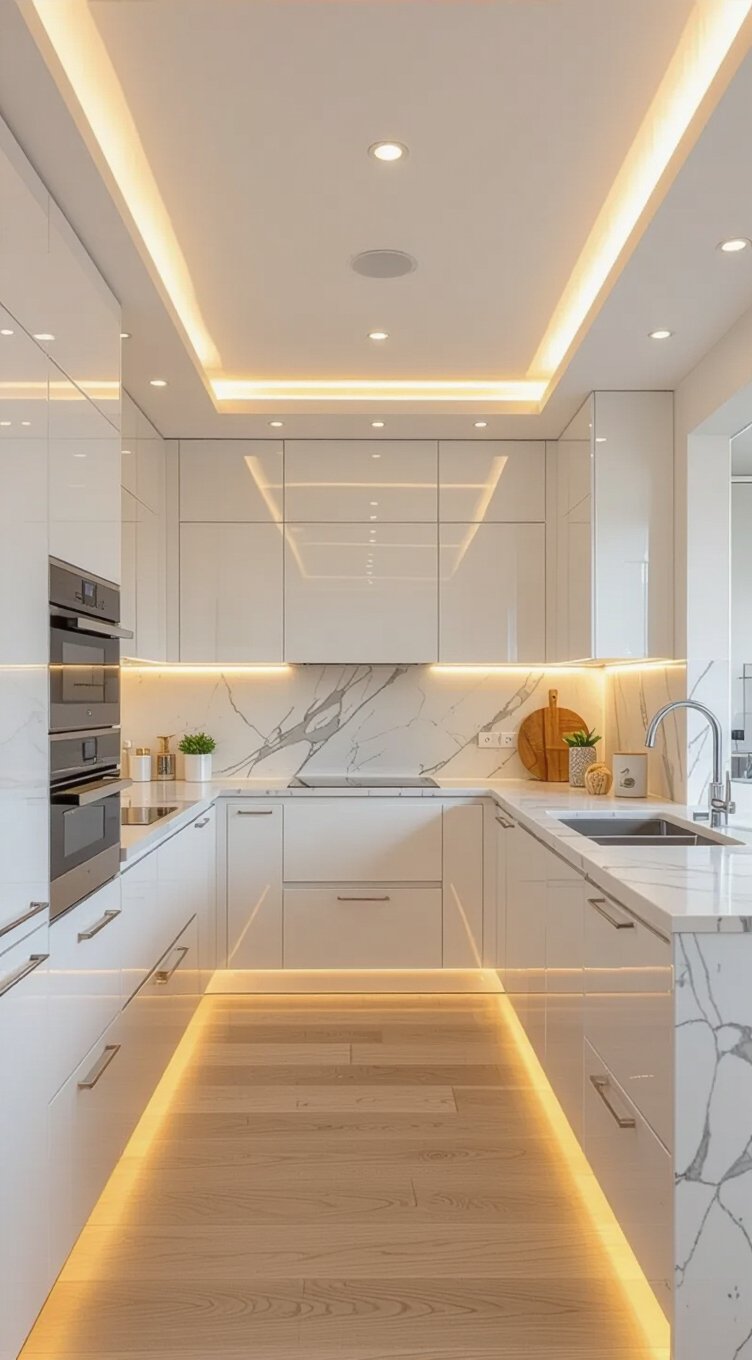
Recessed lighting is one of the best ways to keep your small kitchen feeling open and uncluttered. It sits flush with your ceiling, improving ceiling aesthetics without adding visual bulk. You’ll gain full control over your space while lighting every corner effectively.
Here are key tips to make recessed lighting work for you:
- Plan your layout by spacing fixtures 4–6 feet apart for even coverage
- Choose dimmable LEDs to control ambiance and cut energy costs
- Hire a licensed electrician to handle installation complexity, especially in older homes
- Use 3-inch or 4-inch fixtures in small kitchens to avoid an overwhelming look
Don’t let installation complexity intimidate you. With proper planning and the right professional help, recessed lighting changes your kitchen into a bright, open space.
LED Strip Lights That Give Your Kitchen a Modern Glow
While recessed lighting handles your overhead illumination, LED strip lights work differently by adding targeted glow exactly where you need it most. You can place them under cabinets, along toe kicks, or inside open shelving to completely change how your kitchen feels and functions.
One powerful feature you’ll love is color tuning, which lets you shift between warm and cool light tones depending on your mood or task. You’re not locked into one setting ever again.
Setting up dimming zones gives you even more freedom by letting different areas operate independently. Your prep zone can stay bright while your dining area softens to a comfortable glow.
LED strips are affordable, easy to install yourself, and genuinely make your small kitchen feel intentional and modern.
Pendant Lights That Add Style Without Crowding
Pendant lights bring personality and focused illumination to your small kitchen without taking up any counter or cabinet space. They create a strong design focus while adding an ambient glow that feels intentional and stylish. You can hang them over a small island, peninsula, or even a breakfast bar.
- Choose mini pendants with a slim profile to avoid overwhelming your space
- Install adjustable-height pendants so you can customize clearance easily
- Pick clear glass shades to maximize light spread without visual heaviness
- Use a single statement pendant instead of multiple fixtures to keep things clean
You don’t need a large kitchen to pull off this look. The right pendant changes your space into something that feels curated, open, and completely yours.
Interior Cabinet Lighting That Opens Up the Room
Adding lights inside your cabinets is one of the smartest moves you can make in a small kitchen. Interior lighting changes dark, cramped storage spaces into open, inviting areas that feel twice as large. You’ll immediately notice how much more spacious your kitchen feels once you illuminate those hidden corners.
Consider these two powerful options:
- Glass shelving with LED strip lights underneath each shelf creates a layered, floating effect that draws the eye upward.
- Ambient backlighting placed behind cabinet interiors produces a soft, warm glow that eliminates harsh shadows.
Both approaches give your kitchen a custom, high-end look without major renovations. You control the brightness, color temperature, and style completely. That freedom to personalize makes interior cabinet lighting an upgrade worth every penny.
Toe Kick Lights That Add Depth to a Small Kitchen
Interior cabinet lighting tackles the upper half of your kitchen, but toe kick lights handle the often-ignored lower zone just as effectively. This hidden ambient lighting creates a floating illusion, making your kitchen feel larger and more open. Toe kick illumination sits beneath your lower cabinets, casting a soft glow along the floor line.
Here are smart ways to use toe kick lights:
- Install LED strip lights for energy-efficient, low-profile hidden ambient lighting
- Choose warm white tones to create a cozy, welcoming atmosphere
- Use motion-activated toe kick illumination for hands-free convenience
- Add color-changing LEDs to personalize your kitchen’s mood
You’re free to experiment with brightness levels and color temperatures. This simple upgrade delivers dramatic visual depth without major renovation work.
Reflective Fixtures That Amplify Light in a Small Kitchen
Reflective fixtures work as natural light multipliers, bouncing illumination around your small kitchen to make it feel brighter and more spacious. You can choose pendant lights with mirror finishes to instantly double the light output in tight spaces. These fixtures catch and redirect light in multiple directions, expanding your kitchen’s visual boundaries effortlessly.
Consider installing sconces or overhead lights featuring glossy surfaces that reflect both natural and artificial light. Polished chrome, brushed nickel, and mirrored metal finishes are excellent options that deliver maximum brightness. You’ll notice how these materials create a continuous flow of light throughout your kitchen.
Pair reflective fixtures with light-colored walls to amplify the effect even further. This simple combination gives you complete control over your kitchen’s brightness without requiring major renovations.
Bold Fixtures That Make a Small Kitchen Feel Intentional
Bold choices in kitchen lighting can actually make a small space feel more curated and intentional rather than cramped. When you adopt bold finishes like matte black, brushed brass, or deep bronze, you’re telling the room exactly what it is—yours. Statement shapes, such as geometric pendants or sculptural sconces, draw the eye upward and create visual purpose.
Here are some bold fixture ideas to contemplate:
- Geometric pendant lights in black or gold finishes
- Cage-style sconces with exposed Edison bulbs
- Drum shades with contrasting interior colors
- Sculptural semi-flush mounts with angular silhouettes
You don’t need a big kitchen to make a big impression. One strong fixture can anchor your entire space and give it a confident, well-designed identity.
Track Lighting for Flexible Small Kitchen Coverage
When your kitchen layout makes it tough to light every corner, track lighting steps in as a genuinely flexible solution. You can mount a single track along your ceiling and aim multiple fixtures exactly where you need them most. The adjustable beams let you redirect light toward your prep area, stove, or open shelving without rewiring anything. That kind of control gives you real freedom to customize your space as your needs change. Use directional focus to highlight specific zones, like a cutting board or a coffee station. If your small kitchen doubles as a dining nook, simply pivot the heads to shift the mood. Track lighting works hard without locking you into one permanent setup, making it a smart, adaptable choice.
Smart Lighting Controls That Simplify a Small Kitchen
Track lighting gives you manual control over where your light lands, but smart lighting controls take that flexibility a step further. You can customize your small kitchen’s lighting without ever touching a switch. These systems give you freedom to adjust brightness, set schedules, and respond to your lifestyle instantly.
- Voice control lets you dim or brighten lights hands-free while cooking
- Motion sensors automatically activate lights when you enter the kitchen
- Scheduled lighting adjusts brightness based on your daily routine
- App-controlled dimmers let you fine-tune lighting from anywhere
You don’t have to sacrifice convenience in a compact space. Smart controls eliminate unnecessary clutter from wall switches while maximizing efficiency. Installing these systems converts your kitchen into a responsive, personalized environment that works specifically for you.
Frequently Asked Questions
Can Poor Kitchen Lighting Affect Food Safety and Meal Preparation Accuracy?
Yes, poor kitchen lighting can compromise your food safety and meal prep accuracy. You’ll risk food contamination when you can’t spot spoilage, and color distortion makes it harder to judge whether your food’s properly cooked.
How Do I Light a Small Kitchen With Low or Sloped Ceilings?
You can use recessed lighting to maximize headroom in low or sloped ceilings without sacrificing style. Choose slim, adjustable fixtures that follow your ceiling’s angle, and investigate flexible pendant choices that won’t crowd your kitchen’s vertical space.
What Lighting Works Best for Small Kitchens With No Natural Light?
For small kitchens with no natural light, you’ll want layered lighting to eliminate dim ambiance. Combine recessed lights, under-cabinet strips, and warm tones to create a bright, inviting space that feels open and liberating.
Should Kitchen Lighting Match the Style of Adjoining Dining or Living Spaces?
You don’t have to match exactly, but maintaining lighting continuity and style harmony between spaces creates a cohesive flow. Feel free to blend complementary styles, giving you the freedom to express your unique personality throughout your home.
How Often Should Small Kitchen Light Fixtures Be Cleaned or Maintained?
You should clean your small kitchen light fixtures monthly to maintain fixture durability and bulb longevity. Simply wipe them down, replace dim bulbs promptly, and you’ll enjoy consistently bright, efficient lighting that keeps your kitchen truly liberated.
Conclusion
Your small kitchen doesn’t need a full renovation to feel brighter and more functional. By layering light sources, choosing the right color temperatures, and adding smart controls, you’ll change how the space looks and works. Start with one or two changes, like under-cabinet LEDs or a bold pendant, then build from there. Small upgrades consistently make the biggest difference in how you experience your kitchen every day.