

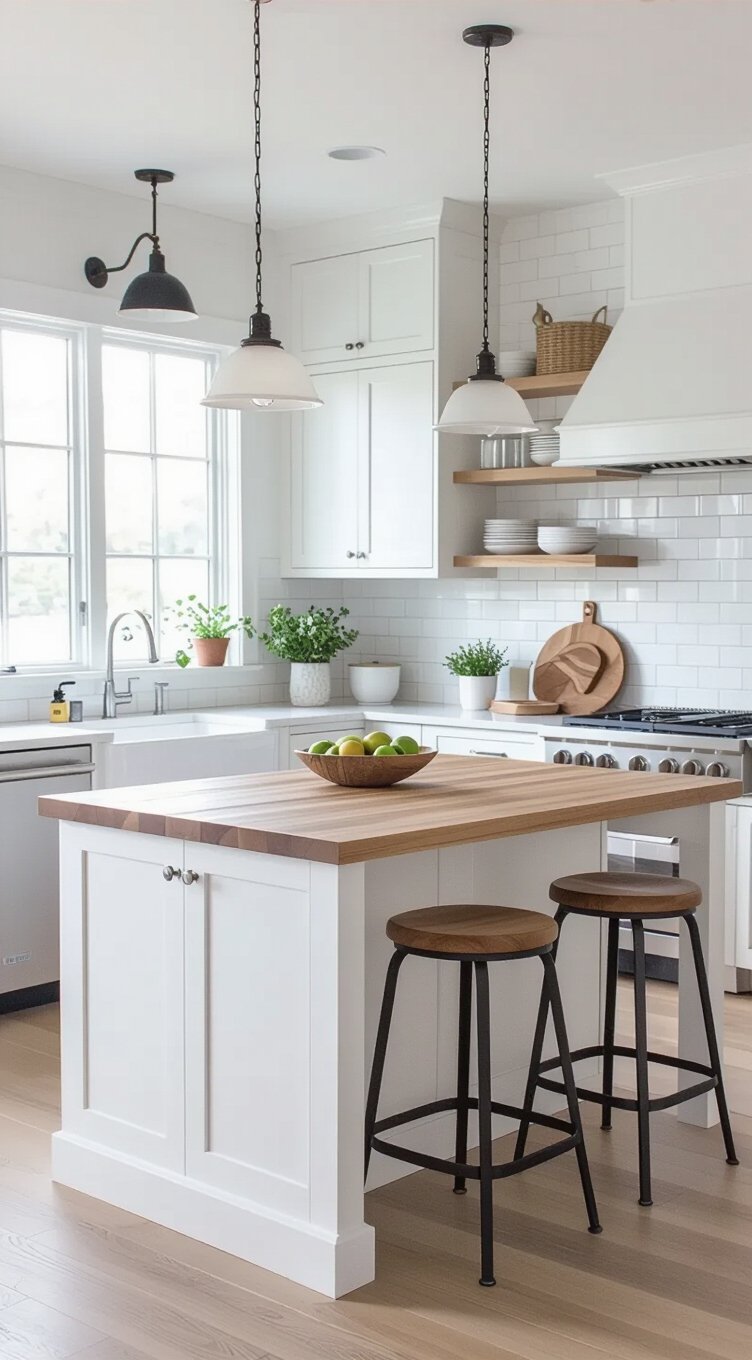
If your small kitchen feels cramped, a well-chosen island can convert it into a functional, organized space. You don’t need a massive layout to make it work — compact designs, rolling carts, and drop-leaf surfaces solve real problems without sacrificing style. From budget-friendly carts under $200 to sleek waterfall-edge designs, the right island fits your space and lifestyle. The smartest solutions might surprise you.
How Small Is Too Small for a Kitchen Island?
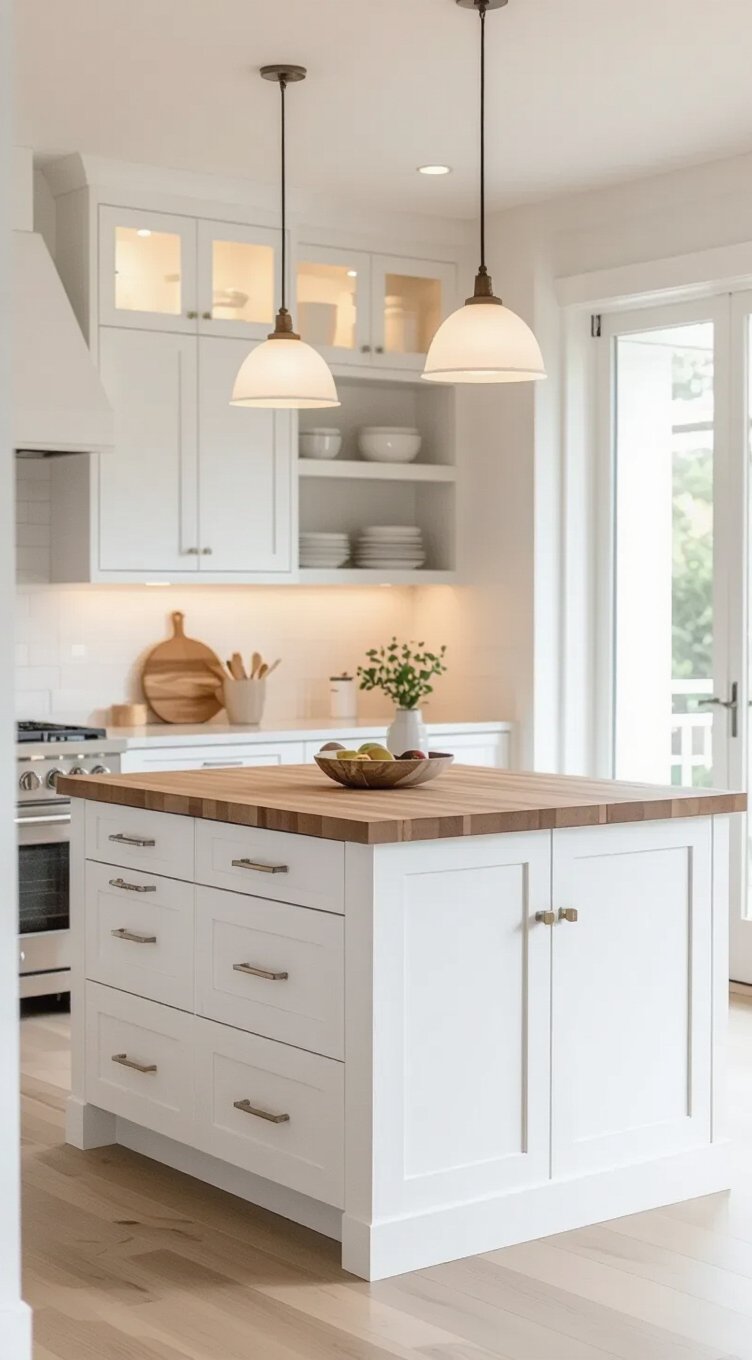
When it comes to kitchen islands, size really does matter—but smaller than you might think can still work beautifully. You don’t need a massive space to enjoy the benefits of an island. Most designers recommend a minimum size of 4 feet long and 2 feet wide. Even with space limitations, a compact island can provide extra prep space, storage, and style. You’ll want to guarantee at least 42 inches of clearance on all sides to move freely. Layout constraints can make this tricky, but it’s absolutely achievable with smart planning. If your kitchen measures at least 8×10 feet, you’ve likely got enough room. Don’t let a smaller footprint discourage you—the right island size fits your lifestyle perfectly.
Rolling Kitchen Islands That Move With You
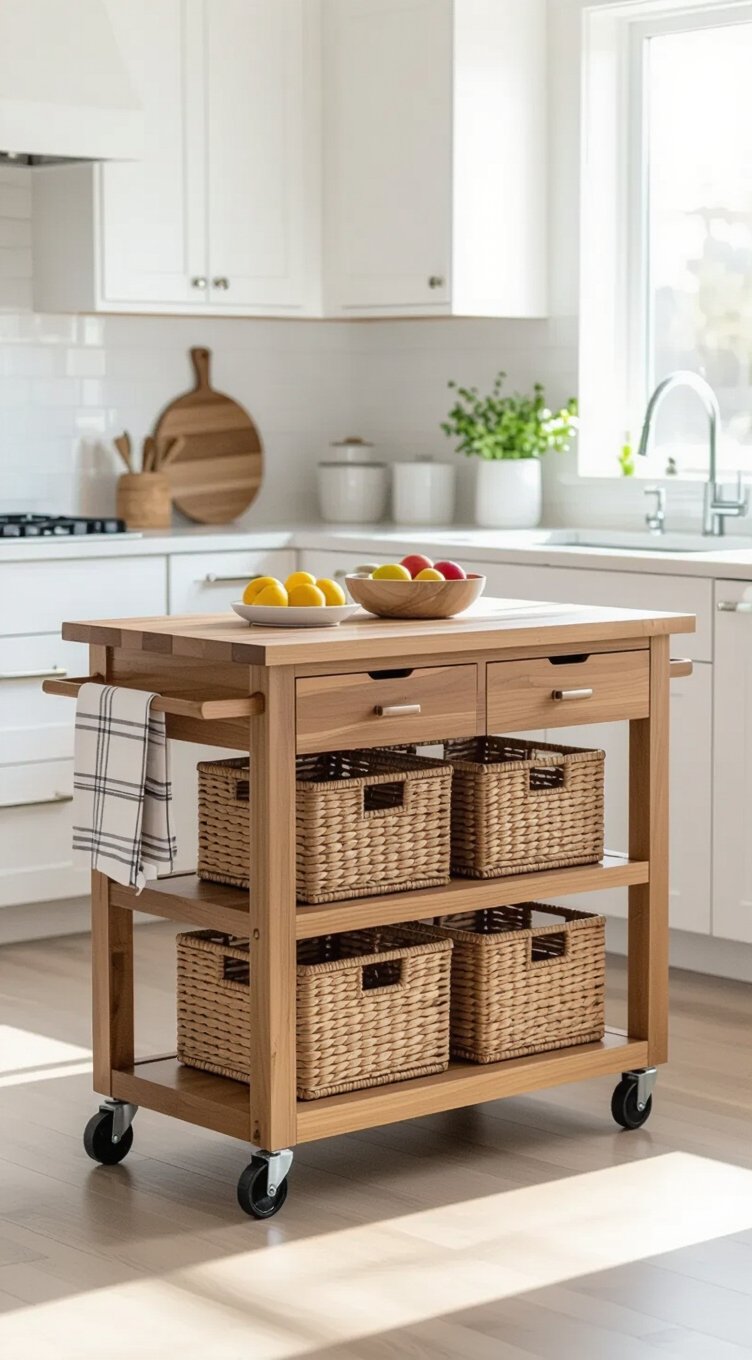
Once you’ve nailed down your ideal island size, a rolling kitchen island might be the most flexible solution you’ll find. These mobile counters give you the freedom to rearrange your kitchen whenever you need extra space or a different layout. You’re not locked into one position, which makes them ideal for smaller kitchens that serve multiple purposes.
Consider these practical benefits of rolling kitchen islands:
- Repositioning ease – Roll sliding stations toward prep areas during cooking, then tuck them away afterward.
- Multi-room versatility – Move your island to dining areas when entertaining guests.
- Storage accessibility – Most models include shelves and drawers that travel with you.
Look for heavy-duty locking casters that keep your island firmly in place when you need stability.
Narrow Kitchen Islands Built for Galley Layouts
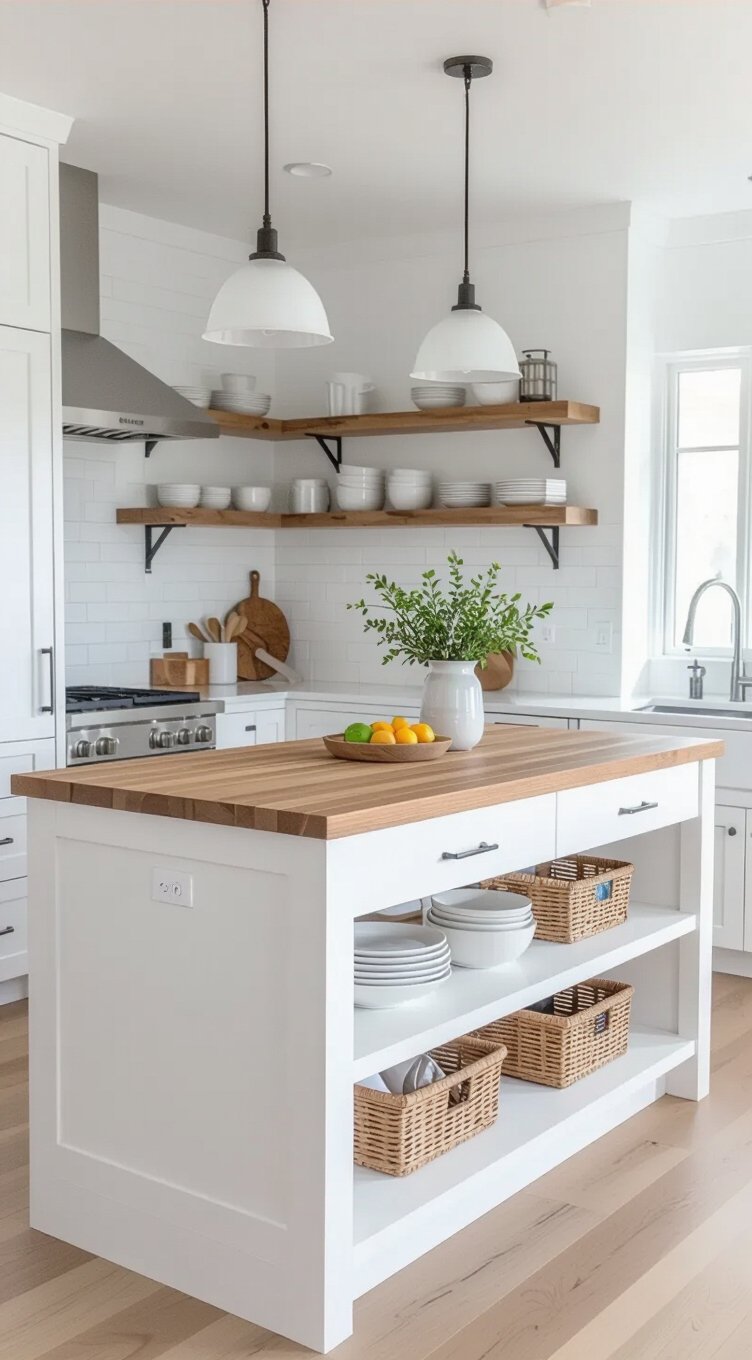
Galley kitchens thrive with narrow islands that fit snugly between parallel countertops without blocking your workflow. A slim profile design, typically 18 to 24 inches wide, keeps your movement free while adding essential workspace. You’ll gain compact storage through built-in shelves, pull-out drawers, or hanging hooks underneath the surface. Choose a butcher block or quartz top for durability and easy meal prep. Position your island parallel to existing counters, leaving at least 42 inches of clearance on each side. This spacing lets you open cabinets and move freely without feeling cramped. Consider adding casters if you occasionally need extra floor space for entertaining. A well-placed narrow island converts a tight galley kitchen into an efficient, flexible workspace that genuinely works for your lifestyle.
Drop-Leaf Kitchen Islands That Expand on Demand
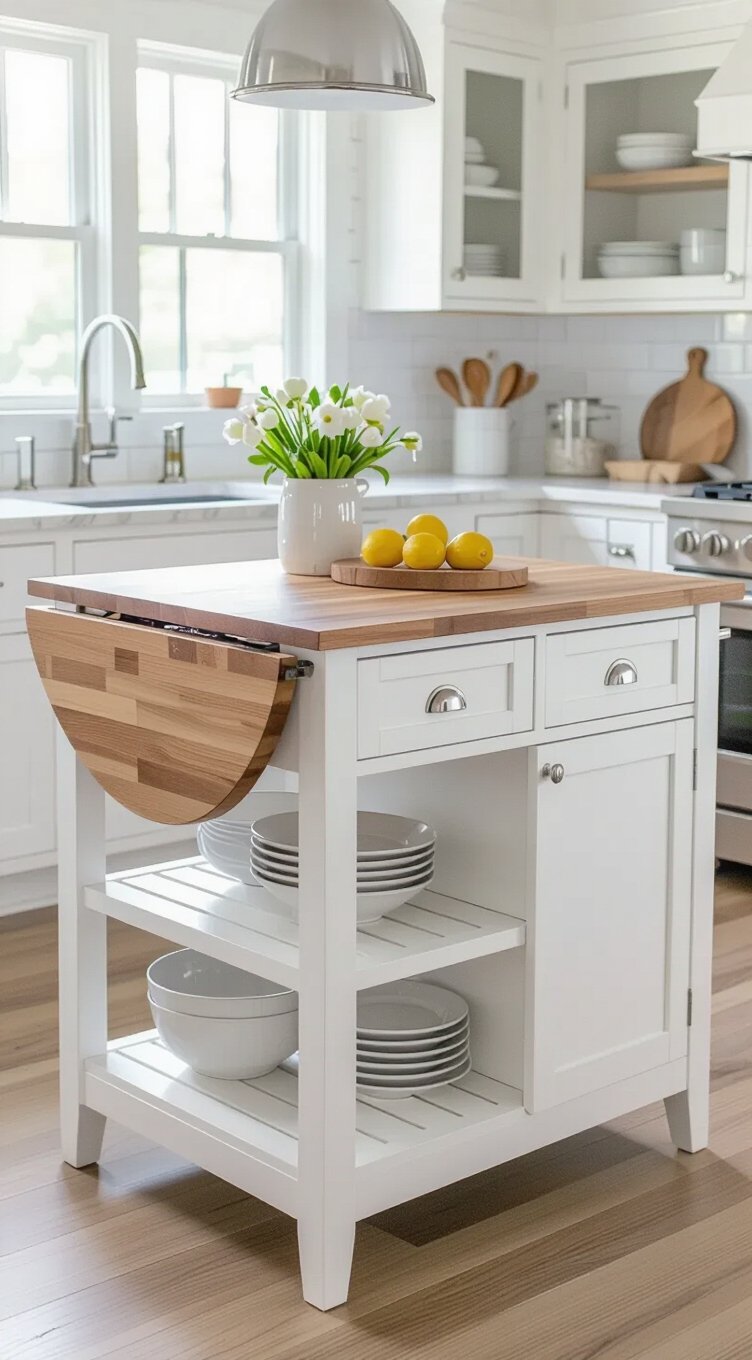
Drop-leaf kitchen islands take space-saving a step further by giving you a surface that literally grows or shrinks based on what you need. When you’re not cooking, fold down countertops flat against the island’s sides, keeping your walkways clear and your kitchen feeling open. Need extra prep space? Raise one or both leaves, and you’ve instantly doubled your work surface. Some models even feature telescoping extensions that slide outward for maximum flexibility without permanent commitment. You’re never locked into one configuration, which means your kitchen adapts to your lifestyle rather than the other way around. Look for drop-leaf islands with locking hinges and sturdy leg supports, ensuring the expanded surface stays stable during heavy meal prep sessions.
Budget Kitchen Island Carts Under $200
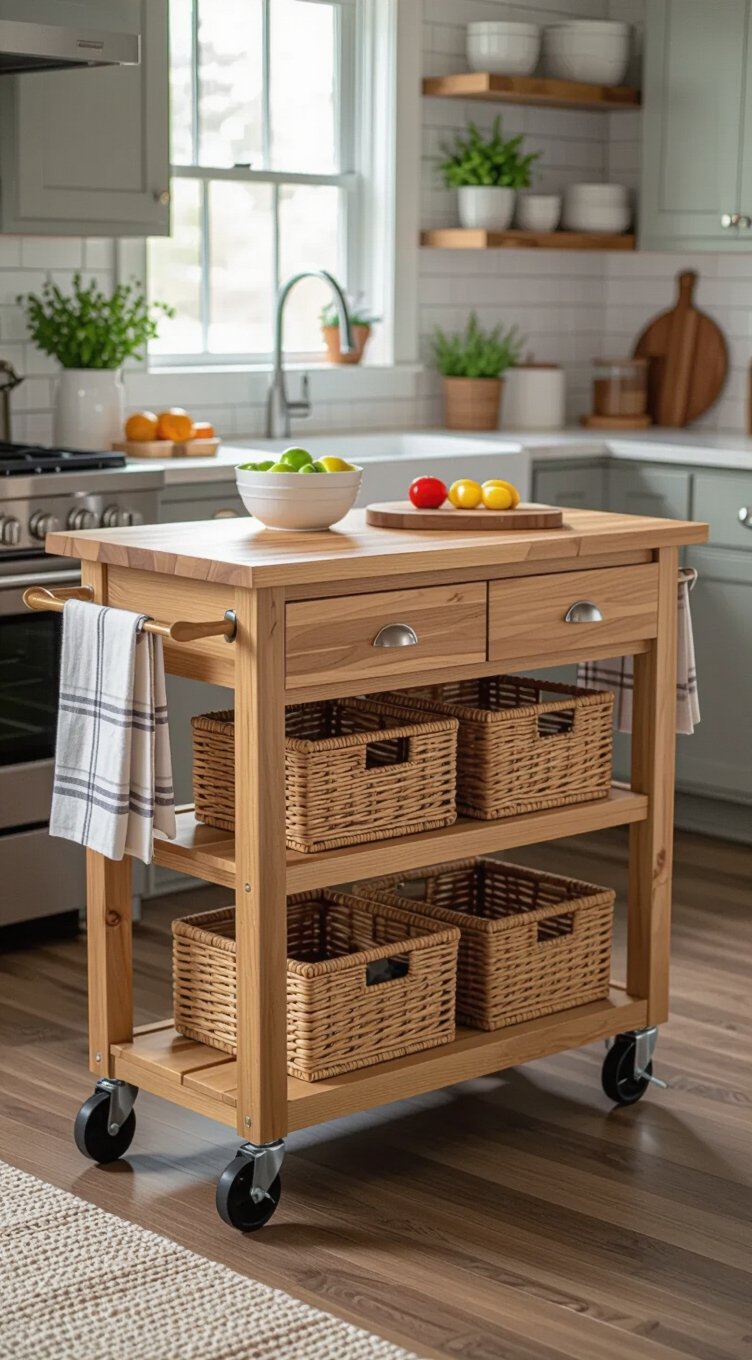
A tight budget doesn’t mean you have to sacrifice functionality when it comes to adding an island to your kitchen. Wheeled utility carts and compact storage solutions under $200 give you flexibility without draining your wallet.
Here’s what to look for when shopping budget-friendly options:
- Adjustable shelving that lets you customize storage for different items
- Locking casters that keep your cart stable during meal prep
- Butcher block or stainless steel tops that handle heavy daily use
You can find solid options at retailers like IKEA, Amazon, and Home Depot. These affordable carts roll wherever you need them, giving you the freedom to rearrange your space anytime. Smart shopping means you don’t have to compromise quality for cost.
Butcher Block Islands That Pull Double Duty as Prep Space
Butcher block durability makes these islands a smart investment for small kitchens by combining durable prep space with smart storage underneath. You’ll get a hardworking surface that handles chopping, rolling dough, and everyday cooking tasks without complaint. The natural wood surface is easy to maintain with regular oiling, keeping it functional for years.
Multi functional design is where butcher block islands truly shine. You can store pots, cutting boards, and pantry items in the shelves or drawers below while working above. Choose a model with locking casters so you can roll it wherever your kitchen workflow demands. This flexibility gives you complete control over your space. A butcher block island removes the limitations of a fixed kitchen layout, letting you cook and organize on your own terms.
Kitchen Islands With Drawers, Shelves, and Cabinets Underneath
Packed with drawers, shelves, and cabinets, a storage-focused island converts your small kitchen into an organized, efficient workspace. You’ll reclaim essential square footage without sacrificing functionality or freedom of movement.
Maximize your island’s potential with these strategic storage solutions:
- Drawers keep utensils, spices, and small tools within easy reach
- Open shelves display compact appliances like toasters or coffee makers, freeing counter space
- Cabinets conceal larger items, creating a clean, uncluttered environment
Add undercounter lighting beneath shelves to illuminate your workspace and create visual depth. This simple upgrade makes your island feel intentional and polished. Choose an island with mixed storage configurations, combining drawers, shelves, and cabinets, to customize organization exactly how you need it. You’re building a kitchen that genuinely works for your lifestyle.
Kitchen Islands With Hidden Trash and Recycling Bins
Once your island’s storage is dialed in, hiding your trash and recycling bins takes organization one step further. Concealed compartments built into your island keep unsightly bins completely out of view, giving your kitchen a cleaner, more open feel. Pull-out bins are especially practical because they let you access waste quickly without disrupting your workflow.
Here’s what to contemplate when adding hidden bins to your small island:
- Choose pull-out bins that slide smoothly on full-extension drawer slides for easy daily access.
- Install side-by-side compartments to separate trash and recycling efficiently within one compact space.
- Select soft-close hardware to keep doors and drawers operating quietly and reliably.
This simple upgrade reclaims your floor space and keeps your kitchen feeling intentionally organized and completely free of clutter.
Built-In Islands Where the Appliances Disappear
When appliances blend seamlessly into your island’s design, your small kitchen instantly feels larger and more streamlined. You can tuck microwaves, toasters, and even small appliances behind cabinet doors using disappearing hinges that fold panels completely out of sight.
Consider these smart integration options:
- Lift-up doors with concealed tracks that glide smoothly upward, revealing hidden appliance garages without wasting counter space
- Pocket doors that slide directly into the island’s frame, keeping your workspace completely clear when needed
- Bi-fold panels using disappearing hinges that collapse flat against the cabinet interior
This approach gives you complete control over your kitchen’s visual clutter. You decide what’s visible and what’s hidden. Your island works harder while maintaining a clean, unrestrictive look that feels intentional and genuinely freeing.
Kitchen Islands With Seating for Two or Three
A small kitchen island can absolutely accommodate seating for two or three people without overwhelming your space. You don’t need a massive footprint to create a functional, social hub in your kitchen. Compact designs with an extended countertop overhang of 10 to 12 inches easily support bar stools on one side. Choose stools that tuck completely under the counter to reclaim floor space when they’re not in use.
Prioritize seating comfort by selecting low-profile stools with padded seats and a seat height matching your counter level. Waterfall-edge islands work especially well for small spaces, offering clean lines while accommodating two to three seats. You’ll gain a casual dining spot, extra prep space, and a gathering place, all without sacrificing your kitchen’s open, breathable layout.
Open Shelf Islands That Make Small Kitchens Feel Larger
Open shelf islands create visual breathing room in small kitchens by keeping sightlines clear and unobstructed. You’ll instantly feel more freedom when heavy cabinet doors aren’t blocking your view across the room.
Consider these open shelf island strategies:
- Floating shelves styled with matching containers keep your island looking intentional and airy
- Glass fronts on lower sections let light pass through, making tight spaces feel more expansive
- Alternating open and closed storage gives you flexibility without sacrificing function
You don’t need a massive island to maximize your kitchen’s potential. Choose lighter wood tones or painted finishes to enhance that open, spacious feeling. Arrange your shelves thoughtfully, grouping similar items together so everything stays accessible and visually balanced throughout your cooking space.
Two-Tone Islands That Add Personality Without the Bulk
Two-tone islands pack serious design impact into a small footprint without making your kitchen feel crowded or overwhelming. This design fusion technique uses color contrast strategically, letting you express your personality without adding visual bulk. Try painting your island’s base a bold navy or forest green while keeping the upper cabinet or countertop neutral. This approach draws the eye downward, creating a grounded, intentional look. You can also reverse the contrast by choosing a lighter base with a darker countertop for depth. Two-tone designs give you creative freedom without requiring extra square footage. The key is selecting complementary colors that feel cohesive rather than chaotic. Keep hardware consistent across both tones to unify the look and make your small kitchen feel deliberately designed and completely your own.
Sleek Waterfall-Edge Islands for Tight Floor Plans
Waterfall-edge islands create a seamless, sculpted look that actually makes tight kitchens feel more polished and intentional. This minimalist design style lets the countertop material cascade down both sides, eliminating visual clutter and giving you a cleaner, more open feel.
You’re not sacrificing personality for function here — you’re gaining both. Seamless integration means fewer competing elements fighting for your attention.
Choose materials that work hard for your space:
- Quartz or marble offers durability with striking visual continuity
- Compact sizing (around 36–48 inches) keeps traffic flow unrestricted
- Waterfall on one side only saves money while still providing that sleek effect
You’ll find that less truly becomes more, and your small kitchen evolves into something that feels completely intentional and entirely yours.
Repurposed Kitchen Islands Made From Furniture You Already Own
While sleek, store-bought islands look stunning, you don’t always need to spend a fortune to get that same functional benefit. You’ve got more options than you think right inside your own home.
A repurposed dresser makes an excellent island base when you add a butcher block or stone top. You’ll gain drawer storage without sacrificing precious floor space. Sand it down, seal it properly, and you’re ready to cook.
An upcycled vanity works surprisingly well in compact kitchens too. Remove the mirror, reinforce the structure, and install a durable countertop surface. Suddenly, you’ve converted forgotten furniture into a hardworking kitchen asset.
Both options let you customize freely, choose your own finishes, and skip the markup that comes with retail furniture. That’s real creative freedom.
How to Choose the Right Island Size for Your Kitchen
Choosing the right island size isn’t complicated once you know the rules that professional kitchen designers follow. Island proportions and clearance requirements work together to define your ideal fit. You’ll want at least 42 inches of walkway on every side of the island for comfortable movement.
Keep these sizing guidelines in mind:
- Minimum clearance: Allow 42 inches for one cook, 48 inches for two
- Island proportions: Keep the island at least 12 inches shorter and narrower than your kitchen
- Countertop overhang: Extend 12 inches for comfortable seating
Measure your available floor space before committing to any size. A smaller, well-proportioned island works far better than an oversized one that restricts your freedom to move and work efficiently.
Frequently Asked Questions
Can a Kitchen Island Improve Resale Value for Small Homes?
Yes, a kitchen island can enhance your home resale value considerably! You’ll attract more buyers, enhance functionality, and increase property value—giving you the freedom to sell confidently and maximize returns on your small home investment.
What Permits Are Needed Before Installing a Built-In Kitchen Island?
Before installing a built-in kitchen island, you’ll likely need a building permit to meet building regulations. Check with your local authority to ensure structural safety, so you’re free to enjoy your new space worry-free.
How Do I Safely Anchor a Kitchen Island to Prevent Tipping?
To anchor your kitchen island safely, you’ll want to secure it using floor bolts drilled into the subfloor and wall brackets attached to studs. This keeps your island firmly in place while giving you complete freedom of movement around it.
Are Kitchen Islands Allowed in Rental Apartments Without Landlord Approval?
You’ll likely need landlord approval before adding a kitchen island. Always review your lease agreements carefully, as rental restrictions often prohibit permanent modifications. Respecting these boundaries protects your freedom to enjoy your space without risking your deposit.
What Lighting Works Best Directly Above a Small Kitchen Island?
Pendant lighting works best directly above your small kitchen island. You’ll create a warm ambient glow that’s both functional and stylish. Hang two or three pendants to brighten your workspace and express your personal, free-spirited design vision.
Conclusion
Your small kitchen doesn’t need a full renovation to feel more functional and stylish. With the right island solution—whether it’s a rolling cart, a drop-leaf design, or a repurposed piece of furniture—you can add prep space, storage, and personality without overwhelming the room. Focus on your kitchen’s dimensions, your daily workflow, and your budget. The perfect island is out there, and it’ll change how you use your space every day.