

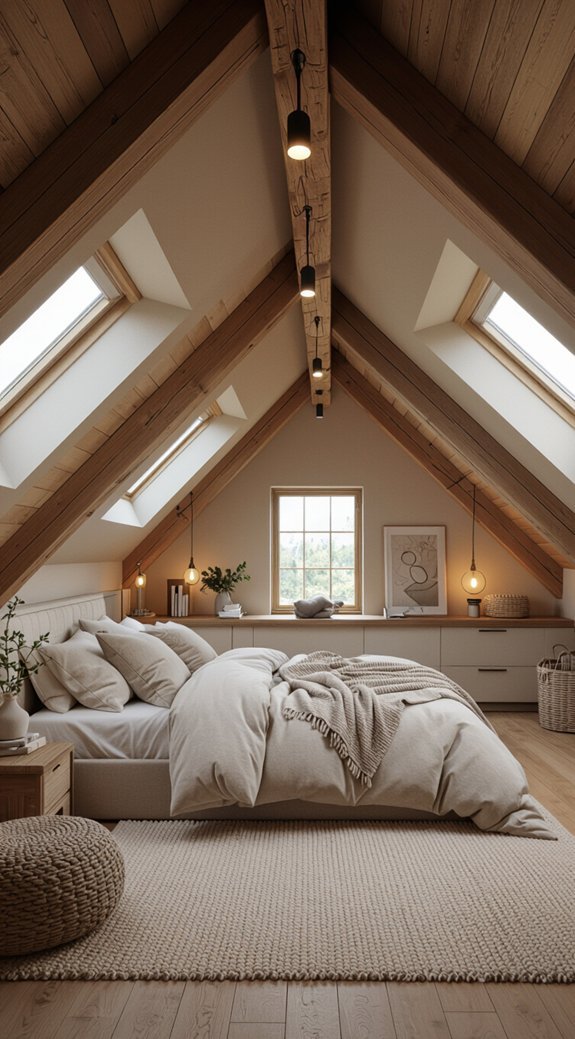
Attic loft bedrooms with sloped ceilings can feel limiting at first glance, but they’re actually full of untapped potential. You can reshape those awkward angles into intentional design features that make your space feel curated rather than compromised. From positioning beds under eaves to maximizing vertical space with loft frames, each solution addresses a specific structural challenge. The strategies ahead cover nine distinct approaches, and some will completely change how you see your attic’s limitations.
Bed Tucked Under the Eaves for a Built-In Feel
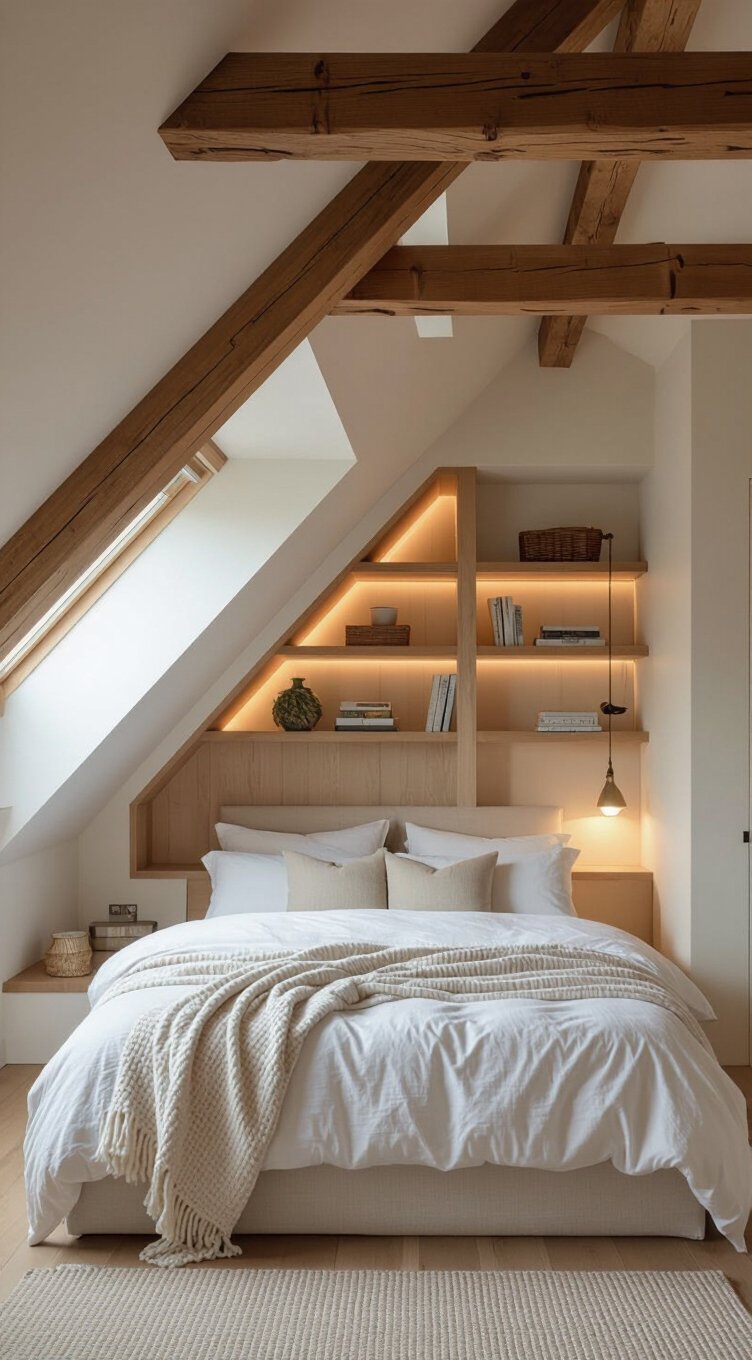
Tucking your bed under the eaves is one of the smartest ways to maximize an attic loft bedroom’s awkward sloped ceiling space. This cozy nook arrangement converts a design challenge into a purposeful sleeping area that feels intentionally built. You’ll create a hidden alcove effect by positioning your bed’s headboard against the lowest wall. Add built-in shelving on either side for books, lighting, and personal items. Use curtains or a canopy to define the space further. This setup gives you a private retreat that feels custom-designed, freeing the remaining floor space for other functional uses.
Skylights That Flood Sloped Ceilings With Natural Light
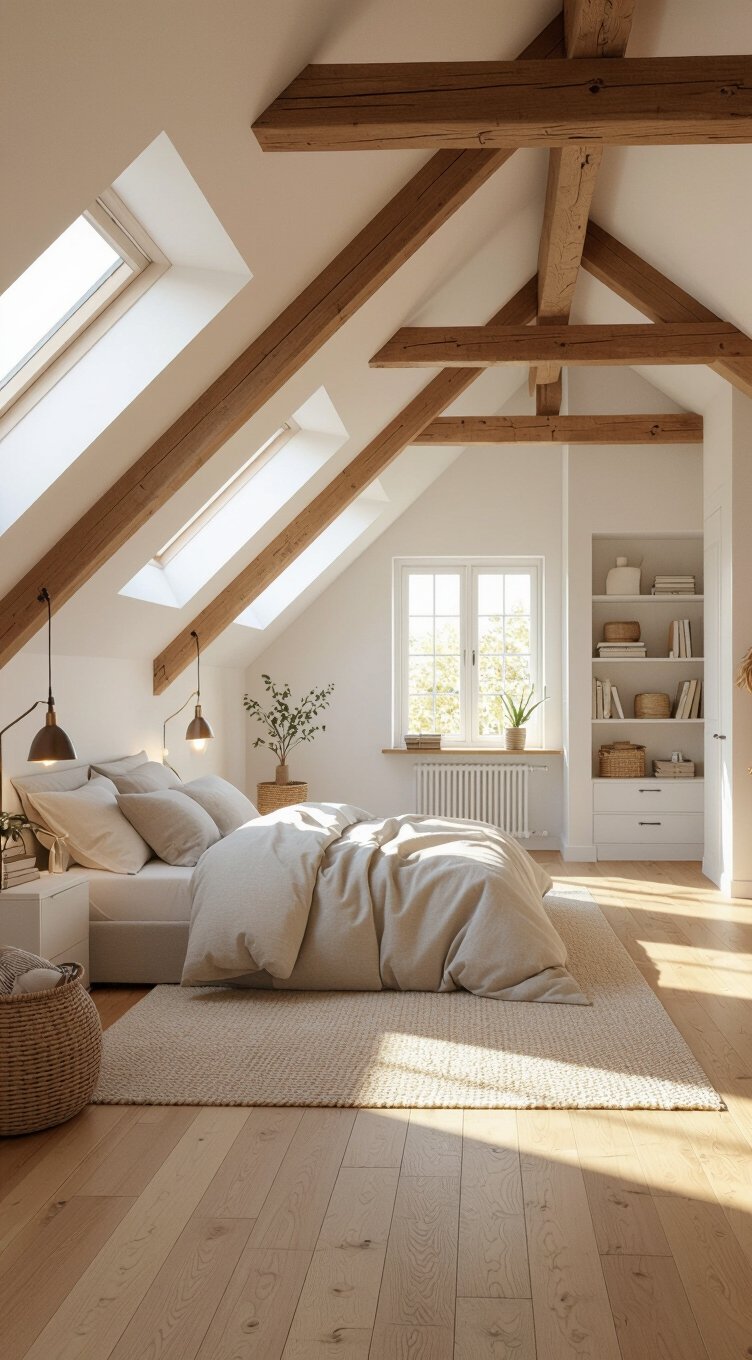
Once you’ve created a cozy sleeping nook under the eaves, the next step is bringing in natural light to make the space feel open and alive. Skylights installed along sloped ceilings convert your attic bedroom into a luminous retreat. You’ll wake up to sunlight streaming directly overhead, and stargazing experiences become effortless on clear nights. Choose vented skylights to control airflow and incorporate solar gain management through built-in shades or low-E glass coatings. These features prevent overheating while maintaining brightness. Strategically placed skylights also eliminate that closed-in feeling, giving your attic bedroom the airy, unrestricted atmosphere you’re truly after.
Built-In Storage Along the Low Sides of the Attic
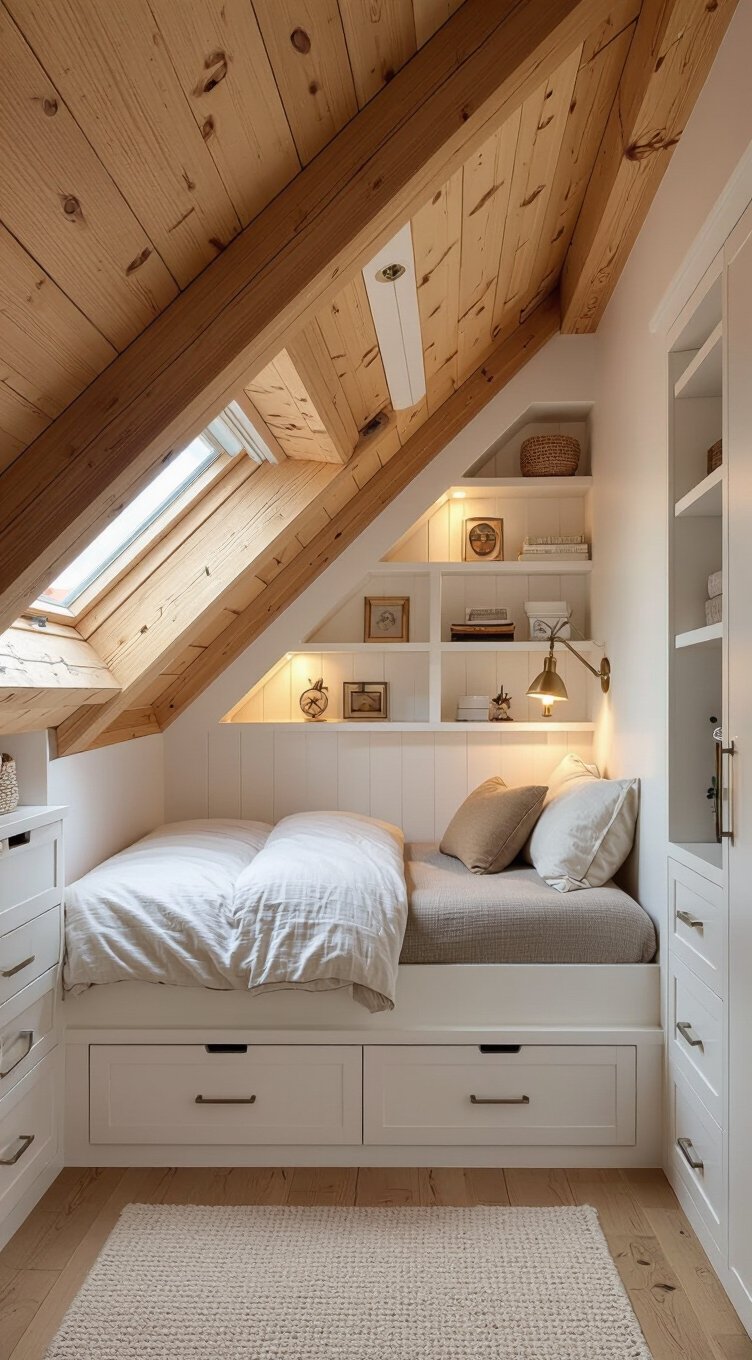
Most attic bedrooms have low-angled walls on each side that seem like wasted space, but they’re actually perfect for built-in storage. You can maximize every inch by installing custom shelving designed specifically for your attic’s unique angles and dimensions. These built-ins can hold books, clothing, and everyday essentials without consuming your floor space. You’ll also want to evaluate hidden compartments tucked beneath knee walls, giving you secure, out-of-sight storage for precious items or seasonal items. This approach lets you live clutter-free while keeping your bedroom functional. Smart built-ins convert awkward architectural limitations into your greatest organizational advantage.
Exposed Beams as a Design Feature, Not an Obstacle
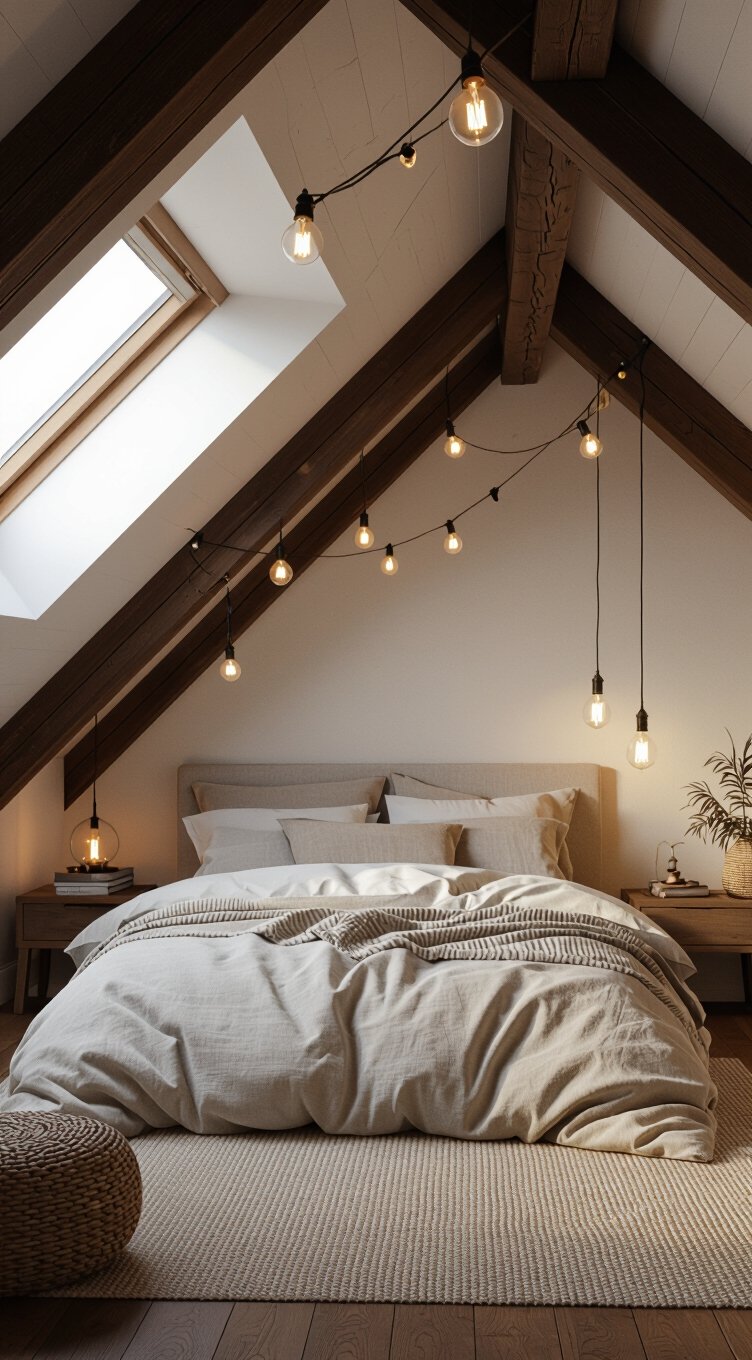
Exposed beams in an attic bedroom don’t have to feel like a design challenge — they can become the room’s most striking feature. Welcome them as a structural accent that adds character and depth to your space. You can stain the beams darker to enhance their rustic charm, or paint them white to create an airy, modern feel. Hang pendant lights or Edison bulbs directly from the beams to maximize their visual impact. Drape lightweight fabric between them for a canopy effect. Let the beams define your room’s personality rather than limit your creativity.
A Reading Nook Nestled Into an Awkward Attic Corner
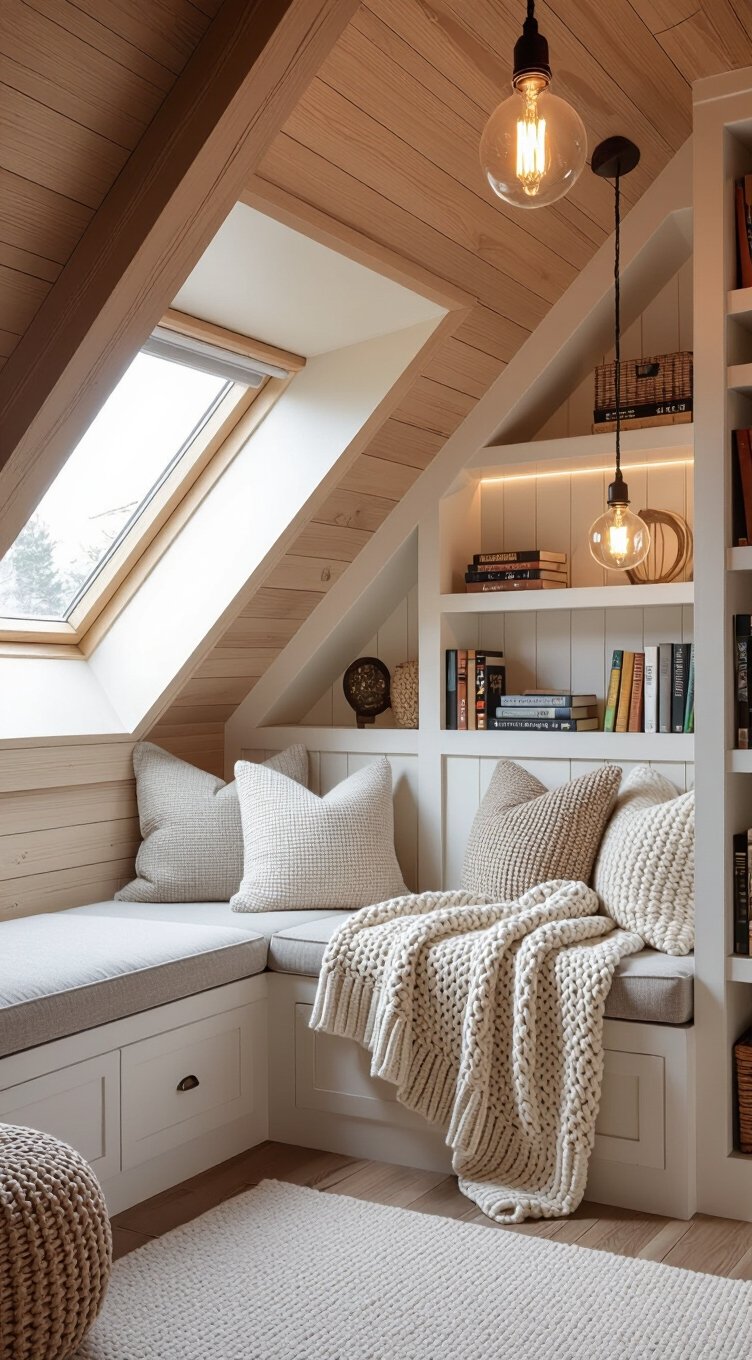
Those same awkward angles that make exposed beams so visually interesting can also create tight corners that seem impossible to use. Don’t let that dead space intimidate you. Instead, convert your cozy corner into a dedicated reading retreat that feels intentional and personal. Build a bookshelf alcove directly into the angled wall, maximizing every inch of available space. Add a slim cushioned bench or floor cushion beneath the lowest ceiling point. Install a small wall-mounted reading light to avoid floor lamp clutter. You’ve fundamentally claimed a forgotten space and turned it into your own private escape.
Dark, Moody Attic Loft Bedrooms That Lean Into the Drama
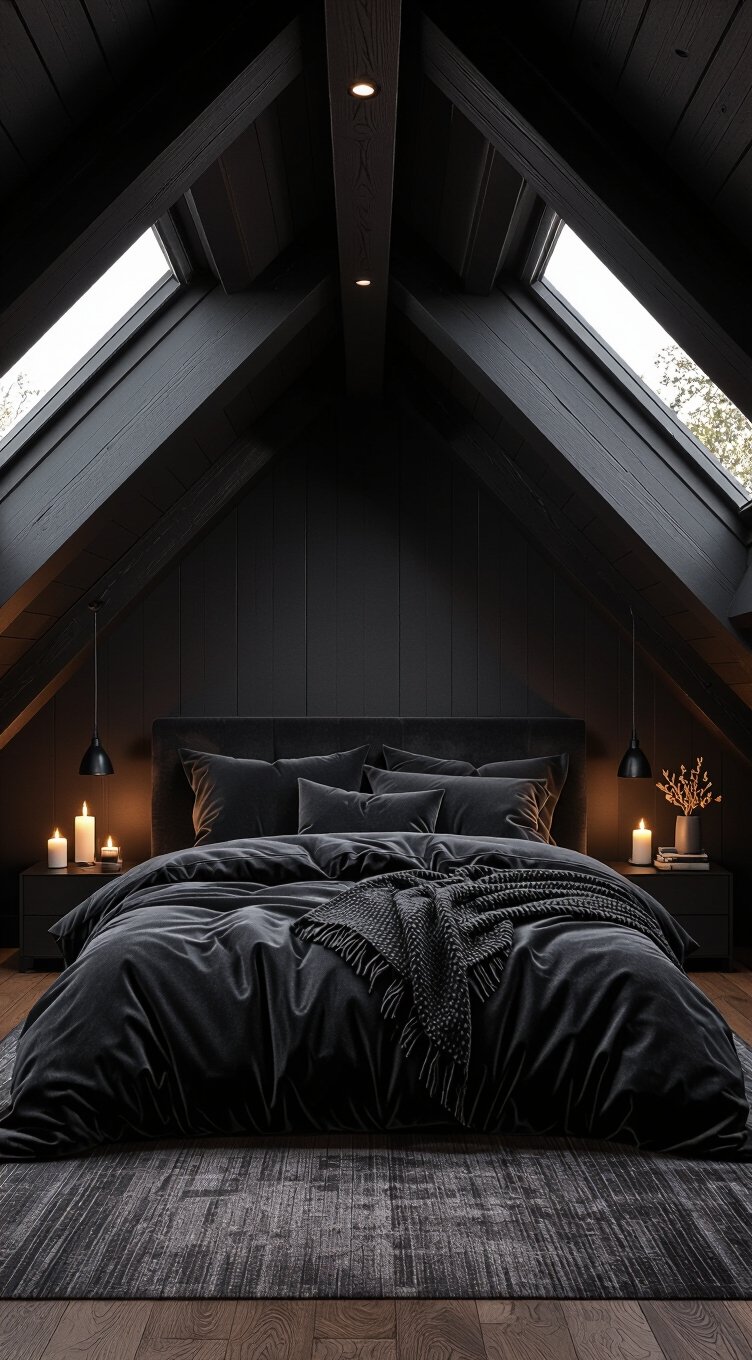
Consider these key benefits:
- Dormer symmetry creates visual balance, making your room feel intentional and polished.
- Strategic window placement maximizes natural light throughout the day.
- Added vertical space gives you more usable headroom near walls.
You’ll convert a cramped attic into a bright, character-filled bedroom that truly feels like your own personal sanctuary.
Loft Beds That Use Every Inch of Vertical Space
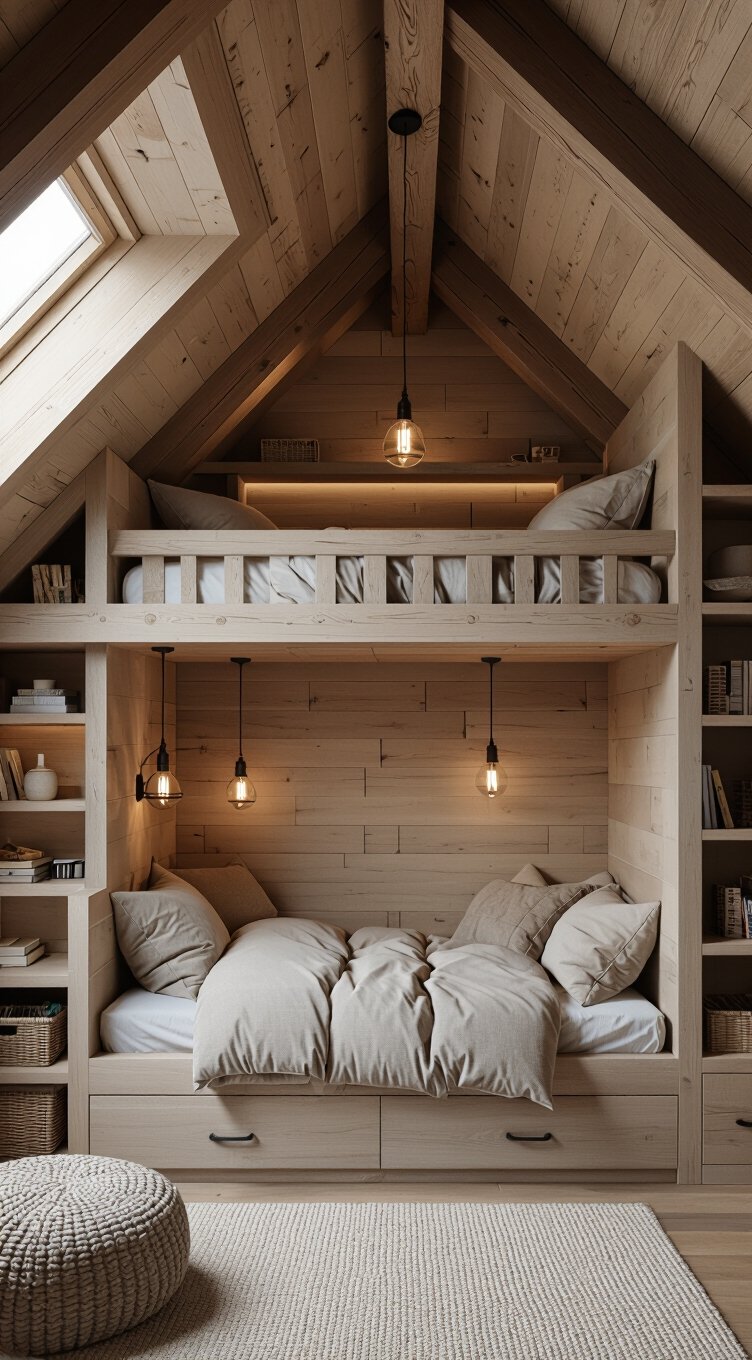
When your attic bedroom has limited floor space, a loft bed can change how you use every square foot. Elevating your sleeping area creates usable space beneath for a desk, storage, or cozy reading nook. Choose sturdy loft ladders that tuck neatly against the wall when you’re not climbing up. Position your bed away from the lowest ceiling points, maximizing your headroom naturally. Install ceiling fans at your room’s highest peak to keep air circulating efficiently below the loft. This setup gives you complete control over your space, letting you live freely without feeling cramped or confined.
Industrial-Style Attic Bedrooms With Raw, Unfinished Details
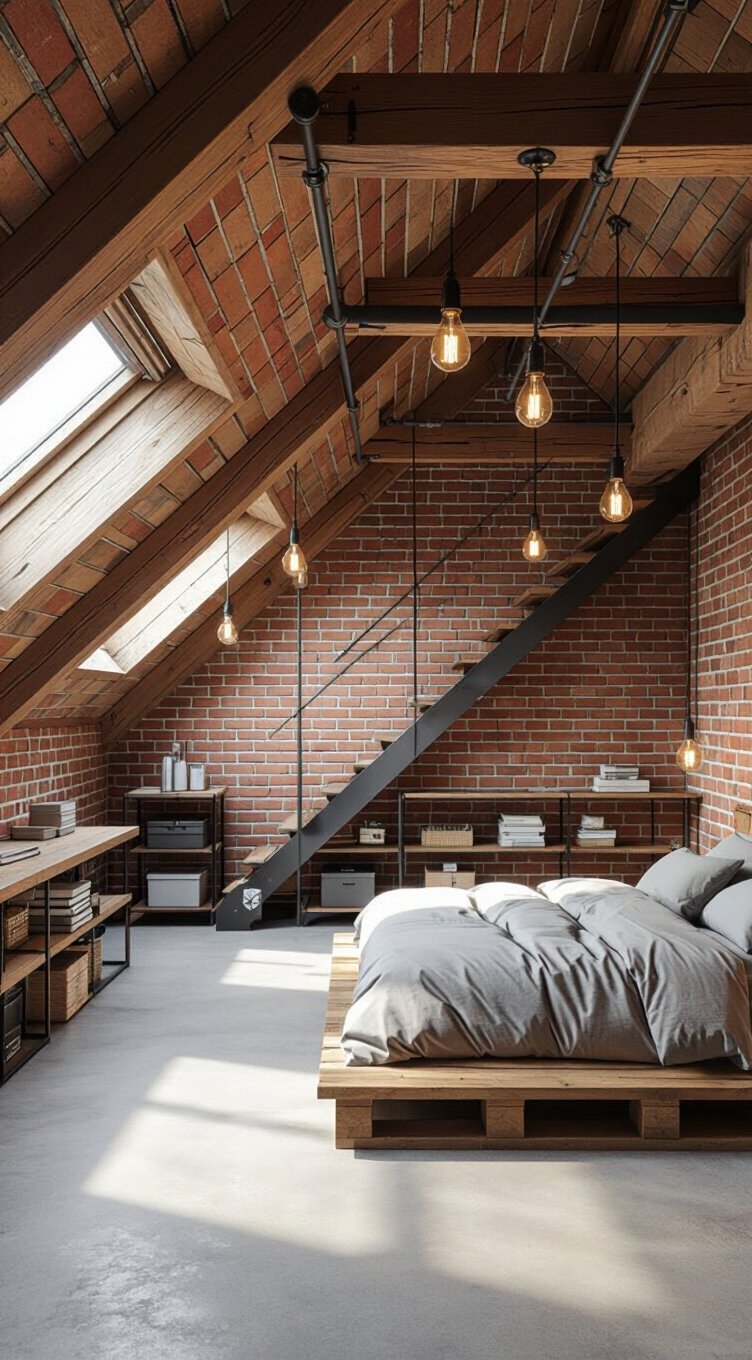
Exposed brick walls, raw wooden beams, and unfinished metal accents can change your attic bedroom into a striking industrial retreat. You’ll love how reclaimed brick adds authentic character without overwhelming your sloped ceiling space. Here’s how to nail the industrial look:
- Install metal fixtures like iron pipe shelving or Edison bulb pendants
- Expose your ceiling joists and leave them unpainted for raw texture
- Mix reclaimed brick with concrete or steel elements for contrast
You’re creating a space that feels honest and unfiltered. Accept imperfections — they’re what make industrial design genuinely captivating and uniquely yours.
Wallpaper and Paint Tricks That Work With Sloped Ceilings
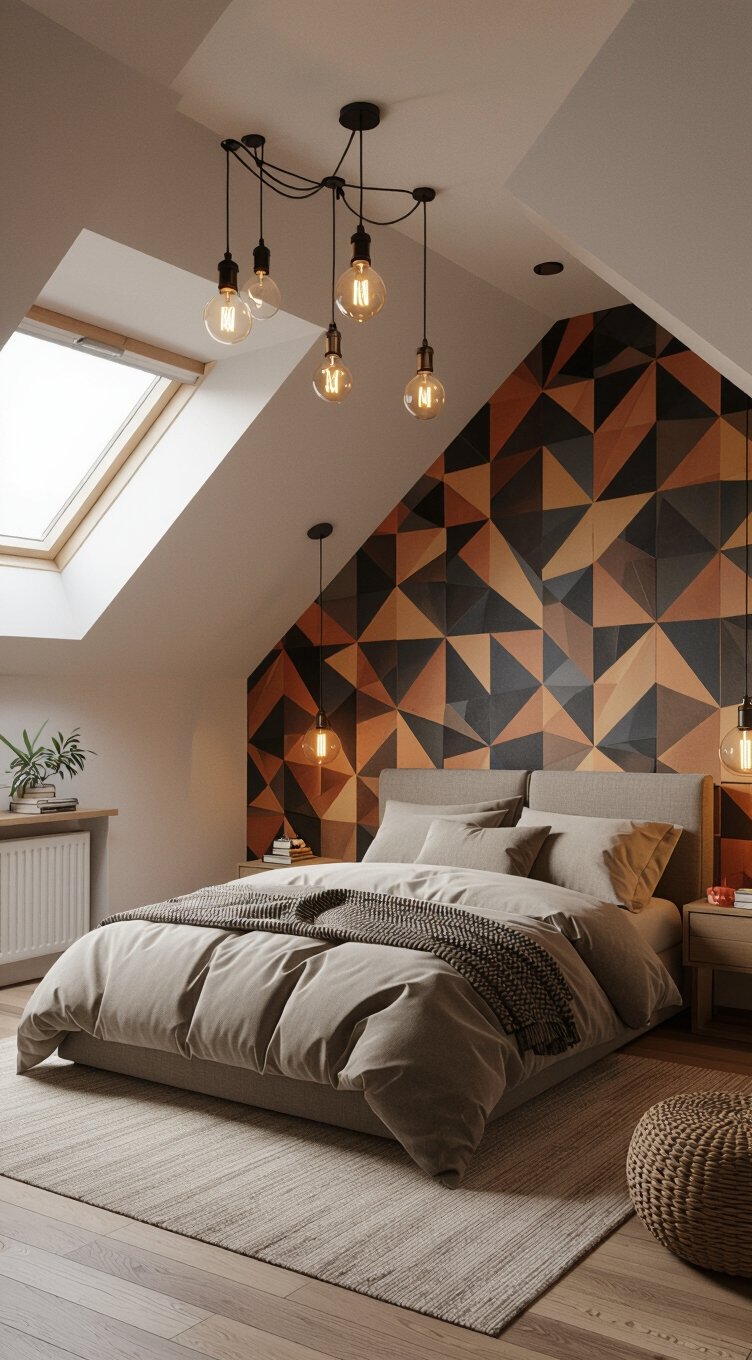
Sloped ceilings don’t have to limit your design choices — they can actually become your room’s most interesting feature with the right wallpaper and paint strategies. Try color blocking by painting the sloped section a bold, contrasting shade that separates it visually from the walls. This technique creates depth and defines your space intentionally. For a bolder statement, apply a patterned accent wallpaper along the angled surface to draw the eye upward naturally. Vertical stripes make low ceilings feel taller, while darker hues make them feel cozier. You control the atmosphere completely — own that creative freedom confidently.
Lighting Layouts Designed Around an Angled Roofline
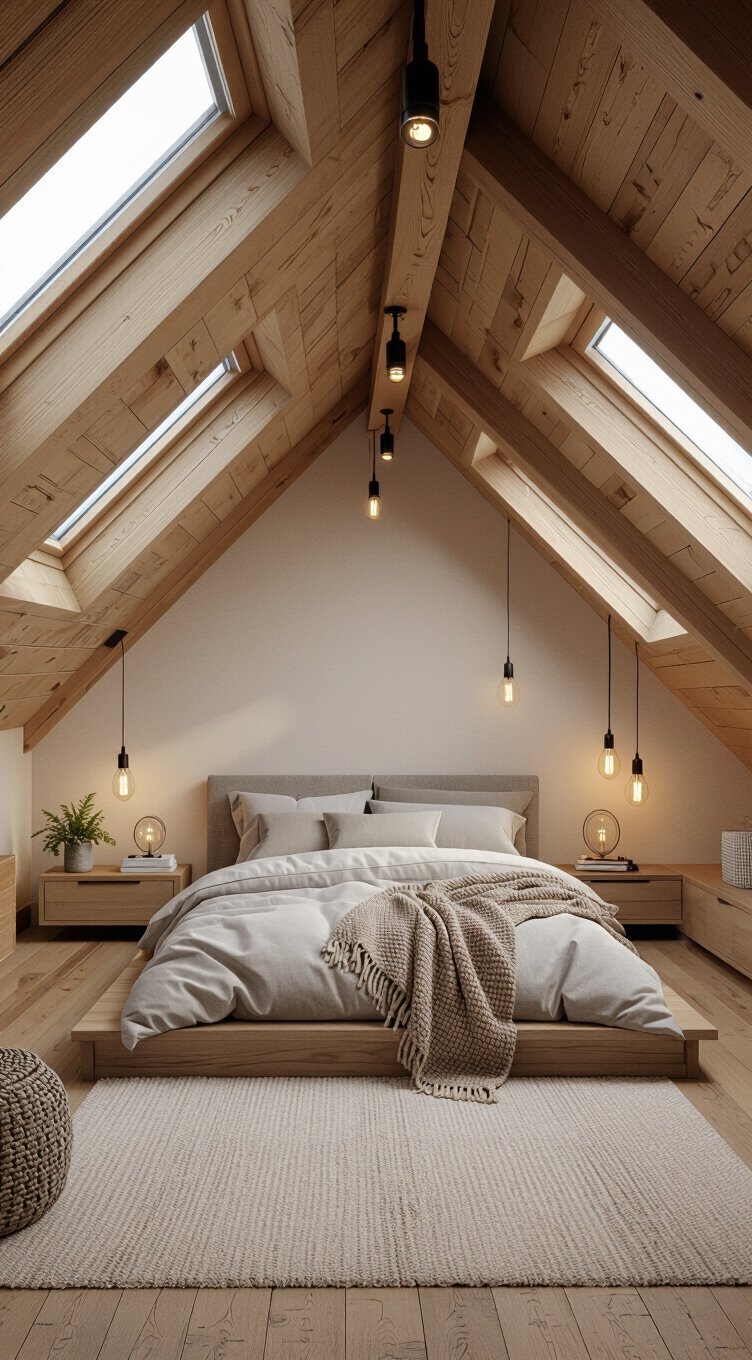
- Install recessed lighting along the lower flat sections to avoid awkward ceiling angles.
- Use pendant placement at the peak where height is greatest for dramatic effect.
- Add adjustable wall sconces along sloped sides for flexible, directional light.
You’ll find that layering these light sources creates depth and warmth throughout your space without fighting the design you already have.
Frequently Asked Questions
What Building Permits Are Typically Required Before Converting an Attic Into a Bedroom?
You’ll typically need a building permit covering structural changes, electrical work, and plumbing. Guarantee your plans include proper attic ventilation and egress windows, giving you the freedom to safely convert your space legally.
How Do I Check if My Attic Floor Can Support Bedroom Furniture Weight?
Hire a structural engineer to assess your attic’s load capacity and structural integrity. They’ll evaluate your joists and confirm if they can handle bedroom furniture weight, giving you the freedom to design confidently.
What Minimum Ceiling Height Is Legally Required for an Attic Bedroom?
You’ll need at least 7’6″ of ceiling clearance for a habitable attic bedroom, though building codes vary by location. Check your local regulations to guarantee you’re meeting the minimum requirements before converting your space.
How Do I Properly Insulate an Attic Bedroom Without Losing Headroom?
Use rigid foam insulation between rafters to minimize thermal bridging while maximizing headroom. You’ll want to install vapor barriers correctly to control moisture. This approach lets you reclaim every precious inch of your attic bedroom’s vertical space.
Can Attic Bedrooms Cause Problems With Home Insurance or Resale Value?
Yes, they can. You’ll need to disclose the attic bedroom during property disclosure, which may affect resale value. Unpermitted conversions can raise your insurance premiums, so make certain you’ve properly permitted your space to protect your freedom of ownership.
Conclusion
Your attic loft’s sloped ceilings aren’t limitations—they’re opportunities to create a truly unique bedroom. You’ve got options, from tucking your bed under the eaves to installing skylights that bright bathe the whole space. Built-in storage, exposed beams, and smart lighting can convert every awkward angle into a functional, stylish feature. Start with one idea that fits your space and budget, then build from there. Your sloped ceiling bedroom can become your home’s most interesting room.