

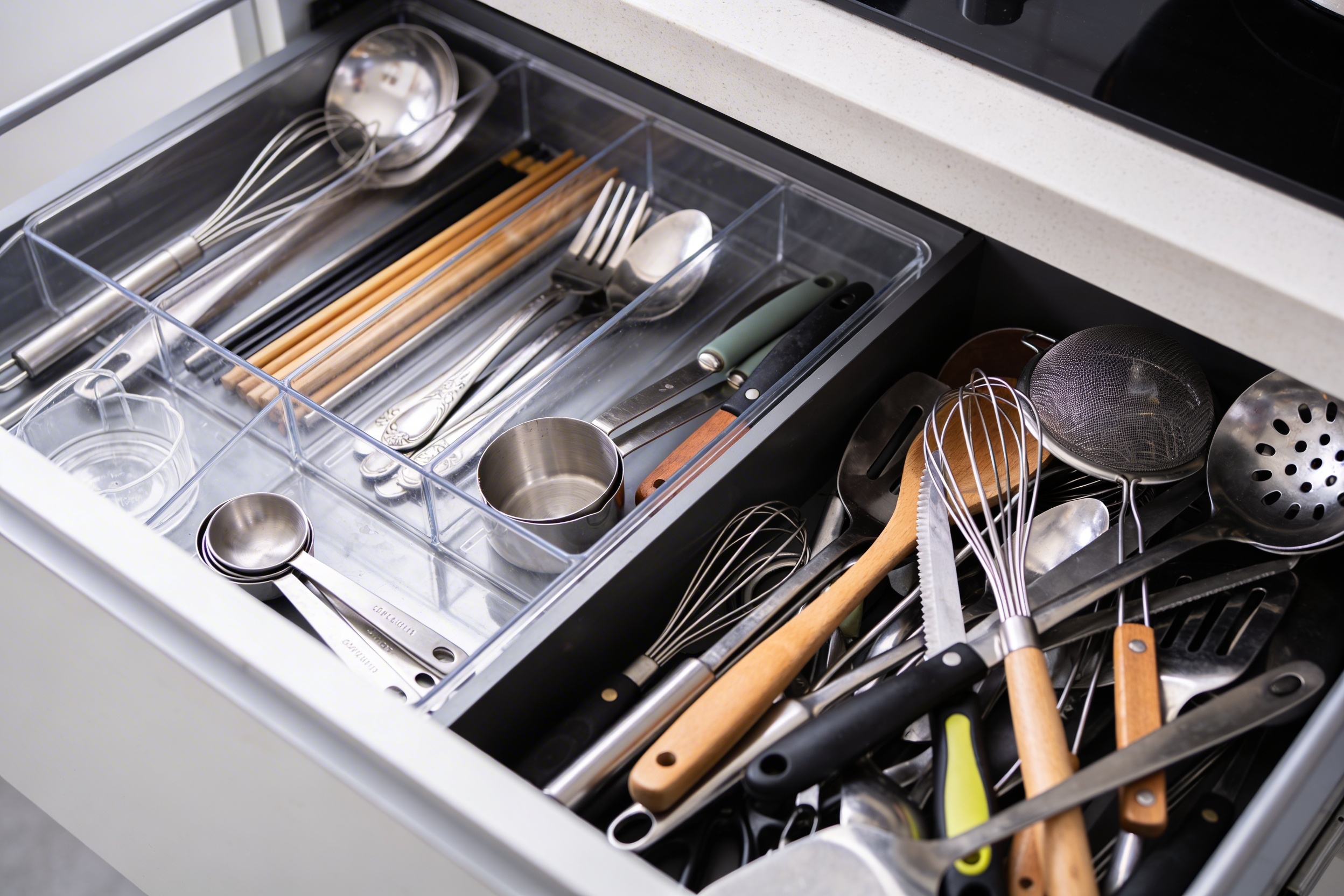
You open your kitchen drawer looking for a measuring spoon and instead get an avalanche of random utensils, expired takeout chopsticks, and that weird gadget your aunt gave you three years ago. Sound familiar? Let’s fix that chaos once and for all because life’s too short to dig through junk drawers every time you need a bottle opener.
The Great Drawer Purge: Start Fresh or Go Home
Before you get all excited about buying fancy organizers, you need to face the music. Pull everything out of those drawers. Yes, everything. I know it’s scary, but trust me on this one.
Dump it all on your counter and prepare yourself for some shocking discoveries. You’ll find duplicates, triplicates, and things you forgot existed. That’s normal. The average kitchen drawer holds about 40% stuff you never actually use.
Sort everything into three piles: keep, donate, and trash. Be ruthless here. If you haven’t used that avocado slicer in two years, you’re not suddenly going to start now. And those plastic forks from delivery? They can go.
Zone Defense: Assign Each Drawer a Purpose
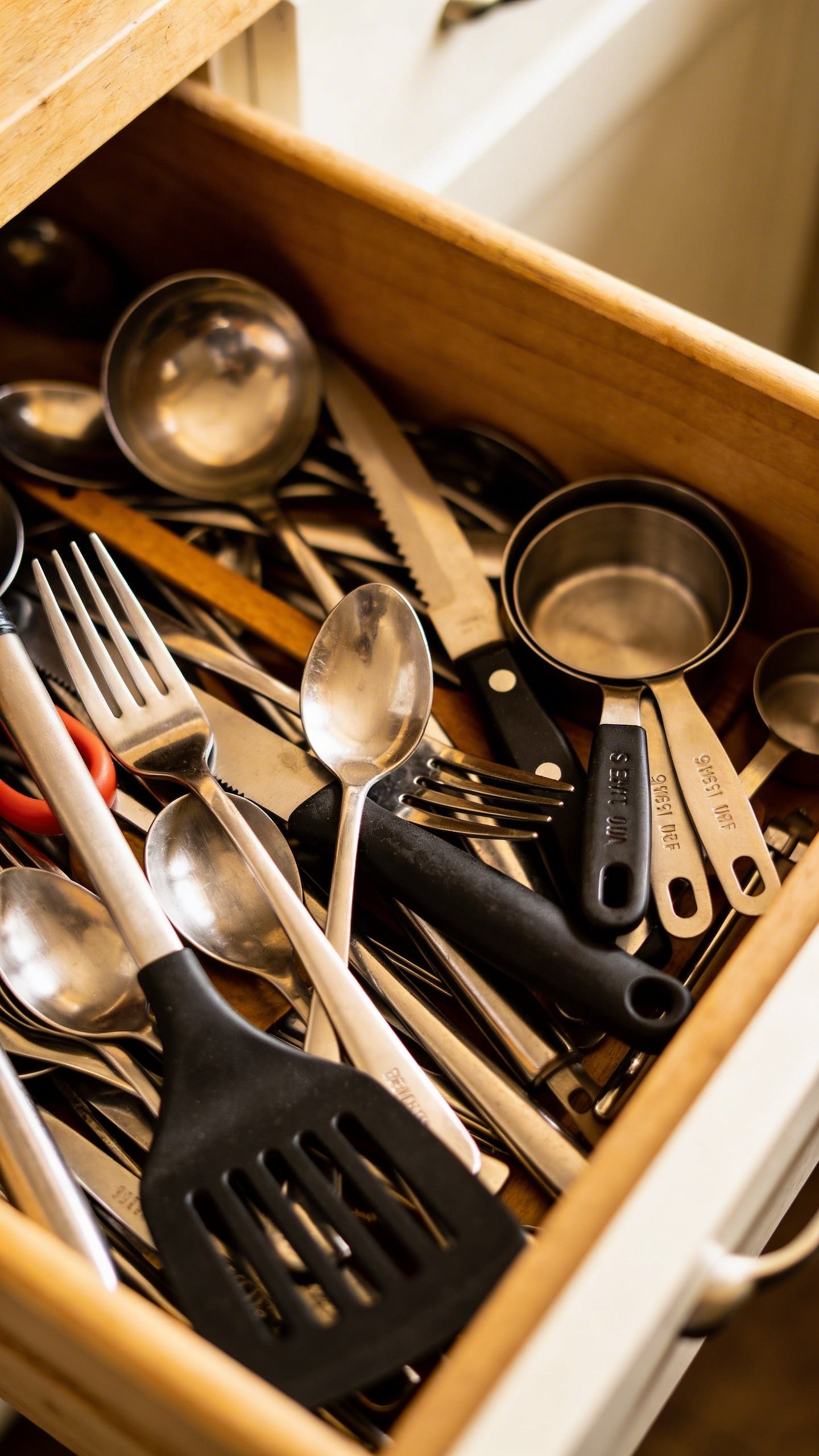
Here’s where people mess up most often. They just shove things randomly and hope for the best. Instead, think of your drawers like neighborhoods where similar items hang out together.
Your most-used drawer should live closest to your main prep area. This is prime real estate, so don’t waste it on birthday candles you use twice a year. Reserve it for everyday heroes like spatulas, wooden spoons, and whisks.
Common Drawer Zones That Actually Make Sense
- Cooking utensils drawer: Spatulas, tongs, whisks, and anything you grab while actively cooking
- Prep tools drawer: Peelers, graters, measuring cups, and knives (if you don’t have a knife block)
- Gadgets drawer: Can openers, corkscrews, pizza cutters, and other occasional-use items
- Baking supplies drawer: Measuring spoons, pastry brushes, cookie cutters, and piping bags
- Junk drawer: Yes, you can keep ONE. For batteries, twist ties, and mystery keys
Notice I didn’t mention storing food in drawers? Keep your spices and snacks elsewhere. Drawers are for tools, not pantry overflow.
Dividers Are Your New Best Friend
Listen, you can organize all day long, but without dividers, everything slides back into chaos within a week. It’s just physics or entropy or whatever. The point is, you need barriers.
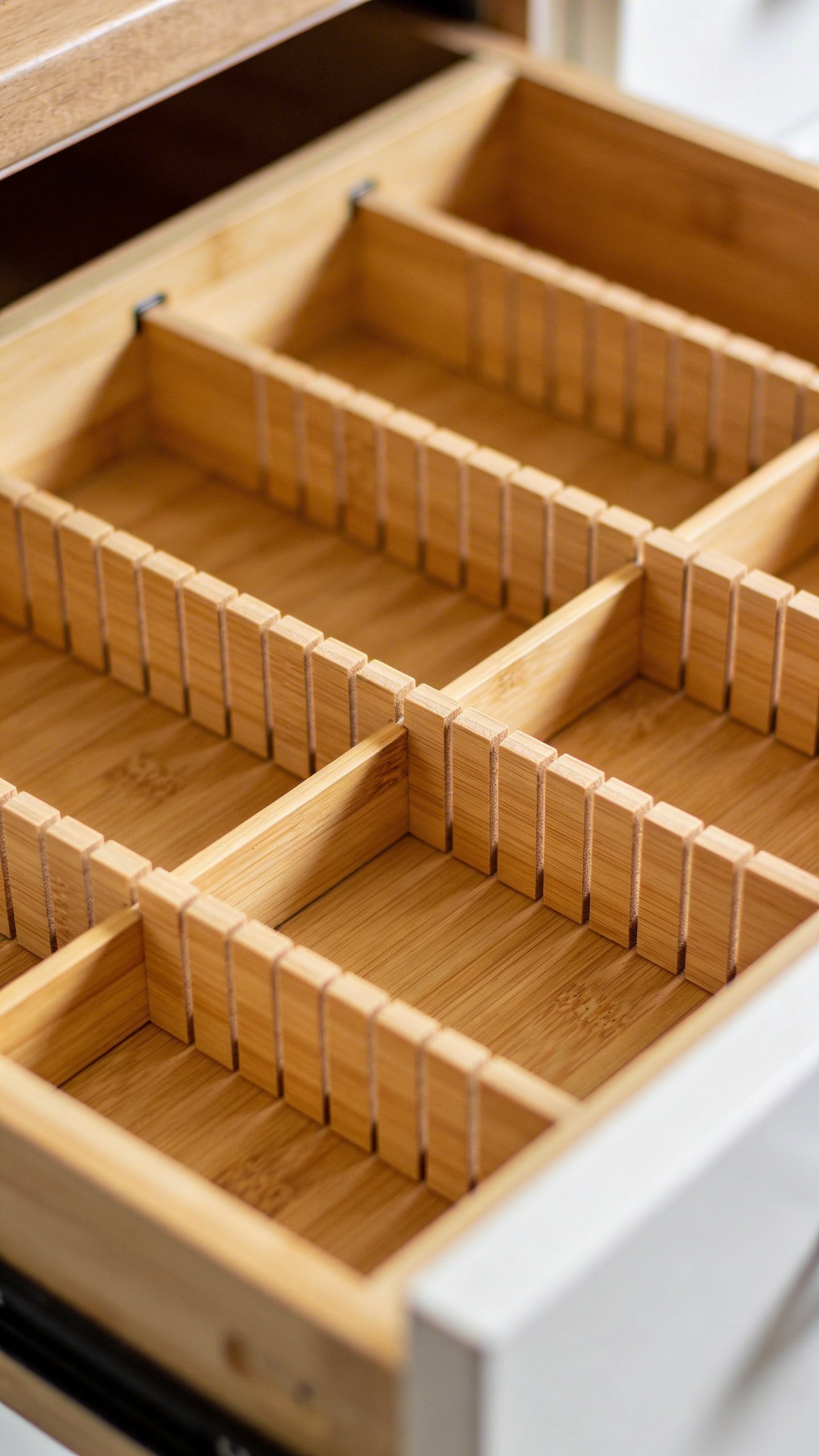
You’ve got options here. Bamboo expandable dividers look nice and work for most drawers. Plastic bins are cheaper and come in tons of sizes. Those honeycomb-style organizers are trendy right now and honestly pretty functional.
DIY Divider Hacks That Don’t Suck
Not ready to spend money? I get it. Small cardboard boxes work surprisingly well if you cut them to the right height. Shoe boxes, jewelry boxes, even those fancy tea boxes can become drawer organizers with minimal effort.
Mason jars laid on their sides keep smaller items contained and you can see everything at a glance. Plus, it gives you that farmhouse aesthetic everyone’s obsessed with these days.
The Vertical Storage Game-Changer
Most people stack things flat in drawers like they’re filing papers. Wrong move. When you stack, you can’t see what’s underneath, and you end up buying your third garlic press because you forgot about the other two.
Store things vertically whenever possible. Stand measuring cups upright. Keep cutting boards on their edges. FYI, this literally doubles your usable space in most drawers.
Those pegboard drawer inserts? They’re not just for show. You can customize the layout exactly how you want it, and items stay put when you open and close the drawer. No more tool avalanches.
Labeling: Because Future You Has a Terrible Memory
You might think you’ll remember your new system. You won’t. Label your dividers, especially if other people use your kitchen.
You don’t need a fancy label maker, though those are admittedly satisfying to use. A piece of masking tape and a marker work just fine. The goal is clarity, not Pinterest perfection.
Label the front edge of dividers so you can read them when the drawer is open. Seems obvious, but I’ve seen people label the tops where you can’t see anything once items go in.
Maintaining Your System Without Losing Your Mind
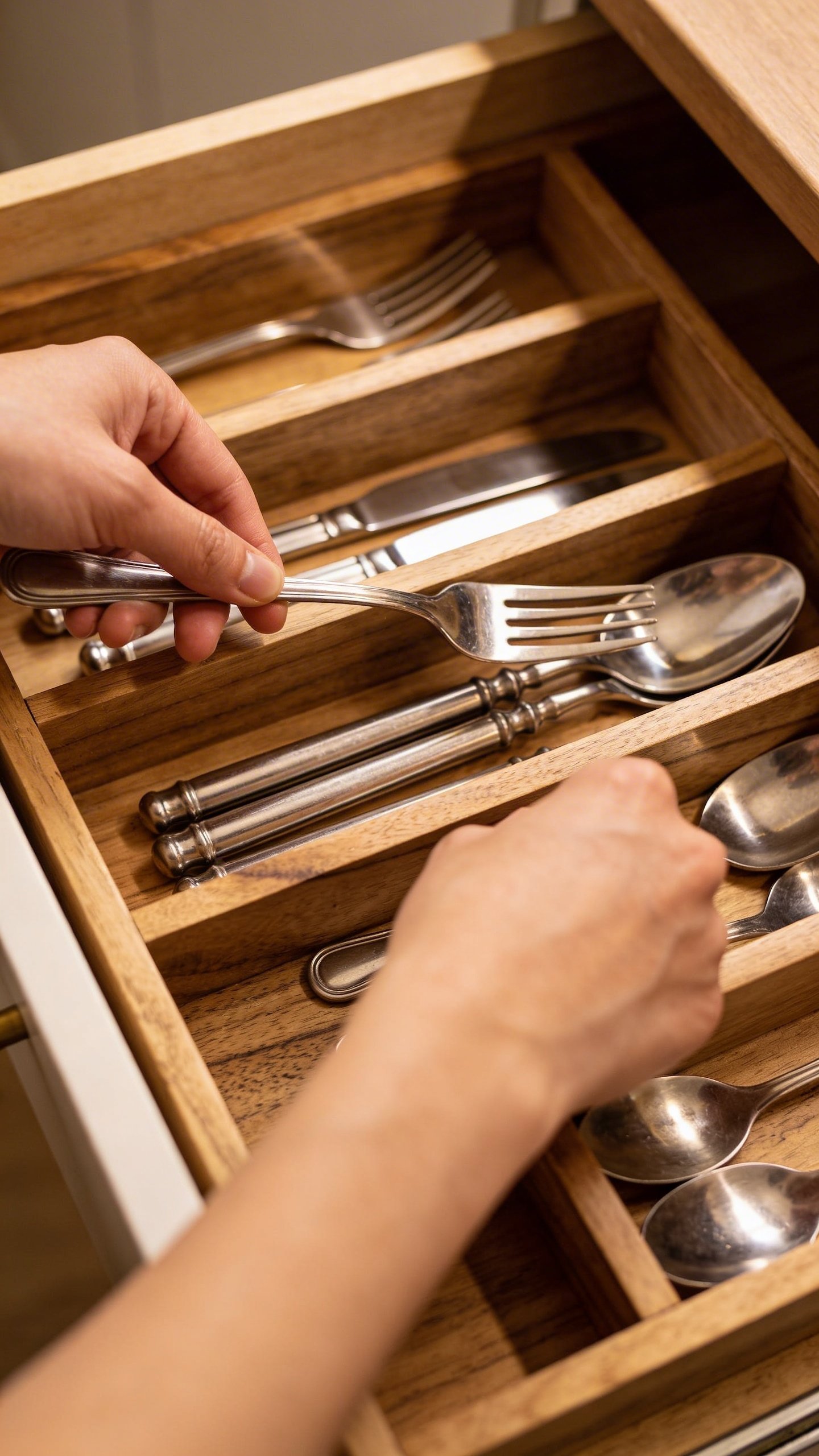
Here’s the truth nobody tells you: organizing is the easy part. Keeping it organized is where most people fail spectacularly.
Set a timer on your phone for a monthly five-minute drawer check. Just peek inside each one and put things back where they belong. Catch the chaos early before it spirals out of control.
Every time you finish cooking, take literally ten seconds to put utensils back in their designated spots. Not “somewhere in the drawer,” but in their actual homes. This habit alone will save you so much frustration.
The One-In-One-Out Rule
When you buy a new kitchen tool, retire an old one. Your drawer space isn’t infinite, no matter how much you wish it was. This keeps clutter from creeping back in.
IMO, this rule also makes you think twice before buying another single-use gadget. Do you really need a pineapple corer when a knife works fine? Probably not.
Frequently Asked Questions
How deep should kitchen drawer organizers be?
Your organizers should be about half an inch shorter than your drawer depth. This prevents them from getting stuck when you open and close the drawer. Measure before you buy, because guessing leads to sad returns trips to the store.
What do I do with oversized utensils that don’t fit in dividers?
Large serving spoons, rolling pins, and other bulky items work better in a countertop crock or hung on a wall-mounted rack. Not everything needs to live in a drawer. Sometimes accepting this fact is the real path to organization enlightenment.
Should I line my kitchen drawers?
Totally up to you. Drawer liners protect the wood and make cleaning easier since you can just wipe them down. But they’re not mandatory. If you skip them, just clean your drawers occasionally with a damp cloth. Revolutionary, I know.
How often should I reorganize my kitchen drawers?
A full reorganization every 6-12 months works for most people. You’ll naturally acquire new tools and your cooking habits change, so your drawer setup should evolve too. Don’t treat your first organization attempt as the final word.
Can I use drawer organizers meant for other rooms in my kitchen?
Absolutely. Bathroom organizers, office supplies dividers, craft storage boxes – if it fits and keeps things separated, use it. Nobody’s checking if your drawer organizers came from the “kitchen” section.
Where should I put my knife drawer?
If you store knives in a drawer, use a dedicated knife organizer that keeps blades separated and protected. Position this drawer away from where kids can reach. Never just toss loose knives in a drawer – that’s a recipe for injury and dull blades.
Conclusion
Organized kitchen drawers won’t change your life, but they’ll definitely make cooking less annoying. You’ll spend less time hunting for tools and more time actually using them. Plus, there’s something deeply satisfying about opening a drawer and seeing everything in its place.
Start with one drawer this weekend. Just one. Get that win under your belt, then tackle the next one when you’re ready. Before you know it, you’ll have a kitchen that actually functions like it should. And when someone asks where the bottle opener is, you’ll know exactly which drawer to point them toward.