

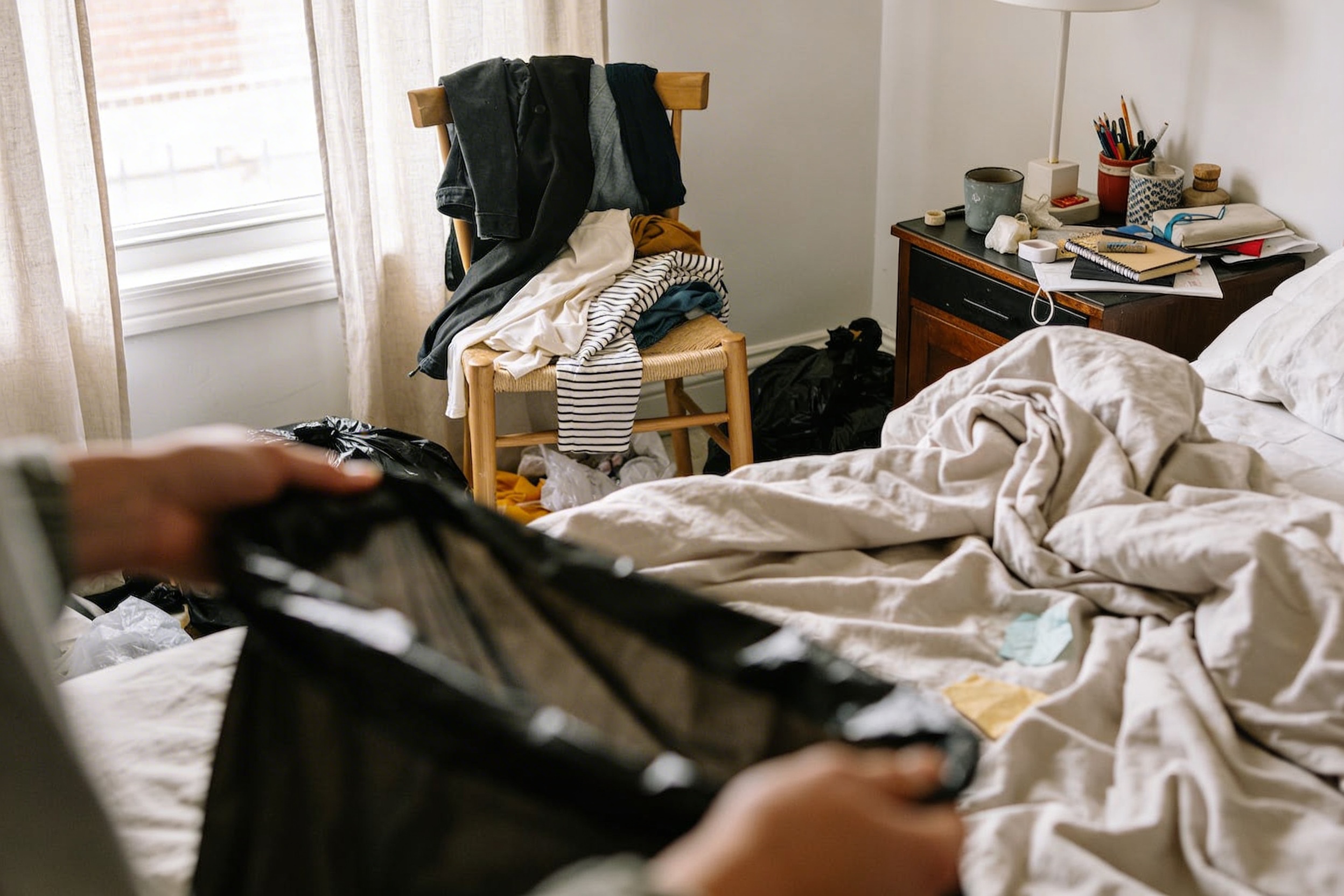
Look, I get it. Your bedroom probably looks like a tornado made a pit stop, and you can’t remember the last time you actually saw your floor. Maybe you’ve been “folding” clothes by leaving them in that chair (you know the one), or your nightstand has become an archaeological dig of water glasses and random receipts. Let’s fix that mess without making it feel like punishment.
The Quick Reset Method (When You’ve Got Zero Motivation)
Some days you just can’t handle a full Marie Kondo situation, and that’s totally fine. The quick reset is your emergency protocol for when your room looks like it actively hates you.
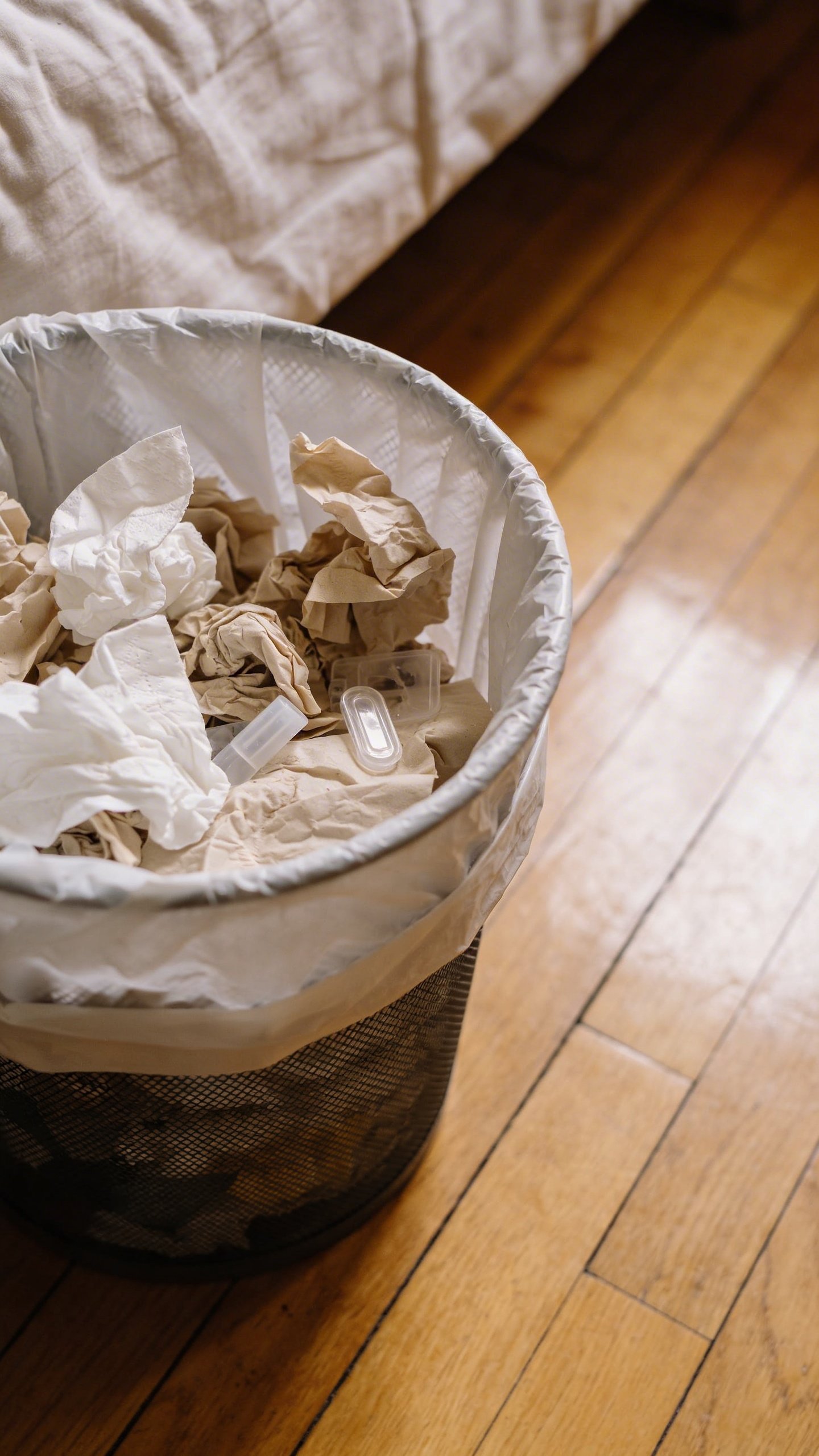
Start with the trash sweep. Grab a garbage bag and walk around your room like you’re on a mission. Toss anything that’s obviously garbage—wrappers, tissues, that empty energy drink can that’s been chillin’ on your dresser for three weeks. You’d be shocked how much better a room looks when you just remove the literal trash.
Next up is the dishes and cups exodus. Every single glass, plate, or mug needs to leave your room right now. No exceptions. Take them to the kitchen in one trip if you can manage, or make it a two-tripper. Your bedroom isn’t a restaurant, so stop treating it like one.
Finally, do a clothes pile assessment. You don’t need to fold everything perfectly, but at least separate clean from dirty. Clean stuff goes back in drawers or hangs up (we’ll get to that), dirty stuff goes in the hamper. Revolutionary, I know.
Tackle Your Clothes Situation Like an Adult
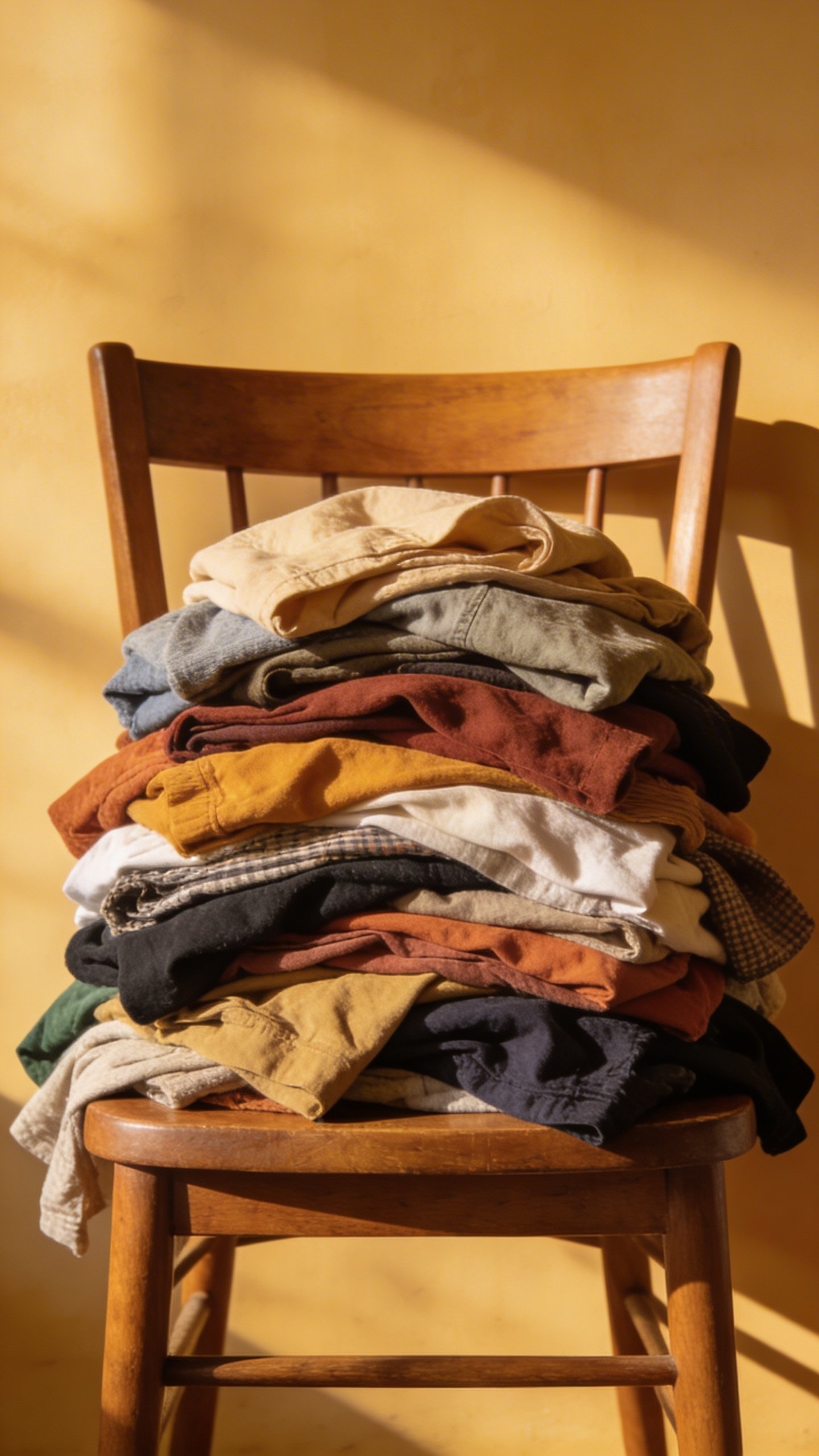
Let’s address the elephant in the room: that chair. You know exactly which chair I’m talking about. The one that’s become a horizontal closet, stacked so high with clothes it’s basically a fabric Jenga tower.
The Chair Needs Its Life Back
Empty that chair completely. Yes, all of it. Then ask yourself honestly: what’s actually dirty? If you wore it for thirty minutes and it doesn’t smell, it can go back in your closet. If you wore it to the gym or all day, it’s dirty. Simple rule, easy decision.
Drawer and Closet Organization
You don’t need a color-coded system or fancy dividers. Just fold your clothes in a way that lets you actually see what you own. The file folding method works wonders—fold items into rectangles and stand them upright in drawers instead of stacking them. Game changer.
Hang up anything that wrinkles easily or that you want to keep nice. Everything else can go in drawers. And FYI, if you haven’t worn something in a year and you’re not saving it for a specific reason, maybe it’s time to say goodbye.
Your Surfaces Are Not Storage Units
Nightstands, dressers, desks—these surfaces collect clutter like they’re getting paid for it. Here’s the thing: every item on a surface should have a purpose for being there.
Your nightstand should hold maybe three to five items max. A lamp, your phone charger, a book you’re actually reading, perhaps some lotion. That’s it. Not seventeen hair ties, four ChapSticks, and a random collection of buttons that fell off various clothing items.
Same goes for your dresser. If you can’t see the actual furniture surface, you’ve got too much stuff out. Put things away in drawers or find them a proper home. Revolutionary concept, I know, but it works.
The Floor Is for Walking, Not Storage
Controversial take: your floor should be mostly visible. Wild, right?
Pick up everything off the floor that doesn’t belong there. Shoes go in your closet or on a shoe rack (if you’re fancy like that). Backpacks and bags hang on hooks or go in the closet. Random papers get sorted—trash, recycle, or file away properly.
If you’ve got stuff under your bed, make sure it’s intentionally stored there, not just shoved there during a panic clean when someone said they were coming over. Under-bed storage boxes are actually pretty clutch for seasonal clothes or extra bedding.
Make Your Bed (Yes, Really)
I know, I know. You’re just going to mess it up again tonight. But here’s the deal: making your bed takes literally two minutes and instantly makes your whole room look more put-together.
You don’t need hospital corners or decorative pillows arranged like a Pottery Barn catalog. Just pull up your sheets, straighten your comforter, and maybe toss those pillows vaguely toward the headboard. Done. Congrats, you’re adulting.
Plus, there’s something weirdly satisfying about getting into a made bed at night. It just hits different than diving into a tangled mess of sheets.
Create Actual Homes for Your Stuff

This is where people usually fail at keeping their rooms tidy. If your stuff doesn’t have a designated spot, it’ll just end up wherever you drop it.
Get some basic organizing supplies:
- Small baskets or boxes for your dresser top
- A hook for bags and jackets
- A proper hamper (not the floor)
- Drawer dividers if you’re feeling ambitious
- A small trash can (crucial!)
Everything needs a home. Keys and wallet? Designated spot on your dresser. Jewelry? Small dish or organizer. Electronics and chargers? One specific drawer. When everything has a place, putting it away becomes automatic instead of a whole decision-making process.
The Nightly Five-Minute Maintenance
Here’s the secret to keeping your room from returning to disaster status: the nightly five-minute pickup. Before bed, do a quick scan and reset.
Hang up or put away any clothes from the day. Clear your nightstand of any random accumulation. Toss any trash. Put things back where they belong. That’s it. Five minutes, and you wake up to a room that doesn’t immediately stress you out.
IMO, this is the real key to maintaining a tidy bedroom. It’s not about these massive cleaning sessions—it’s about preventing the chaos from building up in the first place.
Frequently Asked Questions
How often should I do a deep clean of my bedroom?
Aim for once a month at minimum. This means vacuuming or sweeping, dusting surfaces, washing your sheets (which should happen every one to two weeks, by the way), and decluttering anything that’s accumulated. If you’re doing the nightly five-minute maintenance, the deep clean won’t feel nearly as overwhelming.
What do I do with sentimental items that take up too much space?
Take photos of them if they’re purely sentimental with no functional use. Store them in labeled boxes under your bed or in a closet. You don’t need to display every concert ticket or greeting card you’ve ever received. Keep your absolute favorites and let the rest go. Your memories exist in your brain, not in the physical clutter.
How do I stop my bedroom from getting messy again?
Create systems that work with your habits, not against them. If you always drop your jacket on the floor, put a hook right there. If you stack books on your nightstand, get a small bookshelf. Work with your natural tendencies instead of fighting them. And seriously, do that five-minute nightly reset. It’s genuinely life-changing.
Should I get rid of stuff I might need someday?
The “someday” excuse is how people end up on hoarding shows. If you haven’t used it in a year and can’t think of a specific upcoming need for it, donate it or toss it. You can probably rebuy it for cheap if that magical “someday” ever actually arrives. Your bedroom shouldn’t be a storage unit for hypothetical future scenarios.
What’s the best way to organize a small bedroom?
Vertical space is your best friend. Use wall hooks, over-door organizers, and shelving to maximize storage without eating up floor space. Keep furniture minimal—you really only need a bed, dresser, and maybe a small nightstand. Multi-functional furniture helps too, like a bed with built-in drawers or an ottoman that opens for storage.
How do I maintain motivation to keep my room clean?
Make it stupidly easy. The less friction between you and tidiness, the more likely you’ll maintain it. Keep cleaning supplies accessible, have enough hangers in your closet, and create those designated homes for everything. Also, notice how much better you sleep and feel in a clean room. That positive reinforcement helps build the habit.
Conclusion
Tidying your bedroom doesn’t require a complete personality transplant or becoming one of those people who enjoys organizing for fun. It just takes a solid initial cleanup and then maintaining it with minimal daily effort. Start with the quick reset to get things manageable, then build those small habits that prevent chaos from taking over again.
Your bedroom should be your sanctuary, not a source of stress every time you walk in. And honestly? Once you get it clean and keep it that way for a week or two, you’ll wonder why you lived in chaos for so long. Future you is going to be really grateful that present you finally dealt with that chair.