

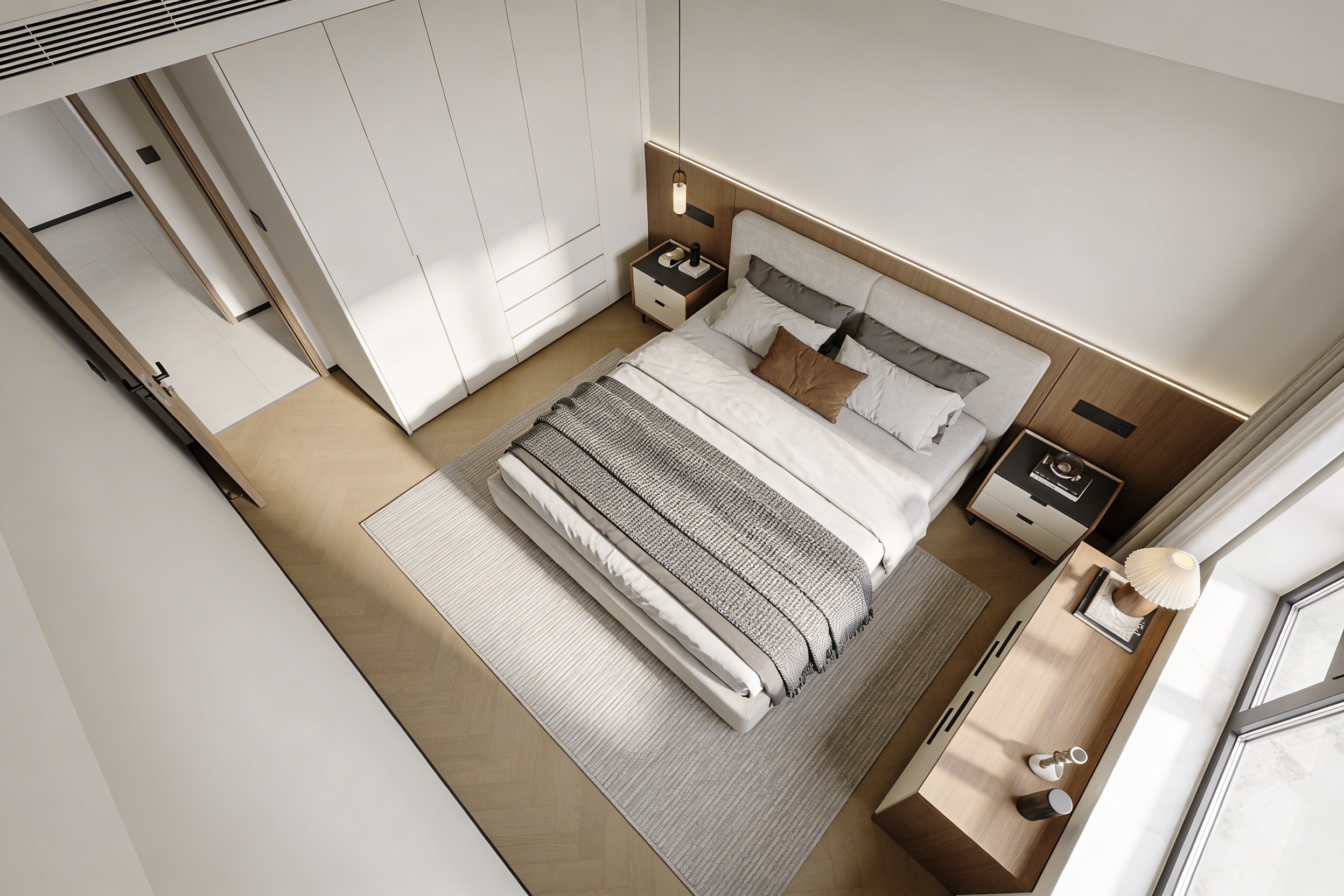
You’ve stared at your bedroom for the tenth time this week, wondering why it feels like a furniture store exploded in there. Maybe your bed blocks the closet, or you keep stubbing your toe on that dresser you swore would fit perfectly. Don’t worry—arranging bedroom furniture isn’t rocket science, but it does require some strategy and a willingness to push heavy stuff around until it clicks.
Start With Your Bed (Because Duh)
Your bed is the star of the show, so position it first and build everything else around it. Most designers recommend placing it against the longest wall, preferably the one you see first when you walk in. This creates a focal point and usually leaves the most floor space for other furniture.
But here’s the thing—rules are meant to be broken if your room is weird. Got windows on every wall? An oddly shaped room? Do what feels right. Just avoid putting your bed directly under a window if you live somewhere cold (hello, drafts) or directly in line with the door (it feels awkward and exposed).
The Headboard Situation
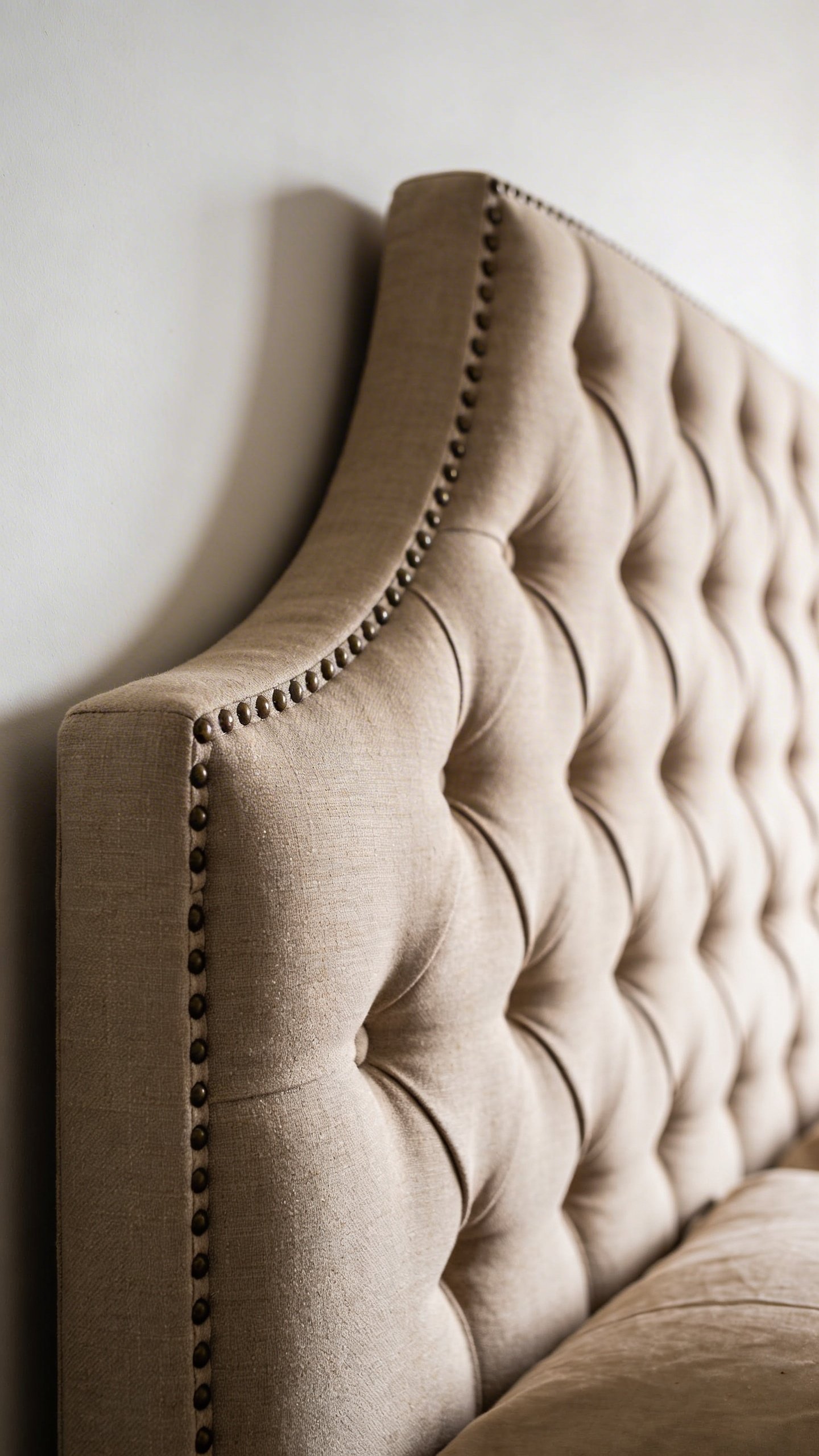
If you have a headboard, centering it on a wall looks most intentional. No headboard? You can get away with off-center placement more easily. Just make sure you can access both sides of the bed unless you’re cool with crawling over your partner every morning.
Create Functional Pathways
Here’s something people forget: you actually need to walk through your bedroom. Revolutionary concept, right? Leave at least 2-3 feet of clearance around the bed and major walkways. You should be able to walk from the door to your closet without doing an obstacle course.
Think about your morning routine. Where do you need to go? Closet, dresser, bathroom door—these should all be accessible without squeezing between furniture like you’re in a crowded subway car. Your future self, stumbling around at 6 AM, will thank you.
Nightstands: The Unsung Heroes
You need somewhere to put your phone, water, and that book you keep meaning to read. Nightstands should sit close to your bed—ideally within arm’s reach—and roughly match the height of your mattress top (give or take a few inches).
Two nightstands create symmetry, which looks clean and balanced. But if you only have space for one? Put it on the side you use most. FYI, matching nightstands aren’t mandatory—mixing styles can actually look intentional and cool if you keep some element consistent like height or color.
Dresser Placement Strategy
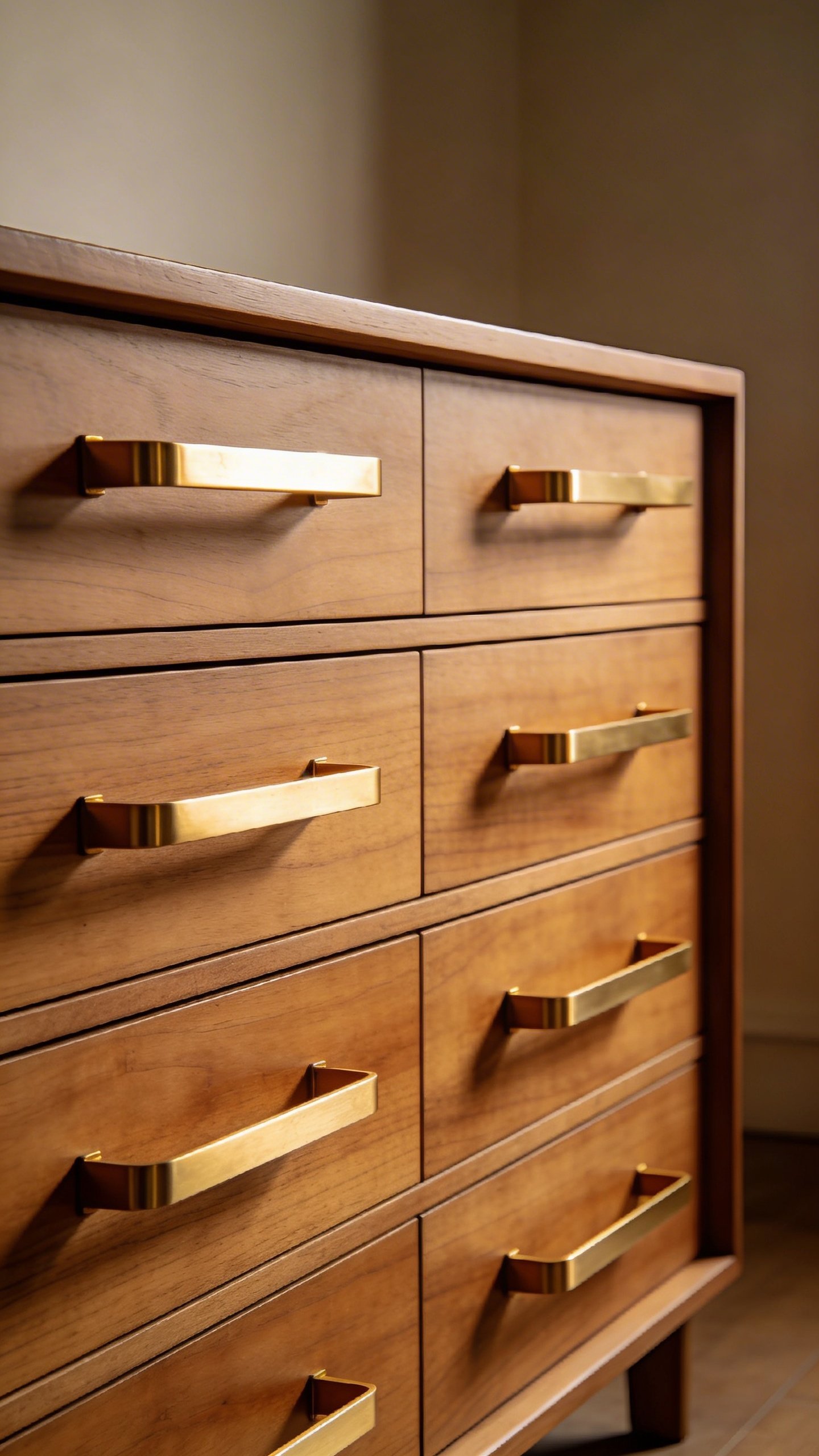
Your dresser needs wall space and preferably some breathing room. Placing it across from the bed works great visually and gives you something nice to look at. Just don’t put it so close to the bed that you’re banging your knees every time you open a drawer.
If you’re mounting a TV on your dresser, make sure you’re not craning your neck at a weird angle from bed. The center of the screen should be roughly at eye level when you’re sitting up. Nobody wants to wake up with a sore neck because they binged an entire series in an ergonomic nightmare position.
Closet Access Matters
Don’t block your closet with your dresser. This seems obvious, but I’ve seen it happen. You need enough clearance for doors to swing open fully—that’s typically about 3 feet. Sliding doors? You’re golden and can place furniture closer.
The Window Factor
Windows complicate things, but they also bring in light (which is good, unless you’re a vampire). Avoid blocking windows with tall furniture if possible. You paid for that natural light—use it!
Consider window treatments too. Heavy curtains need space to hang and draw without catching on furniture. If your dresser sits under a window, make sure you can still operate the blinds or curtains without climbing onto furniture like you’re training for American Ninja Warrior.
Small Bedroom Hacks
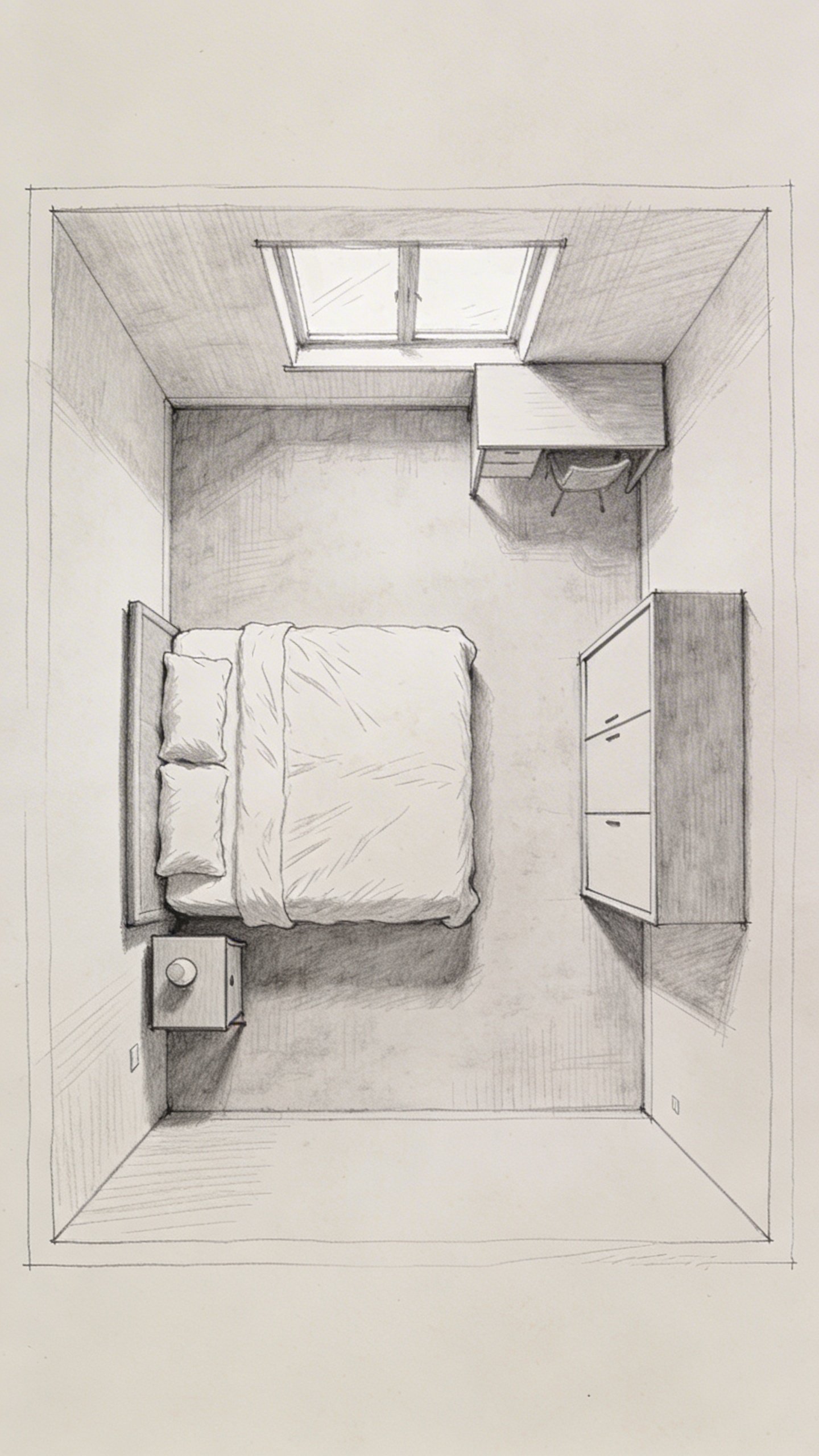
Got a shoebox-sized room? Welcome to the club. Small bedrooms need creative solutions, and sometimes that means making tough choices about what stays and what goes.
Consider these space-saving moves:
- Push your bed into a corner to free up floor space
- Use wall-mounted shelves instead of bulky bookcases
- Choose a bed with built-in storage drawers
- Mount floating nightstands to save floor space
- Use vertical space with tall, narrow dressers instead of wide ones
Mirrors are your secret weapon here. A large mirror opposite a window bounces light around and makes the room feel bigger. It’s basically an optical illusion, but it works.
When to Skip Furniture Pieces
You don’t need every piece of bedroom furniture ever invented. Can’t fit a dresser? Use your closet more efficiently with organizers. No room for nightstands? Wall-mounted shelves or a small cart works fine. IMO, it’s better to have less furniture that fits well than a cramped room stuffed with everything.
Balance and Symmetry (Or Intentional Chaos)
Symmetrical arrangements—matching nightstands, centered bed, evenly spaced furniture—create a calm, hotel-like vibe. Asymmetrical arrangements can look more casual and lived-in. Neither is wrong; it depends on your style.
If you go asymmetrical, you still need visual balance. That means if you have a tall dresser on one side of the room, you might balance it with a reading chair and floor lamp on the other. Weight doesn’t have to be identical, just proportional.
Frequently Asked Questions
Should my bed face the door?
Most people prefer seeing the door from bed (something about feeling secure), but not being directly in line with it. The diagonal “command position”—where you can see the door but aren’t directly aligned with it—tends to feel best. Some feng shui enthusiasts swear by this setup too.
Can I put my bed in the middle of the room?
Absolutely, if you have enough space! This works great in large master bedrooms and creates a luxurious, hotel-suite feeling. Just make sure you have at least 2-3 feet on all sides and somewhere to put nightstands that doesn’t look awkward.
How do I arrange furniture in a long, narrow bedroom?
Float your bed away from the wall if possible, or place it along the short wall to break up the bowling alley effect. Use rugs to define zones, and avoid lining all furniture up along one long wall—it emphasizes the narrowness.
What if my bedroom has multiple doors?
This is annoying, but workable. Map out the door swing paths and make sure furniture doesn’t interfere. Your bed typically should go on a solid wall section between doors. You might need to get creative with furniture placement, prioritizing function over perfect symmetry.
Do I need to buy all matching furniture?
Nope! Matching sets can look nice, but mixing furniture adds personality and often looks more sophisticated. Keep some element consistent—similar wood tones, coordinating colors, or matching hardware—and you’ll look intentional rather than random.
How much space do I really need around my bed?
Minimum 2 feet on the sides you use to get in and out, though 2.5-3 feet feels more comfortable. You can push one side against a wall if space is tight, but both sides accessible is ideal, especially for couples.
Wrapping It Up
Arranging bedroom furniture comes down to function first, aesthetics second. You need to sleep, get dressed, and move around comfortably—everything else is just styling. Start with your bed, create clear pathways, and don’t be afraid to experiment with different layouts before committing.
The “perfect” arrangement is the one that works for your specific room, your lifestyle, and your stuff. So grab a friend, move some furniture around, and don’t stress too much about following every design rule. Your bedroom should work for you, not the other way around.