

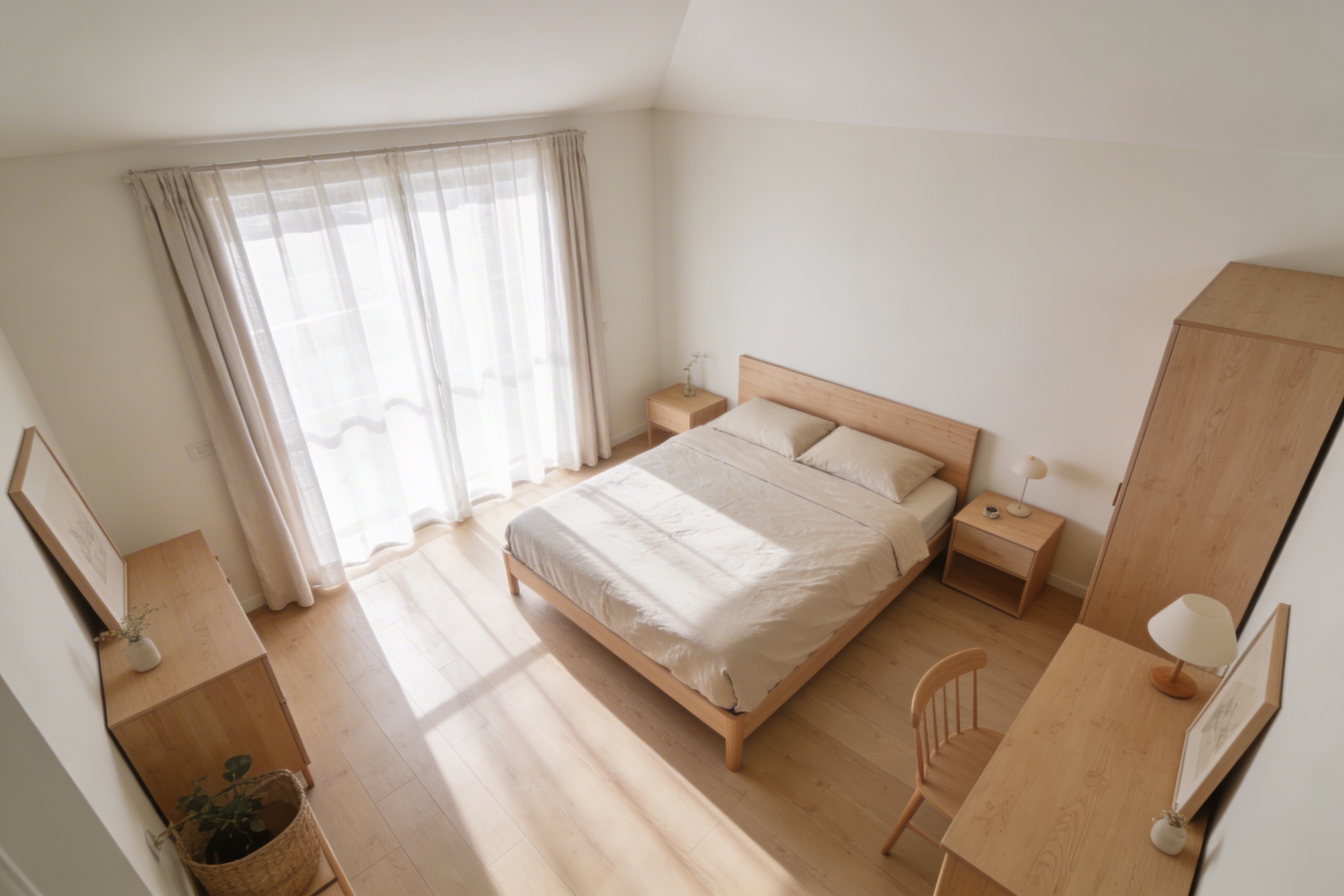
Your bedroom layout can make the difference between a peaceful sanctuary and a chaotic mess that stresses you out every time you walk in. Most people just shove furniture wherever it fits and call it a day, but a little strategic planning goes a long way. The good news? You don’t need to be an interior designer or spend a fortune to create a bedroom that actually works for your lifestyle.
Start With Your Bed Placement (Because Obviously)
Let’s be real—your bed is the star of the show, so figure out where it goes before you do anything else. The most common spot is centered on the main wall, usually opposite the door, which creates that balanced, hotel-room vibe most of us are going for.
But here’s the thing: rules are meant to be broken. If placing your bed against the window gives you the best layout, go for it. Just maybe invest in some blackout curtains unless you enjoy being woken up by the sun at 5:30 AM.
Avoid placing your bed directly in line with the door if possible—it feels weirdly exposed and can mess with your sleep quality. Also, try to keep at least two feet of clearance on each side if your room allows it. You’ll thank yourself later when you’re not doing that awkward shimmy to get in and out of bed.
Consider Your Traffic Flow
Think about how you actually move through your bedroom. Where do you walk when you first wake up? How do you get to your closet? Can you open your dresser drawers without hitting the bed?
Create clear pathways between key areas—your bed, closet, door, and any seating areas. A good rule of thumb is to leave at least 24-30 inches for walkways, though 36 inches is even better if you’ve got the space. Nobody wants to play Twister just to grab clean socks.
FYI, this is where a lot of people mess up by cramming too much furniture into their room. Sometimes less really is more, especially in smaller bedrooms.
Tackle Your Storage Situation
Storage can make or break a bedroom layout. You need places for clothes, shoes, accessories, and all the random stuff we accumulate. The key is figuring out what storage pieces you actually need before you start arranging.
Dresser Placement 101
Dressers work great along walls opposite or perpendicular to your bed. If you’ve got a TV, you might want to place your dresser where it can double as a media console—killing two birds with one piece of furniture.
Just make sure you can fully open those drawers. Sounds obvious, but I’ve definitely positioned a dresser perfectly only to realize the bottom drawer crashes into the bed frame. Learn from my mistakes.
Closet Accessibility Matters
Don’t block your closet with furniture. Seriously, don’t do it. You’ll regret it every single morning when you’re running late and can’t fully open the door to grab your favorite jacket.
If you have a small closet that’s bursting at the seams, consider adding a wardrobe or armoire elsewhere in the room. Position it where you can easily access it without disrupting your traffic flow.
Nightstands Are Non-Negotiable (Well, Almost)
Look, I know not everyone has space for nightstands, but if you can swing it, they’re total game-changers. Having a spot for your phone, water, book, or whatever helps you wind down makes bedtime so much better.
Ideally, you want matching nightstands on both sides of the bed for that symmetrical look. But if you’re working with limited space or budget, even one nightstand is better than none. You can get creative with alternatives too—a small stool, a stack of books, or a wall-mounted shelf all work.
Pro tip: Your nightstand should be roughly the same height as your mattress top, give or take a few inches. This makes it way easier to actually use the thing without straining.
Don’t Forget About Lighting Layers
A single overhead light isn’t going to cut it, folks. You need different types of lighting for different moods and activities. Think about where you’ll place lamps, sconces, or pendant lights as you plan your layout.
Your nightstand lamps should be positioned so they provide good reading light without glaring in your eyes. If you’re using wall sconces instead, mount them about 30-36 inches above your mattress and 6-8 inches out from the bed’s edge.
Task lighting near your dresser or vanity area helps with getting ready, while ambient lighting creates that cozy atmosphere. IMO, dimmer switches are worth every penny because mood lighting is everything.
Create Functional Zones (If Your Room Allows)
Got a larger bedroom? Lucky you! Consider creating distinct zones for different activities. Maybe you want a reading nook by the window, a small workspace in the corner, or a vanity area for getting ready.
The trick is defining these zones without making the room feel cluttered or chopped up. You can use rugs, lighting, or furniture placement to create subtle boundaries. A cozy chair with a floor lamp instantly becomes a reading spot. A small desk tucked in the corner transforms into your WFH zone.
Just remember—your bedroom should primarily be for rest and relaxation. Don’t turn it into a full-blown office or gym unless you absolutely have to.
Measure Twice, Move Furniture Once
Before you start dragging heavy furniture around, grab a tape measure and actually measure your space. I know it’s tempting to eyeball it, but you’ll save yourself so much frustration by knowing exact dimensions.
Measure your room, your furniture, and the spaces between pieces. You can even create a simple floor plan using graph paper or one of those free online room planning tools. Some people swear by apps that let you visualize layouts in 3D, which is pretty cool if you’re into that.
Write down your measurements and keep them handy when you’re shopping for new pieces. Nothing’s worse than falling in love with a dresser only to get it home and realize it’s six inches too wide.
Frequently Asked Questions
Should my bed face the door?
Your bed shouldn’t directly face the door if you can help it, but you should be able to see the door from your bed. This “commanding position” makes most people feel more secure and sleep better. Position your bed at an angle where you can see who’s entering without being in the direct line of the doorway.
How much space do I really need around my bed?
Ideally, leave at least 24 inches on each side of your bed where you get in and out. You can get away with less on one side if it’s against a wall, but the side you use most should have comfortable clearance. At the foot of the bed, aim for 36-48 inches if possible.
Can I put my bed under a window?
Absolutely! Just be prepared for potential downsides like drafts, noise, and light issues. Invest in good curtains or blinds, and maybe add a headboard to create some separation from the window. Some people sleep great this way, while others hate it—you’ll have to try it and see.
Where should I put my TV in the bedroom?
If you’re including a TV, mount it on the wall opposite your bed at eye level when you’re sitting up, or place it on a dresser. Make sure there’s no glare from windows, and keep it far enough away that you’re not straining your eyes. That said, sleep experts recommend keeping TVs out of bedrooms entirely—but I’m not here to judge your Netflix habits.
What’s the best layout for a small bedroom?
In small bedrooms, prioritize the essentials: bed, one nightstand, and minimal storage. Consider multifunctional furniture like a bed with built-in drawers or a nightstand with shelving. Keep your bed against the longest wall, and use vertical space for storage with wall-mounted shelves or tall, narrow dressers.
Should I arrange furniture before or after I paint?
Paint first, arrange furniture after. Trust me on this one. Moving furniture around a freshly painted room is way easier than trying to paint around everything. Plus, you might change your mind about the layout once you see the new color, and you don’t want to be moving stuff twice.
Conclusion
Laying out your bedroom doesn’t have to be complicated or stressful. Start with your bed placement, think about how you move through the space, and add furniture that serves a real purpose in your life. Take measurements seriously, plan your lighting, and don’t be afraid to experiment until something clicks.
Remember, the “perfect” bedroom layout is the one that works for you—not what some design magazine says you should do. If you wake up feeling relaxed and can easily find your stuff, you’ve nailed it. Now go forth and arrange some furniture!