

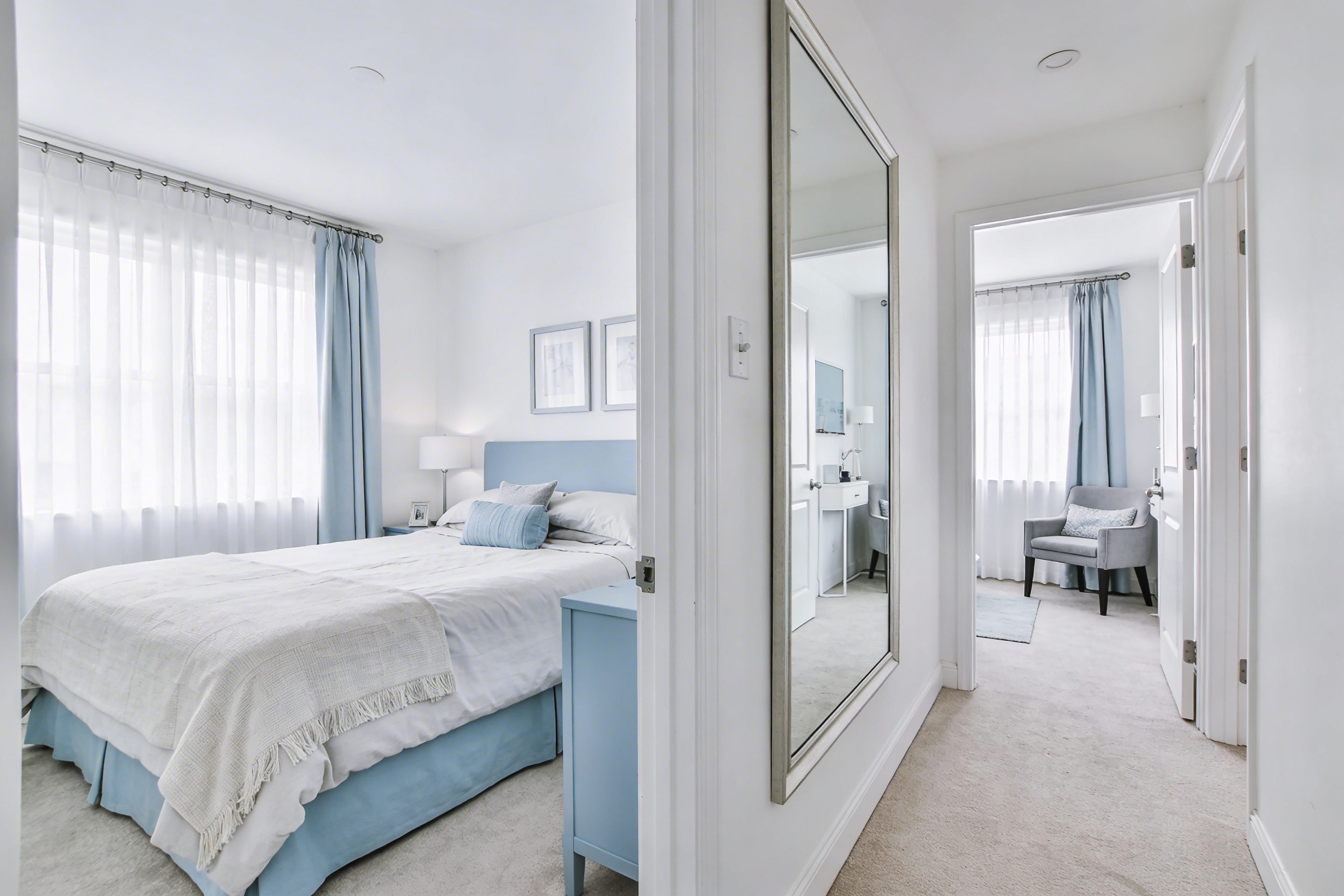
Staring at your cramped bedroom and wondering if you accidentally moved into a shoebox? You’re not alone. The good news is that you don’t need to knock down walls or blow your budget on a costly renovation to make your space feel more spacious. With a few clever tricks and some strategic thinking, you can transform your tiny sleep cave into a room that feels surprisingly roomy.
Color Is Your Secret Weapon
Let’s talk about the elephant in the room—or rather, how to make sure there’s no elephant-sized feeling in your room. Paint color matters way more than you think. Light colors reflect more light, which makes walls appear to recede and creates the illusion of more space.
Stick with whites, soft grays, pale blues, or gentle pastels for your walls. I know, I know—you might think this sounds boring. But here’s the thing: you can absolutely add personality with accessories, bedding, and artwork without sacrificing that spacious feel.
Dark colors do the opposite. They absorb light and make walls feel like they’re closing in on you. Save the moody navy or charcoal gray for a larger space, or use them as accent colors in small doses.
The Monochromatic Magic Trick
Want to level up? Try keeping your walls, ceiling, and trim all the same light color. This eliminates visual breaks that chop up the space and make it feel smaller. Your eye travels smoothly around the room instead of getting stuck on contrast lines, and boom—instant spaciousness.
Mirror, Mirror on the Wall
Mirrors are basically cheat codes for small spaces. They bounce light around the room and create the illusion of depth, making your bedroom feel like it goes on forever (okay, maybe not forever, but definitely bigger than it actually is).
The key is placement and size. A large mirror opposite a window? Chef’s kiss. It’ll reflect natural light and outdoor views, doubling your visual real estate. You can also try:
- Leaning a full-length mirror against a wall for an effortlessly chic look
- Hanging multiple smaller mirrors in a gallery arrangement
- Using mirrored furniture like nightstands or dressers
- Installing mirrored closet doors if you’re feeling ambitious
Just avoid putting mirrors directly across from your bed if you’re superstitious or easily startled at night. Nobody needs that kind of drama at 3 AM.
Furniture: Less Is More (Seriously)
I get it—you want all your stuff. But cramming every piece of furniture you own into your bedroom is like trying to fit into jeans from high school. It’s not going to work, and it’s going to be uncomfortable.
Choose furniture that’s proportional to your space. That king-sized bed might be tempting, but if it leaves you with only six inches of walking space on each side, it’s making your room feel claustrophobic. Sometimes a full or queen is the smarter move.
Multi-Functional Pieces Are Your Best Friend
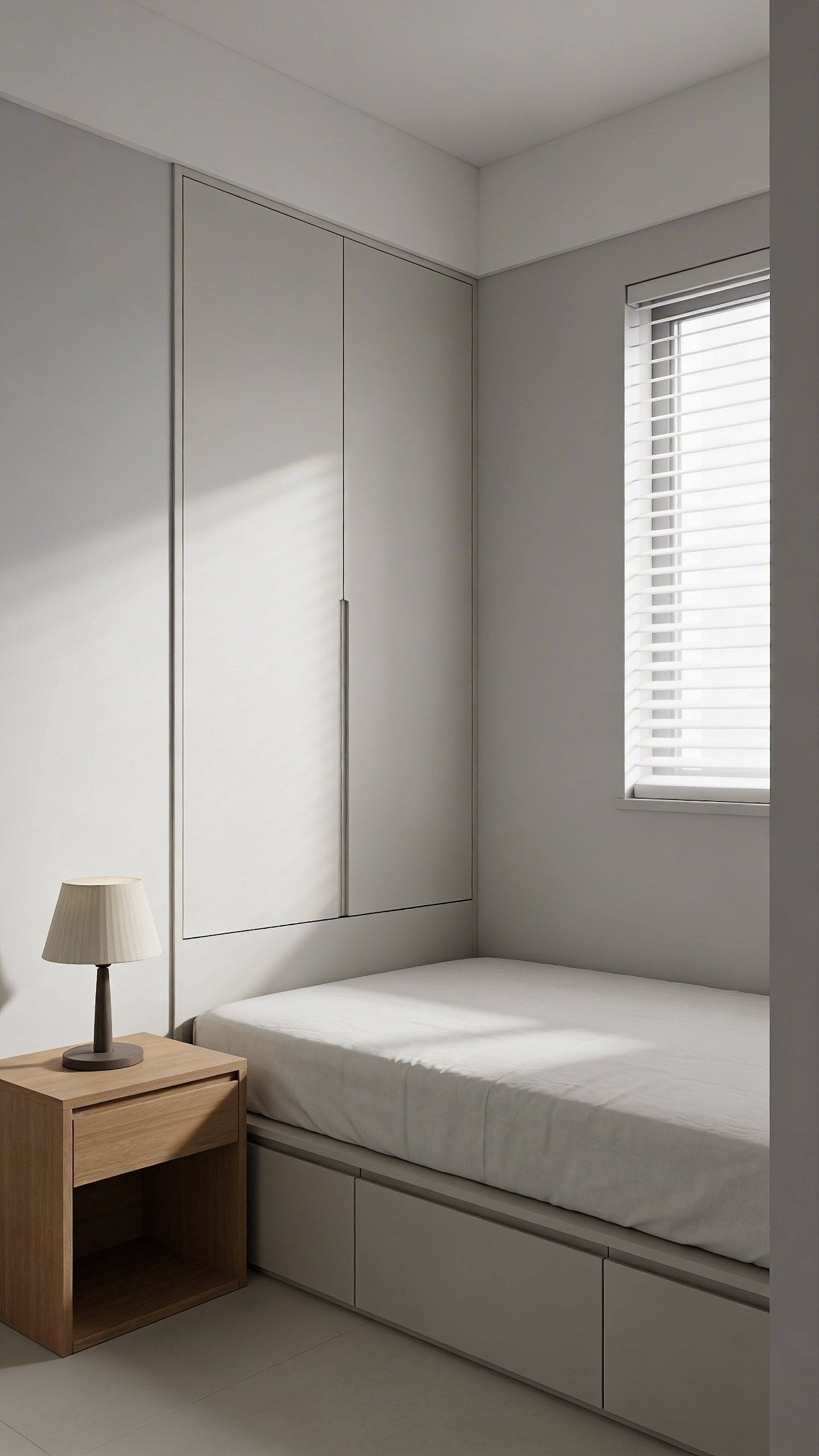
Look for furniture that pulls double duty. A bed with built-in storage drawers underneath? Genius. An ottoman that opens up for storage? Yes, please. A nightstand with shelves instead of just a flat top? You’re speaking my language.
The fewer separate pieces of furniture you need, the more floor space you’ll have visible. And visible floor space = the appearance of a bigger room. It’s basic math, really.
Strategic Lighting Creates Depth
Bad lighting can make even a massive room feel cramped and cave-like. Good lighting, on the other hand, opens everything up and adds dimension.
Ditch the single overhead light and go for layered lighting instead. Combine three types:
- Ambient lighting: Your main source (ceiling fixture or recessed lights)
- Task lighting: Reading lamps, desk lights, or bedside sconces
- Accent lighting: Decorative elements like string lights or LED strips
Lights in different corners draw the eye around the room and create the impression of more space. Wall sconces are particularly clutch here because they free up nightstand space while adding upward light that makes ceilings feel higher.
Vertical Space Is Wasted Space
Most people completely ignore the upper half of their rooms, and honestly? That’s leaving opportunity on the table. Drawing the eye upward makes ceilings feel taller and rooms feel larger.
Install floor-to-ceiling curtains even if your windows are shorter. The vertical lines create the illusion of height. Mount the curtain rod as close to the ceiling as possible—not right above the window frame where amateurs put them.
Tall bookshelves, vertical artwork, and even vertical striped wallpaper on one accent wall can all trick the brain into perceiving more space. You’re basically hacking human perception, and it works.
Don’t Forget About Storage
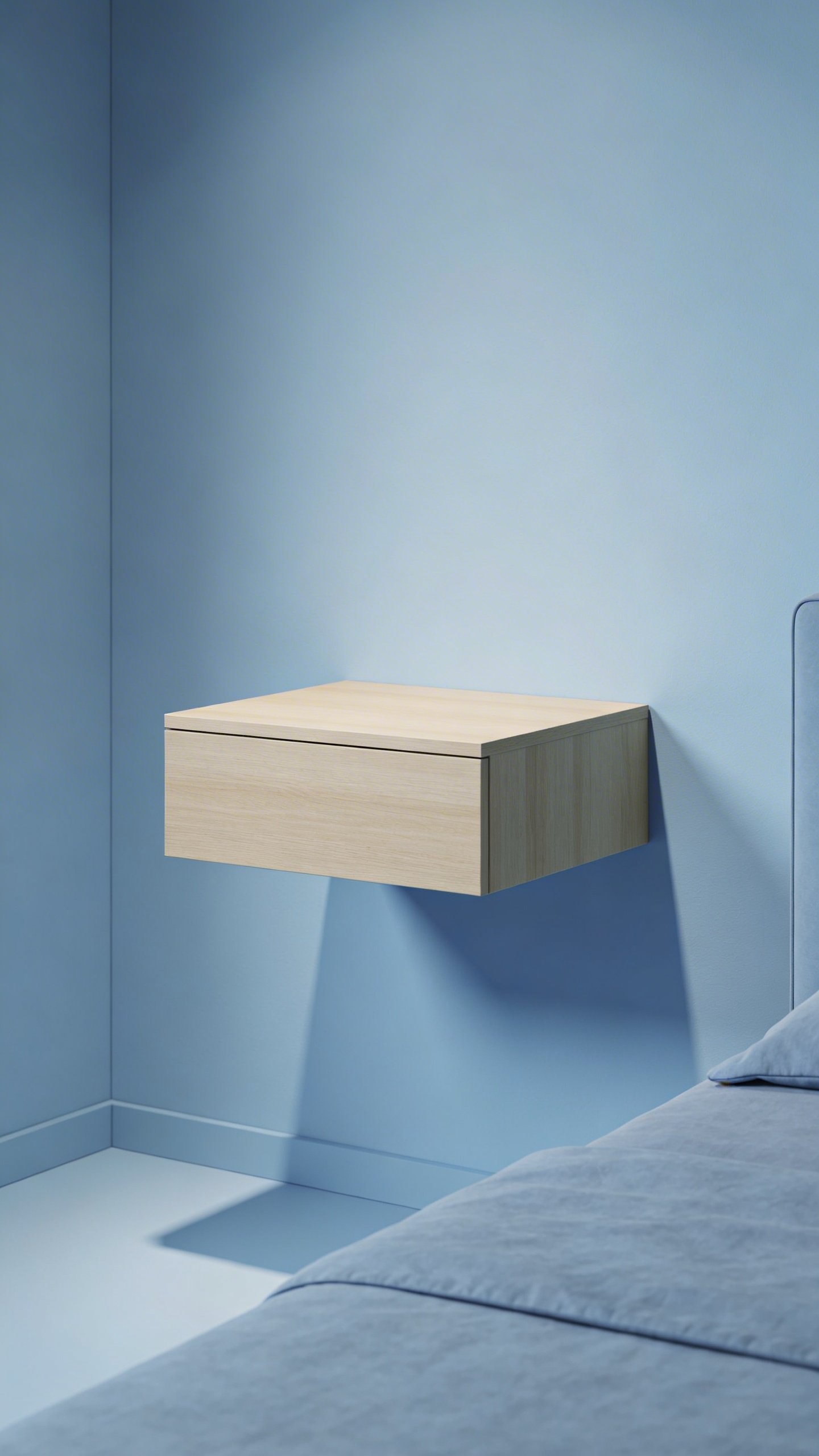
Use wall-mounted shelves instead of floor-based storage units when possible. Floating shelves keep the floor clear while providing storage, which maintains that crucial sense of openness. Plus, they look way more modern than bulky dressers anyway.
Keep It Clutter-Free (I Know, Easier Said Than Done)
Real talk: no amount of design tricks will make your room look bigger if there’s stuff everywhere. Clutter is the ultimate space-killer.
FYI, this doesn’t mean you need to go full minimalist monk mode. You just need to be intentional about what you display and where you store things. If every surface is covered with random objects, your brain registers chaos and smallness.
Invest in closed storage solutions. Baskets, boxes, and drawers hide visual clutter while keeping your stuff accessible. Keep your nightstand to just essentials—lamp, current book, maybe a plant. That’s it.
Scale and Pattern Matter More Than You Think
Large-scale patterns can actually make a room feel bigger, which seems counterintuitive but works. Tiny, busy patterns make spaces feel cluttered and closed-in. A duvet with large, bold geometric shapes? Much better for small spaces than one with tiny florals all over it.
Same goes for rugs. One larger rug makes a room feel cohesive and spacious. Multiple small rugs chop up the floor and make everything feel fragmented and smaller. Aim for a rug that fits under at least the front legs of your bed and extends beyond the sides.
Frequently Asked Questions
Should I avoid patterns completely in a small bedroom?
Nope! You don’t need to avoid patterns, just choose them wisely. Stick with larger-scale patterns and use them as accents rather than covering every surface. Vertical stripes on one wall or large geometric shapes on bedding both work great. Just don’t go pattern-crazy on the walls, floor, and bedding all at once.
Can I use dark colors anywhere in a small bedroom?
Absolutely. Dark colors work well as accents—think throw pillows, a single accent wall, or decorative objects. Some designers even paint the ceiling a darker color to create a cozy, expansive feel (though this is advanced-level stuff). Just keep the majority of your space in lighter tones for maximum spaciousness.
What’s the best bed size for a small bedroom?
It depends on your room dimensions, but generally, you want at least 24-30 inches of walking space on each side of the bed and at the foot. Measure your room and work backward from there. A queen usually works for rooms around 10×10 feet, while smaller rooms might need a full or even a twin.
Do I really need to get rid of my furniture to make my room look bigger?
Not necessarily get rid of—just be selective. Remove pieces you don’t actually use daily. That accent chair that just holds laundry? Maybe it can live somewhere else. Keep only the essentials and make sure each piece serves a real purpose in your daily life.
Will painting my ceiling white make my room look taller?
Yes! A white or very light ceiling reflects more light and visually lifts the room. If you want to get fancy, you can even paint it a shade lighter than your walls to enhance this effect. Just avoid dark ceiling colors in small rooms—they create a cave-like feeling.
Are there any quick fixes that make an immediate difference?
Absolutely. Declutter surfaces, replace heavy curtains with light and airy ones, add a large mirror, and make sure you have adequate lighting. These changes take minimal effort and investment but create instant impact. IMO, the mirror and lighting are the two fastest wins you can get.
Wrapping It Up
Making your bedroom look bigger doesn’t require a magic wand or a construction crew. It’s all about working smarter with what you’ve got. Light colors, strategic mirrors, appropriately sized furniture, and good lighting do most of the heavy lifting. Throw in some vertical elements and keep the clutter under control, and you’ll be amazed at how much more spacious your room feels.
The best part? Most of these tricks cost very little—some are completely free. So go ahead and give your cramped bedroom the glow-up it deserves. Your future self, stretching out in what feels like a palace, will thank you.